Cadillac & Buick Ignition Switch Repair in Fort Worth (2026)
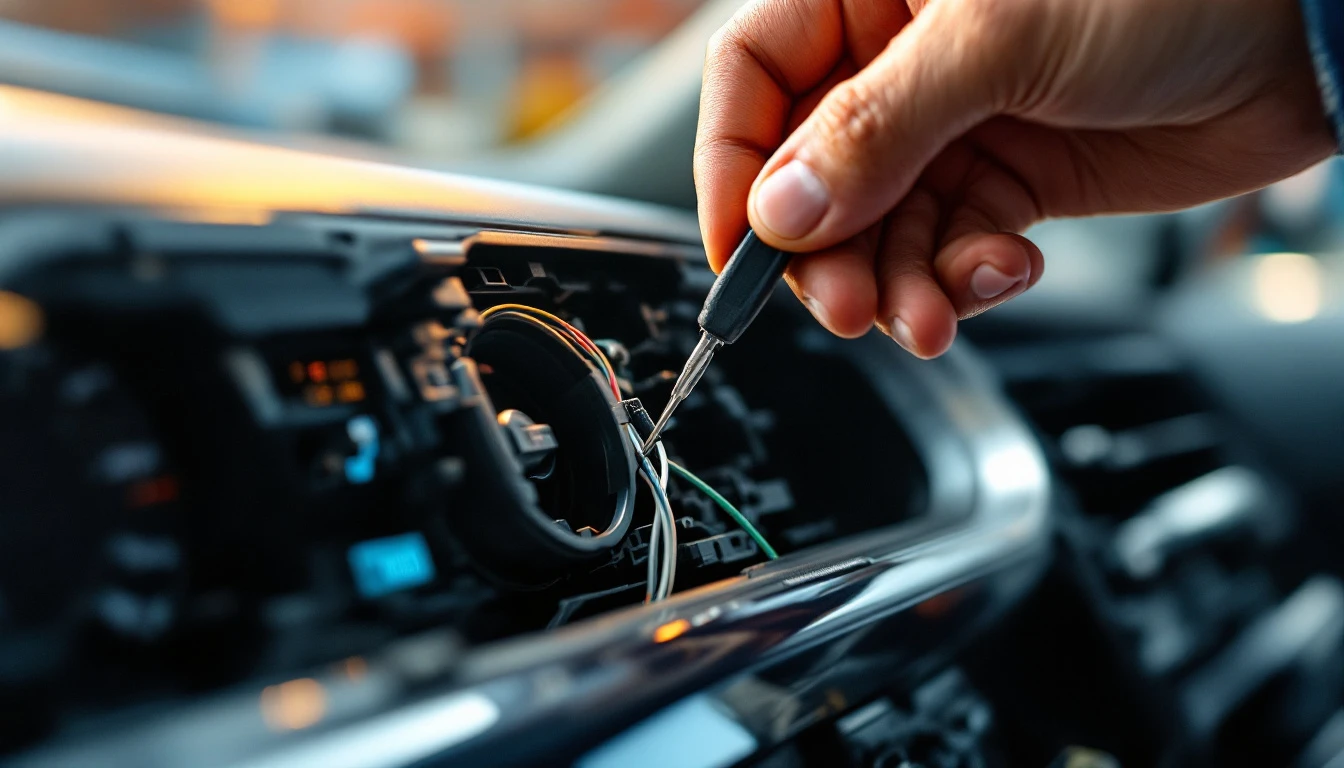
Two very different things go wrong with Cadillac and Buick ignitions, and from the driver's seat they can feel almost identical. One is mechanical: a lock cylinder that has worn out and no longer accepts, turns, or releases the key properly. The other is electronic: an anti-theft system that has decided the key is not legitimate and is shutting the engine down to prove it.
The repairs share almost nothing. The parts are different, the labour is different, and the cost is different. Getting the distinction right before anyone orders anything is the single most valuable thing an owner of a high-mileage CTS, SRX, Escalade, LaCrosse, Enclave, or Regal can do.
The Fork That Decides Everything
There is one question that separates the two families, and it can be answered in your own driveway in ten seconds.
Does the key physically turn?
If the key will not rotate, rotates roughly, needs jiggling, has to be pushed in harder than it used to, or will not come back out — you are in the mechanical family. The lock cylinder, the key, or the actuator behind it is the problem.
If the key turns perfectly and the engine cranks, but the car either refuses to fire or fires and dies within a second or two — usually with a security indicator lit on the dash — you are in the anti-theft family. The mechanical ignition just did its job flawlessly. Something further down the chain decided not to permit combustion.
Everything below follows from which side of that line you land on.
Where the Lock Actually Lives on These Vehicles
GM has used two broad packaging approaches, and where the cylinder sits changes how much work reaching it involves.
Column-mounted. On older full-size platforms and trucks — including Escalades of the pre-push-button era — the lock assembly sits in or against the steering column shroud. Access means getting into the column, which brings the steering lock mechanism and the supplemental restraint components into the working space.
Dash-mounted. Most GM cars from the mid-2000s onward moved the cylinder into the dash to the right of the column, including a large share of Cadillac and Buick sedans and crossovers of that era. Access is different rather than easier: less column disassembly, more trim and bracket work.
Two vehicles that both have a key cylinder can therefore be quite different jobs — one reason no honest published price exists for this work.
How These Cylinders Wear Out
The wear story on high-mileage Cadillacs and Buicks is consistent enough to be predictable.
Inside the cylinder, a stack of spring-loaded wafers is lifted to precise heights by the peaks and valleys on the key. Over a hundred thousand cycles two things happen at once: the key's cut profile rounds off and the wafers wear while their springs weaken. Neither alone causes a failure. Together they stop producing a clean shear line.
The failure almost always announces itself first — a slight wiggle needed, better operation with the key pushed a fraction further, one failure on a hot afternoon followed by three good weeks. Owners adapt to those symptoms rather than act on them, which is why these calls arrive as "it finally stopped working today" rather than "it has been getting worse for six months".
Heavy keychains genuinely accelerate this. A large ring of keys and fobs hanging off an inserted key puts constant downward leverage on the cylinder. On a vehicle started and stopped many times a day the cumulative effect is real. Carrying the ignition key on its own light ring costs nothing and helps.
Worth noting before any parts are ordered: on a worn-cylinder vehicle, a freshly cut key from the vehicle's code — not a copy of a copy of a worn key — sometimes restores normal operation on its own, because half the wear equation has been removed. It is the cheapest thing to try and it should be tried first.
The Key Stuck in Accessory
This is the signature GM complaint and it deserves its own treatment, because the most common cause is not the ignition at all.
On automatics the shift interlock exists to prevent the key being removed unless the vehicle is genuinely in Park. If the shifter has not seated fully, or the park position switch or interlock solenoid is failing, the key is held exactly as designed. Rock the shifter firmly into Park and try again — a meaningful share of these calls end there.
If that does not release it, the candidates are the interlock solenoid or park switch, a worn cylinder that no longer returns fully to the lock position, or a worn key binding on the way out.
The one thing not to do is force it. A key pulled hard enough snaps, and extracting a broken key from a cylinder that was already marginal converts a manageable repair into a much bigger one.
Faults Wearing an Ignition Costume
Here is where the GM-specific knowledge earns its keep, because these systems produce no-start symptoms that owners and general shops routinely misattribute to the ignition.
VATS resistor keys
The older General Motors anti-theft design put a resistor pellet into the blade of the key. Contacts inside the ignition lock read its resistance value, and the vehicle compares that value against what it expects. It appeared broadly across GM from the late 1980s into the early 2000s, including many Cadillacs of the period.
Its characteristic failure is neither the key nor the cylinder. It is the small wires running from the lock assembly into the column, which flex every time the key turns and eventually fatigue and break — producing a car with a mechanically perfect ignition that cranks and will not start, security indicator on. Replacing the lock cylinder fixes nothing. Our GM VATS bypass page covers the correct approach to this family of faults.
PassLock
The successor design reads a sensor in the ignition lock housing to confirm the correct cylinder is being rotated. When that sensor or its circuit degrades, the vehicle concludes an unauthorised key is in use and cuts fuel — so the engine starts and stalls almost immediately, security light on.
PassLock is the most misdiagnosed fault on these platforms precisely because the failure genuinely lives inside the ignition lock housing, so "it must be the ignition" feels correct. The mechanical cylinder is usually fine. The repair addresses the sensor circuit, and a relearn procedure is normally required afterward before the vehicle will run normally again.
The distinction matters financially. A PassLock repair and a full mechanical cylinder replacement are not remotely the same job, and a shop that treats every security-light no-start as a cylinder replacement will overcharge for a repair that does not fix the car.
Later GM vehicles moved to transponder keys with immobilizer authority sitting in the body control module — a third pattern, where diagnosis may lead to module programming rather than lock work. The key side of that era is covered in our Chevrolet Silverado key replacement guide.
The Cadillacs and Buicks With No Cylinder At All
On newer push-button-start models — the current Cadillac sedans and crossovers, Escalades from the mid-2010s onward, and the later Buick crossovers — there is no mechanical ignition lock to fail. There is a start button and a proximity fob system.
That changes the entire failure list. A no-key-detected message points at a dead fob battery, a weak vehicle battery, radio interference, or a fault in the receiving antennas and modules — none of it mechanical, none of it solved by anything resembling ignition repair.
Every vehicle of this type has a documented backup start method, normally holding the fob against or beside the start button so it can be read at very short range. Find yours in the owner's manual before you need it. Fob-side work here is smart key programming, not lock work.
What This Costs
No published range exists here for ignition cylinder or ignition switch work, and inventing one would be dishonest. The cost turns on whether the lock is column-mounted or dash-mounted, how much disassembly reaching it requires, whether the replacement can be re-keyed to your existing key or arrives keyed differently, and whether a transponder key then needs programming. A PassLock circuit repair and a full cylinder replacement on a column-mounted platform are simply not comparable jobs.
What does have established bands is the key and module work that sometimes accompanies it. As of August 2026:
| Related Cadillac / Buick work | Range (as of August 2026) | When it applies |
|---|---|---|
| Ignition lock cylinder repair or replacement | Quoted after inspection | Design, mounting, and re-keying set the figure |
| Ignition switch (electrical) or PassLock circuit repair | Quoted after inspection | Diagnosed before any parts are ordered |
| Transponder key cut and programmed | $120 – $250 | If a new key is introduced by the repair |
| Push-to-start smart fob | $250 – $650+ | Proximity vehicles, no cylinder involved |
| Body control module programming | $150 – $350 | Immobilizer authority on later platforms |
| Engine or powertrain control module programming | $150 – $500 | Only where diagnosis points there |
Parts and hardware are priced separately by supply, and no total is promised over the phone before the vehicle has been identified and seen.
What the Visit Involves
Ownership is verified first: government-issued photo identification checked against registration, title, or an insurance card in a matching name. Proof of ownership is required before any lock or key work begins. Companies performing this work in Texas operate under the Texas Department of Public Safety Private Security Program, and independent professionals accessing secured vehicle data do so through established channels such as the National Automotive Service Task Force Vehicle Security Professional registry.
Then the symptom is reproduced rather than taken on description, and the free checks run first — does the key turn, does the engine crank, is a security indicator lit, does the shifter seat in Park, what condition is the key and battery in. Those observations sort the mechanical family from the anti-theft family before a single panel comes off.
Column and dash work near the ignition also puts supplemental restraint components in the working area, and they are handled properly rather than worked around. Worth stating plainly since it comes up nearby: an SRS or airbag module reset clears stored crash data — it does not replace anything. Deployed airbags and fired pretensioners are physical parts that must be physically replaced.
Before anyone leaves, the vehicle starts repeatedly rather than once, the key operates every position and releases correctly, the steering lock behaves, any required relearn has been completed, and no new fault codes have been introduced.
Honest Limits
A few things stated plainly.
Some of these are diagnostic jobs before they are repair jobs. A security-light no-start on an older Cadillac may take testing before anybody can say what it is, and paying for that testing is cheaper than paying for the wrong part. Related: deep column disassembly on some platforms is workshop work rather than roadside work, and being told that up front beats a job abandoned halfway.
A few cases genuinely belong at a dealer. Certain late-model security configurations are dealer-only, and hearing that before money changes hands is the outcome you want. Broader mobile automotive locksmith and ignition repair work covers the large majority of these vehicles, but not the entire set.
Frequently Asked Questions
How do I tell a worn Cadillac ignition cylinder from a security-system fault?
Ask whether the key physically turns. A mechanical cylinder failure shows up as a key that will not rotate, rotates roughly, needs jiggling, or will not come back out. A security fault lets the key turn perfectly, cranks the engine, and then either prevents it starting or lets it start and stall within a couple of seconds, usually with a security indicator lit. Those are two different repairs with two different costs, and mixing them up is the most common way money gets wasted on these vehicles.
What is PassLock and why does it look like an ignition problem?
PassLock is a General Motors anti-theft design that reads a sensor in the ignition lock housing to confirm the correct lock cylinder is being turned. When the sensor or its wiring degrades, the vehicle decides an unauthorised key is being used and cuts fuel, so the engine starts and stalls almost immediately with a security light. It looks like an ignition fault because the failure genuinely lives inside the ignition lock housing, but the mechanical cylinder is usually fine. The repair addresses the sensor circuit rather than the lock, and a relearn procedure is normally required afterward.
What is VATS and which Cadillacs used it?
VATS is the older General Motors anti-theft system that put a resistor pellet into the blade of the key, with contacts inside the ignition lock reading its resistance value. It appeared broadly across GM from the late 1980s into the early 2000s, including many Cadillacs of that period. Its classic failure is not the key at all but the small wires running from the lock into the column, which flex every time the key turns and eventually break. The result is a no-start with a security indicator on a car whose ignition is mechanically perfect.
Why is my Buick or Cadillac key stuck in the accessory position?
The most frequent cause on automatic vehicles is the shift interlock, which holds the key until the vehicle is genuinely in Park, so rocking the shifter firmly into Park releases it in many cases. If that fails, a failing interlock solenoid or park position switch, a worn lock cylinder that no longer returns fully to the lock position, or a worn key are the usual candidates. Do not force or yank the key, because breaking it off inside a failing cylinder converts a modest repair into a significantly larger one.
How much does Cadillac or Buick ignition repair cost in Fort Worth?
There is no single honest figure, because the cost depends on whether the lock is column-mounted or dash-mounted, whether the housing has to come apart, whether the replacement is re-keyed to your existing key, and whether any key programming follows. A security-system fault and a mechanical cylinder failure are also completely different repairs on the same symptom. The figure is confirmed on inspection of the specific vehicle. Any key programming that follows falls into the published transponder or smart key bands.
My Escalade has push-button start and no key cylinder. What can fail?
On push-button Cadillac and Buick models there is no mechanical ignition lock to wear out, so the failures are electronic rather than mechanical. A no-key-detected message generally traces to a dead fob battery, a weak vehicle battery, radio interference, or a fault in the receiving antennas and modules. Every vehicle of this type has a documented backup start method, usually holding the fob against or beside the start button so it can be read at very short range. That is worth locating in your owner's manual before you ever need it.
Does a heavy keychain really damage a GM ignition?
Yes, and it is one of the few pieces of common wisdom in this area that is accurate. A heavy ring of keys and fobs hanging from an inserted key applies constant downward leverage on the lock cylinder and its wafers, accelerating wear that would otherwise take far longer to develop. On high-mileage vehicles that are started and shut off many times a day, the difference is measurable over years. Carrying the ignition key on a light, separate ring is genuinely protective and costs nothing.
Get the Diagnosis Before the Parts
Describe the symptom precisely and half the diagnosis is already done: does the key turn, does the engine crank, is a security light on, does the key come out. Those four answers decide whether your Cadillac or Buick needs lock work, security-system work, or a new key.
Call or text (817) 668-3801, email contact@fwlocksmith.com, or use the contact page with your model, year, and symptom. Mobile Cadillac key service and ignition work are available across Fort Worth and the surrounding cities, evenings and weekends included. Proof of ownership is required before any work begins, and if your specific vehicle turns out to be a dealer-only case you will hear that before you spend anything.