EEPROM All-Keys-Lost in Fort Worth: When Bench Programming Is the Only Path
TL;DR
Some all-keys-lost jobs in Fort Worth cannot be done with OBD tools alone — they require removing the immobilizer or body-control module, reading or writing its EEPROM chip on the bench, and reinstalling. This is what separates a real automotive locksmith from a key duplicator. EEPROM AKL pricing in DFW: $700–$1,400 mobile, depending on platform.
OBD-only key programming is the easy half of automotive locksmith work. The hard half is when the vehicle’s immobilizer security data can’t be extracted through the OBD port — when you have to physically remove a module, solder probes onto a memory chip, read the binary EEPROM data, calculate or extract the security key, and write everything back. This is “bench programming.” In Fort Worth in 2026, this is what real automotive locksmiths charge a premium for, and why.
What Is an EEPROM Chip?
EEPROM stands for Electrically Erasable Programmable Read-Only Memory. It’s a small non-volatile memory chip used in nearly every automotive electronic control module to store calibrations, security data, key memory, mileage, and other persistent settings. Common variants: 24C04, 24C08, 24C16, 95040, 95080, 95128, 95160, 95320, 93C46, 93C56, 93C66. Each is essentially a tiny storage device — a few kilobytes of data — with a specific read/write protocol.
When a manufacturer says “the key data is in the immobilizer EEPROM,” that means one of these small chips on the module’s circuit board holds the binary data the immobilizer references to decide whether a presented key is authorized.
When Does AKL Need EEPROM Bench Work?
Three main scenarios force a Fort Worth locksmith into bench-level EEPROM work:
- The manufacturer didn’t expose security access via OBD. BMW FEM/BDC, Mercedes FBS3/FBS4, Range Rover L405 immobilizer, some Volvo CEMs — these store the security secret only in EEPROM, not retrievable through the diagnostic port.
- The immobilizer’s communication is locked. Some modules require an OBD password to talk to. If both keys are lost, the PIN extraction sometimes requires a direct EEPROM read.
- The module is “virgin” or has had memory corruption. Used donor modules and modules with battery-disconnect EEPROM corruption need to be written by hand on the bench, not via OBD.
Vehicles That Routinely Need EEPROM AKL in Fort Worth
- BMW F-series (FEM/BDC): F30/F31/F32/F33 3/4 Series, F10/F11 5 Series, F15/F16 X5/X6, F22/F23 2 Series, F25 X3, F48 X1
- BMW E-series late (CAS3/CAS3+): E60/E61, E63/E64, E70/E71, E90/E91/E92/E93, E83
- Mercedes-Benz FBS3: W204 C-Class late, W212 E-Class, W221 S-Class, W166 ML/GLE, W463 G-Wagon
- Mercedes-Benz FBS4: W205 C-Class, W213 E-Class, W222 S-Class — only on certain software versions
- Range Rover L322 (some software): 2010–2012 full-size
- Range Rover L405 / L494: 2013–2021 full-size + Sport
- Audi B8/C7 (4th-gen immo): A4/A5/A6/A7/Q5/Q7 most years require bench read of the immo node
- VW MQB platform (2013+): Golf 7, Passat B8, Tiguan, Atlas — component protection bypass via bench
- Volvo (CEM access): S60, V60, S80, V70 some years
Tools Required
A serious bench-programming setup in Fort Worth includes:
- EEPROM programmers: Xprog-M, Orange5, AVDI Xhorse VVDI Prog, Iprog+. Each supports different chip families.
- Diagnostic platforms: Autel IM608 Pro for OBD + bench coordination, ABRITES AVDI with platform-specific licenses (BMW, Mercedes, JLR, VAG), Xhorse VVDI2 / VVDI Key Tool Plus.
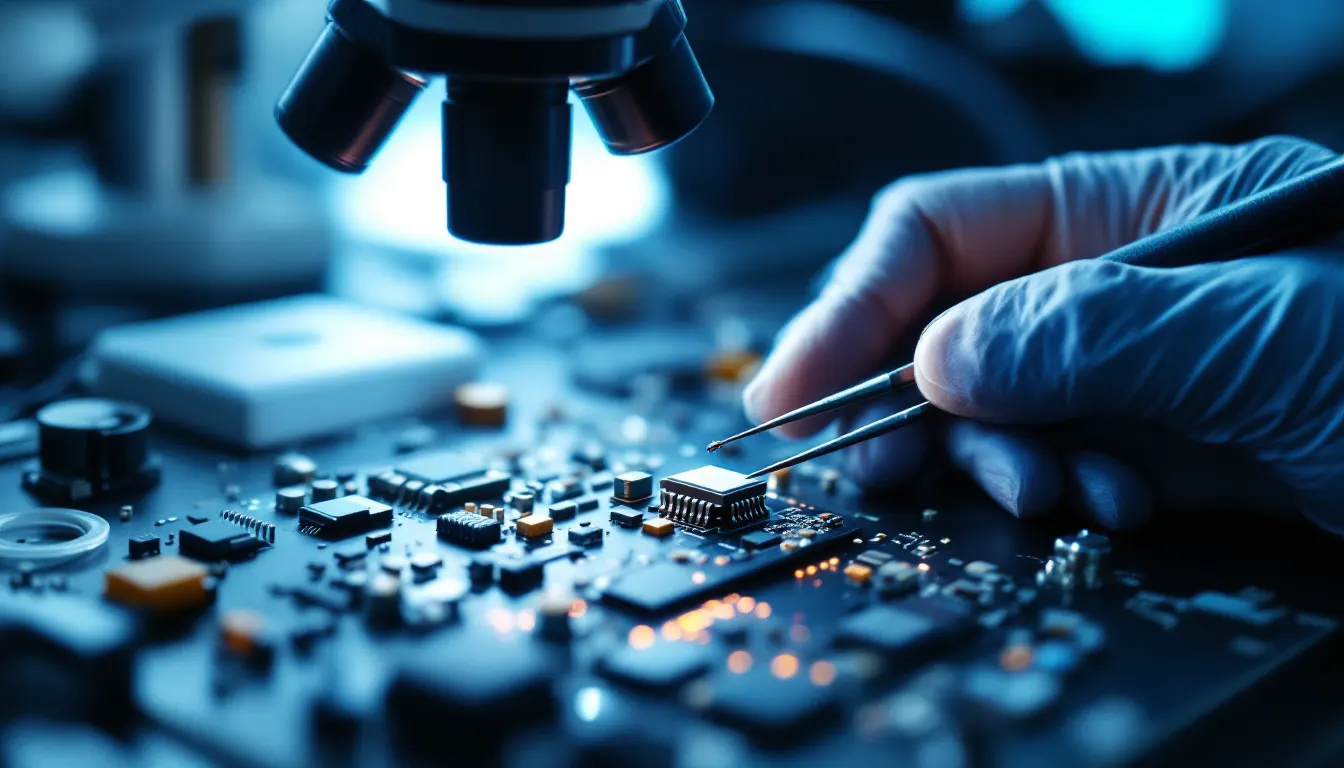
- Soldering and reflow equipment: Hot-air rework station, fine-tip soldering iron, microscope (10–40x), conformal coating remover. EEPROM chips are sometimes 8-pin SOIC, sometimes 14-pin TSSOP — different physical handling.
- Test fixtures and clips: SOIC8 clip-on programmers for in-circuit reads when desoldering isn’t needed. SOIC clip is the difference between a 15-minute read and a 90-minute desolder/resolder cycle.
- Bench power supply with current limiting: Protects modules during programming from accidental shorts.
The total kit costs $15,000–$30,000 to assemble, which is why most general locksmiths don’t have it. Real EEPROM AKL specialists exist in fewer than 1 in 10 Fort Worth locksmith shops.
Worth calling out: on BMW FEM/BDC modules the target chip is almost always a 95128 or 95256 in SOIC8 package on the bottom side of the board, hidden beneath the RF shield. Mercedes FBS3 EIS units carry a 95320 read at 5V — using 3.3V will return garbage and trip the security counter on the EIS, which is non-trivial to recover from. Get the voltage and chip ID right before the first read.
Range Rover L405 immobilizer modules add another wrinkle: the secure-data EEPROM lives on a daughterboard that is itself conformal-coated, so the technician has to remove the daughterboard first, clean the coating with isopropyl and a microfiber under microscope, and only then attempt the SOIC8 clip read. Skipping the clean step leaves the clip contacts riding on coating residue, returning a partial dump that crashes the bin-extraction step. Plan 60-75 minutes for the L405 bench portion, double the BMW FEM time.
What a Typical Bench Job Looks Like
- Customer verification: ID + ownership documents.
- OBD pre-diagnosis: confirm immobilizer fault, read any DTCs, document baseline.
- Remove the target module: BMW FEM is behind the glovebox; Mercedes EIS is in the steering column; Range Rover immo is under the driver’s seat area — varies by platform.
- Open the module housing, identify the target EEPROM chip(s), clean conformal coating if needed.
- Clip-on or desolder the chip, place into EEPROM programmer, read the binary content.
- Process the binary: extract ISN / security PIN, calculate new key data, or generate a modified binary with new key slots.
- Write the modified binary back to the chip (or to a fresh chip if the original is damaged).
- Reinstall the module and verify on the vehicle via OBD.
- Program the physical key(s) via OBD, test, document, charge.
Typical total time: 90–180 minutes from arrival, including the 25–60 minute bench portion. Almost always mobile — the bench setup lives in the back of the locksmith’s service truck.
Fort Worth EEPROM AKL Pricing 2026
- BMW CAS3/CAS3+ AKL: $700–$1,000 mobile
- BMW FEM/BDC AKL: $900–$1,200 mobile
- Mercedes FBS3 AKL: $900–$1,300 mobile
- Mercedes FBS4 AKL: $1,200–$1,600 mobile (when tool coverage permits)
- Range Rover L405 / L494 AKL: $1,000–$1,400 mobile
- Audi B8 / C7 AKL: $800–$1,100 mobile
- VW MQB AKL: $700–$1,000 mobile
The same platforms sorted by price, as of August 2026:
| Platform | Mobile all-keys-lost price |
|---|---|
| BMW CAS3 / CAS3+ | $700–$1,000 |
| VW MQB | $700–$1,000 |
| Audi B8 / C7 | $800–$1,100 |
| BMW FEM / BDC | $900–$1,200 |
| Mercedes FBS3 | $900–$1,300 |
| Range Rover L405 / L494 | $1,000–$1,400 |
| Mercedes FBS4 (when tool coverage permits) | $1,200–$1,600 |
Dealership pricing on the same operations is consistently 50–100% higher and the wait is 3–7 days. The mobile premium over OBD-only AKL ($300–$600) reflects the 25–60 extra labor minutes plus the tool cost spread across each job.
Real-World Scenario: 2017 Audi A6 EEPROM AKL in Keller
A Keller customer lost both keys to a 2017 Audi A6 (C7 chassis, 4th-gen immobilizer). Audi dealer quoted $2,250 + $190 tow + 5-day wait for “parts from California.” A mobile locksmith with ABRITES AVDI and VAG license arrived in 50 minutes, did a 35-minute bench read on the instrument cluster (where the 4th-gen immo data lives), calculated the security access, programmed two new HU66 blade keys via OBD, and finished. Total: $985. Same afternoon.
Frequently Asked Questions
Q: Do I really need bench-level work?
If your car is one of the platforms listed above, yes. OBD-only attempts on those platforms either fail or leave the module in a partially-coded state that takes more work to recover. A good locksmith identifies the right approach over the phone before dispatching.
Q: Will it damage my module?
Done correctly, no. The risks are: chip ESD damage (mitigated by anti-static handling), solder bridges (mitigated by microscope work), and conformal coating residue (mitigated by reflow cleaning). A practiced operator does dozens of these a year without damage.
Q: How long does the bench portion take?
25–60 minutes typically. Some modules with conformal coating or hard-to-access chip locations take longer. The full visit including OBD work and reinstall: 90–180 minutes.
Q: Can you do this in my driveway?
Yes — the entire bench setup travels in the locksmith’s truck. Module removal happens at the car, bench work at the truck, reinstall back at the car.
Q: What if my EEPROM is already damaged?
We can swap in a fresh chip and write the data we recovered from the original. This adds ~$50–$100 to the job. Catastrophic module hardware failure (rare, <5% of cases) requires OEM replacement.
Q: How is this different from OBD-only programming?
OBD-only works when the manufacturer exposes a security-access protocol through the diagnostic port. EEPROM bench work is required when they don’t. Most BMW E/F-series, Mercedes FBS3/FBS4, JLR L405, Audi B8/C7, and VW MQB fall in the latter group.
Related deep-dives: ECU programming, Module programming, BMW FRM module guide, Mercedes ELV repair.
Need EEPROM AKL work in Fort Worth?
Call (817) 668-3801 with year, make, model, and VIN. We’ll identify the right approach before dispatching.
What experienced EEPROM locksmiths say
“EEPROM all-keys-lost is the deepest level of automotive locksmith work — bench programming, dumping the immobilizer chip, calculating the new key data, writing back, and re-soldering. It’s why AKL on modern Mercedes/BMW/Audi platforms commands four-figure pricing. A locksmith advertising EEPROM AKL should be able to name their hot-air rework station, their EEPROM reader/writer model (Orange-5, XPROG, Auto Diag), and which immobilizer platforms they currently handle bench-side.”
— ALOA-MAL certified locksmith with EEPROM specialization, 11 years DFW
The NASTF Vehicle Security Professional registry is the public-facing credential check; any EEPROM-level AKL provider should also carry ALOA Master Automotive Locksmith (MAL) credentialing.