Land Rover RFA & KVM Module Programming and Key Faults (2026)
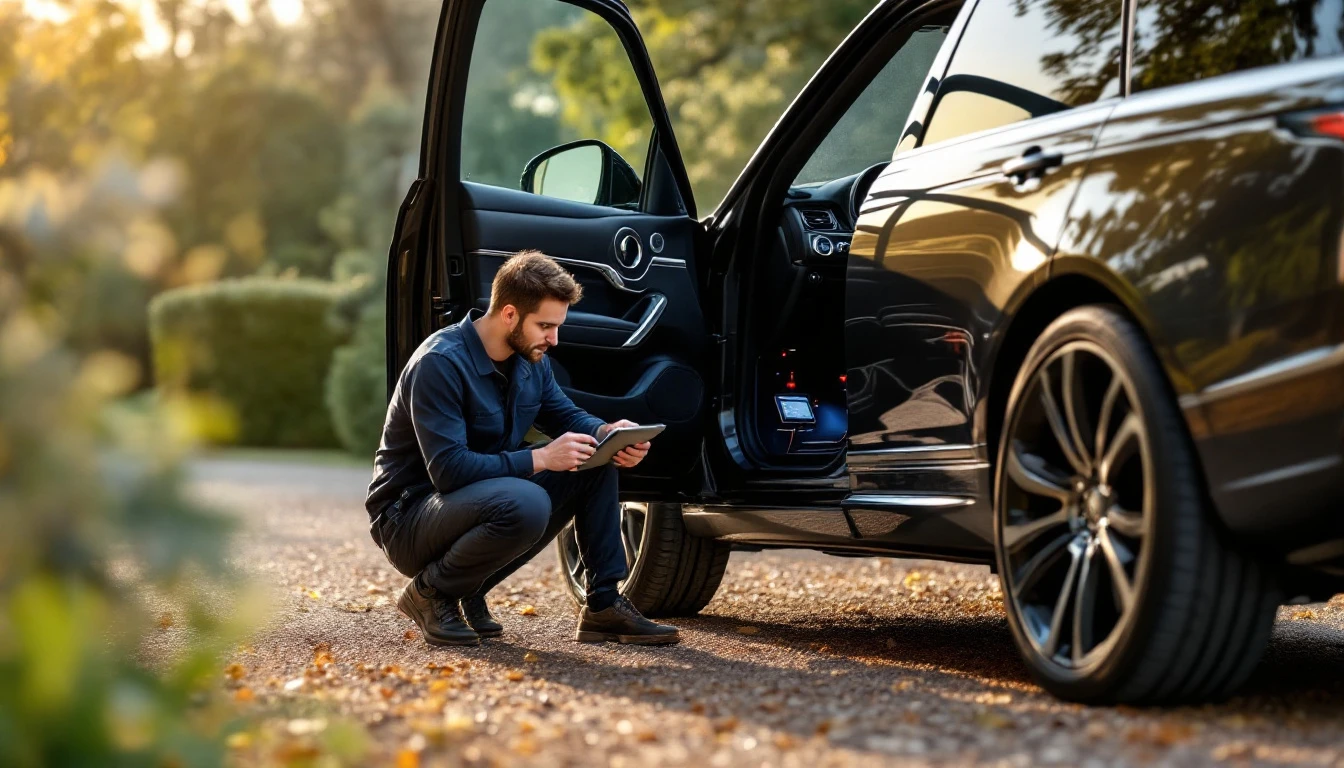
Land Rover and Range Rover owners around Fort Worth tend to arrive at the same handful of complaints, and almost all of them route through the same two module names. As of August 2026, the most common calls are: the vehicle insists the key is not detected while the fob sits in the cupholder; the vehicle unlocks but will not crank; the keyless entry works intermittently and unpredictably; or the battery is flat every second or third morning for no reason anyone can identify.
Those four symptoms share a root cause more often than they share a coincidence. This guide covers what the RFA and KVM actually do, how to tell a fob problem from a module problem, what a replacement module genuinely requires, why some of this work cannot be completed without manufacturer online access, and what all-keys-lost realistically involves on these platforms.
RFA and KVM: What They Are
Depending on model, generation, and market, the module governing keyless operation on Jaguar Land Rover vehicles is referred to as the RFA — Remote Function Actuator — or the KVM — Keyless Vehicle Module. Different names, closely related job.
The module is responsible for:
- Receiving and validating the radio signal from the key fob
- Driving the low-frequency antennas distributed around the vehicle that determine where the key is — outside the driver's door, outside the tailgate, inside the cabin
- Authorizing lock, unlock, and tailgate operations from a key it recognizes
- Authorizing the start request when a valid key is detected inside the vehicle
- Coordinating with the immobilizer and body control systems so the rest of the vehicle agrees the request is legitimate
That antenna network is the underappreciated part. Passive entry and passive start are not simply "is a valid key nearby." The system has to know whether the key is inside or outside the cabin, which is why a single failed antenna produces symptoms that seem irrational — the vehicle unlocks from the door handle but refuses to start, or starts fine but will not lock with the key in your pocket.
Vehicles that commonly present these faults in our service area include Range Rover, Range Rover Sport, Range Rover Velar, Range Rover Evoque, and Discovery, across a wide span of model years.
Sorting the Symptoms
The complaints look distinct to an owner and cluster tightly to a technician.
"Key not detected." The message is generic and it covers a great deal of ground: a flat fob battery, a physically failed fob, a failed antenna, damaged antenna wiring, external radio interference, or a failing keyless module. Note that the fob battery is genuinely the most common cause and the cheapest to eliminate — a competent diagnosis starts there rather than at the module.
No crank with the fob present. The vehicle acknowledges you, lights come on, and the start request produces nothing. If the vehicle can see the key well enough to unlock but not well enough to authorize a start, suspicion moves toward the interior antennas and the module's ability to place the key inside the cabin.
Intermittent keyless entry. Works in the driveway, fails at the grocery store. Fails when cold, works when warm. This pattern points at marginal hardware — a failing antenna, a corroded connector, a module with a developing internal fault — far more than at software.
Battery drain from a module that will not sleep. This is the one owners rarely connect to the key system, and it is a classic on these vehicles. If the keyless module keeps polling for a key it cannot resolve, or a network fault keeps the vehicle awake after lock-up, current continues to flow long after you have walked away. Owners replace batteries repeatedly and the problem returns, because the battery was never the fault.
Everything works but the vehicle feels unpredictable. Sporadic warnings, occasional failures to recognize a key that has always worked. Worth investigating before it becomes a no-start in a parking garage.
What Actually Gets Diagnosed
A responsible visit on one of these vehicles does not begin with a module. It begins with elimination, in a specific order:
- Fob condition and battery. Measure it, do not assume it. Test with a second key if one exists.
- Full network scan. Faults elsewhere on the vehicle network change the interpretation entirely. A charging system problem or a low battery produces module behavior that mimics failure.
- Antenna and circuit verification. Confirm the low-frequency antennas are being driven and are responding. This is where a large share of "module" faults actually resolve.
- Parasitic draw measurement where a battery complaint exists, to identify which module is refusing to sleep.
- Module assessment last, once the cheaper and more common causes have been genuinely ruled out rather than skipped.
That sequence matters financially. Replacing a keyless module on a Range Rover because of a symptom that a failed antenna also produces is an expensive way to not fix a vehicle.
Programming a Replacement RFA or KVM
When the module genuinely is the fault, installation is not the job. Programming is.
A replacement module requires:
VIN programming. The module must be written with your vehicle's identification number. Other modules on the network verify it, and the vehicle will not accept a module claiming a different identity.
Key pairing. Your existing keys have to be enrolled to the new module. Until they are, the vehicle recognizes no key at all — which means a botched module swap converts a keyless entry annoyance into a vehicle that will not start.
Correct configuration for the vehicle's equipment. These vehicles vary considerably by trim and market in what the keyless system controls — powered tailgate behavior, approach lighting, walk-away locking. Configuration determines whether those work.
Verification across the whole feature set. Lock, unlock, tailgate, start, walk-away, and a clean re-scan. Confirming the engine starts is not the same as confirming the system is correct.
This is the same fundamental discipline as BCM programming on any other platform — a body-domain module carrying an identity, a configuration, and a set of paired devices — with the added constraint that JLR security operations are more tightly controlled than most.
The Online Access Limit, Stated Plainly
On many later-model Jaguar Land Rover vehicles, security-relevant operations — key enrollment prominently among them — are validated through the manufacturer's online system. An authorized session is required. Earlier platforms were more accommodating to offline methods; later ones are not.
We would rather say this before dispatch than discover it in your driveway:
- Some Land Rover key work cannot be completed offline. That is a design decision by the manufacturer, not a tooling gap that a better device would solve.
- A provider who promises to bypass a manufacturer's security system on a late-model vehicle is describing something that either will not work or should not be attempted.
- The legitimate route for a qualified independent to obtain the same access a franchise dealer uses is the Secure Data Release framework administered by NASTF, which exists precisely so that security-controlled work can be done outside a dealership by accountable, identity-verified professionals.
The practical version for you: ask any provider, before they drive out, whether your specific year and model requires an authorized online session and whether they can run one. The answer determines whether the visit ends with a working vehicle.
All Keys Lost on These Platforms
Adding a spare while a working key exists is meaningfully easier than starting from nothing. All keys lost involves:
| Element | Added spare | All keys lost |
|---|---|---|
| Proof of ownership | Required | Required, without exception |
| Authorized online session | Often required | Required on most later models |
| Module work | Usually none | Frequently required |
| Bench level work | Rare | Possible on some platforms |
| Time at the vehicle | Shorter | Considerably longer |
| Mechanical blade cutting | Sometimes | Yes, for the emergency override |
Proof of ownership is not negotiable on either row. Registration or title matched to photo identification, every time. This is the basic ethical floor of automotive security work and it is the reason the trade has credentials at all — a point ALOA has organized its professional standards around.
Why These Vehicles Are Quoted, Not Charted
We publish price ranges for most of what we do. For Land Rover keyless and module work we quote after diagnosis, and the reasoning is specific rather than evasive.
The variables that genuinely move the number:
- Model year and platform generation. The security requirements changed substantially across the range.
- Whether the fault is a fob, an antenna, or the module. Three very different jobs behind one symptom.
- Port-based work versus bench-level work. Some situations require the module removed.
- Added key versus all keys lost. Different scope entirely.
- Whether an authorized online session is required, and for how long.
A single published figure for "Range Rover key programming" would be wrong for most of the vehicles that call. We confirm the year, model, and situation, then give an all-in number before anything begins.
For related work on the sister marque and on these specific vehicles, see our guides to Jaguar key not detected and no-start faults and Range Rover key fob specialty work. Owners comparing keyless architectures across brands may also find our Subaru immobilizer and push-button smart key guide useful for how differently manufacturers approach the same problem.
Frequently Asked Questions
What does the RFA or KVM module do on a Land Rover?
The RFA, or Remote Function Actuator, and the KVM, or Keyless Vehicle Module, manage the passive entry and passive start system. They listen for the key fob, run the low frequency antennas that locate the key inside or outside the vehicle, authorize the start request, and coordinate with the immobilizer and body systems. When passive entry or passive start misbehaves, this module is one of the first places to look.
Why does my Range Rover say key not detected when the fob is right there?
Common causes include a depleted fob battery, a failed or water damaged fob, an antenna or wiring fault in the keyless system, interference from another transmitter, and a failing RFA or KVM module. Because several very different faults produce one identical message, the correct approach is a systematic scan and antenna check rather than replacing the fob and hoping.
Can a replacement RFA or KVM module be installed without programming?
No. A replacement module has to be programmed to the vehicle identification number and paired with the existing keys before the keyless system will function. An unprogrammed module generally leaves the vehicle unable to recognize any key, which turns one fault into a complete no start. Plan for the programming as part of the job rather than as an optional extra.
Why is my Land Rover battery going flat overnight?
A frequent cause on these vehicles is a module that will not go to sleep. If the keyless module keeps polling for a key it cannot resolve, or a network fault keeps the vehicle awake, current draw continues long after the vehicle is parked. Diagnosis involves measuring parasitic draw and identifying which module is staying awake, since replacing the battery alone treats the symptom.
Does Land Rover key programming require online security access?
On many later model Jaguar Land Rover vehicles, yes. Security relevant operations including key enrollment are validated through the manufacturer's online system, so an authorized session is required. There are platforms where this cannot be worked around offline, and any provider should tell you that before dispatch rather than after arriving at your vehicle.
What is involved in a Land Rover all keys lost situation?
All keys lost on these platforms requires proof of ownership, an authorized security session on most later models, work with the keyless and immobilizer modules to enroll new keys, and in some cases removal of a module for bench level work. It takes considerably longer than adding a spare and it is priced after the specific platform and year are confirmed.
How much does Land Rover RFA or KVM work cost?
These platforms are quoted after diagnosis rather than from a price chart. The variables that move the number are the model year, whether the module can be handled through the diagnostic port or requires bench work, whether an authorized online session is needed, and whether the situation is an added key or all keys lost. We confirm the vehicle first, then give an all in figure before any work begins.
Land Rover Keyless and Module Work in Fort Worth
Fort Worth Locksmith & Computer Programming diagnoses and programs keyless system modules and keys for Range Rover, Range Rover Sport, Velar, Evoque, and Discovery as a mobile service across the metroplex. We eliminate fob and antenna faults before condemning a module, we require proof of ownership on every key job, and we tell you before dispatch when your platform requires manufacturer online authorization.
Call or text (817) 668-3801, or email contact@fwlocksmith.com with your year, model, and exactly what the vehicle is doing. We are mobile and available 24/7. See our smart key programming and module programming pages, or how we serve Southlake and Colleyville.
Texas locksmiths are licensed and regulated by the Texas Department of Public Safety Private Security Bureau.