BCM Programming vs Replacement in Fort Worth: Symptoms, Cost & Coding
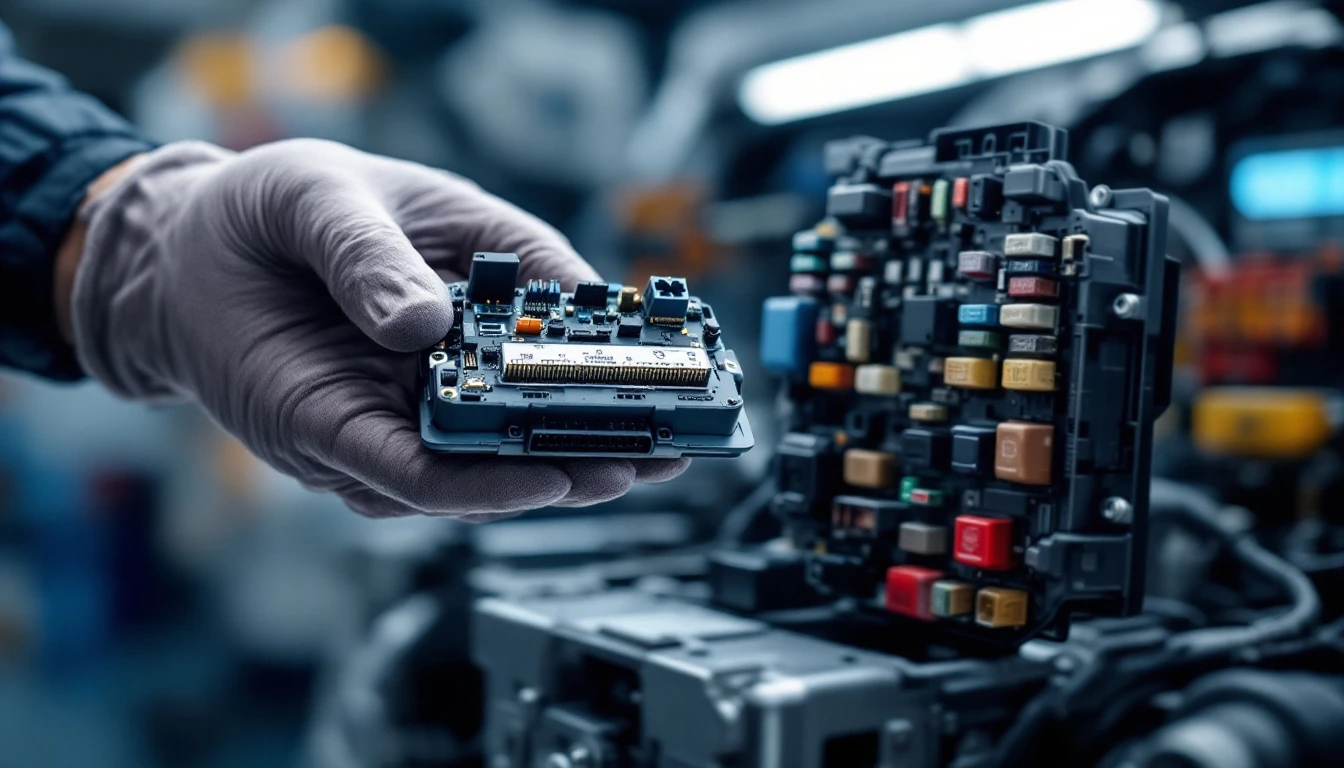
If your Fort Worth vehicle has developed a spray of electrical gremlins — interior lights that will not shut off, doors locking themselves, a key fob that "died" after a new battery, an alarm going off at 2 a.m. — someone has probably told you the Body Control Module is bad. The next sentence usually decides how much you pay: is this a reprogramming job, or a replacement? Those two paths differ by hundreds of dollars, and the wrong call means buying a module you never needed.
This guide draws that line clearly. It covers the symptoms that actually point to the BCM, the single diagnostic step that separates reprogramming from replacement, why the module stores your VIN and keys, and what each path costs in the Fort Worth market as of July 2026. For the broader background on what "BCM programming" means as a category, see our companion pieces on what BCM programming is and when it is needed and BCM programming near me. This article is about the decision: reprogram or replace.
What the BCM Controls — and Why It Fakes You Out
The Body Control Module is the computer that runs your vehicle's electrical "comfort and convenience" systems: power windows and locks, keyless entry, interior and exterior lighting, wipers, the horn, the alarm and immobilizer, power mirrors, and on many vehicles the instrument-cluster communication. It sits on the in-vehicle data network and constantly exchanges messages with dozens of other modules using diagnostic frameworks built on SAE International's J1979 standard.
Because it touches so many systems at once, a single BCM fault produces a cluster of unrelated-looking symptoms — which is exactly why it gets misdiagnosed in both directions. A healthy BCM behaving oddly because of a weak battery gets replaced needlessly; a genuinely failing BCM gets ignored while a mechanic chases each symptom separately. The whole point of a proper diagnosis is to stop guessing.
The Symptoms That Actually Point to the BCM
BCM faults almost never show up as one clean problem. The pattern to watch for is several electrical oddities appearing around the same time, each of which individually looks like something else:
- Lighting that misbehaves. Interior lights that will not turn off, headlights or turn signals that flicker, dash illumination that dims and brightens on its own. This is the single most common BCM complaint, and it is routinely blamed on the alternator or battery first.
- Locks and windows acting on their own. Doors that lock or unlock without input, power windows that respond slowly or lose their one-touch feature, even though the individual motors and switches test fine.
- A key fob that "died." The fob stops locking or unlocking the car, or the immobilizer stops recognizing it — when the fob itself is fine and the BCM's receiver or pairing data is the real culprit.
- Phantom alarms and parasitic battery drain. The alarm triggering at random hours, or a BCM that fails to put systems to sleep and quietly kills the battery overnight. Repeated no-obvious-cause jump-starts belong on the BCM suspect list.
- A dashboard lit up like a Christmas tree. When the BCM cannot communicate properly across the network, it can trigger ABS, traction, airbag, and tire-pressure warnings simultaneously — even though those individual systems are healthy.
None of these alone proves the module is bad. That is the entire reason diagnosis comes before any purchase decision.
The One Step That Decides Reprogram vs Replace
Here is the diagnostic split that determines which path — and which price — applies to your vehicle. A capable scan tool is connected to the OBD-II port and asked three questions:
- Does the BCM still communicate on the data bus? If the tool can see the module, read its part number, and pull its software version, the hardware is alive. A truly dead module goes silent — no communication at all.
- Does it respond to commands? A live module will actuate outputs on request (cycle a lock, flash a light) and report back. A module that communicates but refuses every command may have an internal fault; one that responds cleanly is almost always a software or configuration problem.
- What do the stored codes and configuration say? Corrupted software, a lost configuration after a battery event, or a mismatch between the module's coding and the car's actual options all point to a software fix, not a part.
If the module communicates, reports its version, and responds — it is a reprogramming or coding job, full stop. A BCM earns a full replacement only when it is genuinely dead: no communication, a confirmed internal short, water intrusion or corrosion damage, or a recovery flash that fails to take. Everything else is software.
The biggest money mistake in this whole category is the parts-cannon repair — throwing a new module at the car before running those three checks. A weak battery, a parasitic drain, or a corroded ground can make a perfectly healthy BCM behave erratically. Replace the module without fixing that underlying voltage problem and the new module misbehaves too. Our full module programming service always starts with this diagnostic split so you only pay for the path your vehicle actually needs.
Reprogram vs Replace: The Decision at a Glance
| Factor | Reprogram / Recode | Full Replacement |
|---|---|---|
| Module communicates on bus | Yes — reports version, responds | No communication, or dead to commands |
| Root cause | Corrupted software, lost config, coding mismatch | Physical failure, short, water/corrosion, bricked flash |
| Part required | None | New or remanufactured BCM |
| VIN write & key re-pair | Sometimes (after reset) | Always required |
| Typical trigger | Jump-start, alternator fault, dead battery, aftermarket accessory | Flood, electrical surge, internal component failure |
| Fort Worth mobile cost | $150–$350 (software only) | $200–$600 (part + programming) |
| Time on site | 20–45 minutes typical | 45–90 minutes typical |
Those price ranges are the same ones established across our module-programming coverage — reproduced here, not invented for this page. The takeaway: the two paths are separated by one honest scan, and the cost difference between them is exactly why that scan is worth insisting on.
Why a Replacement BCM Needs Programming Before It Works
When a BCM genuinely needs replacing, the part is only half the job — the programming is the half that makes it work. A complete replacement runs through a specific sequence, and a shortcut on any step is why some "new" BCMs still misbehave:
Flash the correct software. The replacement arrives blank or generic and must be loaded with the exact software for your year, make, and model from the manufacturer's programming database.
Configure your specific options. The module has to be told which features your car actually has — fog lights, power liftgate, particular lighting and lock behavior, region settings. A BCM flashed but not configured will enable the wrong features or disable ones you have.
Write the VIN and re-pair every key. Because the BCM stores immobilizer and fob data, all keys must be re-paired to the new module or they will not lock, unlock, or start the car. This is the step that requires legitimate security access.
Verify and clear. Every BCM-controlled system — lights, locks, windows, alarm, wipers — is tested, and all diagnostic codes are cleared and confirmed gone on a re-scan. Throughout, a stable power supply protects the flash, because a voltage drop mid-write can corrupt a brand-new module just as easily as an old one.
The VIN, Coding, and Security Access
Two words in that sequence — VIN and coding — are where BCM work stops being a generic "reflash" and becomes security-relevant.
VIN. The module stores your Vehicle Identification Number so it knows which car it belongs to and refuses to authenticate keys from another vehicle. On a replacement, that VIN has to be written in; on a used donor module, the previous vehicle's VIN has to be cleared and yours written.
Coding. Coding tells the module the option content of your specific trim. Two identical-looking trucks can carry different BCM configurations, and loading the wrong one produces new gremlins — a liftgate that will not open, lights that behave incorrectly, a chime that never sounds.
Because the BCM holds immobilizer and fob-pairing data, replacing or reflashing it requires legitimate security access. Per the NASTF Vehicle Security Professional registry, an identity-verified professional can obtain the same secured data a dealer technician uses to re-pair keys after BCM work — the credential that lets an independent provider finish the job without sending you to the dealer for the key step. If the fix turns out to be simple key or fob programming rather than a module at all, that same credential covers it.
What Drives the Cost Either Way
Whether you land on reprogramming or replacement, a handful of factors move the final number:
- Make and platform. GM (Chevrolet, GMC, Buick, Cadillac) leads the Fort Worth BCM call volume — Silverado, Equinox, Malibu, Tahoe, and Suburban modules are prone to configuration loss after battery disconnects. Ford and Lincoln (where the BCM is sometimes the Smart Junction Box) and Stellantis vehicles (Jeep, Ram, Charger, 300) round out the frequent list.
- Part cost, if any. A reflash has no part. A replacement adds the module — a wide range depending on make and whether a remanufactured unit is available.
- Multi-module overlap. BCM work often overlaps with ECM and PCM programming, so one provider can frequently handle the whole set in a single visit — which is more efficient than separate appointments.
- Diagnosis depth. Ruling out battery, ground, and charging problems is part of a proper job. Skipping it is how the wrong path gets chosen in the first place.
For a full side-by-side of every module and key service price in the metro, see our car computer and module programming cost guide for Fort Worth. The U.S. Bureau of Labor Statistics tracks the locksmith and electronic-security trade under SOC code 49-9094; the concentration of mobile capacity in large metros like DFW is why competitive, same-day BCM service is realistic here in a way it is not in rural markets.
A Real-World Fort Worth Example
The vehicle: a Chevrolet Malibu with a randomly triggering alarm, doors that locked on their own, and a key fob that had stopped unlocking the car.
The quote it arrived with: a shop had recommended a new BCM plus programming, telling the owner the module was dead. The owner had already replaced the fob battery twice and bought a second fob online that also "did not work."
The diagnosis: a scan with a current platform found no hardware failure — the module communicated, reported its version, and responded to commands. The configuration had been corrupted, almost certainly during a recent jump-start, and the fobs had simply lost their pairing.
The fix: a reflash of factory software plus re-pairing both fobs. No new module. Alarm behavior normal, locks behaving, both fobs working — for a fraction of the replacement quote. That is the entire lesson of this article: the scan that separates corrupted software from a dead module is the most valuable twenty minutes of the whole job.
Licensing and Doing This Right in Texas
Automotive module and key work in Texas is regulated. Locksmith and access-control companies operate under the Texas Department of Public Safety (DPS) Private Security Bureau, and reputable providers verify vehicle ownership before performing any security-relevant work. Before a technician writes a VIN or re-pairs keys, expect to show a government-issued photo ID and proof of ownership — registration, title, or insurance in your name. That step protects you, your vehicle, and the provider's standing. The Federal Trade Commission publishes guidance on spotting locksmith scams, and an unwillingness to diagnose before selling a part is one of the clearest red flags.
Frequently Asked Questions
How do I know if my BCM needs programming or full replacement?
A scan tells you. If the module still communicates on the data bus, reports its software version, and responds to commands, it is almost always a reprogramming or coding job — the hardware is alive and only the software or configuration is wrong. A BCM needs full replacement only when it is physically dead: no communication at all, confirmed internal short, water or corrosion damage, or a failed recovery flash. Insist on that diagnostic split before anyone sells you a part.
What are the most common symptoms of a failing BCM?
Clusters of unrelated electrical faults appearing at once: interior lights that will not turn off, doors locking or unlocking on their own, a key fob that stopped working after a fresh battery, phantom alarms, parasitic battery drain, and multiple dashboard warning lights (ABS, airbag, traction) triggering together. One symptom rarely proves a bad BCM — the telltale sign is several oddities arriving around the same time.
Does a new BCM need to be programmed before it works?
Yes. A replacement BCM arrives blank or generically configured. It must be flashed with the exact software for your year, make and model, coded for your vehicle's options, have your VIN written to it, and have every key fob re-paired. A module that is installed but not programmed will enable the wrong features or leave the car unable to start.
How much does BCM reprogramming cost versus replacement in Fort Worth?
Coding or a reset (software only, no part) commonly runs $150–$350. Replacement plus programming runs $200–$600 at a mobile locksmith depending on the make and module cost, versus $500–$1,200 or more at a dealership. The gap is widest when the real fix was a reflash but the job was quoted as a replacement.
Why does the BCM store my VIN and key data?
The BCM is a security-relevant module: it holds immobilizer authentication and key-fob pairing data so the vehicle only starts for a recognized key. That is why replacing or reflashing it requires legitimate security access — an identity-verified professional obtains the same secured data a dealer technician uses, then re-writes the VIN and re-pairs your keys so the car starts again.
Can BCM programming or replacement be done at my home in Fort Worth?
Yes. Coding, reset, and replacement programming are all mobile-friendly — the technician connects a scan tool and a stable power supply in your driveway or parking lot. Same-day service is realistic for most makes across the Fort Worth and DFW area, with no tow to a dealer.
Will fixing the BCM without addressing my battery just cause it to fail again?
Often, yes. Voltage spikes and dropouts from jump-starts, a failing alternator, or a deeply discharged battery are a leading cause of corrupted BCM software. Reflashing restores normal operation, but if the underlying charging or battery problem is left unfixed, the new configuration can corrupt again. A proper repair fixes the electrical root cause alongside the module work.
Get an Honest BCM Diagnosis in Fort Worth
If your car has the electrical gremlins described above, do not start replacing parts blindly. Fort Worth Locksmith & Computer Programming diagnoses first — we run the communication-and-response scan that separates a corrupted reflash from a genuinely dead module, then quote only the path your vehicle needs. Mobile ECU, BCM, and module programming is available throughout Fort Worth, Arlington, Dallas, and the entire DFW metroplex.
Call or text (817) 668-3801, or reach us at contact@fwlocksmith.com or through our contact page. Describe your vehicle's symptoms and we will tell you whether it is likely a coding, a reflash, or a replacement, name the tool we will use, and give you an upfront, all-in quote before we dispatch. Mobile service is available 24/7.