ECM Programming Near Me — Mobile Engine Module Flash in DFW (2026)
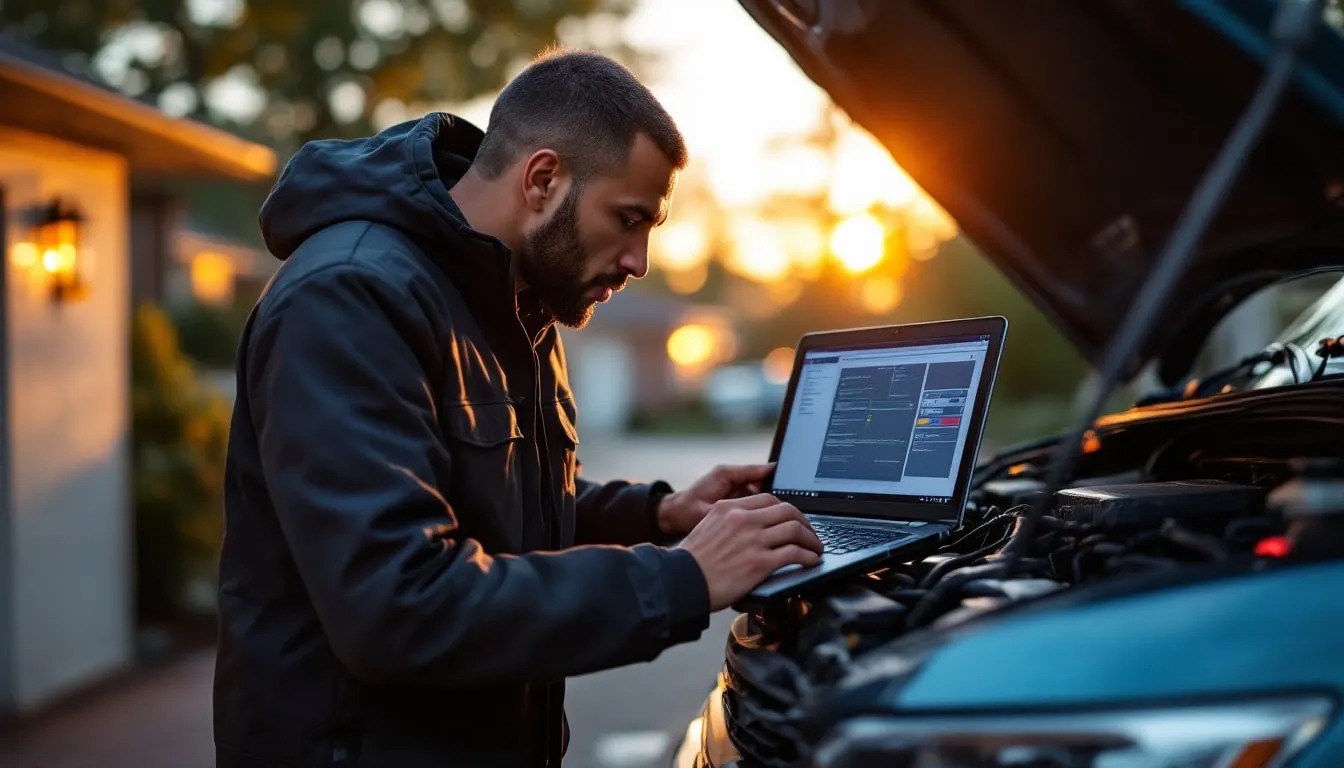
If you are searching “ECM programming near me” in the Fort Worth area, you almost certainly just learned that a replacement engine control module does not work out of the box. A new or used ECM has to be flashed with your vehicle’s calibration and matched to its immobilizer before the engine will start. The good news: you do not have to tow your car to a dealership for it. A mobile automotive locksmith with dealer-level programming tools can do the same flash in your driveway, usually for 40–70% less than dealer pricing.
This guide is written for the “near me” searcher in Tarrant County and the wider DFW metroplex. It covers what ECM programming actually is, why a replacement module needs it, how to tell whether a provider can really do engine-module work (versus key-only flashing), what it costs locally, and the exact questions to ask before anyone touches your vehicle. For the deeper technical background you can also read our companion guide on whether a locksmith can program an ECM or PCM.
What ECM Programming Means (and Why It Is Required)
The Engine Control Module is the computer that manages fuel injection, ignition timing, idle speed, and emissions control. The U.S. Environmental Protection Agency notes that since the 1996 model year, every light-duty vehicle sold in the United States has used an onboard computer with standardized OBD-II diagnostics to monitor that emissions hardware. That standardization is exactly why aftermarket programming is even possible: the access port and the diagnostic protocols are defined by federal rule, not locked behind a proprietary connector.
When an ECM is replaced, the new module arrives as a blank slate or carries a generic calibration. It has no knowledge of your VIN, your engine and transmission combination, your emissions configuration, or your registered keys. Programming — sometimes called flashing or reflashing — writes the correct manufacturer software and thousands of calibration parameters into the module so the engine runs the way the factory intended. Without it, you typically get a no-start, a flashing security light, or an engine that runs but throws emissions and communication fault codes on the first drive. Our full reference on what ECU/ECM programming involves walks through every stage of that flash.
The right to perform this work outside a dealership is not a gray area. The technical infrastructure for independent reprogramming is established under SAE International standard SAE J2534, the “pass-through” reprogramming specification that lets a generic interface load OEM software onto a control module. A legitimate ECM programming provider uses J2534-compliant hardware paired with a current OEM software subscription, or a high-end aftermarket platform that bundles the equivalent.
When You Need ECM Programming Near You
Most Fort Worth drivers never think about the ECM until something forces the issue. The common triggers we see:
After ECM replacement. This is the number-one reason people search “ECM programming near me.” A failed module gets replaced with a new, remanufactured, or junkyard unit, and that unit must be flashed and married to the vehicle before it will run.
After water, flood, or electrical damage. North Texas storms produce flash flooding, and a soaked engine bay can corrupt or destroy an ECM. The National Highway Traffic Safety Administration warns in its flood-damaged vehicle guidance that water intrusion frequently damages a vehicle’s electronics and control modules — which is why a flood car often needs module replacement and reprogramming, not just a battery.
Used-car purchases. A used ECM transplanted from a donor vehicle, or a used car whose module still holds the prior owner’s key data, needs reprogramming so your keys register and the calibration matches your specific car.
Manufacturer software updates (TSBs). Automakers issue Technical Service Bulletins with updated calibration files that fix rough idle, harsh shifting, poor fuel economy, and emissions failures. Flashing the latest software often cures a problem that no parts swap can.
Signs the ECM — Not Something Else — Is the Problem
Before you spend money on a module or programming, it is worth knowing what an ECM problem actually looks like, because plenty of no-starts and rough-running complaints trace to sensors, wiring, or fuel rather than the computer itself. A genuine ECM issue tends to show one or more of these signatures:
A no-start with no obvious mechanical cause. Good battery, good starter, fuel present — but the engine will not fire, and the scan shows the ECM not communicating or not commanding injectors and spark.
A check-engine light with internal-control or implausible-signal codes. Codes pointing at the controller itself, or contradictory readings that no single failed sensor would produce, suggest the module rather than a peripheral.
Symptoms that began right after an electrical event. A jump-start gone wrong, a reversed-polarity boost, a flood, or a corroded harness can corrupt or kill an ECM — and the trouble dates from that moment.
Multiple modules dropping off the network at once. When the ECM stops talking, other modules report communication faults too — a network-wide pattern, not an isolated sensor. A proper diagnosis confirms the ECM is the root cause before anyone replaces or reflashes it; replacing a healthy module because a sensor was actually at fault is wasted money, which is why the diagnosis is the most important step of the whole job.
How to Tell a Real ECM Programmer From a Key-Only Shop
This is the part most “near me” guides skip, and it is the part that saves you money and a bricked module. Many mobile locksmiths can program keys but cannot perform genuine engine-module flashing. Both jobs use a scan tool, so the marketing looks identical online. The difference shows up the moment you ask the right question.
“ECM programming is genuine module-level work — it is not a key-fob job. Done correctly it requires either OEM-licensed scan software like GM SPS2, Ford FDRS, BMW ISTA, or Mercedes XENTRY, or a current Autel or Snap-on level scanner with the equivalent platform pack. A shop offering ECM programming without naming the tool they will use is almost always doing key-side flashing and calling it ECM work. Ask for the tool by name before dispatch.”
— Donny Seyfer, Executive Officer, National Automotive Service Task Force (NASTF)
NASTF exists precisely to give independent shops legitimate access to OEM service information and security data. Per the NASTF Vehicle Security Professional registry, a credentialed VSP is identity-verified and authorized to obtain the same key codes and security access a dealer technician uses. When you call a provider, ask three things: which tool they will use by name, whether they carry a current subscription for your make, and whether they use a stable bench or vehicle power supply during the flash. Vague answers are your signal to keep dialing.
Why the power-supply question matters: ECM programming requires uninterrupted voltage for the entire 15–45 minute write. If voltage sags mid-flash — which a tired battery or a jump pack will do the instant the ABS or body modules wake up — the module can be permanently corrupted and may need bench recovery or replacement. A serious programmer connects a dedicated power supply or maintainer, never a trickle charger.
ECM Programming Cost Near Fort Worth
Local pricing depends on the make, whether keys also need to be married, and how many modules are involved. Realistic 2026 DFW ranges:
Mobile locksmith / independent ECM programming: $150–$500. Most domestic and Japanese jobs land in the $200–$350 range, including travel, diagnostics, the flash, key synchronization, and verification. European platforms and multi-module jobs run higher.
Dealership ECM programming: $500–$1,500, before towing. Shop labor in the DFW market commonly runs $150–$200 per hour. The AAA Your Driving Costs research underscores why this matters: maintenance and repair is one of the largest controllable line items in vehicle ownership, so a 50–70% swing on a single module job is real money. If your car cannot drive, add $75–$200 for a tow to the dealer — a cost mobile service eliminates entirely.
Mobile against the dealer, as of September 2026:
| Line item | Mobile locksmith / independent | Dealership |
|---|---|---|
| ECM programming — most domestic and Japanese jobs | $200–$350 | $500–$1,500 |
| ECM programming — full range, including European and multi-module | $150–$500 | $500–$1,500 |
| Tow, if the vehicle cannot be driven | None — the technician comes to you | $75–$200 |
A Real-World Example
The vehicle: A 2015 Chevrolet Silverado 1500 in Fort Worth, no-start after a shop installed a remanufactured ECM but could not program it.
Before: The truck cranked but would not fire. The security light was flashing. A dealer quoted programming plus a tow because the truck could not be driven in, putting the out-the-door estimate north of $900. The owner had already paid for the module and the install labor at the original shop.
The mobile programming visit: A technician arrived with a GM-licensed SPS2 platform and a 70-amp power supply, connected at the driveway, confirmed battery and charging health first, downloaded the correct calibration for the truck’s VIN, flashed the ECM, then synchronized the immobilizer and the existing keys in a single visit. Total wall time on site was about an hour.
Result: The truck started on the first attempt, security codes cleared, no U-codes on the follow-up drive. The owner paid a fraction of the dealer estimate and never paid for a tow. The lesson is the one in this whole article: the install is the cheap part; the programming is where the right tool and a stable power supply earn their keep.
A more recent one, early September 2026: a Super Duty in north Fort Worth that would crank and not fire, already carrying a replacement engine module the owner had bought online. The stored codes pointed at fuel delivery, not the computer — the truck's fuel pump driver module had failed, which is a well-known Super Duty pattern and looks exactly like a dead PCM from the driver's seat. The programming was still needed to marry the replacement module, but the no-start had a different cause entirely. Diesel-specific pricing is broken out in our diesel truck module programming cost guide.
Makes We Program in the DFW Area
Our equipment supports ECM, PCM, and BCM programming for nearly every vehicle on the road: GM (Chevrolet, GMC, Buick, Cadillac), Ford and Lincoln, Stellantis (Chrysler, Dodge, Jeep, Ram), Toyota and Lexus, Honda and Acura, Nissan and Infiniti, Hyundai and Kia, plus BMW, Mercedes-Benz, Audi, and Volkswagen. Engine-module work is often paired with key programming, so having one provider handle both — the flash and the key marriage — in a single visit saves a second trip charge.
Frequently Asked Questions
Can a locksmith really do ECM programming, or only the dealer?
A qualified mobile locksmith with J2534-compliant hardware and a current OEM software subscription can flash an ECM for most makes. The capability is defined by the tool and subscription, not the trade title. The work is enabled by the SAE J2534 pass-through standard and NASTF security access, both of which exist specifically to support independent reprogramming.
How long does ECM programming take?
The flash itself typically runs 15–45 minutes. Add diagnostics, key synchronization, and verification, and most single-module mobile visits in the Fort Worth area take about an hour on site.
What does ECM programming cost near Fort Worth?
Expect $150–$500 from a mobile locksmith depending on make and complexity, versus $500–$1,500 at a dealership before any towing fee. Most domestic and Japanese jobs fall in the $200–$350 range.
Do I need to tow my car for ECM programming?
No. Mobile programming comes to your location, which is the whole point of searching “near me.” The technician connects a power supply on site and flashes the module wherever the vehicle is parked, so you avoid the $75–$200 tow a dealership often requires.
What is the one question that proves a provider can do real ECM work?
Ask which tool they will use, by name, for your make — for example GM SPS2, Ford FDRS, BMW ISTA, or a current Autel platform pack. A real engine-module programmer answers immediately. A key-only shop will be vague or change the subject.
Get ECM Programming Near You in Fort Worth
Do not let a dealer estimate of $900–$1,700 decide your week. Fort Worth Locksmith & Computer Programming provides mobile ECU and engine-module programming throughout Fort Worth, Arlington, Dallas, and the entire DFW metroplex. We bring dealer-level tools and a proper power supply to your driveway — no tow, no service-bay wait.
Call (817) 668-3801 with your year, make, model, and the issue you are seeing. We will tell you the exact tool we will use, give you an upfront, all-in quote before we dispatch, and schedule same-day service for most ECM, PCM, and BCM jobs in the Fort Worth area.