PCM Programming Near Me — Flash, Clone & Replace in Fort Worth (2026)
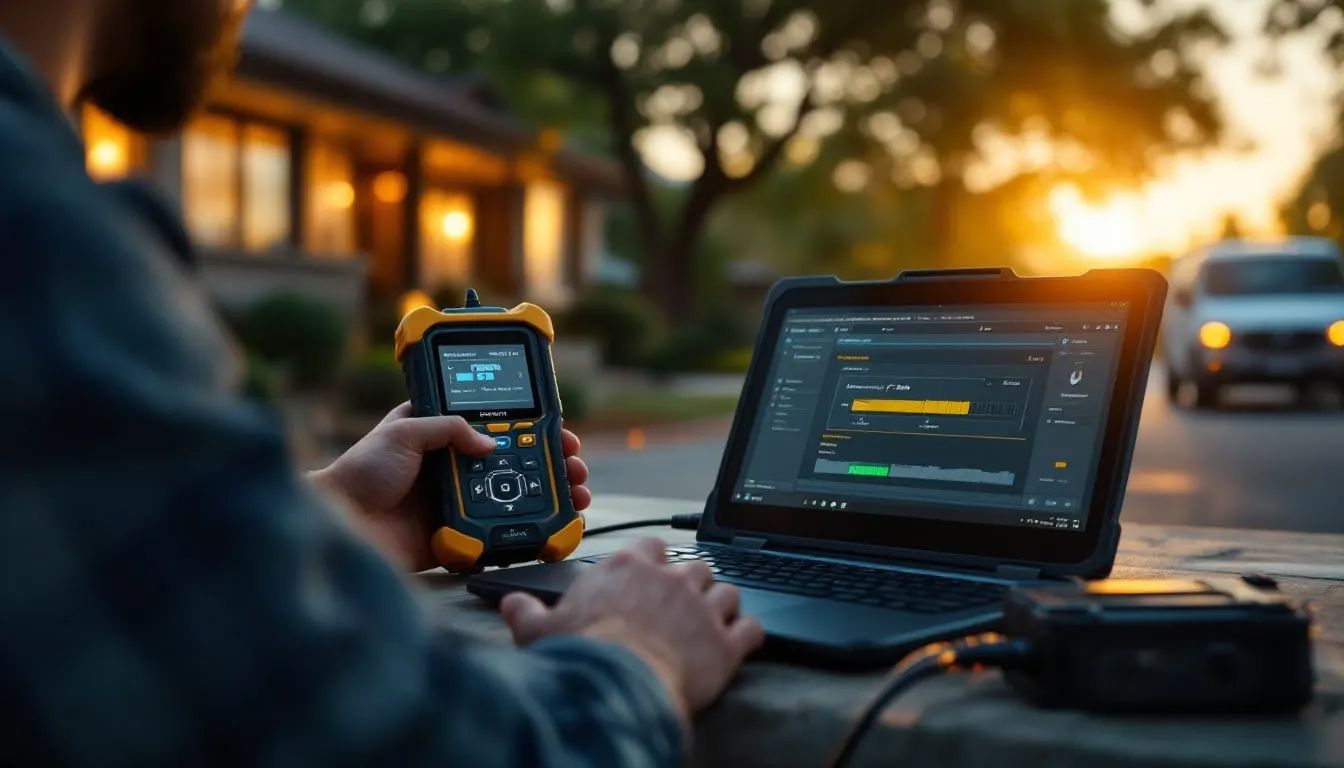
Most GM, Ford, and Stellantis vehicles do not have a separate engine computer and transmission computer — they have one combined Powertrain Control Module that runs both. So when a PCM fails, you are not just losing engine management; you are losing shift logic, adaptive transmission learning, and often the immobilizer link too. That is why “PCM programming near me” is one of the most common module-programming searches in the Fort Worth area, and why getting it done right matters more than getting it done cheap.
This guide explains what a PCM does, the three ways a replacement PCM gets set up (flash, clone, or replace-and-virginize), why transmission adaptives have to relearn afterward, what it costs locally, and how mobile programming saves you a tow. If you want the broader module overview first, see our guides on ECM programming near me and whether a locksmith can program an ECM or PCM.
ECM vs. PCM: What Is Actually Different
An Engine Control Module manages the engine alone. A Powertrain Control Module integrates engine and transmission control into a single unit, and on many platforms it also coordinates the immobilizer and a slice of body functions. Domestic manufacturers favor the PCM design; that is why a GM Silverado, a Ford F-150, or a Ram 1500 owner is far more likely to be quoted “PCM programming” than “ECM programming.”
The integration is the reason PCM work is more involved. A blown PCM can produce a no-start and erratic shifting at the same time, and a replacement has to be calibrated for both the engine family and the exact transmission in your truck. Get the wrong transmission calibration and the truck might start fine but shift like it is broken. Like every post-1996 vehicle, a PCM is accessed through the federally standardized OBD-II port the EPA requires for emissions monitoring — which is what makes independent reprogramming possible at all.
Symptoms That Point to a Failing PCM
Because the PCM runs both the engine and the transmission, a failing one rarely produces a single, tidy symptom. Instead you see a cluster of issues that can look like several unrelated problems at once. The most common patterns we diagnose in the Fort Worth area:
No-start or intermittent start. The engine cranks but will not fire, or starts inconsistently — sometimes paired with a flashing security light when the PCM’s immobilizer link is involved.
Erratic or harsh shifting. Because the PCM controls the transmission, a failing module can cause late shifts, slipping, gear hunting, or a transmission stuck in “limp” mode that holds a single gear to protect itself.
A check-engine light with multiple or contradictory codes. A PCM that is losing its mind throws diagnostic trouble codes that do not line up with any single failed sensor — communication faults, implausible-signal codes, and emissions codes appearing together. Per the EPA’s OBD program, those emissions monitors are exactly what a malfunctioning PCM stops reporting correctly — which is also why a bad PCM can fail a Texas state inspection even when the engine runs.
Poor fuel economy and stalling. When the PCM mismanages fuel and timing, you feel it at the pump and at idle. None of these symptoms alone proves the PCM is bad — sensors and wiring cause the same things — which is why a proper scan, not a guess, decides whether the module needs programming or replacement at all.
The Three Ways a Replacement PCM Gets Set Up
When a PCM is replaced, there is not just one procedure. There are three, and the right one depends on the part you bought:
1. Flash a new (blank) PCM. A brand-new service module from the dealer parts counter is empty. It must be flashed with the correct calibration for your VIN using OEM software — GM SPS2, Ford FDRS, or the Stellantis equivalent — then configured and immobilizer-married. This is the cleanest path and the one OEMs assume.
2. Clone the old PCM to a used one. If the original module’s memory is still readable, a programmer can clone its calibration and security data onto a matching used module. Cloning is popular because it can sidestep a fresh immobilizer marriage and is sometimes the only practical route on older platforms where dealer calibration files are scarce. It only works when the donor module is the correct hardware revision.
3. Replace and virginize a used PCM. A used PCM from a salvage vehicle still holds the donor car’s VIN and key data. It has to be “virginized” (reset to a blank, unmarried state) and then reflashed and re-married to your vehicle. Skipping the virginize step is a classic reason a used PCM throws security and theft-deterrent faults after install.
“The single most common reason a replaced powertrain module still throws codes on the first drive is a skipped secondary step — a used module that was never virginized, or a flash that completed but never got the companion module pass it needed. A programmed PCM is not done until the immobilizer is married and the adaptives are reset. Anyone quoting this work should be able to walk you through those steps before they start.”
— Donny Seyfer, Executive Officer, National Automotive Service Task Force (NASTF)
NASTF is the body that gives independent technicians legitimate access to OEM reprogramming files and security data. Per the NASTF Vehicle Security Professional registry, a registered VSP is identity-verified to pull the same security access a dealer uses — the credential that makes virginizing and immobilizer marriage possible outside a franchise shop.
Why Transmission Adaptives Have to Relearn
Modern automatic transmissions are not fixed. Over thousands of miles the PCM learns your specific transmission’s clutch wear, line pressure, and shift timing, and stores those “adaptive” values. When the PCM is replaced and reflashed, those learned values are wiped to factory defaults. Until the transmission relearns — which happens automatically over a series of drive cycles, or can be force-initiated with a scan tool — you may feel firm, late, or slightly clunky shifts. That is normal and expected, not a sign the programming failed.
A competent PCM programming visit includes initializing or resetting the adaptive learning and telling you what to expect on the first 50–100 miles. A shop that hands the keys back without mentioning the relearn is one that may not understand the transmission side of the module it just flashed.
Stable Power Is Non-Negotiable
A PCM flash writes for 15–45 minutes and must never lose voltage during the write. A sagging battery or a jump pack that dips when the body or ABS modules wake up can corrupt the module mid-flash, and a corrupted powertrain module usually means bench recovery or another replacement. Every legitimate PCM programmer connects a dedicated power supply or a high-capacity maintainer first and confirms charging-system health before starting. A dealer that quotes PCM programming on a vehicle with a marginal battery without replacing the battery first is setting the customer up for a much larger bill if the flash fails.
PCM Programming Cost Near Fort Worth
Mobile locksmith / independent PCM programming: $150–$500. Most domestic truck and SUV jobs land in the $250–$400 range including travel, diagnostics, the flash, immobilizer marriage, key sync, and adaptive reset. Cloning jobs and multi-module work can run higher.
Dealership PCM programming: $500–$1,500, before towing. At the $150–$200/hour shop labor common in the DFW market, the bill climbs fast. AAA’s Your Driving Costs research consistently shows maintenance and repair among the biggest controllable ownership expenses, so the 50–70% gap on a single module is meaningful money — before you add the $75–$200 tow a dealer needs if the vehicle cannot drive.
The three setup paths against what each one costs locally. As of August 2026:
| Replacement PCM path | What it involves | Mobile locksmith | Dealership |
|---|---|---|---|
| Flash a new (blank) service module | Flashed to your VIN with OEM software — GM SPS2, Ford FDRS, or the Stellantis equivalent — then configured and immobilizer-married | $150–$500; most domestic truck and SUV jobs $250–$400 | $500–$1,500 |
| Clone the old PCM onto a used one | Calibration and security data copied off the still-readable original onto a matching used module of the correct hardware revision | Cloning and multi-module work run above the $250–$400 typical band | $500–$1,500 |
| Replace and virginize a used PCM | Donor VIN and key data reset to a blank, unmarried state, then reflashed and re-married to your vehicle | $150–$500, on site | $500–$1,500 |
| Tow, if the vehicle cannot drive | Not needed — mobile programming comes to the vehicle | $0 | $75–$200 on top |
A Real-World Example
The vehicle: A 2013 Ford F-150 5.0L in Arlington, intermittent no-start and a stored transmission code, traced to a failing PCM.
Before: An independent shop had already sourced a remanufactured PCM but could not flash it — no FDRS subscription. The truck sat for a week. The local dealer quoted programming plus a tow, pushing the estimate past $1,000.
The mobile programming visit: A technician arrived with a current Ford FDRS platform and a 70-amp supply, verified battery health, flashed the new PCM to the truck’s VIN, ran the companion APIM pass to clear the no-start network faults, re-married the immobilizer and existing keys, and reset the transmission adaptives. The owner was told to expect slightly firm shifts for the first 60–80 miles while the transmission relearned.
Result: Clean start, no U-codes, shifts settled within two days of normal driving exactly as described. The owner paid well under half the dealer estimate and skipped the tow entirely. The relearn heads-up turned what could have felt like a problem into an expected, temporary behavior.
What to Ask Before You Book PCM Programming
The quality gap between PCM providers is wide, and it shows up in the answers to five questions. Ask them before you authorize any work:
1. “Which OEM platform will you use for my make?” The honest answer is specific — GM SPS2, Ford FDRS, the Stellantis equivalent, or a current high-end aftermarket platform with the matching pack. Vagueness here means the provider may only do key-side flashing, not true powertrain programming.
2. “Is my replacement module new, used, or a clone candidate?” A provider who understands PCM work will immediately frame the job as a flash, a clone, or a virginize-and-reflash, and tell you what each path costs.
3. “How will you maintain voltage during the flash?” The right answer mentions a dedicated power supply or high-capacity maintainer, not a trickle charger or a jump pack. This single detail separates programmers who have bricked modules from those who have not.
4. “Will you reset the transmission adaptives and tell me what to expect?” A yes — with a heads-up about firm shifts for the first 50–100 miles — signals someone who understands the transmission half of the module.
5. “Can I get the quote in writing before you dispatch?” The Federal Trade Commission has documented bait-and-switch pricing in mobile vehicle services — a low phone quote that balloons on arrival. A written, all-in quote before the truck rolls is your protection against it.
Frequently Asked Questions
What is the difference between PCM and ECM programming?
An ECM controls the engine only; a PCM combines engine and transmission control in one module and often coordinates the immobilizer too. PCM programming is therefore more involved — it must calibrate both the engine and the specific transmission, and it requires a transmission adaptive relearn afterward.
Can a used PCM be programmed to my vehicle?
Yes, but it must be virginized first — reset from the donor vehicle’s VIN and key data to a blank state — then reflashed and re-married to your car. Skipping the virginize step is the most common cause of security and theft-deterrent faults after a used-PCM install.
Why does my transmission shift hard after PCM programming?
Reflashing wipes the transmission’s learned adaptive values back to factory defaults. Firm or slightly late shifts for the first 50–100 miles are normal while the transmission relearns. The behavior smooths out on its own, or can be sped up with a scan-tool adaptive reset.
How much does PCM programming cost near Fort Worth?
A mobile locksmith typically charges $150–$500, with most domestic truck and SUV jobs in the $250–$400 range. A dealership charges $500–$1,500 before towing. Mobile service comes to you and eliminates the $75–$200 tow fee.
Do I need a dealer for PCM programming?
No. A mobile locksmith with the correct OEM platform — GM SPS2, Ford FDRS, or the Stellantis equivalent — and NASTF security access can flash, clone, or virginize a PCM for most domestic vehicles, on site, for far less than a dealer.
Get PCM Programming Near You in Fort Worth
Fort Worth Locksmith & Computer Programming performs mobile PCM, ECM, and module programming throughout Fort Worth, Arlington, Dallas, and the entire DFW metroplex — flash, clone, or virginize, with immobilizer marriage and adaptive reset handled in the same visit. We bring the OEM platform and a proper power supply to your driveway, so there is no tow and no service-bay wait.
Call (817) 668-3801 with your year, make, model, and whether your replacement module is new, used, or a clone candidate. We will confirm the right procedure, name the tool we will use, and give you an all-in quote before we dispatch. Same-day service is available for most powertrain-module jobs.