BMW CAS/FEM/FRM Programming & Coding in Fort Worth
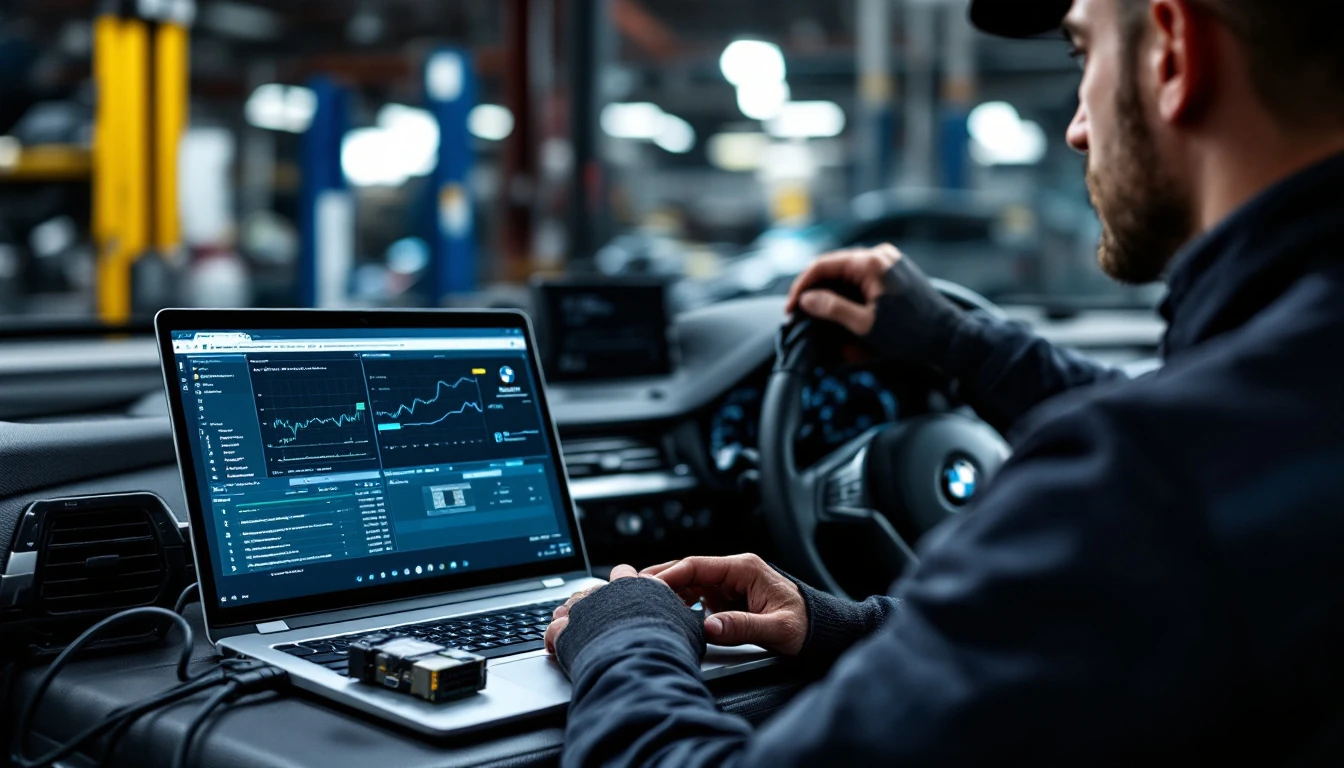
BMW builds some of the most tightly integrated vehicle-security architecture on the road, and that integration is exactly why a dead key, a failed module, or a salvage-title rebuild turns into a programming project rather than a five-minute fix. The three modules Fort Worth BMW owners run into most are the CAS (Car Access System), the FEM/BDC (Front Electronic Module / Body Domain Controller), and the FRM (Footwell Module). Each one lives somewhere in the chain between your key and the engine, and each one has its own programming and coding requirements.
As of July 2026, this guide explains what CAS, FEM/BDC, and FRM actually do, how E-series and F/G-series security differ, when programming or coding is required, how all-keys-lost recovery works, and what fair pricing looks like against a Fort Worth dealership quote. If you are looking for the service itself, our BMW key programming and module work covers booking — but the technical detail below is what tells you why the job costs what it costs, and how to avoid paying for a full module swap when a coding or repair step would have done. If you are shopping the job on price, our breakdown of BMW key replacement cost in Arlington covers the same work from the pricing side.
The BMW Security Chain: Key → CAS/FEM → DME
On a BMW, the key does not talk to the engine directly. The authorization path runs through a dedicated security computer that verifies the key's rolling code, then tells the engine control unit — the DME (Digital Motor Electronics) on gas cars, or DDE (Digital Diesel Electronics) on diesels — that it is allowed to start. If any link in that chain fails to authenticate, the DME withholds fuel and spark and the car cranks but will not start.
That security computer is the CAS on older cars and the FEM/BDC on newer ones. The FRM sits slightly to the side of the chain, handling lighting and windows, but it also participates in the vehicle's low-voltage handshake, which is why a failed FRM so often masquerades as a "key not recognized" or no-start problem. Understanding which module owns which job is the whole game in BMW diagnosis — and it is why professional module programming starts with identifying the failing node, not guessing.
CAS: The E-Series Immobilizer (≈2002–2013)
The Car Access System is the immobilizer and key-authorization module found on the E-series generation — E46, E60/E61, E70 X5, E71 X6, E82/E88, E90/E91/E92/E93 3 Series, and related chassis. CAS evolved through several revisions: CAS1, CAS2, CAS3, CAS3+, and CAS4/CAS4+, each with tighter cryptography than the last.
The revision matters enormously for programming:
- CAS1–CAS3 are relatively open. Key data can often be read and written through the OBD port or at the bench, and adding a spare or recovering all-keys-lost is a well-trodden procedure.
- CAS3+ introduced an encrypted ISN (Individual Serial Number) exchange with the DME, closing the easy OBD path on many cars. Work frequently moves to the bench, reading the CAS EEPROM directly to extract key data.
- CAS4/CAS4+ (late E-series and early F-series overlap) uses a more secure chip and typically requires bench-level reading with the correct adapters, then careful DME-ISN alignment.
When a CAS module fails outright — from water intrusion, a soldering fault, or a botched prior programming attempt — a replacement CAS has to be virginized or cloned, coded to the VIN, and re-synchronized with the DME and the existing keys. This is precise work; a mismatched ISN between CAS and DME leaves the car immobilized even with a "programmed" key in hand. For lost-key situations specifically, our write-up on all-keys-lost EEPROM recovery walks through the bench side of the process.
FEM/BDC: The F-Series and G-Series Successor (≈2011 onward)
Starting around 2011, BMW replaced CAS with the FEM (Front Electronic Module) and, on later and larger platforms, the BDC (Body Domain Controller). These modules do more than the old CAS — they fold key authorization, body electronics, and gateway/communication duties into one unit on F-series (F30 3 Series, F10 5 Series, F15 X5, F25 X3, and relatives) and G-series cars.
FEM/BDC programming is meaningfully harder than CAS work for two reasons:
- Virginizing and pre-coding. A replacement FEM or BDC usually arrives either virgin or paired to a donor car. It must be flashed to the correct I-level (integration/software level) that matches your vehicle, then coded to your VIN and full option list before it will behave correctly. Skipping the software-level match is a common cause of post-swap gremlins.
- Key-FEM cryptographic binding. On F/G-series cars the key and FEM are cryptographically linked. Adding a key or recovering all-keys-lost requires reading the FEM at the bench in many cases, calculating the key data, writing the key, and re-aligning the FEM with the DME/DDE. A bare module swap without this sequence leaves the car dead.
Because the FEM/BDC is also the communication gateway, coding errors here can ripple into comfort, lighting, and network behavior across the car. That is why FEM/BDC work is bench-and-ISTA territory, not a plug-and-play scan-tool job.
FRM: The Footwell Module That Fakes a Key Problem
The FRM (Footwell Module, usually FRM2/FRM3 on the cars Fort Worth sees most) controls exterior and interior lighting, power windows, wipers, and the rain sensor — and it participates in the vehicle's low-voltage key-recognition handshake. When it fails, the symptoms are dramatic and easily misread: flickering or stuck lights, dead windows, "key not recognized," or a full no-start.
The most common FRM failure mode is a corrupted serial EEPROM after a low-voltage event (a weak jump-start, a dying battery, or a coding attempt done with unstable power). The fix is frequently a bench repair and re-flash of the FRM's EEPROM rather than a costly replacement — the original module's coding and vehicle data are preserved, so the keys do not need to be reprogrammed from scratch. Our detailed BMW FRM footwell module failure guide covers the symptoms and the repair-versus-replace decision, and dedicated FRM repair is a standing service. If your BMW's lights and windows went haywire before the no-start, suspect the FRM first — replacing a CAS or FEM you did not need is an expensive mistake.
Programming vs. Coding: Two Different Jobs
BMW owners hear "programming" and "coding" used interchangeably, but they are distinct operations and it helps to know which one your car needs.
Programming (flashing) writes new firmware or a calibration file into a module — bringing a replacement FEM up to the right I-level, updating a DME calibration, or writing key data into a CAS. It is the heavier operation and demands rock-solid power; BMW reflashes will brick a module if voltage sags mid-flash.
Coding sets configuration inside existing firmware. After you install a used module, retrofit a feature, or replace a component, coding tells the car what equipment it now has and how it should behave — folding mirrors, comfort-access behavior, daytime-running-light logic, region settings, and hundreds of other parameters. BMW's factory platform, ISTA (with the older INPA/NCS tools still used for some legacy coding), performs both programming and coding, and most module or key operations need a coding pass afterward to restore correct behavior.
The practical takeaway: a "programmed" key that starts the car but leaves comfort access broken usually just needs the coding step finished — a far cheaper conversation than another module.
All-Keys-Lost on a BMW: What Actually Happens
Adding a spare key to a working BMW is straightforward. All-keys-lost — where no working key exists — is the harder case, and how it is handled depends entirely on your security generation:
- CAS1–CAS3 (E-series): Key data can often be read and a new key written, sometimes via OBD, frequently at the bench by reading the CAS EEPROM. The new key is then synchronized with the DME.
- CAS3+/CAS4 (late E-series): The encrypted DME-ISN exchange usually pushes the job to the bench. The CAS is read directly, the ISN is recovered from the DME, and the new key is written and aligned.
- FEM/BDC (F/G-series): The FEM or BDC is typically read at the bench, the key data is calculated, a new key is written, and the FEM is re-synchronized with the DME/DDE.
The same VIN-and-ISN linkage shows up elsewhere on the car — BMW EGS transmission module programming follows a comparable read-adapt-align sequence when the transmission controller is swapped, which is why a donor module rarely works as a straight bolt-in on any BMW system.
Every all-keys-lost job on a modern BMW is longer than a spare-key appointment, and every reputable specialist will require proof of ownership — registration or title matching the VIN and your ID — before touching the immobilizer. This is both a legal and an ethical standard for automotive security work. If you also need a physical blade cut for the door or glovebox, that is bundled into the car key replacement side of the visit.
Fort Worth 2026 Pricing: BMW CAS / FEM / FRM Work
Pricing on BMW security work varies with the module generation, whether you are adding a key or recovering all-keys-lost, and whether a module is being coded, repaired, or replaced. The ranges below reflect typical mobile-specialist work in the Fort Worth and DFW market as of July 2026. Every job gets an exact quote after a VIN check and diagnosis — BMW generation differences are large enough that a blind flat rate would be misleading.
| Service | Mobile specialist | Dealership | Notes |
|---|---|---|---|
| Add spare key (CAS or FEM, key present) | $200–$400 | $375–$700 | Plus key/fob cost |
| All-keys-lost (E-series CAS1–CAS3) | $350–$600 | Often refused | Bench read on some revisions |
| All-keys-lost (CAS3+/CAS4 or FEM/BDC) | $450–$900 | Often refused | Bench EEPROM + DME/DDE alignment |
| FRM repair + re-flash | $200–$600 | $800–$1,500 | Preserves original coding |
| CAS replacement + code + DME sync | $400–$800 | $725–$1,400 | Plus module cost |
| FEM/BDC replacement, flash + code + sync | $500–$1,000 | $900–$1,800 | I-level match required |
| Retrofit / feature coding (ISTA) | $125–$350 | $175–$450 | Per-feature, no hardware |
Two notes worth understanding. First, dealerships frequently refuse all-keys-lost and used-module work altogether — many program only brand-new parts sold through their counter, so a salvage-yard FEM or a repairable FRM never gets a fair shake there. A mobile specialist with bench tools can recover data and re-VIN modules the dealer will not touch. Second, dealer security jobs bill multiple hours of bay labor plus the part plus a software-access fee; mobile pricing is flat-rate and skips the bay overhead — that is where the savings come from, not from cutting corners on tooling, which costs the same either way.
Why This Work Requires Specialized Tools and Credentials
Three things separate BMW module programming from generic OBD-II diagnostics. First, the tooling: a programming- and coding-capable setup (ISTA plus a professional aftermarket platform such as Autel IM608, AVDI, or comparable, with the right bench adapters for CAS/FEM EEPROM work) is a five-figure investment with recurring software subscriptions. A parts-store code reader cannot write a key or flash a module.
Second, power stability. BMW reflashes and coding sessions run 20–60 minutes with the module in a vulnerable state; a stable bench power supply is standard practice, because a voltage drop mid-flash can permanently brick a module.
Third, credentials and identity checks. Legitimate specialists verify ownership before immobilizer work and hold the appropriate licensing. In Texas, companies performing this work are regulated by the Texas Department of Public Safety Private Security Bureau. For OEM secure-data access, independent specialists register with the National Automotive Service Task Force (NASTF) Vehicle Security Professional program, and automotive-locksmith credentialing is tracked through the Associated Locksmiths of America (ALOA). Ask any provider to name their licensing and credentials before they touch your CAS or FEM.
Common Fort Worth BMW Scenarios
"Lights went crazy, now it won't start" — usually FRM. The classic FRM3 EEPROM corruption after a weak battery or bad jump. Diagnose and repair the FRM before assuming a CAS or FEM failure; the repair preserves coding and keys.
"Bought a used FEM to save money, car is dead" — I-level and binding. A donor FEM/BDC that was not flashed to your software level, coded to your VIN, and key-bound will immobilize the car. The fix is the full flash-code-sync sequence, not another module — and on a salvage-title all-keys-lost E90, a bench CAS read with DME-ISN recovery and a new key written and aligned is a job the dealer typically will not do at all.
What to Do Right Now
If your BMW has lighting and window faults ahead of a no-start, get the FRM checked before authorizing any CAS or FEM replacement — the repairable path is a fraction of the cost. If you are sourcing a used FEM, BDC, or CAS, confirm with the programmer that your generation and software level can be matched before you buy the module. For all-keys-lost, gather proof of ownership and expect a longer appointment. And if a dealer quoted four figures, get a second opinion from a mobile BMW module specialist — the diagnosis alone often reveals a coding or repair fix instead of a full swap.
Service Throughout Fort Worth and the DFW Metroplex
Mobile BMW CAS, FEM/BDC, FRM, and key programming is available throughout Fort Worth, Arlington, Keller, Southlake, Colleyville, and the broader DFW metroplex. Common Fort Worth zones include the Cultural District, TCU area, Alliance/North Tarrant Parkway corridor, Camp Bowie, and Sundance Square, with extended dispatch to outer-county addresses. See our Fort Worth service area or reach out through the contact page with your VIN and symptoms.
For BMW programming and coding throughout the Fort Worth area, contact Fort Worth Locksmith & Computer Programming at (817) 668-3801 or contact@fwlocksmith.com. We are mobile and available 24/7, carry programming- and coding-capable tooling with bench-level EEPROM capability, verify ownership before immobilizer work, and give you an upfront quote after a VIN check — before any work begins.
Frequently Asked Questions
What is the difference between BMW CAS, FEM, and FRM?
CAS (Car Access System) is the immobilizer and key-authorization computer on E-series BMWs from roughly 2002 to 2013. FEM (Front Electronic Module) and its sibling BDC (Body Domain Controller) replaced CAS on F-series and G-series cars from about 2011 onward, combining key authorization with body-electronics gateway duties. FRM (Footwell Module) is a separate lighting and window controller found on both eras that also participates in key recognition. Programming and coding steps differ for each.
Can you program a BMW key if all keys are lost in Fort Worth?
Yes. All-keys-lost on a BMW requires reading the immobilizer data from the CAS or FEM/BDC — often at the bench via EEPROM or ISTA-authorized procedures — writing a new key, and synchronizing it with the engine (DME/DDE). It is more involved than adding a spare, so plan for a longer appointment and provide proof of ownership. An exact quote follows a VIN check and confirmation of your CAS or FEM generation.
Does a replacement FEM or BDC module need programming?
Almost always. A used or new FEM/BDC has to be flashed with the correct software level, coded to your VIN and equipment, and aligned with the CAS-style key data and the DME. On F/G-series cars the FEM and key are cryptographically linked, so a bare swap without programming will leave the car immobilized. The exact sequence depends on whether the donor module is virgin or previously paired.
What is BMW coding versus programming?
Programming (flashing) writes new firmware or a calibration file to a module. Coding sets configuration options within existing firmware — enabling folding mirrors, adjusting lighting behavior, retrofitting features, or matching a replacement module to your car's option list. BMW's ISTA platform handles both; many jobs need coding after a module or key operation to restore correct behavior.
Why won't my BMW start after an FRM or CAS failure?
Both modules sit in the key-authorization chain. If the CAS or FEM cannot verify the key, or the FRM cannot pass its handshake, the car withholds the start signal from the DME even with a good, charged key. That is the security system working as designed. Diagnosis identifies which module is at fault before any programming is done.
How much does BMW CAS, FEM, or FRM programming cost in Fort Worth?
It depends on the generation, whether you are adding a key or recovering all-keys-lost, and whether a module is being replaced or repaired. Ranges are in the table above, and mobile specialist pricing typically runs well under dealer rates. A precise figure is provided after a VIN check and on-site diagnosis — we quote before any work begins.
Is BMW module programming done at my location or at a shop?
Much of it is mobile. Key programming, coding, and many CAS/FEM operations are performed on-site in Fort Worth with programming-capable tools and a stable power supply. Some bench-level EEPROM recoveries and repairs to a failed FRM or FEM are done on the module bench. We tell you up front which path your car needs.
Sources & references
- NASTF — Vehicle Security Professional registry (OEM secure-data access)
- Associated Locksmiths of America — Master Automotive Locksmith directory
- Texas Department of Public Safety — Private Security Bureau (locksmith/security licensing)
- NHTSA — vehicle recalls & manufacturer service bulletins
- FTC — locksmith scam guidance for consumers