Airbag / SRS Crash Module Reset Near Me After an Accident in Fort Worth
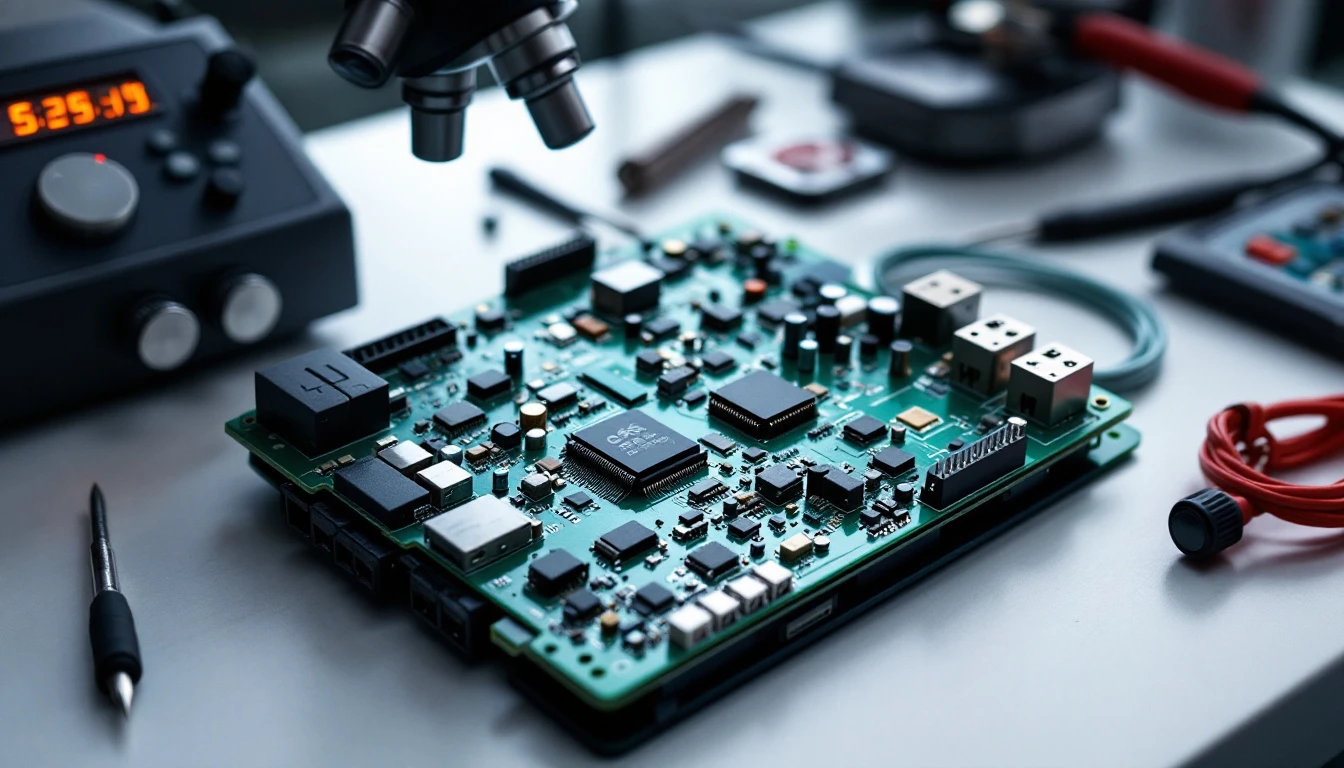
After a collision in Fort Worth, the airbag warning light on your dash stays on — and it will not go away on its own, no matter how many times you disconnect the battery. That light means your SRS (Supplemental Restraint System) control module has recorded a crash event and, in most cases, locked itself. If you have been searching "airbag module reset near me," you have already found the good news: a locked crash module can often be reset by a specialist for a fraction of a dealer replacement. This guide gives you the rest of the story — including the one safety line an honest specialist will never cross.
Read this before you pay anyone. As of July 2026, the single most important fact about this service is that a crash module reset does not replace your airbags. Resetting only clears the locked crash data inside the computer. The deployed airbags, spent seatbelt pretensioners, and any damaged sensors and wiring must be physically restored by a qualified shop first. A reset is the last step of a real restraint repair, never a shortcut to silence a warning light. We serve Fort Worth, Arlington, Dallas, and the wider metroplex, and our airbag and crash module reset service is built around verifying that repair before clearing anything.
What the SRS / Airbag Control Module Does
The SRS control module — also called the airbag control unit (ACU) or restraints control module — is the computer that monitors crash sensors around the vehicle and decides, in milliseconds, whether and how to fire the airbags and tighten the seatbelt pretensioners. The National Highway Traffic Safety Administration regulates these systems under Federal Motor Vehicle Safety Standard No. 208, which governs occupant crash protection. In plain terms, this module is the brain of your car's life-safety system.
Most modern SRS modules also contain an Event Data Recorder. NHTSA's Event Data Recorder regulation (49 CFR Part 563) defines the crash data these devices capture — speed change, restraint deployment, seatbelt status in the moments around an event. That recorded data is one reason crash-module work is sensitive, and why a reputable Fort Worth shop handles it transparently rather than quietly wiping evidence of a wreck.
Hard Codes vs. Soft Codes: Why the Light Will Not Clear
After a crash, an SRS module stores one of two kinds of fault, and the difference decides whether a simple clear or a full reset is needed.
Soft codes are recoverable faults — a connector that came loose, a sensor that briefly dropped communication, a condition that has since been fixed. Once the underlying issue is repaired, a soft code can usually be cleared with a scan tool and the airbag light goes out.
Hard codes (crash data) are different. When the module commands a deployment, many manufacturers write a permanent "crash" flag into the module's non-volatile memory and lock it. A locked module will not clear with an ordinary scan tool, will not reset by pulling the battery, and often refuses to arm the system at all — which is the module doing its job, refusing to pretend the car is safe when it is not. Clearing a hard-coded module requires either specialized reset equipment that rewrites the crash data in the memory chip, or replacement of the module. This is the same non-volatile-memory behavior that makes broader module programming a specialist discipline rather than a scan-and-clear job.
When a Crash Module Can — and Cannot — Be Reset
It CAN be reset when: the deployed airbags and pretensioners have been replaced with proper components, all damaged wiring and sensors have been repaired, the module itself is physically undamaged, and the only thing standing between you and a working SRS is the locked crash data. In that situation a specialist clears the stored data so the repaired system arms correctly — restoring the protection the rebuild already paid for.
It CANNOT (and must not) be reset when: the airbags or pretensioners are still deployed or missing, the goal is simply to make the warning light disappear without restoring the restraints, the module is cracked or water-damaged (a flooded car is a replacement, not a reset), or the vehicle is being prepped for sale in a way that would hide a prior deployment from a buyer. The Federal Trade Commission's Used Car Rule exists to protect buyers from exactly that concealment.
NHTSA is explicit here: under federal motor vehicle safety law (49 U.S.C. Chapter 301), it is illegal for a business to knowingly render an installed safety device inoperative. A crash-module reset that leaves the restraint system non-functional crosses that line. A real specialist refuses that job — and you should walk away from anyone in the Fort Worth area who offers to "just clear the light" on a car whose restraints have not been made whole.
The Reset Does Not Replace Deployed Airbags — Read This Twice
This is the point most "reset near me" searches miss, so it is worth stating without any hedging: resetting the SRS module is a software operation on the computer, not a repair of the physical restraint system. The reset clears the locked crash data. It does not, and cannot:
- Replace a deployed driver, passenger, side-curtain, or knee airbag.
- Replace spent seatbelt pretensioners, which fire once and are single-use.
- Fix damaged impact sensors, clockspring, or wiring harnesses.
- Restore any structural or mounting damage behind the restraint components.
A qualified body or mechanical shop must physically restore every one of those items before a reset is appropriate. The Insurance Institute for Highway Safety's airbag research documents how central these devices are to survival in moderate and severe crashes — a missing or improper airbag is not a cosmetic gap, it is a person unprotected in the next collision. NHTSA has also issued repeated warnings about counterfeit airbags entering the repair market, units that may not deploy or may deploy with shrapnel, so a responsible specialist confirms the replacement airbags came from a legitimate source before clearing anything. The reset brings a restored system back online. It is never a substitute for restoring it.
What Has to Happen Before a Reset Is on the Table
A crash-module reset is the final step of a restraint repair. Before it is appropriate, the full system has to be made whole, at minimum:
Every deployed airbag is replaced with a proper component — driver, passenger, side-curtain, knee, whichever fired.
Seatbelt pretensioners are replaced. They fire in the same event as the airbags and are single-use; a reset on a car with spent pretensioners leaves a major part of the restraint system dead.
Damaged crash sensors, clockspring, and wiring are repaired. The module relies on impact sensors around the vehicle; if any were damaged or disconnected, they must be restored or the system cannot self-test clean.
A counterfeit-airbag check has been done, confirming the replacement units came from a legitimate source.
Only when all of that is verified — ideally with the repairing shop's invoice in hand — does clearing the locked crash data make sense.
Reset vs. Replacement: The Fort Worth Cost Picture
When a reset is appropriate, it is dramatically cheaper than the dealer alternative. A dealership typically requires a new, often VIN-specific SRS module — a significant part cost before programming and labor. A specialist crash-data reset of the existing, undamaged module is a fraction of that and is frequently mobile. The ranges below reflect typical DFW-market work as of July 2026; every job gets an exact quote after a scan confirms the module is undamaged and the restraints are already repaired.
| Service | Mobile specialist | Dealership | Notes |
|---|---|---|---|
| SRS crash-data reset (undamaged module) | $100–$300 | Not offered | Only after restraints restored |
| Soft-code clear + system self-test | $75–$175 | $150–$300 | Non-crash faults |
| SRS module replacement + programming | $400–$1,200+ | $800–$1,800+ | Part often VIN-specific |
| Flood/water-damaged module (assessment) | Quote on inspect | Replacement | Reset not safe — replacement path |
| Post-repair diagnostic scan | $75–$150 | $150–$250 | Confirms clean self-test |
The savings are real, but they are conditional on the restraint hardware already being fixed. Treat any quote that is "just clear the light, ten minutes" on a car with still-deployed or missing airbags as a red flag, not a bargain. Cutting the one corner that protects your life is not where to save money.
Why Disconnecting the Battery Will Not Reset the Light
It is the first thing almost everyone tries, and it almost never works on a crash code — for a reason worth understanding. On most systems, generic engine and convenience codes live in volatile memory that a battery disconnect can clear. The SRS crash flag does not. When the module commands a deployment, many manufacturers write that event permanently into non-volatile memory — the same kind of chip that keeps your radio presets without power — and lock it. The whole point of that design is that a crashed restraint system should not be silenced by something as casual as pulling a battery cable.
That is also why a generic code reader from the parts store usually cannot clear it. If a tool or a technician clears the SRS light in thirty seconds with no restraint repair, that is not a reset working — it is a warning that something is being hidden, and it is the moment to stop and ask hard questions.
Buying or Selling a Car With a Reset Module
If you are buying a used car in the Fort Worth area, an airbag light — or evidence that one was recently cleared on a vehicle with a prior accident — is a reason to dig deeper, not gloss over. Ask for documentation that the airbags and pretensioners were properly replaced after any deployment, and have an independent technician scan the SRS system to confirm it self-tests clean. A car whose airbag light was simply silenced without a real restraint repair may not protect you in the next crash, and the seller's disclosure obligations fall under consumer-protection rules like the FTC's Used Car Rule. The honest version of this work always leaves a paper trail showing the restraints were restored; the dishonest version leaves only a dark dashboard light.
What to Do Right Now in Fort Worth
If your restraint repair is done but the SRS light will not go out, get the module scanned to confirm it is a locked hard code on an otherwise undamaged unit — that is the resettable case. If your car was flooded, do not pay anyone to "reset" it; a water-damaged module is a replacement, and resetting it is unsafe. If a body shop or dealer quoted a VIN-specific replacement module when the restraints are already fixed, get a second opinion — a reset of the undamaged module is often the right and far cheaper call. And if anyone offers to clear the light with no questions about what restraint work was done, walk away and call a specialist who verifies the repair first. Our airbag module reset after accident deep-dive covers the diagnostic detail behind these decisions.
Service Throughout Fort Worth and the DFW Metroplex
Mobile SRS / airbag crash module reset — for verified, restored restraint systems only — is available throughout Fort Worth, Arlington, Dallas, and the DFW metroplex. Common Fort Worth zones include the Cultural District, TCU area, Alliance/North Tarrant Parkway corridor, Camp Bowie, and Sundance Square, with extended dispatch to outer-county addresses. See our Fort Worth service area and Dallas service area, or reach us through the contact page. Because this is safety-critical work, we verify the restraint repair before we dispatch — you can read our approach on the about page.
For an honest airbag module assessment and reset throughout the Fort Worth area, contact Fort Worth Locksmith & Computer Programming at (817) 668-3801 or contact@fwlocksmith.com. We are mobile and available 24/7. We verify the restraint repair first, reset only undamaged modules, and refuse any job that would leave the safety system inoperative — and we give you an upfront quote before we dispatch.
Frequently Asked Questions
Is there an airbag module reset near me in Fort Worth?
Yes. Fort Worth Locksmith & Computer Programming offers mobile SRS crash module reset throughout Fort Worth and the DFW metroplex. A crash reset is only appropriate after the deployed airbags, seatbelt pretensioners, and damaged sensors and wiring have been properly restored — we verify that first and reset only undamaged modules. Call (817) 668-3801 with your year, make, model, and what restraint work is already done.
Can you just clear my airbag light after an accident?
Only as the final step of a completed restraint repair. If the airbags and pretensioners have been properly replaced and any damaged sensors and wiring fixed, a specialist can clear the locked crash data so the system arms again. Clearing the light without restoring the restraints is unsafe and, when a business does it knowingly, illegal under federal safety law.
Does a crash module reset replace my deployed airbags?
No — and this is the most important thing to understand. Resetting the SRS module only clears the locked crash data in the computer. It does not replace deployed airbags, spent seatbelt pretensioners, or damaged restraint hardware. A qualified shop must physically restore those parts first. A reset on a car with missing or spent restraints leaves the occupant unprotected in the next crash.
Why won't the airbag light turn off after I replaced the airbags?
Many SRS modules write a permanent "hard" crash code and lock themselves when they command a deployment. That locked data will not clear by disconnecting the battery or with an ordinary scan tool — it requires specialized reset equipment that rewrites the crash data in the module's memory, or a replacement module. Once the restraints are restored, clearing that lock is what brings the system back online.
When does the SRS module need replacement instead of a reset?
Replacement is required when the module is physically cracked, water- or flood-damaged, or has a fault that a reset cannot correct. A flooded car is a replacement, not a reset, because corrosion can compromise the whole restraint system. We assess each vehicle individually and tell you honestly when replacement is the only responsible option.
How much does an SRS crash module reset cost near Fort Worth?
A specialist crash-data reset of an undamaged module commonly runs in a modest range in the DFW area, far below a dealer replacement module, which is often several hundred to over a thousand dollars for the part alone before programming and labor. See the table above for ranges. An exact quote follows a scan that confirms the module is undamaged and the restraints are already repaired.
Is resetting an airbag module legal in Texas?
Yes, when it is the final step of a complete restraint repair on a vehicle whose airbags and pretensioners have been properly restored. Federal law makes it illegal for a business to knowingly render an installed safety device inoperative, so a reset that hides a deployment or leaves the system non-functional crosses that line. A reputable specialist verifies the repair before resetting and refuses jobs that would leave the system unsafe.