What Does Car Computer & Module Programming Cost in Fort Worth? (2026 Price Guide)
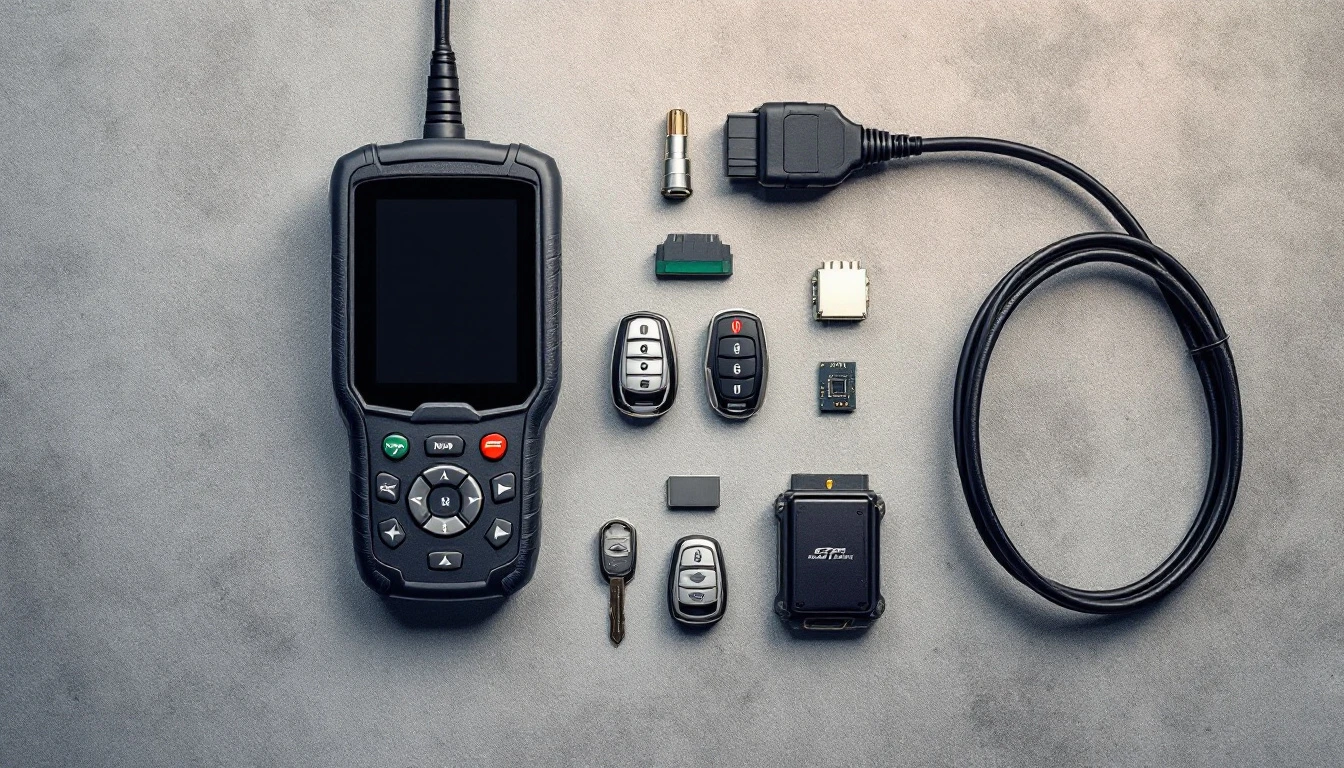
"How much is this going to cost?" is the first real question once you learn your car needs computer or module programming — and the honest answer is that it depends heavily on which computer and which job. A spare transponder key and an all-keys-lost immobilizer reset are both "programming," but they are worlds apart in price. The problem for most Fort Worth drivers is that these numbers are scattered across a dozen different service pages and articles.
This guide pulls them into one place. Below is a single comparison table covering every key and module programming service, followed by the context that explains why each job costs what it does and how the mobile-locksmith price compares to a dealership. Every figure here is a real Fort Worth range as of July 2026 — reproduced from our own service pricing, not inflated or invented. Where a job genuinely varies too much to price sight-unseen, it is marked "quote required after diagnosis," and this guide explains exactly why. For the deeper technical background behind these services, our ECU programming explained guide is the companion read.
The One Table: Fort Worth Module & Key Programming Prices (2026)
These are mobile-locksmith prices — service comes to your location, and the range covers diagnostics, programming, and verification. Part costs (a physical module, when one is needed) are additional and noted.
| Service | Category | Mobile locksmith price | Notes |
|---|---|---|---|
| Traditional cut key (non-chip) | Key | $10–$50 | No programming required |
| Transponder key (cut + program) | Key | $120–$250 | Chip key, 1996+ vehicles |
| Remote-head key / key fob | Key | $180–$400 | Chip + remote in one unit |
| Push-to-start smart key | Key | $250–$650+ | Proximity / keyless-go |
| BCM coding or reset (software only) | Module | $150–$350 | No part — reflash/recode |
| BCM replacement + programming | Module | $200–$600 | Includes part + key re-pair |
| ECM / PCM programming (general) | Module | $150–$500 | Most standard jobs $200–$350 |
| New ECU/ECM/PCM module programming (domestic) | Module | $275–$475 | Plus module cost |
| TSB reflash / calibration update | Module | $175–$325 | Free in warranty at dealer |
| Immobilizer lockout clearance | Module | $175–$325 | Platform-dependent |
| BCM / PCM combo programming | Module | $425–$725 | Multi-module sequence |
| Used ECU re-VIN (domestic / Asian) | Module | $325–$500 | Supported platforms only |
| Used ECU re-VIN (European) | Module | $500–$1,200 | Bench-level EEPROM work |
| Airbag / SRS crash-data reset (undamaged module) | Safety | $100–$300 | Only after restraint repair |
| Standalone TCM (transmission control module) | Module | Quote required after diagnosis | Often integrated into the PCM |
| Luxury / European key (BMW, Mercedes, Audi) | Key | Quote required after diagnosis | Proprietary security |
| All-keys-lost ECU reset & programming | Module | Quote required after diagnosis | Varies by platform |
Pricing disclaimer: final quotes depend on your vehicle's year, make, model, security generation, key blank availability, and exact location in the Fort Worth area. Emergency after-hours service may carry an additional fee, and outlying addresses can add a mileage charge — always stated up front, before dispatch.
Key Programming: Why the Range Is So Wide
Key prices span from $10 for a plain metal blade to $650-plus for a proximity smart key — because "getting a key" now means very different amounts of electronics.
- Traditional cut keys ($10–$50) on pre-1996 vehicles are pure mechanical duplication. No chip, no programming.
- Transponder keys ($120–$250) embed an RFID chip the engine computer reads before allowing fuel delivery. You pay for the blade and the programming sequence specific to your make.
- Remote-head keys ($180–$400) combine a chip, a blade, and lock/unlock buttons in one unit, so both the immobilizer code and the remote frequency have to be synced.
- Push-to-start smart keys ($250–$650+) communicate continuously with the car's antenna array and require writing encrypted data to multiple modules.
Luxury and European keys — BMW CAS/FEM, Mercedes EIS/EZS, Audi advanced-key — use proprietary security architectures that make sight-unseen pricing impossible, so those are quoted after diagnosis. Our car key replacement and transponder key programming pages cover the full key lineup, and the dedicated car key replacement cost guide drills into key pricing specifically.
ECU / ECM / PCM: The Engine-Computer Numbers
The engine computer — ECU, or ECM, or the combined PCM on most GM, Ford, and Stellantis vehicles — is the module people most often mean by "car computer programming." The jobs and their ranges:
- General ECM/PCM programming ($150–$500, most $200–$350). The everyday case — a replacement flash or reprogramming on a standard domestic or Japanese vehicle.
- New domestic module programming ($275–$475, plus the module). Flashing a brand-new module with your software, VIN, and calibration.
- TSB / calibration reflash ($175–$325). Applying a manufacturer's updated calibration file. Free under warranty at a dealer — take that if you qualify.
- Immobilizer lockout clearance ($175–$325). Clearing a security lockout and re-pairing existing keys.
- BCM/PCM combo programming ($425–$725). A multi-module sequence handled in one visit.
Used modules cut both ways. A salvage-yard donor module carries another vehicle's VIN and must be re-coded to yours. On supported domestic and Asian platforms, that re-VIN runs $325–$500 — often cheaper than a new OEM module. On European platforms it climbs to $500–$1,200 because it requires bench-level EEPROM work, and some platforms (certain Mercedes, BMW, and Audi years) effectively block used-module re-VIN without extensive work. Confirm your platform supports it before buying the donor. The mechanics of all of this are covered in can a locksmith program an ECM or PCM, and our ECU and module programming service handles the booking.
BCM: The Cheapest and Most-Misdiagnosed Line Item
The Body Control Module is where drivers most often overpay — because a "dead BCM" is frequently just corrupted software.
- BCM coding or reset ($150–$350). Software only, no part. This fixes lost configuration or corrupted software, commonly after a jump-start or battery event.
- BCM replacement + programming ($200–$600). A genuinely dead module, replaced and fully programmed, including key re-pair.
The difference between those two lines is a single diagnostic scan, and it is the most valuable step in the whole job. If a provider quotes a $600 replacement before confirming the module is actually dead, get a second opinion. Our companion guide BCM programming vs replacement walks the exact decision, and module programming is the service page for BCM and other body-electronics work.
Airbag / SRS: A Safety Line With a Hard Rule
An airbag module reset is one of the cheapest module jobs — $100–$300 for a crash-data reset of an undamaged module — but it comes with a non-negotiable condition: it is only done after the restraint system has been properly repaired. Clearing the light on a car whose airbags and pretensioners have not been restored is unsafe and, when done knowingly by a business, illegal under federal safety law. A water-damaged module is a replacement, not a reset. The full safety framing is in airbag / crash module reset after an accident, and the airbag reset & crash module service page covers scope. For context, a dealer replacement module is often $400–$1,200 for the part alone before programming and labor — which is why a legitimate reset, when appropriate, saves so much.
Why the Mobile Price Beats the Dealer
Across nearly every line in that table, the dealership number is higher — often dramatically:
- ECM/PCM programming: $150–$500 mobile versus $500–$1,500 at a dealer, before towing.
- BCM replacement: $200–$600 mobile versus $500–$1,200 or more at a dealer.
- New ECU programming: in the $275–$475 mobile range versus $525–$900 at a dealer, plus the module.
The gap is not magic. A dealership bills two to three hours of bay labor at $150–$200 per hour, plus a diagnostic fee, plus a per-flash programming charge, plus a tow if the car will not drive. A mobile locksmith-programmer carries the same class of tools — a full programming-capable platform is a five-figure investment with annual OEM software subscriptions — but no service-bay overhead, and comes to you, erasing the tow. That is the entire cost story. Which professional does which job, and when the dealer is genuinely the right call, is covered in who reprograms ECM near me.
If you are trying to plan around the appointment rather than only the invoice, our companion guide covers how long ECU and module programming takes by module type, including why flash time and appointment time are two different numbers.
What Moves Your Final Number
Within the published ranges, a handful of factors decide where you land:
- Vehicle year, make, and security generation. Newer and more secure platforms take longer and require more capable tooling.
- Whether a part is needed. A reflash has no part cost; a replacement adds the module.
- How many modules are involved. Combo and multi-module sequences cost more than a single flash.
- Key status. All-keys-lost is more involved — and more expensive — than adding a spare to a working key.
- Location and timing. After-hours and outlying-address service can add a fee, always disclosed before dispatch.
The "Quote Required" Lines — and Why They're Honest
Three lines in the table are deliberately not priced: standalone TCM programming, luxury/European keys, and all-keys-lost ECU work. This is not a dodge — it is the responsible answer. Luxury security architectures, whether bench-level work is required, key blank availability, and how many modules must be touched all move the number too much to promise a figure sight-unseen. A shop that quotes a firm price on a BMW all-keys-lost job over the phone, before seeing the car, is guessing — and that guess usually becomes a surprise on the invoice. For these, we diagnose first, then quote before any work begins. Everything else on the table carries a real, published range.
How to Avoid Overpaying
Five habits protect your wallet on any module job:
- Insist on diagnosis before any part is quoted. Many "dead module" cases are corrupted software a reflash fixes.
- Get an all-in price. It should include diagnostics, programming, key pairing, and verification — not a low flash price with extras bolted on later.
- Ask the provider to name the tool. A legitimate ECM job uses OEM-licensed or equivalent professional software; a shop that cannot name it is often doing key-side work and calling it module programming.
- Compare mobile against dealer honestly. Factor in towing and lost time, not just the sticker.
- Confirm platform support for used modules before buying a salvage-yard part.
The Federal Trade Commission publishes guidance on spotting locksmith and automotive-service scams; a refusal to diagnose before selling a part is the clearest red flag. The U.S. Bureau of Labor Statistics tracks the trade under SOC 49-9094, and the concentration of qualified mobile programmers across DFW is exactly why these competitive prices are realistic here.
Licensing and Verification in Texas
Security-relevant automotive work in Texas is regulated. Locksmith and access-control companies operate under the Texas Department of Public Safety (DPS) Private Security Bureau, and a reputable provider verifies vehicle ownership before any programming that touches the immobilizer or keys. Expect to show a government-issued photo ID and proof of ownership — registration, title, or insurance in your name — before a VIN is written or keys are paired. That verification protects you, your vehicle, and the provider's standing. Browse the full service lineup to see every job and what it includes.
Frequently Asked Questions
How much does car computer programming cost in Fort Worth?
It depends entirely on which module and job. Simple key programming starts around $120–$250 for a transponder key; ECM/PCM programming generally runs $150–$500 with most standard jobs $200–$350; BCM coding or reset (software only) runs $150–$350; a BCM replacement with programming runs $200–$600. Complex luxury/European work and all-keys-lost jobs are quoted after diagnosis. The full comparison table in this guide breaks down every service.
Why is dealership module programming so much more expensive?
A dealership bills two to three hours of bay labor at $150–$200 per hour, plus a diagnostic fee, plus a per-flash programming charge, plus the module — and a tow if the car cannot drive. A mobile locksmith-programmer carries the same class of tools but no service-bay overhead and comes to you, which removes the tow entirely. That is why the same ECM/PCM job that runs $150–$500 mobile often runs $500–$1,500 at a dealer.
What makes a job "quote required" instead of a fixed price?
Luxury and European platforms (BMW, Mercedes, Audi) and all-keys-lost situations vary too much to price sight-unseen — the security architecture, whether bench-level work is needed, key blank availability, and how many modules must be touched all move the number. For those we diagnose first, then quote before any work begins. Straightforward domestic and Japanese jobs carry the published ranges.
Does the price include key programming and verification?
A proper mobile module job includes diagnostics, the programming or flash, immobilizer sync and key pairing where required, and post-work verification with the codes cleared and confirmed gone. Beware a quote that covers only the flash and adds key pairing or diagnosis as surprise line items later — ask for an all-in price up front.
Is a used or salvage-yard module cheaper than a new one?
Often, yes — re-VINning a working donor module can save the cost of a new OEM part on supported platforms, running $325–$500 for domestic and Asian modules. European platforms frequently require bench-level EEPROM work at $500–$1,200 and some effectively block used-module re-VIN altogether. Confirm your platform supports it before buying the donor module.
Are there extra fees for after-hours or emergency service?
Emergency and after-hours service may carry an additional fee, and outlying addresses can add a mileage charge. Reputable providers state any such fees when they quote, before dispatch — not after the work is done. Ask for the all-in total, including any after-hours or travel component, when you call.
How do I avoid overpaying for module programming?
Insist on diagnosis before any part is quoted — many "dead module" cases are corrupted software a reflash fixes. Get an all-in price that includes diagnostics, programming, key pairing, and verification. Ask the provider to name the tool they will use. And compare the mobile locksmith route against the dealer, factoring in towing and lost time, not just the sticker price.
Get an Upfront Quote in Fort Worth
You should never be surprised by a module-programming invoice. Fort Worth Locksmith & Computer Programming quotes an all-in price — diagnostics, programming, key pairing, and verification — before we dispatch, with any after-hours or travel fee stated up front. Mobile ECU and module programming is available throughout Fort Worth, Arlington, Dallas, and the entire DFW metroplex.
Call or text (817) 668-3801, email contact@fwlocksmith.com, or use our contact page. Give us your year, make, model, and the exact issue, and we will tell you which range applies — or, for a luxury or all-keys-lost job, diagnose and quote before any work begins. Mobile service is available 24/7.
Sources & references
- BLS — Locksmiths & Safe Repairers (SOC 49-9094) wage data
- Texas Department of Public Safety — Private Security Bureau
- FTC — Locksmith scams: tips for consumers
- NASTF — Vehicle Security Professional registry
- NHTSA — vehicle recalls & module-related TSBs
- SAE International — J2534 pass-through reprogramming standard