Ram ProMaster & Ford Transit Work Van Spare Keys (2026)
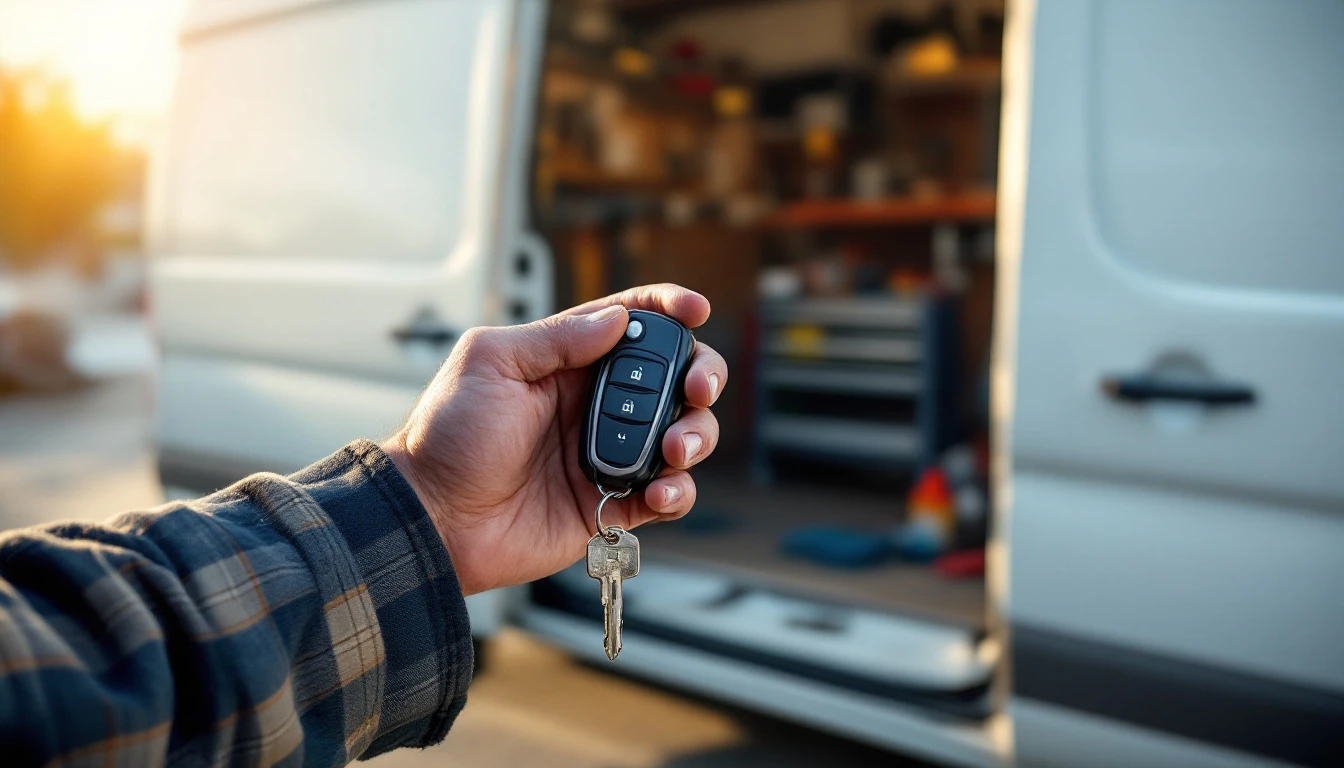
A work van that cannot start is not an inconvenience. It is a day of missed appointments, a crew standing around, and tools locked inside a vehicle nobody can move. The Ram ProMaster and Ford Transit are the two vans we key most often around Fort Worth, and in almost every case the call comes after the last key has already failed rather than before.
As of August 2026, a spare key for either van runs about $120–$250 for a bladed transponder key and $250–$650+ for a proximity or push-to-start fob, programmed on site. The all keys lost version of the same job costs materially more, takes longer, and happens on the worst possible day. This guide covers both platforms, why they are not interchangeable, how many keys a van will hold, and where to actually keep the spare.
Quick Answer — Cut the Spare Before You Need It
If your van has one key, that key is a single point of failure for a revenue-generating vehicle. Fobs get crushed in doors, dropped down storm drains, washed in work trousers, and simply fail after enough Texas summers. None of those events are unusual.
Adding a key while one still works is short, scheduled, and inexpensive. Replacing all keys is none of those things. That is the whole argument, and it does not get more sophisticated than that.
Why Downtime Is the Real Number
Owners tend to compare the price of a spare key against the price of nothing. That is the wrong comparison. The right one is the price of a spare key against the cost of a van sitting still.
Think through an actual bad morning. The driver arrives at the yard, the key does not work, and now someone has to diagnose it over the phone, get a locksmith dispatched, and wait through a longer procedure than a spare would have needed. Meanwhile every job on that van's schedule slips. If the van carries the only set of specialized tools for that day's work, the slip cascades to jobs the van was not even assigned.
Against that, the cost of a spare cut in advance is trivial — and it is a scheduled expense you choose, rather than an emergency expense that chooses you.
Ram ProMaster — Fiat Underneath the Ram Badge
The single most useful thing to know about the ProMaster is that it is not a Ram 1500 with a box on the back. It is a Fiat-derived commercial platform, and its keys, immobilizer, and diagnostic behavior come from that lineage rather than from the Mopar truck side of the house.
This matters practically. Owners call and say "it's a Ram," we quote a Ram truck key, and then the VIN comes back as a ProMaster and the key type, blade profile, and procedure are all different. Confirming the VIN before dispatch is not bureaucracy on these vans — it is the difference between arriving with the right key and arriving with the wrong one.
Key variants you will encounter
Most ProMasters in the field use a bladed key with an integrated transponder, frequently in a flip housing with lock and unlock buttons. The transponder is read by an antenna ring around the ignition, and the immobilizer compares the identity against its authorized list before allowing the engine to run.
Higher-specification and later vans introduce proximity arrangements where the key is detected rather than inserted. These cost more and take slightly longer to program, but they are still routine mobile work.
The ProMaster City — the smaller van sold alongside the full-size ProMaster — is again a different animal with its own key and immobilizer details. Treat it as its own vehicle when you call, not as a small ProMaster.
If you also run Ram pickups in the same fleet, the truck-side guidance lives in our Ram 1500 and 2500 spare key guide, and the Ram key service page covers what we handle across the badge.
Ford Transit — PATS and the Ford Programming Environment
Ford's immobilizer is PATS, historically marketed as SecuriLock. The name has been on Ford vehicles for a long time and the underlying idea has not changed — a transponder identity in the key is checked against a list the vehicle holds before fueling is permitted.
What has changed is where that list lives and how you write to it. On older Fords the relevant data sat in the powertrain control module. On newer platforms, key and security functions moved substantially into the body control module, and programming happens through Ford's current diagnostic environment rather than through a simple timed procedure. Our guide to Ford BCM programming and SecuriLock covers that architecture in detail, including why a module swap on these vehicles is rarely as simple as bolting in a used part.
Transit key variants
Full-size Transits appear in the field with bladed transponder keys, flip keys, and — on later and higher-trim vans — proximity fobs with push-to-start. The Transit Connect is the smaller sibling and, like the ProMaster City, has its own key details.
One Ford-specific note that saves people money: on some Ford platforms, a spare added while two working keys are present can be programmed with a much simpler procedure than one added when only a single key exists. The practical implication is counterintuitive but real — the best time to get a third key is when you already have two. If your van still has both factory keys, that is the cheapest moment in its life to add another.
For the wider Ford picture, see our Ford key service page.
How Many Keys Can a Van Hold?
Every immobilizer has a maximum number of key identities it will store. Most Transit and ProMaster platforms comfortably accommodate several — enough for a driver key, a spare in the office, and a third for a relief driver or a second shift.
The number is platform-specific and model-year-specific, and it is one of the things we confirm against your VIN before we quote. Two related points matter for fleets:
Adding a key does not remove existing keys. A spare add is additive. Your current keys keep working exactly as they did.
Erasing keys is a separate, deliberate operation. If a driver leaves and does not return a key, the correct response is not to add another key — it is to erase the immobilizer list and re-register only the keys you actually hold. That is a different procedure, it requires all the keys you intend to keep present, and it is genuinely worth doing when a key goes missing rather than merely being misplaced.
Fort Worth Van Key Pricing
Ranges below reflect real mobile market pricing as of August 2026, with a working key present. Dealer figures assume you deliver the van during business hours.
| Van and key type | Typical application | Mobile spare | Dealer |
|---|---|---|---|
| Bladed transponder key | ProMaster, Transit base trims | $120–$200 | $200–$350 |
| Flip key with remote | Both platforms, mid trims | $150–$250 | $250–$400 |
| Proximity or push-to-start fob | Later and upper trims | $250–$450 | $400–$700 |
| Proximity fob, newest platforms | Current model years | $300–$650 | $450–$800 |
| Second and third key, same visit | Any | Reduced per key | Full price each |
| Same van, all keys lost | Any | Materially higher | Plus tow |
Two rows deserve attention. Second and third key on the same visit is the fleet play — the trip charge and setup happen once, so keys after the first are cheaper. And the last row is why this article exists.
On-Site Programming — How It Actually Works
We are mobile only. There is no shop to drive to, which for a work van is the entire point — the van does not have to leave the job.
- VIN first. Before anyone dispatches, we confirm the exact platform, key type, and blade profile from the VIN. On these two vans specifically, the VIN prevents more wasted trips than on any other vehicle class we handle.
- Proof of ownership. Driver's license and registration or title. For a company vehicle, that means paperwork tying the van to the business and a person authorized to act for it. This is not negotiable and it is the same standard applied by the National Automotive Service Task Force registries that govern secure vehicle access.
- Cut the blade. To code from the VIN where available, or decoded from an existing lock. Proximity fobs contain an emergency blade — we cut it, because a fob battery will eventually die.
- Program the key. Connect to the diagnostic port, authenticate, and write the new key identity into the immobilizer list. On bladed vans this is transponder key programming; on push-to-start vans it is smart key programming.
- Test everything. Start the engine on the new key, cycle every remote function, and physically test the blade in the driver's door and — importantly on a work van — the cargo and side doors, which sometimes use a different lock than the driver's door on older vehicles.
Typical time on site with a working key present is 20 to 40 minutes. Booking goes through car key replacement, and we cover Fort Worth, Arlington, and the surrounding Tarrant County cities 24 hours a day.
Where to Keep the Spare
This is the part everyone gets wrong, so it is worth being blunt about.
Do not keep the spare in the van. A key in the glovebox is inside the vehicle you are locked out of. A key in a magnetic box under the frame is a gift to anyone who thinks to look, and it disappears along with the van if the van is stolen.
Good places for a work van spare, in rough order of usefulness:
- At the shop or office, in a labeled, controlled location, where a second person can grab it and drive it out to a stranded crew.
- At the owner's or manager's home, if the fleet is small enough that this is realistic.
- With a second driver who works the same geography and can reach the job site quickly.
The test is simple. If the van is locked, dead, or stolen, can somebody get to the spare without needing the van? If the answer is no, the spare is not really a spare.
If you are already locked out of a van right now, that is a different call — see emergency lockout and phone us directly rather than reading the rest of this.
Aftermarket Keys and Cheap Online Fobs
You can buy Transit and ProMaster keys online for very little. Some are fine. Many are not, and commercial vans are a worse place than most to find out.
The failure pattern is consistent and delayed. A low-grade fob programs correctly on the day, works for a few weeks, then becomes intermittent in heat or vibration — and a work van sees far more of both than a commuter car. By the time it fails, the seller is gone.
We stock keys we have tested on these platforms and warranty our work on them. If you prefer to supply your own hardware we will program it, but we cannot warranty parts we did not source, and if the key refuses to accept programming the service call still occurred.
For what it is worth, having this work done by an independent locksmith does not affect your factory warranty. The Magnuson-Moss Warranty Act protects your right to use a provider other than the dealership.
Licensing and Ownership in Texas
Locksmiths in Texas are licensed through the Texas Department of Public Safety Private Security Bureau. Ask about licensing, expect a firm quote before work starts, and expect to prove the van is yours or your company's.
That last requirement is the one that occasionally frustrates fleet managers dispatching a locksmith to a driver at a job site. It is also the requirement that prevents anyone with a phone from having keys cut to your van. Plan for it — have the paperwork reachable, and make sure whoever meets us on site is authorized to sign for the work.
Frequently Asked Questions
How much is a spare key for a Ford Transit in Fort Worth?
As of August 2026, a bladed transponder key for a Transit runs roughly $120–$250 programmed, and a proximity or push-to-start fob runs $250–$650 or more. Having one working key present keeps the job short and puts it toward the lower end of the range.
Can you program a Ram ProMaster key at my job site?
Yes. We are fully mobile and program van keys wherever the vehicle is parked — a job site, a driveway, a yard, or a parking lot. There is no shop visit and no tow, which is the main reason fleet owners use mobile service instead of a dealership appointment.
How many keys can a work van hold at once?
Most Transit and ProMaster platforms accept several keys in the immobilizer list, which is more than enough for a driver key, a spare, and an office copy. The practical limit varies by platform and model year, so we confirm against your VIN before adding.
Do I need to bring the van in to have a spare made?
No. With one working key present the whole job happens at the vehicle, typically in 20 to 40 minutes including cutting the blade. That is the entire advantage of doing it before you need it rather than after.
Is a ProMaster key the same as a Ram 1500 truck key?
No. The ProMaster is Fiat-derived and uses a different key and immobilizer architecture from the Ram 1500 pickup, even though both wear a Ram badge. Confirming the exact model and VIN matters more on these vans than on almost anything else we work on.
What happens if a work van loses its only key on a job?
The van stops earning until keys are made. All keys lost requires establishing security access from nothing, which takes longer than adding a spare and sometimes requires a tow. A spare cut in advance turns that day-ending event into a short interruption.
Where should I keep the spare key for a work van?
Anywhere other than the van. A spare stored in the glovebox is inside the vehicle you are locked out of and is lost with the van in a theft. Keep it at the shop, at home, or with a second person who can reach the job site.
Book the Spare Around Your Schedule, Not Around a Breakdown
A spare key for a ProMaster or a Transit is a short mobile visit you can schedule between jobs. The same work after the last key is gone is longer, more expensive, and takes the van off the road on a day you needed it.
Call or text (817) 668-3801 with the model year and full VIN of each van, or email contact@fwlocksmith.com. If you are keying several vehicles we will do them in one trip and price them accordingly.