Car Key Replacement in Cedar Hill TX — Mobile Locksmith (2026)
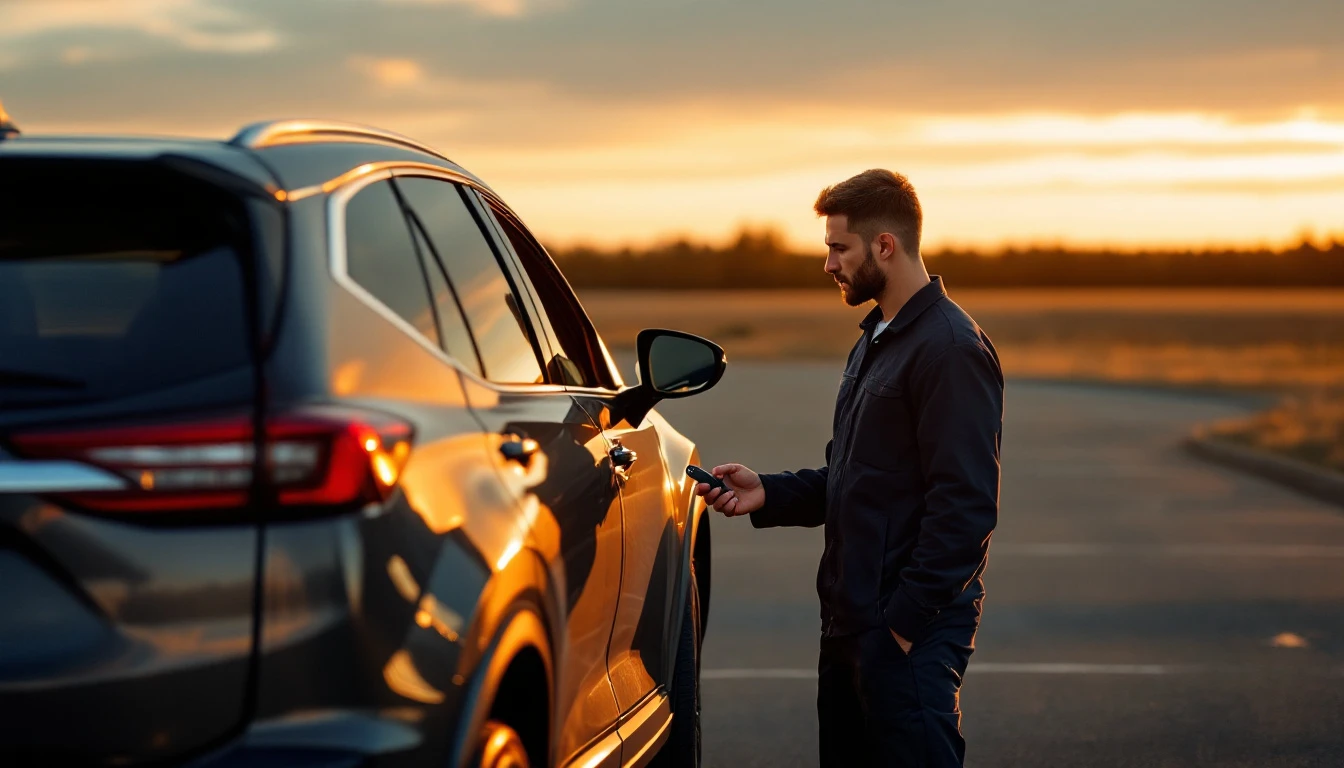
Cedar Hill sits in the hills of southern Dallas County, spread between US-67, Joe Pool Lake, and the neighbouring Best Southwest cities. It is a spread-out place with a lot of driveways, a lot of lake parking, and a lot of vehicles that spend their days somewhere other than home.
That geography shapes the calls we take from there. Two problems dominate: keys that are entirely gone, and proximity fobs behaving strangely. This article concentrates on those two rather than reciting a service menu, because they are the ones that cost real money and the ones most often misunderstood before the phone call.
Automotive only — keys, fobs, immobilizers, and the modules behind them.
The Two Calls We Actually Get
The first is the easy one. Someone has a working key, wants a second before it becomes a problem, and books an appointment at a convenient time. That job is short, predictable, and priced at the friendly end of everything below. Nothing more needs saying about it except that it is the cheapest decision available to any single-key owner.
The second is the expensive one. Nothing works. No key, no fob, no backup in a drawer. That is all keys lost, and it is not a bigger version of the first job — it is a structurally different one.
Here is why. Every add-a-key procedure works by using an existing registered key to prove authority to the immobilizer. The vehicle trusts the old key, the old key vouches for the session, and a new key gets added to the accepted set. Remove that starting point and the whole mechanism is unavailable. Authority has to be established another way entirely: through security access tied to the vehicle itself, sometimes involving a PIN or a seed-and-key exchange, sometimes involving a timed delay the platform imposes deliberately, and on some vehicles involving physical access to a module.
That is where the money goes. Not into the plastic in your hand.
All Keys Lost, Step by Step
Worth walking through, because owners often imagine something either simpler or more dramatic than the reality.
Identify the platform. Year, make, model, trim, and often the build date. Two vehicles that look identical in a parking lot can carry different security modules. This step is not optional and it is not padding.
Verify ownership. Before anything else touches the vehicle. Detailed below.
Establish security access. The vehicle has to be persuaded to permit a key registration session without an existing key vouching for you. How that happens varies enormously by manufacturer, and it is the single largest variable in the job.
Cut a working blade or produce a fob. For bladed vehicles, a key is cut to code from the VIN or by decoding the lock directly. For push-button vehicles, the correct fob variant has to be on hand — and "correct" is narrower than most people assume, since a single model year can have several.
Register the key and verify everything. Not just that the engine starts. Locks, remote functions, proximity detection at both door and start positions, and a check that no new fault codes appeared during the session.
On most vehicles that whole sequence happens at your location. On some platforms — European models especially — the security module has to come out and be read on a bench, which is hours of precise work rather than a driveway procedure. And on certain newer vehicles, key registration requires manufacturer-side authentication that is genuinely not available outside the dealer network. A technician confirms your exact setup before promising an outcome, and a dealer referral given before you have spent money is a good result rather than a failed one.
Why Proximity Keys Fail Differently
Smart keys do not fail like metal keys. Understanding the difference saves a lot of unnecessary spending.
A mechanical key fails visibly — it wears, it bends, it snaps, it stops turning. A proximity fob fails by degrees, invisibly, and the symptoms mimic several unrelated faults.
The classic pattern is a declining battery. A weakening coin cell will still trigger the door remote at arm's length, because that function tolerates a weak signal. The start-authentication exchange is fussier and needs the fob closer and stronger. So the fob "works" — the doors unlock — and the car reports no key detected. The owner reasonably concludes the fob has died and starts pricing replacements.
Almost every push-button vehicle has a backup for exactly this: holding the fob against or immediately beside the start button, or into a designated pocket or slot, so the vehicle can read it at contact range. If that starts the car, you have a battery problem. A coin cell costs a few dollars. Try it first.
The second pattern is antenna and receiver trouble. Proximity systems rely on antennas distributed around the vehicle to work out where the fob is. When one fails, the fob is detected in some positions and not others — works from the driver's seat, not from the passenger side, or works when held near a specific pillar. That is a vehicle-side fault, not a key fault, and no new fob resolves it.
The third is interference. A fob riding next to a phone, another fob, or certain wireless devices can be swamped. Rare, but real, and free to test by isolating the fob.
Only after those three are ruled out is it worth talking about smart key programming and a replacement fob.
Keys Lost Around the Lake
Joe Pool Lake generates its own category of call, and it deserves a practical answer rather than a joke.
A set of keys that went into the water, or into tall grass, or into a bag that never made it back to the car, is a genuine all-keys-lost regardless of how ordinary it felt at the time. The vehicle is where you left it, the keys are not coming back, and the job is the full procedure described above.
The practical considerations at a lakeside or park location are access and light rather than anything technical. A mobile setup cuts and programs at the vehicle, so a gravel parking area works the same as a driveway. What changes the logistics is a gated area, restricted hours, or a vehicle that has already been towed to a yard with limited access. Mention any of those on the phone so it is solved before someone drives out.
The awkward one is documentation. If the wallet went with the keys, ownership verification gets harder — not impossible, but it needs arranging in advance rather than negotiating in a parking lot at dusk. Raise it early.
Which Cedar Hill Vehicles Bring Which Problem
Four patterns recur across the Best Southwest.
Toyota and Lexus. Heavily represented, and the smart-key systems on these are their own discipline. When one of these presents as intermittent no-start with a fob that works sometimes, the problem is as likely to be in the vehicle's smart-key hardware as in the fob. These platforms also tend to hold their value long enough that owners are still running fifteen-year-old examples, which spans several generations of security design.
Ford Explorers and Escapes. Common family vehicles down here, and Ford's security architecture has passed through several distinct eras. The model year matters more on these than most, and an all-keys-lost Explorer from one generation is a very different job from the next.
Hyundai and Kia. A large and growing share of the local fleet. Newer examples increasingly route key work through tighter security access, and coverage genuinely varies by platform and build date rather than following the badge.
Jeep and Dodge. These bring their own immobilizer lineage and their own module quirks. When one of these misbehaves, the question of whether the fault is the key or the body control module comes up quickly.
That last question is worth its own section.
When the Module Is the Fault
Not every no-start is a key problem, and the ones that are not tend to get expensive when misdiagnosed.
The body control module holds the registered key data on a great many modern vehicles. When that module has communication faults, water damage, or degraded memory, the symptoms look exactly like key failure: keys intermittently unrecognised, registration attempts failing at the security stage, remote functions behaving inconsistently.
Cutting more keys never fixes this. Neither does buying a used module from a salvage vehicle and bolting it in — on most platforms a donor module arrives bound to its original car and does not become yours simply by being installed.
Two clues point this direction. Intermittency — a fob that works nine times out of ten is rarely a fob problem. And water history — a vehicle with a leaking windshield seal, blocked sunroof drains, or flood exposure has a plausible mechanism for module failure. If either applies, our comparison of BCM programming near me versus outright replacement explains which path fits which symptom, and module programming covers the service side.
Coverage Across the Best Southwest
Cedar Hill is served alongside its immediate neighbours — Duncanville, DeSoto, and Lancaster — and the whole cluster is close enough together that a trip to one commonly covers the others in the same run. Our notes on mobile key cutting and programming around Lancaster describe the same corridor from the eastern side.
Being straight about distance: this is southern Dallas County, and a technician coming from the Fort Worth side is making a real drive. You get an honest arrival window rather than an implausible one, updated if traffic changes it. For a planned spare-key appointment the drive is irrelevant. For a stranded vehicle it is not, and knowing the real number lets you decide how to spend the wait.
What It Costs
As of August 2026:
| Work | Typical range |
|---|---|
| Transponder key — cut and programmed | $120 – $250 |
| Push-to-start / smart prox key | $250 – $650+ |
| BCM programming | $150 – $350 |
| ECM / PCM programming | $150 – $500 |
| Used module re-VIN to your vehicle | $325 – $1,200 |
| Airbag / SRS crash-data reset | $100 – $300 |
| Luxury, complex, or all-keys-lost European | Quoted after diagnosis |
All-keys-lost sits at the upper end of whichever band applies, and that is a real difference in work rather than a penalty. Fobs, blanks, and module hardware are separate and priced by supply. A procedure with no listed range of its own sits at the low end of the module-programming band, with the exact figure confirmed once the vehicle and module are identified. We will not put a single precise number on a complex platform over the phone, because that number would move on arrival.
While airbags are on the list: a crash-data reset is not the same as replacing deployed airbags. Deployed bags and seatbelt pretensioners are physical parts that must be physically replaced, and no module operation restores them. Occupant-restraint requirements are set out by the National Highway Traffic Safety Administration, and anyone implying a reset substitutes for replacement should not be working on your vehicle.
Ownership Verification, and Why It Tightens Here
Government-issued photo identification checked against registration, title, or insurance in a matching name. Company vehicle, company documentation. Every job, including a simple spare.
On an all-keys-lost job the standard is if anything higher, because the capability being exercised is precisely the one a vehicle thief would want. The Federal Trade Commission lists skipped ownership checks among the clearest indicators of locksmith fraud, and independent professionals working on secured vehicle systems operate through established channels — the National Automotive Service Task Force maintains the Vehicle Security Professional registry governing identity-verified access to secured manufacturer data. In Texas, locksmith and access-control companies operate under the DPS Private Security Program.
If your paperwork is complicated — recent purchase, lost wallet, vehicle in a relative's name — raise it during the call. There is usually a route. There is never a route that skips verification.
Frequently Asked Questions
What does all keys lost actually mean?
It means no key or fob in your possession is recognised by the vehicle, so there is nothing available to prove your authority to the immobilizer. Every add-a-key procedure relies on an existing registered key to establish trust, and without one that route is closed. Security access has to be established a different way, which takes longer and requires more capability. It is the single biggest cost difference in automotive key work.
Why is a lost smart key more expensive than a lost metal key?
A proximity fob is a small computer holding a rolling credential, not a cut piece of brass, so the hardware itself costs more before anyone programs anything. On top of that, registering a new fob when none exists usually requires deeper security access than writing a transponder chip does. Some platforms also add a timed security delay to the procedure. The combination of pricier hardware and a longer procedure is where the gap comes from.
My fob suddenly stopped being detected — is it dead?
Not necessarily. A declining coin cell will often still work the door remote at arm's length while failing the closer-range authentication the start system needs, which reads to the driver as a completely dead fob. Most push-button vehicles provide a backup method, commonly holding the fob against or very near the start button so the car can read it at contact range. If that starts the vehicle, you have a battery problem rather than a key problem. Try it before ordering anything.
Can you make keys for a vehicle parked at Joe Pool Lake?
Usually yes, provided the vehicle is accessible and you can produce ownership documentation on site. A mobile setup cuts and programs at the vehicle, so a lakeside parking area works the same as a driveway. The practical limits are access and daylight rather than location. If the vehicle is inside a gated or after-hours area, tell us before dispatch so the access question is solved before someone drives out.
How do I prove ownership if my ID was in the lost bag too?
Say so on the phone before dispatch rather than on arrival. Ownership verification is required on every job without exception, and a lost wallet complicates it but does not always end it. There are usually workable paths involving insurance records, registration copies, or another documented route, but they need arranging in advance. What cannot happen is a key being made for a vehicle whose ownership nobody has verified.
Which is more likely on a no-start — the key or the module?
The key is more common, but the module is more often missed. When a vehicle intermittently refuses to recognise a fob that is provably good, or when key registration reaches the security stage and fails without explanation, the body control module becomes a genuine suspect rather than a long shot. Water intrusion history is a strong clue. Cutting more keys never fixes a module fault, so the diagnosis has to come before the parts.
What does key replacement cost in Cedar Hill in 2026?
As of August 2026 a cut-and-programmed transponder key generally falls in the $120 to $250 range, and a push-to-start proximity fob generally falls in the $250 to $650 or higher range depending on the vehicle and fob. All-keys-lost work sits at the upper end of whichever band applies because of the additional security access and time. European and other complex platforms are quoted after diagnosis rather than over the phone.
Get a Cedar Hill Vehicle Moving Again
Tell us the year, make, and model, and whether anything at all still works — a fob that unlocks doors but will not start the car is a completely different conversation from nothing at all. Those two facts size the job immediately.
Call or text (817) 668-3801, email contact@fwlocksmith.com, or use the contact page. Mobile car key replacement and smart-key work covers Cedar Hill and the surrounding southern Dallas County cities, 24/7 for genuine emergencies. Proof of ownership is required on every job, and if your vehicle turns out to be a dealer-only case you will hear that before you spend anything.