Jeep Grand Cherokee WK2 Ignition and Start Faults (2026)
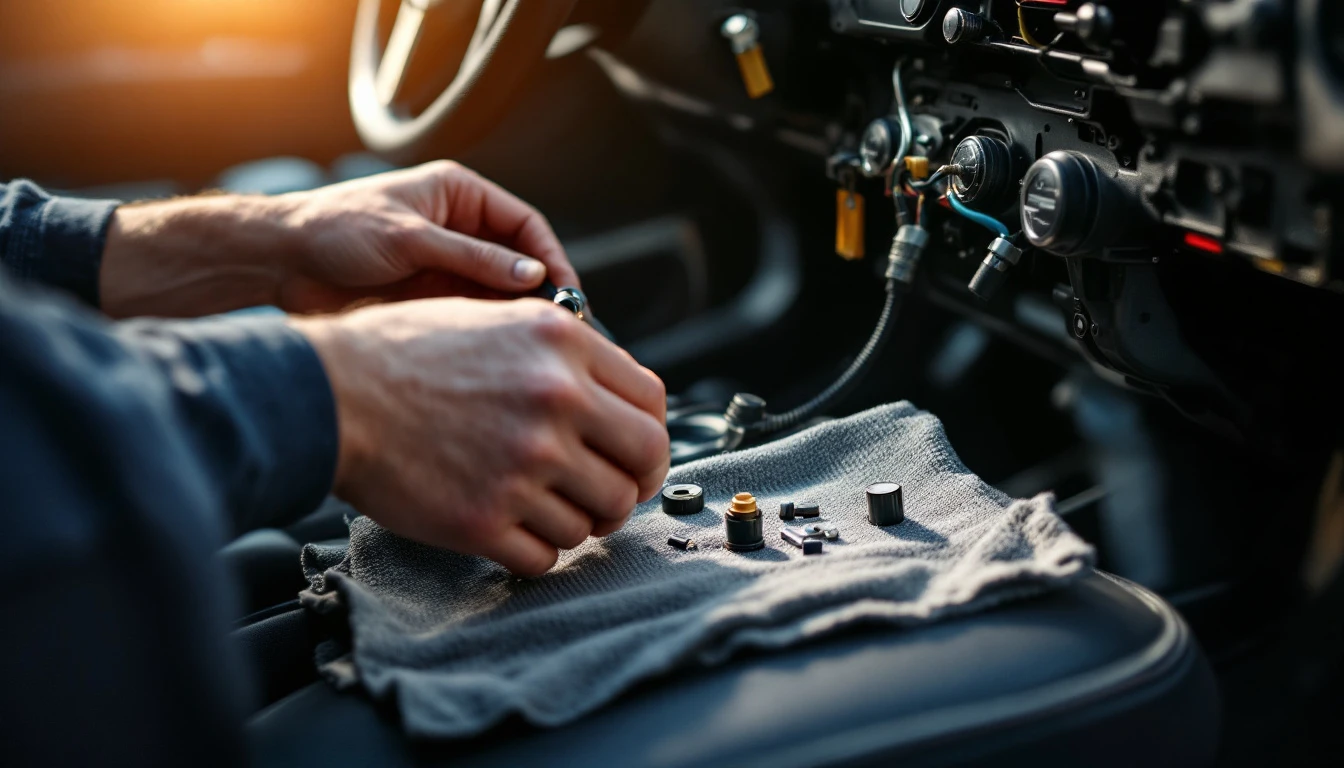
The 2011 to 2021 Grand Cherokee — the WK2 generation — is one of the most common vehicles we get called out to in Fort Worth for a no-start that is not a battery. Owners describe it in a handful of recurring ways: "it says key not detected," "nothing happens when I press start," "the steering wheel is locked and it won't do anything," or "it worked yesterday."
Those are not one fault. They are four or five different faults that produce overlapping symptoms, and telling them apart before anyone buys a part is the entire job. As of August 2026, WK2 ignition work is quoted after diagnosis because the price genuinely depends on which layer has failed. If a key has to be made or rematched as part of the repair, a transponder key runs about $120–$250 and a push-to-start fob runs $250–$650+.
This guide walks through how the WK2 start system is put together, what each symptom pattern usually means, and where the boundary sits between a mechanical repair, a module problem, and an immobilizer fault.
Quick Answer — What Usually Goes Wrong
On a WK2, a no-start that is not battery or starter almost always resolves to one of four things.
A dead or dying fob battery. Boring, common, and free to rule out.
A failing wireless ignition node or RF hub. These are the electronic assemblies that read your key and permit starting. When they degrade, the fault is often intermittent before it becomes permanent.
A mechanical ignition or steering lock issue on the keyed variants, where the cylinder or the column lock binds.
An immobilizer authorization failure, where the vehicle can see a key but will not accept it.
Everything below is about telling these apart without guessing.
Push-Button Versus Keyed — Know Which WK2 You Have
The WK2 was built across a long production run and in both configurations, which is the first thing to establish on the phone.
Keyed variants use a fob with a bladed key that inserts and rotates through the ignition. There is a physical cylinder, a mechanical steering lock, and a transponder read at the ignition.
Push-button variants have no cylinder to turn. The vehicle detects the fob wirelessly through interior antennas, confirms it is present and authorized, and the start button then works. There is still an electronic steering lock behavior on many of these vehicles, and it is still capable of stranding you.
The two configurations fail differently and are diagnosed differently. If your Grand Cherokee has a slot you push the fob into, or a key you turn, tell us — it changes the likely cause list before we even arrive.
The WIN Module and the RF Hub
Two module names come up constantly on WK2 diagnosis, and owners are frequently told one of them is bad without much explanation.
WIN — the wireless ignition node. On WK2 and its Mopar siblings, this assembly lives at the ignition and combines several roles. It reads the key, it performs the ignition switch function that older vehicles handled with a mechanical switch behind the cylinder, and on keyed variants it interacts with the steering lock. It is a single point that touches nearly every complaint on this list, which is why it comes up so often.
RF hub — the radio frequency hub module. This is the receiver that handles keyless entry and remote functions and, on many Mopar platforms, participates in key detection. A degraded RF hub produces exactly the kind of intermittent "sometimes it sees the key, sometimes it doesn't" behavior owners find maddening.
The important and frequently skipped point: these modules carry vehicle security data. A replacement arrives blank as far as your Jeep is concerned. It has to be configured to the VIN and your keys have to be matched to it before the vehicle will start. This is module programming, and it is a substantial part of what makes an ignition module job cost what it does.
The same logic applies across the Mopar family. Our guide to Durango and Grand Cherokee TIPM module programming covers the power-distribution side of the same architecture, and the Chrysler and Dodge WIN module service page covers the ignition node specifically. If you also own a Wrangler or Gladiator, the Jeep RF hub key programming guide covers how the same components behave on those platforms.
Symptom Patterns and What They Actually Mean
"Key not detected" on the dash
This is the message people quote most, and it means precisely what it says — the vehicle attempted to authenticate a key and did not get an acceptable answer.
Test the free thing first. On push-button WK2s there is a documented backup procedure: hold the fob directly against the start button and press. The vehicle can read a transponder at very close range even with a dead fob battery. If it starts, your problem is a coin cell, not a module. That test costs nothing and resolves a meaningful share of these calls.
If the backup works reliably but normal detection does not, the fob battery is the answer. If the backup also fails, or if detection is intermittent with a known-good battery, the suspicion moves to the ignition node, the RF hub, or an antenna.
Nothing at all when you press start
No crank, no click, no dash reaction. On a WK2 this points at the ignition node or the vehicle's start permission logic rather than the starter itself — though a genuinely dead battery produces the same silence, so the battery gets checked first every time.
An important distinguishing question: do the interior lights, dash, and radio behave normally? Full electrical function with no response to the start button is very different from a vehicle that is electrically dim everywhere.
Steering wheel locked and the vehicle will not respond
On keyed variants, a steering lock loaded hard against the column will physically prevent the cylinder from rotating. The classic tell is that rocking the steering wheel left and right while turning the key frees it. That is a mechanical bind, and it is fixable.
On push-button variants, an electronic steering lock that fails to release is a different fault entirely and usually involves the module side. Same symptom from the driver's seat, completely different repair.
Accessory power drops out while driving or at idle
Intermittent loss of accessories, or a dash that flickers between states, suggests a connection that is no longer reliable — the ignition switch function inside the node, or wiring at the column. This is the most safety-relevant symptom on the list and it should not be lived with. If a vehicle can drop out of run while moving, that is worth an immediate diagnosis rather than a wait-and-see.
Cranks strongly, fires briefly, dies
This is the textbook immobilizer signature. The engine is mechanically capable — it caught. Then the security system withdrew fueling because it did not accept the key.
Note the contrast: cranks and never fires at all, with no security indicator, is usually a fuel, spark, or sensor problem and belongs with a mechanic rather than a locksmith. We will tell you that honestly rather than sell you a key you do not need.
Mechanical, Module, or Immobilizer — The Triage Table
| Symptom | Most likely layer | What confirms it |
|---|---|---|
| Key binds or must be jiggled to turn | Mechanical cylinder or steering lock | Symptom changes with physical handling |
| Wheel locked, frees when rocked | Mechanical steering lock bind | Reproducible with wheel movement |
| Key not detected, backup start works | Fob battery | New coin cell restores normal operation |
| Key not detected, backup start also fails | Ignition node, RF hub, or antenna | Fault present with known-good fob |
| No response at all to start button | Ignition node or start permission | Full dash power but zero start reaction |
| Cranks, fires, stalls, security light | Immobilizer authorization | Security indicator behavior on attempt |
| Accessories drop out intermittently | Ignition switch function or wiring | Fault tracks with column movement or vibration |
The value of triage is that it tells you which parts you are allowed to consider buying. Nearly every expensive WK2 repair story we hear started with a part purchased before the layer was identified.
Why Ignition Replacement Usually Means Programming
This is the part that surprises people, so it is worth being explicit.
When a mechanical ignition cylinder fails on an old vehicle, you replace the cylinder and the vehicle starts. On a WK2, the ignition assembly is not purely mechanical — it is an electronic module that holds security data. A new or used replacement has no knowledge of your vehicle or your keys.
So the job is genuinely two jobs. First, the physical replacement. Second, configuring the replacement to the VIN and matching your keys to it. Skip the second and you have a Jeep that is mechanically perfect and completely immobile.
There is a further wrinkle with used modules. A module pulled from a donor vehicle carries the donor's identity. Depending on the platform and the module, it may need to be re-VINed or it may simply refuse to accept another vehicle's identity at all. This is the same class of problem we deal with on engine controllers — the mechanics are explained in our guide to automotive ECM programming, and the principles transfer directly.
Our honest position on used modules is that they are sometimes the right economic answer and sometimes a trap, and which one it is depends entirely on the specific module. We will tell you which before you buy anything.
What a Diagnosis Visit Looks Like
We are mobile only, so this happens where the Jeep is parked.
- Confirm the basics. Battery state, whether the vehicle has full electrical function, and which WK2 configuration it is.
- Fob and detection testing. Including the close-range backup start on push-button vehicles, which frequently ends the visit right there.
- Read the vehicle. Fault codes and security status across the relevant modules, which is what separates an authorization failure from a communication failure from a mechanical one.
- Physical assessment. On keyed vehicles, how the cylinder feels through its full rotation and whether the steering lock is loading. On any vehicle, whether the fault tracks with column movement.
- A clear recommendation with a number. Mechanical repair, module work, key work, or "this is a mechanic's job and here is why."
That last one matters. Not every no-start is ours. A locksmith who finds a way to make every diagnosis end in a key sale is not diagnosing.
While you are dealing with a WK2 issue, it is worth spending two minutes on the NHTSA recall lookup with your VIN. The WK2 had an active production life and safety campaigns exist across it — anything open is dealer-covered work you should not be paying anyone for.
Keys, Ownership, and Licensing
If the outcome of your diagnosis involves keys, everything below applies.
Proof of ownership is required — driver's license plus registration or title matching your name. This is standard practice for secure vehicle access, reflected in the credentialing frameworks maintained by the National Automotive Service Task Force. Any provider willing to skip it is one you should not be calling.
Texas locksmiths are licensed through the Texas Department of Public Safety Private Security Bureau. Ask about it, and expect a firm quote before work begins.
Key work on this platform runs through our Jeep key service and car key replacement pages, and the ignition side lives on ignition repair. We cover Fort Worth ignition repair and the surrounding Tarrant County cities around the clock.
Frequently Asked Questions
Why does my Jeep Grand Cherokee say key not detected?
The message means the vehicle could not read an authorized key identity. Common causes are a dead fob battery, a failing ignition node or RF hub, antenna trouble, or a damaged transponder in the fob. Holding the fob against the start button is the fastest way to separate a battery problem from everything else.
What is the WIN module on a WK2 Grand Cherokee?
WIN stands for wireless ignition node. It is the assembly at the ignition that reads the key, handles the ignition switch function, and works with the steering lock. On WK2 vehicles it is a common failure point for no-crank and key-not-detected complaints.
How do I tell a mechanical ignition fault from a module fault?
Mechanical faults change with physical input — the key binds, has to be jiggled, or behaves differently when the steering wheel is rocked. Module and immobilizer faults are electrical and usually pair with a security indicator, a dash message, or a fault that comes and goes without any change in how you handle the key.
Does replacing a Jeep ignition require programming afterward?
Usually yes. A replacement ignition node or RF hub arrives without your vehicle's security data, so it has to be configured to the VIN and the existing keys have to be matched to it. Bolting the part in without that step almost always leaves the vehicle unable to start.
How much does Jeep Grand Cherokee ignition repair cost?
Ignition work is quoted after diagnosis because the price depends on whether the fault is mechanical, module-level, or immobilizer-related. If a key has to be made or reprogrammed as part of the repair, as of August 2026 a transponder key runs about $120–$250 and a push-to-start fob runs $250–$650 or more.
My WK2 cranks but will not start — is that the immobilizer?
It can be. A vehicle that cranks strongly and then stalls immediately, especially with a security indicator, is the classic immobilizer signature. A vehicle that cranks and simply never fires with no security warning is more often a fuel, spark, or sensor fault and belongs with a mechanic.
Can you repair a Grand Cherokee ignition at my house?
Yes, in most cases. We are fully mobile and diagnose and repair ignition and immobilizer faults wherever the Jeep is parked. Some outcomes require parts that have to be ordered, in which case we confirm what is needed on the first visit and return with it.
Diagnose Before You Buy Parts
Almost every expensive WK2 start-fault story begins with a module purchased on a guess. The failure patterns on this platform overlap enough that guessing is genuinely difficult, and the parts involved are not cheap enough to guess with.
Call or text (817) 668-3801 with your model year, VIN, and a description of exactly what the Jeep does when you try to start it — including whether the dash shows a message. Email works too at contact@fwlocksmith.com. We will tell you what we think it is before we dispatch, and confirm it on site.