Dodge Durango & Jeep Grand Cherokee TIPM Module Programming — Fort Worth
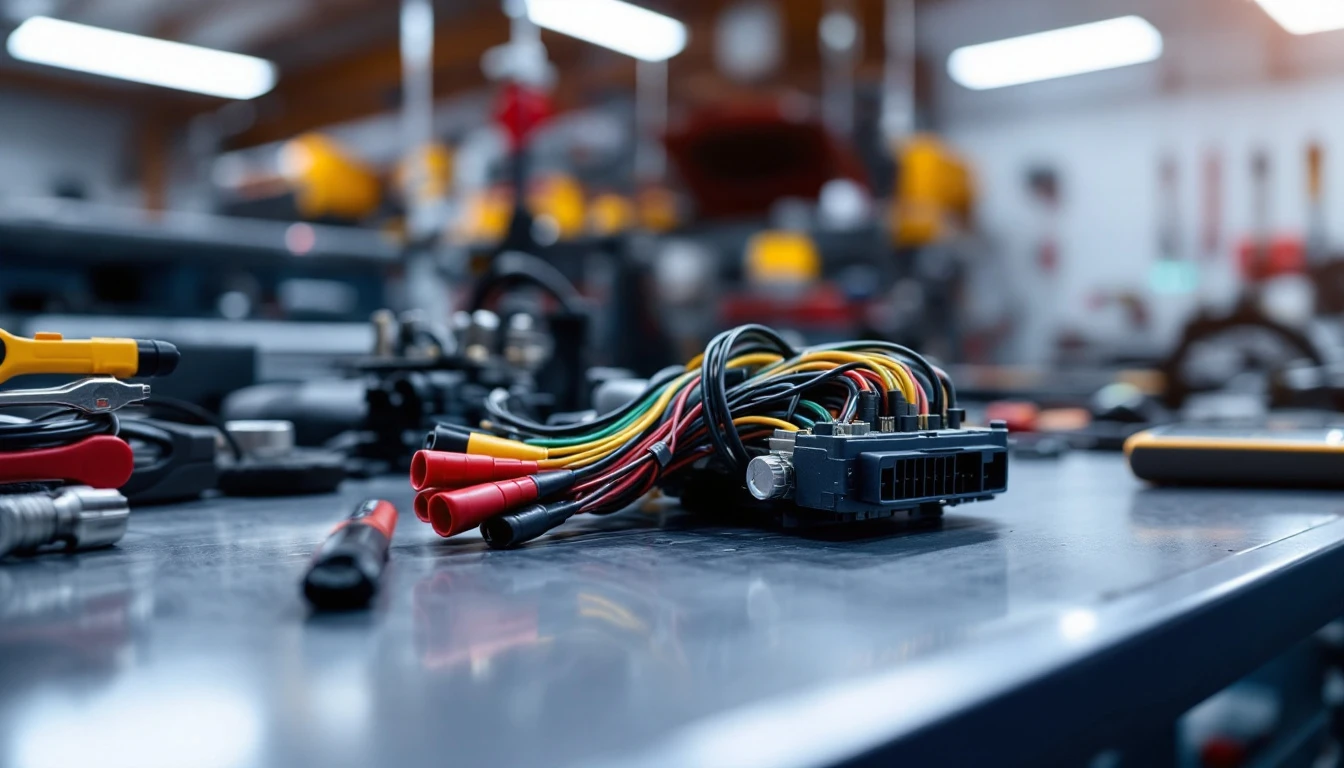
If your Dodge Durango or Jeep Grand Cherokee is doing something electrically bizarre — the fuel pump humming after you pull the key, wipers sweeping on their own, a horn that honks at nothing, or a crank-but-no-start with no obvious cause — there is a good chance the Totally Integrated Power Module is involved. As of July 2026, programming and VIN-configuring a replacement TIPM on these platforms falls in the $150–$500 module programming band, while a used or donor TIPM requiring re-VIN work lands in the $325–$1,200 range. The module itself is a separate parts cost, and your VIN sets the exact number.
This guide covers the WK2-era Grand Cherokee and its Durango sibling — roughly the 2011 through 2021 model years — because that platform generated more TIPM calls in Fort Worth than anything else we see. We are a mobile automotive computer and module programming specialist based in Fort Worth. We come to the vehicle, read the VIN, and tell you honestly whether you are looking at a programming job or a hardware replacement before anything gets ordered.
Quick Answer: What TIPM Programming Actually Costs and Involves
A replacement TIPM is not plug-and-play. Even a brand-new module from the parts counter ships as a blank slate: no VIN, no configuration, no knowledge of whether your Durango has a power liftgate, a trailer tow package, HID headlamps, or the second-row heated seats. Programming writes your VIN into the module and then configures it against your build sheet so it energizes the right circuits and speaks correctly to the rest of the network. On 2018 and newer vehicles, that write access is gated behind the Security Gateway module and requires an authenticated session before the tool can change a single byte.
The honest part, which we will repeat below: a large share of TIPM complaints are hardware failures, not software problems. A welded relay contact or a cooked driver transistor cannot be programmed away. Diagnosis comes first.
What a TIPM Actually Is
On older vehicles, the under-hood box was a passive fuse and relay panel. Power came in, fuses split it up, relays were switched by simple wires from switches and the ignition. Nothing in the box made decisions.
The TIPM replaced that arrangement with a hybrid: it is still the physical power distribution center — the fuses, the high-current relays, the bus bars that feed the starter circuit, the fuel pump, the cooling fans, the headlamps, the wipers, the horn — but it also contains a microcontroller sitting on the vehicle's CAN network. Instead of a switch closing a circuit directly, the switch tells a module, that module puts a message on the bus, and the TIPM decides whether to energize the relay.
That architecture saves an enormous amount of copper wiring and lets Stellantis build one harness for many option packages. It also means a single failed component inside the TIPM can produce symptoms that look nothing like an electrical fault. When the TIPM misbehaves, the vehicle does not throw one clean code — it produces a scattered mess of complaints across systems that share nothing except the box they are fed from.
The Modules It Talks To
The TIPM does not act alone. On a WK2 Grand Cherokee or a Durango of the same era, it exchanges messages with:
- The WIN module (Wireless Ignition Node) — the ignition and immobilizer authority. It reads the key fob, validates the transponder credential, and tells the network the vehicle is authorized to run. Our Dodge and Chrysler WIN module page covers that side in depth.
- The BCM — body control, lighting logic, door and lock behavior, chimes.
- The PCM — engine control, which will not fuel or spark until it receives a valid immobilizer authorization.
- The RF Hub on later builds, which handles keyless entry and remote start radio traffic. If your complaint is keyless-entry-specific rather than power-distribution, the Jeep and Ram RF hub programming guide is the closer match.
Because the TIPM sits in the middle of that conversation, a TIPM fault can masquerade as an immobilizer problem, a starter problem, or a charging problem.
Symptoms of TIPM Failure on Durango and Grand Cherokee
These are the complaints that bring these trucks to us, roughly in order of how often we hear them.
Fuel Pump Runs With the Key Off
The single most recognizable TIPM symptom. You shut the vehicle off, walk away, and hear the pump still whining behind the rear seat. Sometimes it stops after a few minutes; sometimes it runs until the battery is flat. The cause is the fuel pump relay circuit inside the TIPM — either the internal relay contacts have welded closed from arcing over thousands of cycles, or the low-side driver that controls the relay coil has failed.
This one matters because it kills batteries, and a dead battery gets blamed for a dozen unrelated faults. Owners chase alternators and parasitic draws for weeks before someone notices the pump.
Crank, No Start
The starter engages, the engine turns, nothing fires. On this platform there are three broad reasons: the immobilizer did not authorize (a WIN or key credential issue), the PCM is not commanding injection, or the TIPM is not delivering power to the fuel pump or ASD circuit at all. A proper diagnosis separates those three quickly — you check for immobilizer authorization on the network before you condemn a power module.
Wipers, Horn, or Lights Operating on Their Own
Wipers that park mid-sweep or run with the switch off, a horn that chirps randomly, headlamps that flicker or refuse to shut down. These come from the same failure family: a relay circuit inside the TIPM that no longer switches cleanly.
Random No-Communication Faults
A scan tool that intermittently loses contact with several modules at once often points at the TIPM, because it feeds the ignition-switched power those modules run on. A brownout in that supply drops modules off the bus.
Battery Drain With No Obvious Load
Related to the fuel pump case but broader. Any TIPM circuit that fails energized becomes a parasitic draw. If a current-draw test shows several amps after the vehicle should be asleep, and pulling the TIPM connectors changes the picture, that is a strong indication.
Hardware Versus Software: The Honest Split
This is the part most articles skip, so we will be direct about it.
Programming fixes: a module that has been replaced and needs your VIN and configuration written; a module whose configuration has been corrupted or partially lost after a low-voltage event; a module that was installed from another vehicle and still carries the donor's identity; option content that changed (a trailer tow package added, a liftgate module installed) and needs to be enabled.
Programming does not fix: welded relay contacts, failed driver transistors, cracked solder joints from heat cycling under the hood, corrosion from water intrusion at the connector, or a burned circuit board trace. Those are physical failures inside a sealed assembly. On the WK2 platform the under-hood location means the module lives through Texas summers at high ambient temperature, and heat cycling is exactly what kills relay contacts and solder joints.
When someone tells you a failed TIPM can simply be "reprogrammed," be skeptical. What is true is that a replacement TIPM absolutely must be programmed, and that some faults blamed on the TIPM turn out to be a different module entirely. If the symptom set is body-electrical rather than power-distribution, read our comparison of BCM programming near me options before spending money on the wrong box.
Fort Worth Pricing Bands, As of July 2026
Ranges only. The VIN, the model year, whether the module is new or used, and whether Security Gateway access is required all move the number.
| Work performed | Mobile specialist | Notes |
|---|---|---|
| New TIPM VIN write + configuration | $150–$500 | Plus the cost of the module itself |
| Used or donor TIPM re-VIN | $325–$1,200 | Platform dependent; not possible on every build |
| WIN module / immobilizer programming | $150–$350 | When the no-start is authorization, not power |
| PCM reflash or replacement programming | $150–$500 | If the engine module was also replaced |
| Diagnosis only, TIPM suspected | Quote required after diagnosis | Confirms hardware vs configuration |
| 2018+ vehicles requiring SGW authorization | Included in the above | Adds session time, not a separate service |
Anything outside these bands — unusual platform variants, or a build where the module supplier will not release configuration data — we quote after diagnosis rather than guess at a number.
The 2018+ Security Gateway Requirement
Around the 2018 model year, Stellantis introduced the Security Gateway module, usually abbreviated SGW. It sits between the OBD-II connector and the vehicle's internal networks and acts as a firewall. Any tool plugged into the port can still read diagnostic trouble codes and live data, but write operations — module configuration, VIN writes, key programming, actuator commands — are blocked until the tool completes an authenticated session against the manufacturer's system.
Practically, that means three things for a Durango or Grand Cherokee TIPM job on a 2018 or newer vehicle:
- The technician needs current credentials and a live internet connection at the vehicle, not just a scan tool.
- The session adds time to the job, though not usually a separate line item.
- A shop without gateway access genuinely cannot complete the work, no matter how good their scanner is — which is why some general repair shops refer these jobs out.
Our dedicated Security Gateway module programming guide for Dodge, Ram, and Jeep covers the mechanics of that in more detail, including what changes when a bypass harness has been installed by a previous shop.
How the Job Runs in Your Driveway
A TIPM appointment starts on the phone with the year, model, and VIN so we know whether we are dealing with a pre-gateway or post-gateway vehicle, and which TIPM part number family your build uses.
At the vehicle, we start with diagnosis, not parts. We scan every module for stored and pending codes, check network communication, verify the immobilizer is authorizing, and measure the circuits the complaint points at. On a fuel-pump-runs-on complaint, that means confirming the relay is energized when it should not be and that the command is not coming from the network. That single check separates "the TIPM is stuck on" from "something is telling it to stay on."
If the module needs replacement, we connect a stable power supply before any programming begins. This is not optional. A configuration write or reflash puts the module into a vulnerable state, and if system voltage sags mid-write — which a tired battery in a Texas August will absolutely do — the module can be left in an unusable state. A bench supply holding steady voltage across the session is standard practice for this work, the same as it is for ECU programming explained in our engine-module guide.
Then the sequence: write the VIN, load the configuration matching your build, verify option content against what the vehicle actually has, complete any required gateway authorization, clear the codes the fault generated across the network, and test. Testing means cycling the affected circuits, confirming the pump shuts down at key-off, confirming the wipers park, confirming a clean start, and re-scanning to make sure nothing new appeared.
Why Owners Come to a Mobile Specialist for This
A Durango or Grand Cherokee with a TIPM fault frequently will not start or will not stay charged, which means the dealership route begins with a tow. Then it is bay-rate labor and a wait for a service slot. Because we come to the vehicle with the tools, the power supply, and the gateway access, the truck never moves.
There is also a parts angle. Dealerships generally program only the modules they sell. A specialist with bench capability can often work with a sound used module from a donor vehicle, which on this platform is a meaningful savings when a new module is expensive or back-ordered. That is not universal — some builds resist re-VIN entirely — which is why we confirm feasibility before you buy anything.
We serve Fort Worth and all of Tarrant County as a fully mobile automotive locksmith and computer programming specialist. As a Texas locksmith operation we work under the Texas Department of Public Safety Private Security Bureau and only work on vehicles you can prove you own.
What To Do Before You Buy a Module
Three pieces of advice that save real money on this platform.
First, diagnose before you order. A TIPM is an expensive part and the failure symptoms overlap heavily with WIN module, battery, and ground-strap problems. We have seen owners buy a module for a no-start that turned out to be an immobilizer authorization issue costing a fraction as much.
Second, check the part number and build content. TIPM part numbers vary by engine, trim, and option package. A physically identical box from a different build may not configure to your vehicle.
Third, ask about gateway access up front if your vehicle is 2018 or newer. It is the single most common reason a job stalls halfway through at a shop that did not plan for it.
Call (817) 668-3801 with your year, model, and VIN and we will tell you which category your vehicle falls into before anyone spends money.
Frequently Asked Questions
How much does TIPM programming cost in Fort Worth?
As of July 2026, programming and VIN-configuring a replacement TIPM on a Durango or Grand Cherokee typically falls in the $150–$500 module programming band, and a used or donor TIPM that needs re-VIN work lands in the $325–$1,200 range. The module itself is a separate parts cost and the VIN determines the exact figure.
What is a TIPM on a Dodge Durango or Jeep Grand Cherokee?
TIPM stands for Totally Integrated Power Module. It is the fuse and relay box under the hood combined with a computer, so it both distributes power and decides electronically which circuits get energized based on messages from the rest of the vehicle network.
Why does my Durango fuel pump keep running with the key off?
That is the signature symptom of a failed fuel pump relay circuit inside the TIPM. The internal relay contacts weld or the driver circuit fails, so the pump stays energized after shutdown. It drains the battery and is a known TIPM hardware failure, not a programming fault.
Does a replacement TIPM have to be programmed?
Yes. A new or used TIPM arrives without your VIN and without your vehicle's option content, so it must be written with the VIN and configured for the exact equipment your truck has before the electrical system behaves normally.
Do 2018 and newer Jeep and Dodge vehicles need security gateway access?
Yes. From roughly the 2018 model year, Stellantis vehicles carry a Security Gateway module that blocks write commands over the OBD-II port until the tool completes an authenticated session. Without that authorization, a scan tool can read data but cannot configure a TIPM.
Can a bad TIPM be fixed with programming instead of replacement?
Sometimes, but often not. If the fault is corrupted configuration or a lost VIN, programming fixes it. If a relay has welded, a driver transistor has failed, or the circuit board has heat damage, that is hardware and no amount of programming will repair it.
Do you come out to Fort Worth for TIPM work?
Yes. We are fully mobile across Fort Worth and Tarrant County and bring programming-capable tools and a stable power supply to wherever the vehicle sits. Call (817) 668-3801 with your year, model, and VIN for a real quote.
Get the Electrical Gremlins Sorted
A TIPM fault is one of the few problems that can make a healthy Durango or Grand Cherokee feel completely untrustworthy — because the symptoms wander across systems and never point cleanly at one part. The fix starts with an honest diagnosis that tells you whether you are buying a module or fixing something cheaper.
Call (817) 668-3801 with your year, model, and VIN. We come to you anywhere in Fort Worth and Tarrant County, and we will tell you plainly whether programming solves it or whether the hardware has to go.
Written by the Fort Worth Locksmith & Computer Programming team — mobile TIPM, WIN module, and Mopar computer programming across Fort Worth and Tarrant County.