Chevy Ignition Repair Cost in Fort Worth (2026)
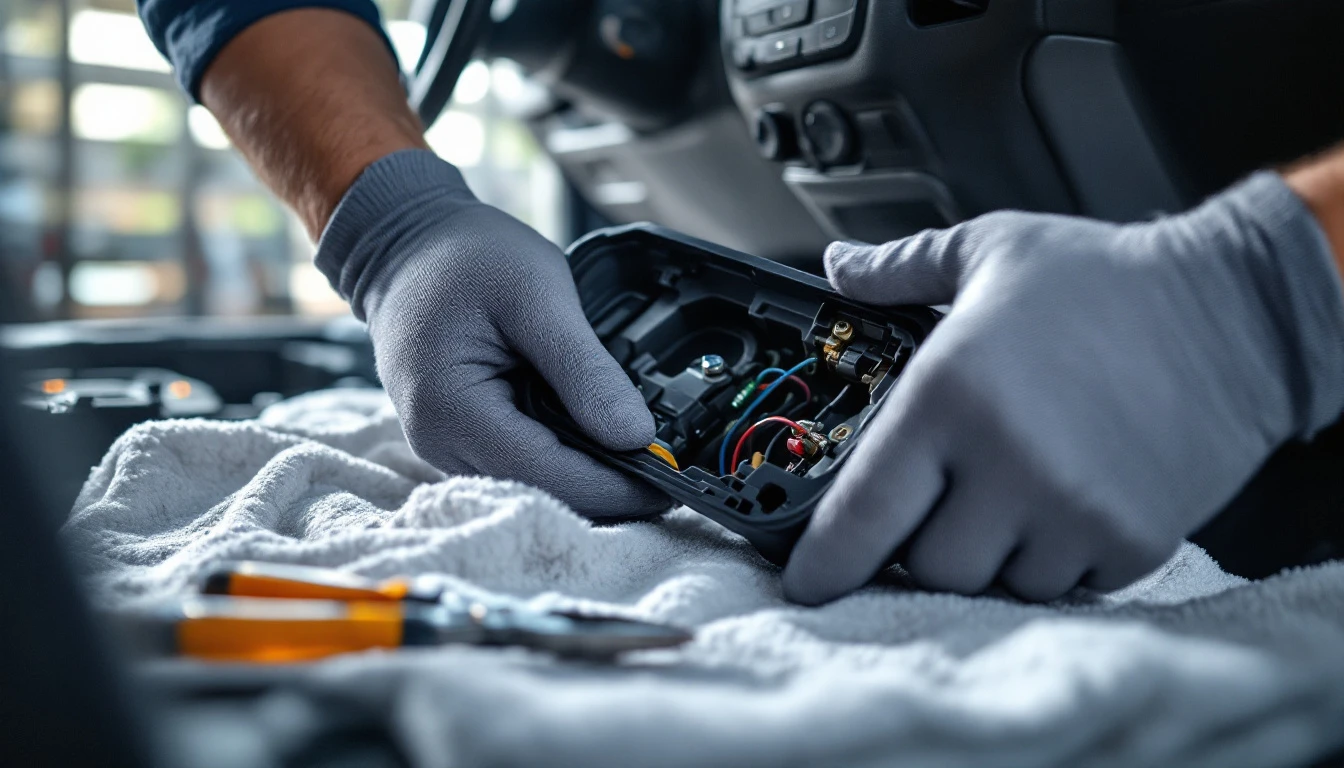
As of October 2026, Chevy ignition repair in Fort Worth typically costs $150–$400 from a mobile specialist for a lock cylinder repair or replacement that is re-keyed to your existing key. If a new coded key is needed, add a transponder key at $120–$250. Steering-column ignition work is quoted after diagnosis. A dealership usually runs roughly 1.4–2 times the mobile price once labor and software fees are added.
That headline range hides a lot of variation, because "Chevy ignition problem" covers at least five different failures: a worn key, a worn lock cylinder, a failed electrical ignition switch, a security (Passlock or immobilizer) fault that only feels like an ignition fault, and a damaged steering column after a theft attempt. Each one has a different price, and the model you drive decides which one is likely. This guide prices the repair by Chevrolet model family and by the part that actually failed, so you can tell which row of the table is yours before you call.
We are a mobile-only service, so the work happens where the vehicle is parked, anywhere in Fort Worth and the surrounding Tarrant County area. For the repair itself, step by step, see our Chevy and GMC ignition switch repair guide; this page is the money side of the same job.
Chevy Ignition Repair Cost by Failure Type
The ranges below are the same bands we use across the site. The right-hand column is the one that matters: it tells you when each line applies.
| Chevy ignition job | Mobile specialist | Dealership | When it applies |
|---|---|---|---|
| Lock cylinder repair or replacement, re-keyed to your key | $150–$400 | roughly 1.4–2× | Worn wafers, sticking cylinder, key turns hard |
| Cylinder replacement plus Passlock security relearn | $150–$400 | roughly 1.4–2× | Cylinder swapped on a vehicle with a Passlock sensor |
| New coded transponder key with the new cylinder | add $120–$250 | higher | The old key is worn or cracked and cannot be re-used |
| Body control module programming (only if diagnosis points there) | $150–$350 | higher | Security faults that persist after the mechanical repair |
| Engine computer programming (immobilizer-side faults only) | $150–$500 | higher | Start-and-stall behavior traced to the engine module |
| Steering-column or complex ignition work | Quote after diagnosis | higher, possible tow | Forced column, bent shaft, theft damage |
| Steering-lock bind with no parts needed | Minimal, diagnostic | n/a | Often a free-turn fix |
For comparison, dealership bay labor in our area runs about $165–$215 per hour before parts and any software access fee. The part cost for the cylinder or switch is on top of the labor in both cases, and it varies with the model.
If your Chevy has a push-button start, there is no cylinder to repair, and the rows above do not apply. That case is covered in the section on push-button models below.
Why the Same Repair Costs Different Amounts on Different Chevys
A cylinder swap on one truck can be a thirty-minute job and on another a long afternoon. These are the variables that move your number inside the range.
1. The model family and column design
On a full-size pickup the ignition cylinder is reached by removing the column covers and sometimes the lower dash trim. On a compact car, the same job can involve lowering the steering column slightly for clearance. More disassembly means more labor, which is why a Silverado and a Malibu are not billed identically even though the part is conceptually the same.
2. Whether the cylinder can be rebuilt or has to be replaced
A cylinder that is merely worn can often be rebuilt with fresh wafers and re-keyed to the key you already hold. That is the least expensive path and keeps your existing key working. A cylinder with a cracked housing, a broken tailpiece, or damage from a theft attempt has to be replaced, and replacement adds the part and, often, the security relearn.
3. The security system generation
Many 2000s-era GM vehicles use a Passlock sensor at the cylinder. When the cylinder is replaced, the vehicle has to relearn the sensor's signal or it will refuse to start and flash a security light. Later vehicles move the logic into the body control module and a transponder in the key. If the repair touches that handshake, the programming is part of the price. Our Passlock relearn explanation and the GM VATS and Passlock bypass guide explain the difference between a proper relearn and a bypass.
4. A worn key hiding behind a worn lock
Before any cylinder is pulled, the key has to be inspected. A key worn smooth will not lift the wafers cleanly, and a worn key in a good cylinder looks identical to a good key in a worn cylinder. Cutting a fresh key to the factory code is a smaller cost than a cylinder, and it is the first thing to rule out. See our guide on what happens when your only key is worn and failing for how to tell the two apart.
5. Electrical switch versus lock cylinder
The ignition has two halves: the lock cylinder you turn and the electrical switch behind it that sends power to the starter and accessories. If the key turns normally and the car stays dead, or the accessories cut out when you bump the column, the electrical switch is the suspect, not the cylinder. Different part, different price, often a quote.
6. Time and location
Mobile service charges a flat rate for the repair and travels to the vehicle, so a truck stuck in a driveway in Burleson or Cedar Hill costs the same repair rate as one in the city. A dealer repair adds a tow, a day or more in the shop, and the hourly rate.
Chevrolet Models and What Usually Fails
This is a general pattern guide, not a promise. We confirm each vehicle by year and trim before quoting.
Silverado and Tahoe/Suburban (full-size trucks and SUVs). The cylinder wears with heavy daily use and a heavy keychain, which loads the cylinder every time the vehicle bounces. Wear shows up as a key that needs a jiggle or a cylinder that will not turn until the steering wheel is moved. Expect the cylinder repair or replacement row, with a key if the original is worn. Newer trucks with a proximity key have no cylinder at all.
Malibu, Impala, Cruze and Cobalt (cars). Compact and midsize cars are where we see the most electrical-switch failures alongside cylinder wear. Several of these models were included in a well-known ignition-switch recall years ago, so check the vehicle identification number for open recalls on the NHTSA recall lookup before paying for a repair that a manufacturer may already owe you.
Equinox, Traverse and Trailblazer (crossovers). Mostly cylinder wear on older units and security-system faults on newer ones. A crossover that cranks and then shuts off with a flashing security light is usually a relearn issue, not a mechanical one.
Colorado (compact pickup). Behaves like the Silverado: cylinder wear first, switch second.
Camaro and Corvette. Low-volume models with different column and key hardware. These are quoted after we identify the exact generation, and some require parts that are more expensive than the standard GM range.
Bolt EV and EUV. Proximity key, push-button start. No cylinder. Starting faults are a key, battery or module issue, covered below.
If you drive a Cadillac or Buick, which share the platform and much of the ignition hardware with Chevrolet, our Cadillac and Buick ignition switch repair guide covers the differences.
Push-Button Chevys: When There Is No Cylinder to Repair
A Chevy with push-button start cannot have a lock cylinder repair, because there is no cylinder. When the button does nothing, the cause is usually one of these, in order of how often we find it:
- A weak fob battery or a fob the car cannot read. Cheapest fix, often a battery and a re-seat of the fob in the backup pocket or slot.
- A low or failing vehicle battery. The system wakes on a signal, and low voltage prevents the handshake.
- A key that was never fully registered to the vehicle, or one deleted during an earlier repair.
- A module fault. Body control or engine module programming, priced at $150–$350 and $150–$500 respectively when diagnosis supports it.
Replacement smart fobs are priced at $250–$650+ depending on the vehicle; our smart key all-keys-lost guide covers that path. For the general price picture across makes, see our ignition repair versus replacement cost guide.
Repair, Replace or Re-Key: How We Decide
We follow the same order on every Chevy so you do not pay for parts you do not need.
- Test the key. Inspect the cuts, compare to the factory code, and try a known-good key if one exists. A worn key is the cheapest fix on the page.
- Test the electrical side. Does the vehicle lose power when the column is bumped? Does the starter engage when the key is held in the start position? That separates cylinder from switch.
- Read the security status. A scan for body control module and Passlock data tells us whether a flashing light is a relearn issue.
- Repair if the housing is sound. Rebuilding and re-keying the cylinder keeps your original key working and is the lowest-cost path.
- Replace if the housing is not sound, and program the security relationship so the car starts on the first try.
Where a new key is needed, we cut and program it on site; the price for the key is the transponder range above. If the whole key set is gone, that becomes an all-keys-lost job, priced separately in our all keys lost cost guide.
Theft-Damaged Ignitions
Older Chevy trucks and cars are regular targets for attempted theft, and the damage is usually to the steering column: a broken ignition collar, a punched or pulled cylinder, or a bent shaft. These repairs are priced as steering-column work and are quoted after diagnosis, because the range between "replace the cylinder and collar" and "replace column components" is wide. File the police report and tell your insurer first; many policies cover theft damage, and a written repair quote is what they will ask for.
How to Keep Your Ignition Repair Cost Down
- Address a jiggling key early. A key that needs a wiggle is a cylinder in decline. Repairing it now costs a cylinder rebuild; waiting until it strands you can add a tow.
- Lighten the key ring. A heavy keychain levers the cylinder on every bump. Removing the extra weight is free and slows wear.
- Get a spare cut while the original still works. Copying a good key is cheaper than recreating one from the code.
- Check recalls first. Free to look up and occasionally worth a lot.
- Do not force a stuck key or a locked wheel. Wiggle the wheel while turning the key gently; forcing it can snap the key or break the cylinder.
- Have us diagnose before ordering parts. A scan and a ten-minute test usually settles cylinder, switch or security before anything is bought.
What Not to Do
Skip the "ignition bypass" shortcuts sold online and the hot-wired starter jobs that some shops offer. A bypassed ignition leaves the vehicle unlocked in effect, can disable the steering lock, and may void insurance coverage. A correct repair keeps the factory security working.
Get a Quote for Your Chevy
Tell us the year, model and what the vehicle does: a key that will not turn, a key that turns and nothing happens, a flashing security light, or visible damage. With that we can place you in the right row of the table and quote before we arrive. Fort Worth Locksmith & Computer Programming is mobile-only and available 24/7 at (817) 668-3801, or use the contact page. The full service is described on our ignition repair service page.
Frequently Asked Questions
How much does Chevy ignition repair cost in Fort Worth?
As of October 2026, a mobile specialist in Fort Worth typically charges $150 to $400 to repair or replace a Chevy lock cylinder and re-key it to your existing key. A new coded transponder key adds $120 to $250. Steering-column work after damage is quoted after diagnosis. A dealership usually costs roughly 1.4 to 2 times as much once labor, software and any tow are added.
Is it the ignition switch or the lock cylinder?
If the key is hard to turn, needs a jiggle, or will not come out, suspect the lock cylinder or a worn key. If the key turns normally but the car stays dead, or accessories cut out when you bump the column, suspect the electrical ignition switch behind the cylinder. A short test on the vehicle separates the two before any part is ordered.
Can you repair a Chevy ignition without replacing my key?
Often, yes. When the lock cylinder is worn but its housing is sound, it can be rebuilt with fresh wafers and re-keyed to the key you already have. That is the least expensive repair. If the key itself is badly worn, cutting a fresh one to the factory code may fix the problem without touching the cylinder.
Why does my Chevy crank and then die after the ignition was replaced?
Many Chevys from the 2000s use a Passlock security sensor at the cylinder. After a cylinder swap the vehicle has to relearn that signal, and until it does the engine starts and shuts off with a flashing security light. A proper relearn fixes it. A bypass is a shortcut that disables the security feature and is not what we recommend.
Does a push-button Chevy have an ignition to repair?
No. A push-button Chevy has no lock cylinder, so the cylinder repair prices do not apply. A start button that does nothing is usually a weak fob battery, a low vehicle battery, an unregistered key, or occasionally a module fault. Replacement smart fobs generally cost $250 to $650 or more depending on the vehicle.
Will insurance pay for a damaged ignition after attempted theft?
Often it can, depending on your policy and deductible. File a police report, notify your insurer, and ask for a written repair quote, which we provide after inspecting the steering column. Theft-damaged columns are quoted individually because the damage ranges from a broken collar to bent column components.
Do you come to me for a Chevy ignition repair?
Yes. We are a mobile-only service and travel to the vehicle anywhere in Fort Worth and the surrounding area, including Burleson and Cedar Hill, at any hour. Most cylinder and key repairs are completed on site in one visit, without a tow.