GM VATS & PassLock Bypass — How It Works, Repair vs. Bypass (All Models)
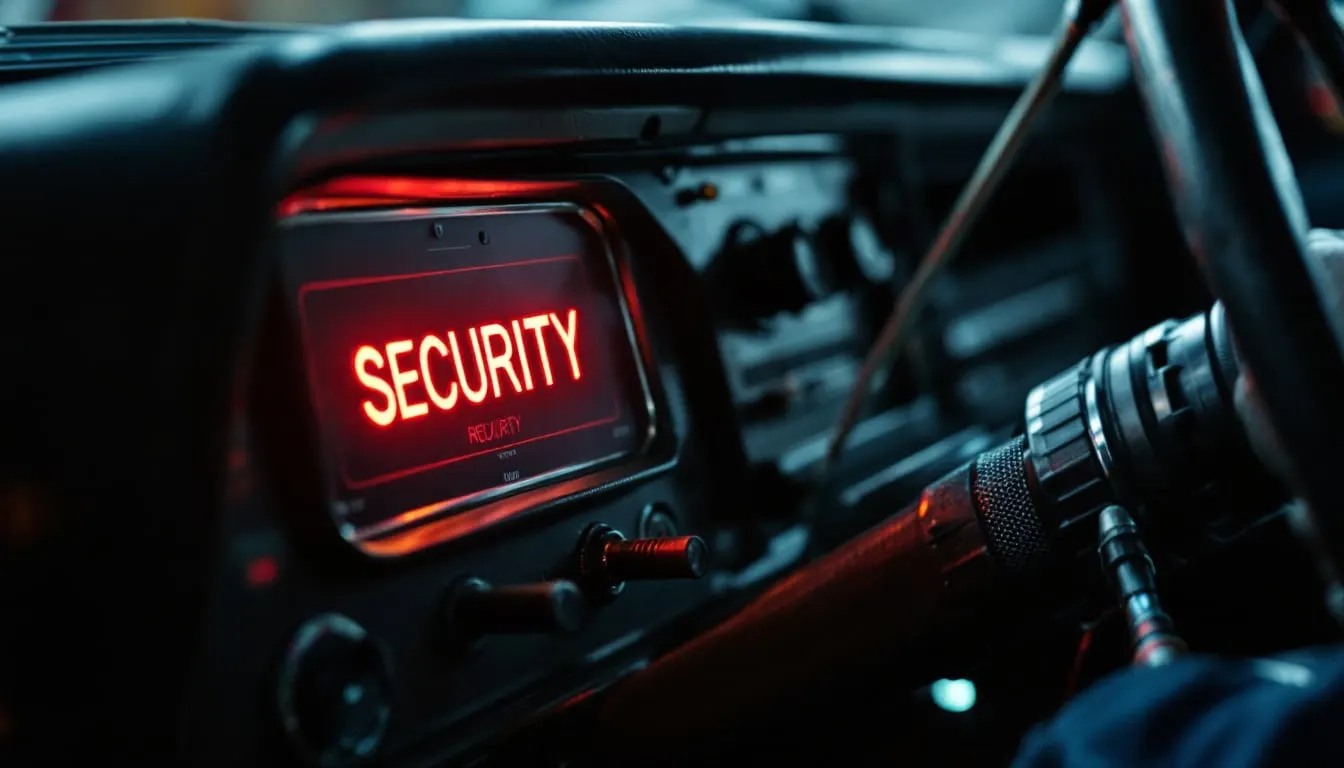
Your older GM vehicle cranks but will not start, the SECURITY light is glowing, and after a failed start you have to wait ten minutes before it will even try again. That is the unmistakable fingerprint of a GM anti-theft system — VATS on the older cars, PassLock on the later ones — locking out the fuel because it thinks the key is wrong. The frustrating part: it is usually not a theft attempt and often not even the key. It is a worn sensor or a corroded connection in the security system itself, and there are two ways to fix it: repair the system, or bypass it.
This guide explains how GM’s VATS and PassLock systems actually work, why they fail on their own, the real difference between repairing and bypassing, which approach makes sense for your specific GM, and the legal and safety considerations. It pairs with our GM VATS bypass and disable service page, where you can see the makes and models we cover.
How GM VATS Works (1986–Mid-1990s)
VATS — Vehicle Anti-Theft System, also marketed as PASS-Key — was one of the auto industry’s early electronic immobilizers, and it was effective enough to influence the federal anti-theft standards that followed under 49 CFR Part 541. The mechanism is elegantly simple: the key has a small black resistor pellet embedded in the blade. When you turn the key, the ignition lock reads the pellet’s resistance value — one of 15 possible values. If the resistance matches what the controller expects, it allows fuel and spark. If it does not match, or if it reads nothing, the system disables starting and forces a timed lockout of roughly three to four minutes before it will retry.
The weak point is the contacts. Decades of key insertions wear the tiny springs and wires that read the pellet, and they corrode. A perfectly good key then reads as “wrong” intermittently — the car starts one day and refuses the next — which is the classic aging-VATS failure that has nothing to do with theft.
How GM PassLock Works (Mid-1990s–2000s)
PassLock (PassLock I and II) replaced the resistor-pellet approach with a sensor in the ignition lock cylinder. Instead of reading the key, PassLock uses a Hall-effect or magnetic sensor that detects the lock cylinder turning to the correct position and sends a coded signal to the Body Control Module. The BCM verifies the code and authorizes the engine controller to deliver fuel. The key itself is just a mechanical key — the security lives in the lock cylinder sensor and the BCM handshake.
PassLock’s notorious failure point is that lock-cylinder sensor. When it degrades — common on high-mileage Chevrolet, GMC, Pontiac, Oldsmobile, Buick, and Saturn models from this era — the BCM stops getting a valid code and triggers the SECURITY light, the no-start, and the ten-minute relearn lockout. Because the security data lives in the BCM, PassLock issues frequently overlap with body control module programming, which is why a single diagnosis can point at either the sensor or the module.
Repair vs. Bypass: What Is the Difference?
There are two legitimate ways to get a VATS or PassLock vehicle running reliably again, and the right one depends on the car:
Repair restores the original system: replacing worn ignition contacts on a VATS car, or replacing the failed lock-cylinder sensor and performing the PassLock relearn procedure on a PassLock car. Repair keeps the factory anti-theft protection intact — the preferred outcome on a vehicle that still has meaningful theft risk and original-spec parts available.
Bypass permanently satisfies the security check so the system stops interfering. On a VATS car, that means installing a fixed resistor matched to the vehicle’s value so the controller always reads “correct.” On a PassLock car, it means a relearn or a module-based bypass that stops the no-start. A bypass is appropriate when the original sensor or contacts are no longer reliably repairable, when replacement parts are obsolete, or when an owner of a 20-to-35-year-old vehicle simply wants to end the intermittent no-starts a worn-out, low-value anti-theft system keeps causing.
“Most VATS and PassLock no-starts that come through the door are not theft attempts — they are worn ignition contacts or a failed lock-cylinder sensor on a car that is twenty-plus years old. The honest conversation is repair versus bypass: repair if the parts exist and the owner wants the factory protection, bypass if the system is the failure point and the vehicle’s value does not justify chasing obsolete parts. Either way, it is the owner’s own vehicle and their informed choice.”
— Fort Worth Locksmith & Computer Programming, GM security policy
One thing a reputable provider verifies first, every time: ownership. Per the ALOA professional standards for the trade, automotive security work requires proof of ownership before any key or anti-theft procedure — a safeguard that protects you and is a baseline marker of a legitimate locksmith. A VATS or PassLock bypass on your own registered vehicle is ordinary maintenance; that ownership check is what keeps it that way.
Which GM Models Are Affected
VATS / PASS-Key (resistor pellet, ~1986–mid-1990s): Chevrolet Corvette and Camaro, Pontiac Firebird and Grand Am, Oldsmobile, Buick, and Cadillac models of the era. If your key has a small black plug in the metal blade, you have VATS.
PassLock I / II (lock-cylinder sensor, ~1995–2000s): Chevrolet Cavalier, Malibu, S-10, Blazer, and Impala; GMC and Pontiac equivalents; Oldsmobile Alero and Intrigue; Buick; and Saturn S-series and L-series. If your key is a plain mechanical key but the SECURITY light governs a no-start, you almost certainly have PassLock.
Later GM vehicles moved to transponder-based immobilizers (PassLock gave way to chip keys and then proximity systems), which are a different repair entirely — covered in our automotive key programming guide.
The DIY Bypass Myth
Search online and you will find forum threads promising a five-dollar VATS “fix” with a single resistor, or a PassLock relearn you can do in your driveway with a paperclip and a stopwatch. Some of these work, on some cars, some of the time — and that is exactly the problem. The reason they so often fail is that the home mechanic guesses at the VATS resistance value instead of measuring it, or attempts a PassLock relearn without first confirming whether the fault is the sensor, the wiring, or the BCM. A wrong resistor leaves the car no better off, and a botched relearn can lock the system into a longer fault state.
The deeper risk is misdiagnosis. The SECURITY-light no-start can come from a worn ignition contact, a failed lock-cylinder sensor, a broken wire between the cylinder and the BCM, or the BCM itself — and the cheap home fix only addresses one of those. A proper diagnosis measures the actual VATS value or reads the PassLock sensor signal, isolates the failure point, and only then chooses repair or bypass. That is the difference between a fix that holds and a car that strands you again next month.
Do Not Ignore an Intermittent SECURITY Light
It is tempting to live with a VATS or PassLock car that “usually” starts — you just try again after the timed lockout. The trouble is that an intermittent failure is a failure that is getting worse, not a quirk that will resolve itself. Worn contacts keep wearing; a degrading sensor keeps degrading. The car that makes you wait ten minutes once a week today will eventually refuse to start at all, and it will pick the least convenient moment to do it. Addressing it while it is still intermittent means a planned, lower-cost visit instead of an emergency no-start in a parking lot. It also rules out the small chance that the intermittent behavior is masking a separate electrical fault worth catching early.
VATS / PassLock Repair and Bypass Cost in Fort Worth
These are older vehicles, so the work is usually quick and affordable relative to modern module programming. A VATS repair or resistor-bypass commonly runs $100–$250 in the DFW market; a PassLock sensor replacement plus relearn, or a PassLock bypass, typically runs $150–$350 depending on whether the lock cylinder needs replacement. By contrast, a dealer that no longer stocks era-correct parts may quote a far larger BCM-and-cylinder job, if they will touch the car at all. The U.S. Bureau of Labor Statistics tracks the trade under SOC 49-9094; its occupational data reflects how independent mobile locksmiths — not dealers — have become the practical source of expertise for these aging anti-theft systems.
The two systems side by side, as of August 2026:
| System | Era | Where the security lives | Fix options | Fort Worth price |
|---|---|---|---|---|
| VATS / PASS-Key | ~1986 – mid-1990s | Resistor pellet embedded in the key blade, read by the ignition lock contacts | Repair the worn contacts, or fit a fixed resistor matched to the vehicle’s value | $100–$250 |
| PassLock I / II | ~1995 – 2000s | Lock-cylinder sensor handshaking with the Body Control Module | Replace the failed sensor and run the relearn, or perform a PassLock bypass | $150–$350 |
Mobile service is included in both, so there is no tow.
A Real-World Example
The vehicle: A 1999 Chevrolet S-10 in Fort Worth — daily-driver work truck — with an intermittent no-start, a glowing SECURITY light, and a forced ten-minute wait after every failed attempt.
Before: The owner had already replaced the battery and the plain mechanical key, with no improvement. The local dealer would not commit to the era-specific PassLock parts and steered toward a large, open-ended BCM diagnosis. The truck was unreliable enough that the owner was afraid to drive it to work.
The visit: A technician confirmed ownership, scanned the BCM, and isolated the failure to a degraded PassLock lock-cylinder sensor — the key and BCM were fine. After discussing repair versus bypass, the owner chose the sensor replacement plus relearn to keep the factory anti-theft on a truck parked at job sites. The relearn procedure was completed on site.
Result: Reliable starts, SECURITY light out, no more ten-minute lockouts, for a fraction of the open-ended dealer path. The lesson is the article’s core: on these systems the right first step is diagnosis that pinpoints the worn component, then an honest repair-versus-bypass choice — not a parts-cannon at the most expensive module.
Frequently Asked Questions
Is bypassing GM VATS or PassLock legal?
On your own registered vehicle, yes — it is ordinary maintenance, and reputable locksmiths verify ownership before performing it. These are decades-old anti-theft systems whose own components have failed; disabling a failed system on a vehicle you own is your choice. A provider should confirm ownership first, consistent with ALOA professional standards.
How do I know if my GM has VATS or PassLock?
Look at the key. VATS keys have a small black resistor pellet embedded in the metal blade. PassLock vehicles use a plain mechanical key — the security is in the lock-cylinder sensor and the BCM, not the key. A SECURITY light governing a no-start, plus a forced wait after a failed start, points to one of these systems.
Should I repair or bypass the system?
Repair restores factory anti-theft and is preferred when parts are available and the vehicle still has meaningful theft risk. Bypass makes sense when the original sensor or contacts are obsolete or no longer reliably repairable, or when chasing era-specific parts is not worth it on an older, lower-value vehicle. A good provider lays out both before you decide.
Why does my car make me wait ten minutes before it will start?
That timed lockout is the security system’s relearn or anti-tamper delay. After it reads an invalid security signal — usually from a worn VATS contact or a failing PassLock sensor — it disables starting for several minutes before retrying. Fixing the worn component (or bypassing the failed system) eliminates the wait.
How much does a VATS or PassLock fix cost near Fort Worth?
A VATS repair or resistor bypass commonly runs $100–$250 in the DFW area; a PassLock sensor replacement with relearn, or a PassLock bypass, typically runs $150–$350 depending on whether the lock cylinder needs replacement. Mobile service is included, so there is no tow.
Get Your GM Security System Sorted in Fort Worth
If a SECURITY light and intermittent no-starts are stranding your older GM, Fort Worth Locksmith & Computer Programming provides mobile GM VATS and PassLock repair, bypass, and disable throughout Fort Worth, Arlington, Dallas, and the entire DFW metroplex. We diagnose first, verify ownership, and lay out repair versus bypass honestly so you choose what fits your vehicle.
Call (817) 668-3801 with your year, make, and model, and describe the SECURITY-light behavior you are seeing. We will tell you whether it looks like worn contacts, a failed sensor, or a BCM issue, and give you an upfront, all-in quote before we dispatch — same-day service for most GM models.