Chevrolet & GMC Ignition Switch Repair in Fort Worth — Key Won't Turn
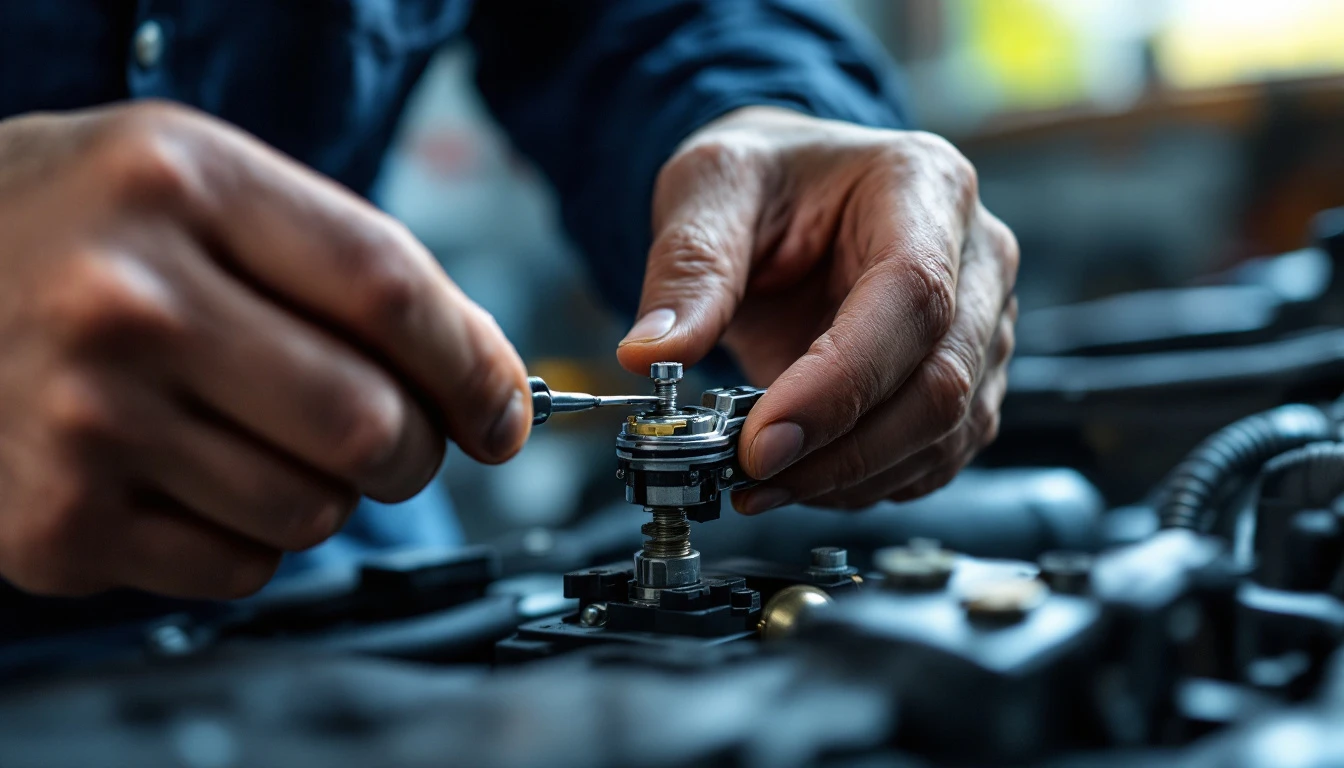
Few car problems are as instantly stressful as a key that will not turn. You are in a parking lot off Camp Bowie, running late, and the key goes into your Silverado's ignition and simply will not rotate — or it turns halfway and jams. On Chevrolet and GMC vehicles, a key that binds, sticks, or refuses to turn is one of the most common ignition complaints we see in Fort Worth, and the good news is that it is usually a repairable mechanical problem rather than a reason to junk the truck.
This 2026 guide explains what actually goes wrong inside a GM ignition — worn wafers, a bound actuator, Passlock cylinder faults — how to tell repair from replacement, why a Passlock cylinder swap may need a security relearn, and the realistic mobile-locksmith pricing for each. It covers the trucks and cars we work on most: Silverado, Sierra, Tahoe, Yukon, and Malibu. Booking ignition repair starts on our main service page, but the diagnostic detail below is where the "why won't it turn" questions get answered.
What Actually Fails Inside a GM Ignition
When a key will not turn, the fault is almost always in one of a few places. Knowing them helps you understand the quote before anyone touches the vehicle.
Worn cylinder wafers
Inside the ignition lock cylinder is a stack of small spring-loaded wafers that the cut of your key lifts into alignment so the cylinder can rotate. After years of daily use — and Chevrolet and GMC trucks in Fort Worth pile on the miles — those wafers and the key both wear down. Eventually the worn key no longer lifts the worn wafers into clean alignment, and the cylinder binds or refuses to turn. This is the single most common ignition complaint on high-mileage GM vehicles, and it is very repairable.
A bound or worn ignition actuator
The actuator is the part that translates the cylinder's rotation into the switch action that powers the vehicle. On full-size GM trucks and SUVs it can wear or bind over time, making the key feel stiff, catch, or turn roughly. A worn actuator often shows up alongside worn wafers, since both are consequences of the same years of heavy use.
Steering-lock bind
Sometimes the key will not turn because the steering wheel is bound against the steering lock — a very common, harmless cause. If the front wheels are turned hard against a curb or under load when you park, the lock pin binds and the key cannot rotate until the pressure is relieved. Gently rocking the wheel left and right while trying the key often frees it. It is worth ruling this out before assuming the cylinder has failed.
Passlock cylinder faults
Many GM vehicles use Passlock, a security system that reads an electrical resistance value from a sensor in the ignition cylinder. If the cylinder or that sensor degrades, the system can misread the value and either refuse to start or throw the security light. This is a different kind of failure — the key may turn fine, but the engine cranks and dies, or a security warning appears. It is why a GM no-start is not always a mechanical key problem, and why diagnosis matters before parts get replaced.
Repair vs Replacement: How We Decide
The most important thing a good locksmith does on an ignition job is figure out the smallest fix that actually solves the problem. Not every stiff key needs a new switch, and not every no-start needs a new cylinder.
When the fault is worn wafers or a worn cylinder, the fix is usually to repair or replace just the lock cylinder and re-key it to match your existing key, so you do not need new keys. That is the common, affordable case. When the actuator is worn, that gets addressed with the cylinder. Only when the failure is deeper — a damaged switch, or a steering-column issue behind the lock housing — does the job move into more involved territory that has to be quoted after diagnosis, because the labor varies so widely by vehicle and condition.
The honest framing is this: cylinder repair or replacement is a defined, priced job. Complex or steering-column work is a quote-after-diagnosis job, because a tech has to confirm your exact setup and condition before promising a price. We never sell a full column repair when a cylinder swap will do. Our automotive locksmith page covers the broader range of on-site work, and the Chevrolet keys and GMC keys pages have make-specific detail.
Why Passlock Relearn Matters After a Cylinder Swap
Here is a detail that trips up a lot of DIY attempts and even some general mechanics: on a Passlock-equipped GM vehicle, replacing the ignition lock cylinder can change the resistance value the security system expects to see. The new cylinder's sensor produces its own value, and until the system relearns it, the vehicle may crank but refuse to run, with the security light on.
That is not a defect — it is the security system doing its job. The fix is a security relearn procedure that teaches the module the new cylinder's value. A locksmith who works GM vehicles handles this as a normal part of a Passlock cylinder replacement, so the truck starts cleanly when the job is done. It is one of the main reasons to have ignition work done by someone who knows GM security, rather than swapping a cylinder and being stranded by a security lockout. When the relearn ties into deeper module work, that falls under our module programming service.
Chevy and GMC Models We See Most
Certain GM vehicles come up again and again for ignition work in Tarrant County.
Silverado and Sierra. The full-size GM trucks are the workhorses of Fort Worth, and their ignitions take the most abuse. High-mileage Silverados and Sierras are the classic worn-wafer, stiff-key case — the key that used to turn smoothly starts catching, then binding, then failing. Because these trucks are re-keyed to the existing key on repair, owners usually keep their same keys.
Tahoe and Yukon. The full-size SUVs share the truck architecture and the same wear patterns. Years of daily family and fleet use wear the cylinder the same way, and the repair path is the same.
Malibu and other Passlock cars. The Malibu and other GM passenger cars are common for the security-related side of ignition trouble — the Passlock no-start where the security light comes on and the engine cranks but will not run. Here the fix leans on the security relearn rather than mechanical cylinder wear, which is why correct diagnosis is everything.
Any GM vehicle with heavy daily use can eventually wear a cylinder, but these are the ones that fill our schedule.
Dealer vs Mobile Locksmith: GM Ignition Pricing
As of September 2026 (prices reviewed this month and unchanged since July), here is how Chevrolet and GMC ignition repair costs break down. Everything below is a range, because the exact vehicle, the part condition, and whether a security relearn or new key is needed all move the number.
| GM ignition service | Mobile locksmith | GM dealer | Notes |
|---|---|---|---|
| Lock cylinder repair or replace (re-keyed to your key) | $150–$400 | roughly 1.4–2× | Most common fix |
| Cylinder replace + Passlock security relearn | $150–$400 | roughly 1.4–2× | Relearn included on-site |
| New coded key required with new cylinder | + transponder key $120–$250 | higher | Only if re-key isn't possible |
| Complex / steering-column ignition work | quote after diagnosis | higher + possible tow | Labor varies by vehicle |
| Steering-lock bind (no parts) | minimal / diagnostic | n/a | Often a free-turn fix |
Two things worth noting. First, dealer pricing on the same work runs notably higher — commonly 1.4 to 2 times mobile pricing — because the dealership adds a bay-rate hourly labor charge (DFW dealers typically bill in the $165 to $215 per hour range, in 1.5 to 2 hour increments) plus the cost of getting a no-start vehicle to the service drive. Second, the mobile advantage is largest on trucks and SUVs, where the dealer's tow-plus-hourly stacks up fast. A mobile tech does the cylinder repair and the Passlock relearn in your driveway, no tow.
Push-Button Chevy and GMC: Ignition Problems Without a Cylinder
A growing share of the Chevrolet and GMC vehicles we see for "ignition" trouble have no key cylinder at all. Upper-trim Silverados and Sierras, most Tahoes and Yukons from the last several years, and many Equinox, Traverse, Acadia and Terrain models start with a button. When one of those refuses to start, the complaint sounds like an ignition failure, but the fault sits in the passive entry and start system — the key, the cabin antennas that search for it, the module that authorizes it, the start button circuit, or on some models an electric steering column lock.
The clue is usually a dash message: Service Keyless Start System, No Remote Detected, or Service Steering Column Lock. Those messages change the diagnosis entirely, and the fix is rarely a mechanical part. Start with the key battery and the backup transmitter pocket described in your owner's manual; if the truck starts from the pocket, the key is fine and the vehicle is failing to hear it. Our guide to what Service Keyless Start System means on a Chevy, GMC, Buick or Cadillac walks through each branch and what it costs.
The pattern we see most on late-summer calls is heat-related: turn-key trucks whose worn switch contacts drop out after a hot afternoon, and push-button trucks whose weak fob battery finally fails in the heat. Both look like a dead ignition from the driver's seat, and both are cheaper to fix than a column replacement. If a replacement key turns out to be the answer on a push-button GMC, our GMC key replacement cost guide lists the price bands by model.
What Happens During an Ignition Repair Visit
An ignition repair on a Chevy or GMC starts with diagnosis, because the fix depends entirely on the cause. The tech confirms whether the key will not turn due to a worn cylinder, a bound actuator, a steering-lock bind, or a Passlock security fault. If it is a worn cylinder, the tech repairs or replaces it and re-keys it to your existing key, then — on Passlock vehicles — runs the security relearn so the engine starts cleanly. Before leaving, the tech verifies that the key turns smoothly, the vehicle starts, and no security warning remains.
Because we are mobile-only, most of this happens wherever the vehicle is parked — your home in the TCU area, a lot downtown, or a driveway in Bedford. There is no tow to arrange for a standard cylinder job. Deeper steering-column work may need extra time, which the tech confirms after diagnosis. If your vehicle is elsewhere in the metroplex, our Fort Worth, Arlington, and Bedford service areas cover most of Tarrant County.
When Ignition Trouble Is Really a Key or Security Problem
Sometimes what feels like an ignition problem is actually a key or security issue, and the distinction changes the fix. If the key turns fine but the engine cranks and dies with the security light on, that points to Passlock or the immobilizer, not the cylinder. If you have lost your keys entirely and cannot even try the ignition, that is an all-keys-lost job rather than a repair.
For the all-keys-lost scenario on GM vehicles, our guide on GM and Chevy all-keys-lost programming covers what that job involves and why it is priced differently from a cylinder repair. And when key replacement and programming are the real need across GM trucks, the GMC and Ram key replacement and programming guide walks through the options. If the fix turns out to be a coded key, our transponder key programming service handles GM chip keys.
The Bottom Line for Chevy and GMC Owners in Fort Worth
A key that will not turn in your Chevrolet or GMC is almost always a repairable problem — a worn cylinder, a bound actuator, or a Passlock fault — not a reason to panic. The right move is a proper diagnosis so you pay for the smallest fix that actually solves it, whether that is a cylinder repair with a security relearn or, in the deeper cases, a quote after diagnosis for column work. Do not let a stiff key turn into a snapped one or a stranded truck.
We handle Silverado, Sierra, Tahoe, Yukon, and Malibu ignition work on-site across Tarrant County every week, re-keying to your existing key where we can and running the Passlock relearn as part of the job. Describe the symptom, and we will bring the right diagnosis and repair to you.
Frequently Asked Questions
Why won't the key turn in my Chevy or GMC ignition?
The most common causes are worn cylinder wafers, a bound or damaged ignition actuator, a worn key, or a steering-lock bind. On Passlock-equipped GM vehicles, a cylinder fault can also trip the security system. A tech confirms which it is on-site before any part is replaced.
How much does Chevy or GMC ignition switch repair cost in Fort Worth?
Lock cylinder repair or replacement typically runs $150 to $400. Complex or steering-column work is quoted after diagnosis because the labor varies widely by vehicle and condition.
What is a Passlock fault and why does it matter after a cylinder replacement?
Passlock is GM's security system that reads a resistance value from the ignition cylinder. Replacing the cylinder can change that value, so the system may need a security relearn before the vehicle starts normally. We handle the relearn as part of the job.
Can you repair a GM ignition without replacing the whole switch?
Often yes. If only the lock cylinder or its wafers are worn, we can repair or replace just that part and re-key it to your existing key. Full switch or column work is only recommended when the cylinder repair will not solve the fault.
Do you come to me for ignition repair?
Yes. We are mobile-only across Fort Worth and Tarrant County and handle most cylinder and switch work in your driveway or lot. Deep steering-column repairs may need extra time, which we confirm after diagnosis.
Will I need a new key after ignition repair?
Not always. When we re-key a new cylinder to match your current key, no new key is needed. If the cylinder must be keyed differently, we cut and program a matching key, which we confirm before starting.
Which Chevy and GMC models have the most ignition problems?
High-mileage full-size trucks and SUVs — Silverado, Sierra, Tahoe, and Yukon — are common for worn cylinders, and the Malibu and other Passlock cars are common for security-related no-starts. Any GM with heavy daily use can wear a cylinder over time.
Get Your GM Ignition Fixed Today
A binding key only gets worse, and a snapped key in the ignition turns a repair into a bigger job. Skip the dealer tow and the bay-rate hourly — a mobile GM ignition specialist comes to you anywhere in Fort Worth and Tarrant County, diagnoses the real cause, and repairs the cylinder with the Passlock relearn on-site. Call Fort Worth Locksmith & Computer Programming at (817) 668-3801 to describe the symptom and get a fair range.
Written by the Fort Worth Locksmith & Computer Programming team — mobile automotive key and programming specialists serving Fort Worth and the greater Tarrant County area.