"Service Keyless Start System" on a Chevy, GMC, Buick or Cadillac: What It Means
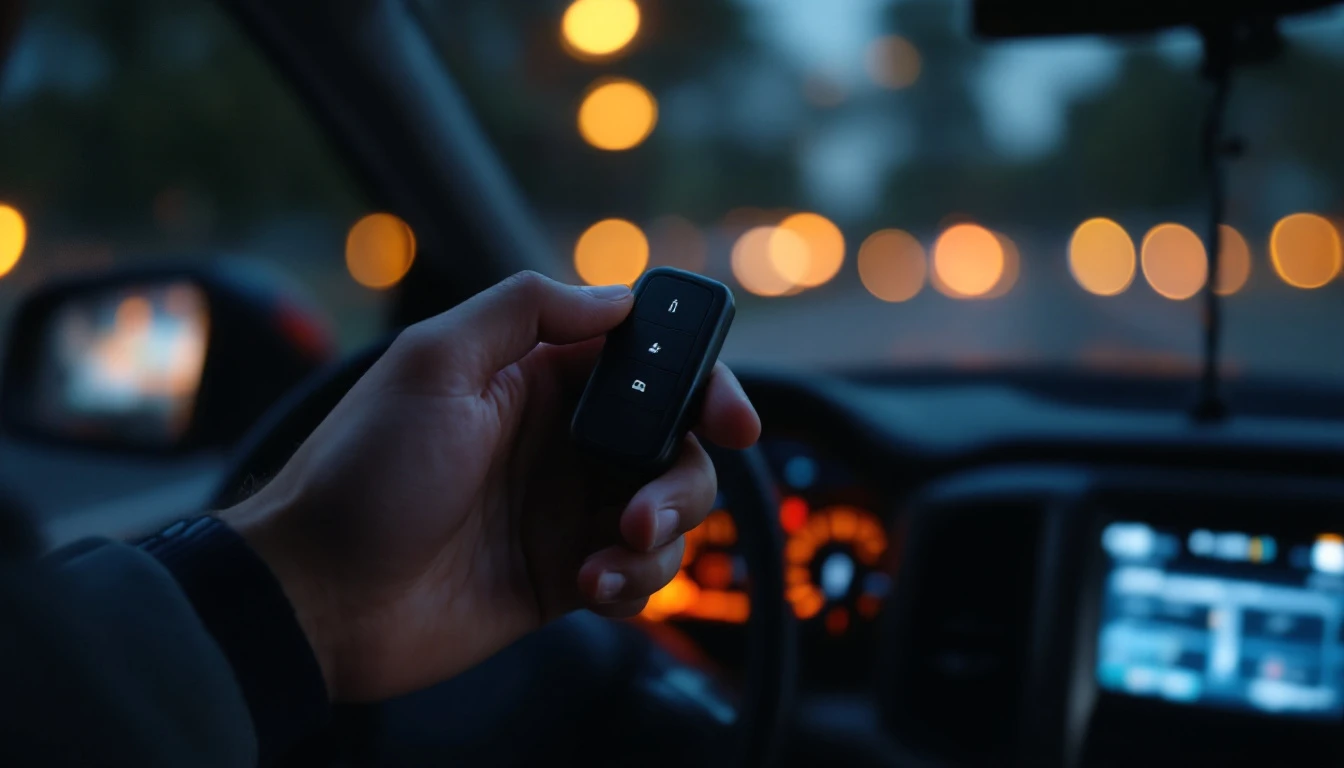
On a push-to-start Chevrolet, GMC, Buick or Cadillac, "Service Keyless Start System" means the passive entry and start system has found a fault in one of four places: the key, the antennas that search for it, the module that runs the system, or the start button and its wiring. As of September 2026, the fixes range from a coin-cell battery to $250–$450 for a new programmed proximity key to $150–$600 for body control module work, and the right one depends on which of those four the fault is in.
The message is common enough across GM's push-button lineup that we see it most weeks. It often travels with its companions — No Remote Detected, Replace Battery in Remote Key, and on vehicles with an electric column lock, Service Steering Column Lock. This guide explains what each one points to, what you can check in the driveway, and what the repair realistically costs in Fort Worth.
How GM's Keyless Start System Works
When you press the start button with the brake held, the vehicle does three things in a fraction of a second:
- It searches for the key. Low-frequency antennas inside the cabin broadcast a wake-up signal. The key answers on a higher frequency.
- It authorizes the key. The module that runs the passive system checks that the answering key is one of the keys programmed to this vehicle. On most GM vehicles that job sits in or alongside the body control module.
- It releases the start. If the key is authorized, the brake input and the button press are accepted, the column lock (on vehicles that have one) confirms it has released, and the engine is allowed to crank.
A failure at any of those steps produces a message. The message tells you which system is complaining, not which part inside it has failed.
The Four Places the Fault Usually Is
| What you notice | Most likely cause | Typical fix and cost |
|---|---|---|
| No Remote Detected, worse in some spots in the cabin | Weak key battery or weak key | Battery first; new proximity key $250–$450 if the key itself is failing |
| Vehicle starts in the backup pocket but not normally | Cabin antenna or its wiring | Quote required after diagnosis |
| Message with every key, backup pocket also fails | Passive start module or body control module | BCM coding $150–$350; replacement with programming $200–$600 plus the part |
| Button does nothing, no dash response at all | Start button, brake switch input or wiring | Quote required after diagnosis |
| Service Steering Column Lock, no crank | Electric steering column lock | Quote required after diagnosis |
| Message appeared right after a battery or module replacement | Lost configuration or unfinished relearn | Programming and relearn, usually in the $150–$350 BCM band |
That table is the whole diagnosis in compressed form. The sections below explain how to tell the rows apart.
First Check: The Key Battery and the Second Key
Start with the two cheapest tests.
Replace the battery in the key you normally use. Use the correct coin cell size — it is printed on the old battery. A weak battery is the single most common cause of No Remote Detected, and it often precedes a service message.
Try the second key. If the second key starts the vehicle without complaint, the vehicle is fine and the first key is failing. If both keys produce the same message, the fault is in the vehicle.
Those two tests take five minutes and separate the key branch from everything else.
Second Check: The Backup Start Pocket
GM builds a backup start into its push-to-start vehicles for exactly this situation. The key is placed in a designated transmitter pocket — depending on the model it is in the center console, a cupholder, the storage bin under the armrest or the glove box — and the vehicle reads the key at very close range while you press the brake and the start button. Your owner's manual shows the exact spot.
What the result tells you:
- It starts in the pocket but not normally. The key is programmed and authorized. The vehicle is failing to hear it at normal range, which points to a cabin antenna, its wiring, or a key with a weak transmitter.
- It will not start even in the pocket. The fault is deeper — the passive start module, the body control module, the start button circuit or the column lock.
If it starts in the pocket, use that method to get home, then have it diagnosed. Do not assume the problem will stay that mild.
The Antenna Branch
GM vehicles place several low-frequency antennas around the cabin and sometimes in the doors and rear bumper. They are how the vehicle knows whether the key is inside or outside. A failed antenna, or a chafed wire to it, creates dead zones: the key works in the back seat but not the front, or works in the pocket but not the driver's pocket.
Antenna faults usually leave stored codes in the passive start or body control module, and a proper read identifies which antenna is at fault. The repair cost depends heavily on where that antenna lives. One behind the center console is an easy access job; one inside a door or bumper takes more time. That is why we quote antenna work after diagnosis.
The Module Branch
When every key fails, the pocket fails, and the button and brake inputs are good, the module running the passive system is the prime suspect. On most GM push-to-start vehicles that work sits in the body control module or a dedicated passive start module closely tied to it.
Two situations are common:
The module lost its configuration. This often follows a battery replacement, a jump start with a voltage spike, or a replacement module installed without being programmed. The fix is coding or reprogramming the existing module and re-learning the keys — usually in the $150–$350 band. Our guide to what happens when a car acts up after a dead battery or jump start covers that pattern across makes.
The module has failed. Water intrusion, internal failure or a shorted circuit. Replacement plus programming runs $200–$600 plus the module, and the keys have to be paired to the new module during the same visit.
For more on body control modules specifically, see what BCM programming is and when it is needed and BCM programming versus replacement.
The Start Button and Brake Input Branch
A push-to-start vehicle will not crank unless it sees both the button press and the brake pedal. If the brake light switch is failing, the vehicle may think your foot is not on the brake. A quick check: with the vehicle off, have someone press the brake while you watch the brake lights. If they do not light, the brake switch or its circuit is a strong suspect.
The start button itself is a switch with more than one internal circuit. A button that has failed on one circuit can produce inconsistent behavior — some presses work, some do not. That is an ignition-system repair, and the price depends on the model's access.
Service Steering Column Lock
Some GM vehicles use an electric steering column lock rather than a mechanical one tied to a key cylinder. The lock motor engages when the vehicle is shut off and must report that it has disengaged before the engine is allowed to start. If it sticks, or its position sensor or control fails, the dash shows Service Steering Column Lock or a similar message and the vehicle will not crank.
A few things are worth knowing:
- Repeated start attempts on a stuck column lock will drain the battery. After two or three tries, stop.
- Gently turning the steering wheel back and forth while pressing start sometimes frees a lock that is mechanically bound, the same way it does on a key ignition.
- If it does not free, the column lock needs diagnosis. Repair routes vary by model — some are a lock motor, some are a column component — and we quote after reading the fault codes.
Column lock failures are ignition work, and they overlap with the steering lock problems we fix on other makes. For the closest equivalent on a European platform, see our guide to Mercedes ELV steering lock failure.
When the Message Appears Right After Other Work
If Service Keyless Start appeared immediately after a battery replacement, a body shop repair, a stereo install, a remote start install or a module replacement, that timing is the most important clue you have. Something in the passive start system lost power, lost configuration, or had a connector disturbed.
Tell whoever diagnoses the vehicle exactly what was done and when. It can save an hour of testing. A module that was replaced without programming is also a common cause; see new module installed and the car still will not start.
What Not to Do
- Do not buy a random online fob first. If the vehicle is at fault, a new fob will not help, and many low-cost fobs are the wrong part or previously locked to another vehicle.
- Do not keep cycling the start button. Each attempt pulls battery. A drained battery adds a second problem and can complicate module diagnosis.
- Do not disconnect modules to "reset" them. Unplugging passive start or body modules can clear configuration and make the repair longer.
- Do not ignore it because it went away. The message often comes and goes before a component fails completely.
What Each Repair Costs in Fort Worth
As of September 2026, these are the bands we quote:
- Key battery: a few dollars, and worth doing first.
- Replacement proximity key, working key present: $250–$450. See our GMC key replacement cost guide for GMC models, and the Chevrolet key page for the sister brand.
- Replacement proximity key, all keys lost: $350–$650 or more.
- Body control module coding or reset: $150–$350.
- Body control module replacement plus programming: $200–$600 plus the module.
- Antenna, start button and steering column lock repairs: quoted after diagnosis.
The diagnostic read at the start of the visit is what turns that list into a single number.
When to Call a Specialist
Call once you have replaced the key battery, tried the second key and tried the backup pocket. If the vehicle starts in the pocket, you can usually drive it to a safe place and schedule a visit. If it will not start at all, or shows Service Steering Column Lock, it needs to be diagnosed where it sits.
We handle GM passive start diagnosis, key programming, BCM coding and column lock faults as a mobile service across Fort Worth and Tarrant County. Our ignition repair service, smart key programming service and module programming service pages describe that work, and we cover ignition repair in Fort Worth directly. For the wider GM picture, see Chevrolet and GMC ignition switch repair and GM Global B key programming.
Frequently Asked Questions
What does Service Keyless Start System mean on a GM vehicle?
It means the vehicle's passive entry and start system has logged a fault it cannot clear on its own. The system that finds the key inside the cabin, authorizes it, and lets the start button work has found a problem with one of its parts — the key, the antennas that search for it, the module that runs the system, or the start button and its wiring. The message identifies the system, not the specific failed part, which is why a diagnostic read is the next step.
Can I still start my GM vehicle when it says No Remote Detected?
Usually, yes. Most push-to-start GM vehicles have a backup method for a weak or undetected key. The key is placed in a specific transmitter pocket — often in the center console, the cupholder area or the glove box depending on the model — and the brake is pressed while pushing the start button. The owner's manual gives the exact location for your vehicle. If the vehicle starts that way, the key itself is being read and the fault is more likely the key battery or the antennas.
Is Service Keyless Start caused by a dead key fob battery?
It can be, and it is the cheapest thing to rule out first. A weak coin cell reduces the key's signal strength, and on some vehicles that shows up as No Remote Detected before any service message appears. Replace the battery with the correct size, try both keys, and try the backup start method. If the message persists with a fresh battery and a second key, the fault is in the vehicle rather than the key.
What does Service Steering Column Lock mean?
On GM vehicles that use an electric steering column lock, the message means the lock motor or its control has a fault. The column lock physically locks the steering when the vehicle is off and must confirm it has released before the engine is allowed to start. A column lock that sticks or cannot report its position can prevent starting entirely. It is an ignition-system repair, and the vehicle should be diagnosed before repeated start attempts drain the battery.
How much does it cost to fix Service Keyless Start in Fort Worth?
It depends on which part failed. As of September 2026, a key battery is a few dollars. Programming a replacement proximity key runs $250 to $450 when a working key exists. Coding or resetting the body control module runs $150 to $350, and replacing it with programming runs $200 to $600 plus the part. Antenna, start button and steering column lock repairs are quoted after diagnosis because parts and access vary by model.
Should I clear the message and keep driving?
Clearing it from the dash does not fix it. If the vehicle is running, it will generally keep running, but the risk is that it will not restart after you shut it off, which leaves you stranded wherever you parked. If the message appears, keep a second key with you, learn the backup start location, and have the system read before the next long trip.
Is a Service Keyless Start repair a locksmith job?
Most of it is. Key programming, backup-start diagnosis, body control module coding and immobilizer authorization are the core of automotive locksmith and module programming work. Some repairs — a failed antenna buried in a door or bumper, or physical column lock replacement on certain models — may involve trim and mechanical access, and a good specialist will tell you up front which parts of the job they will do at the vehicle.
Seeing Service Keyless Start in Fort Worth or Tarrant County? Call or text (817) 668-3801 and tell us the year, model and whether the backup pocket start works.