New Module Installed and the Car Still Won't Start: Fort Worth Diagnosis
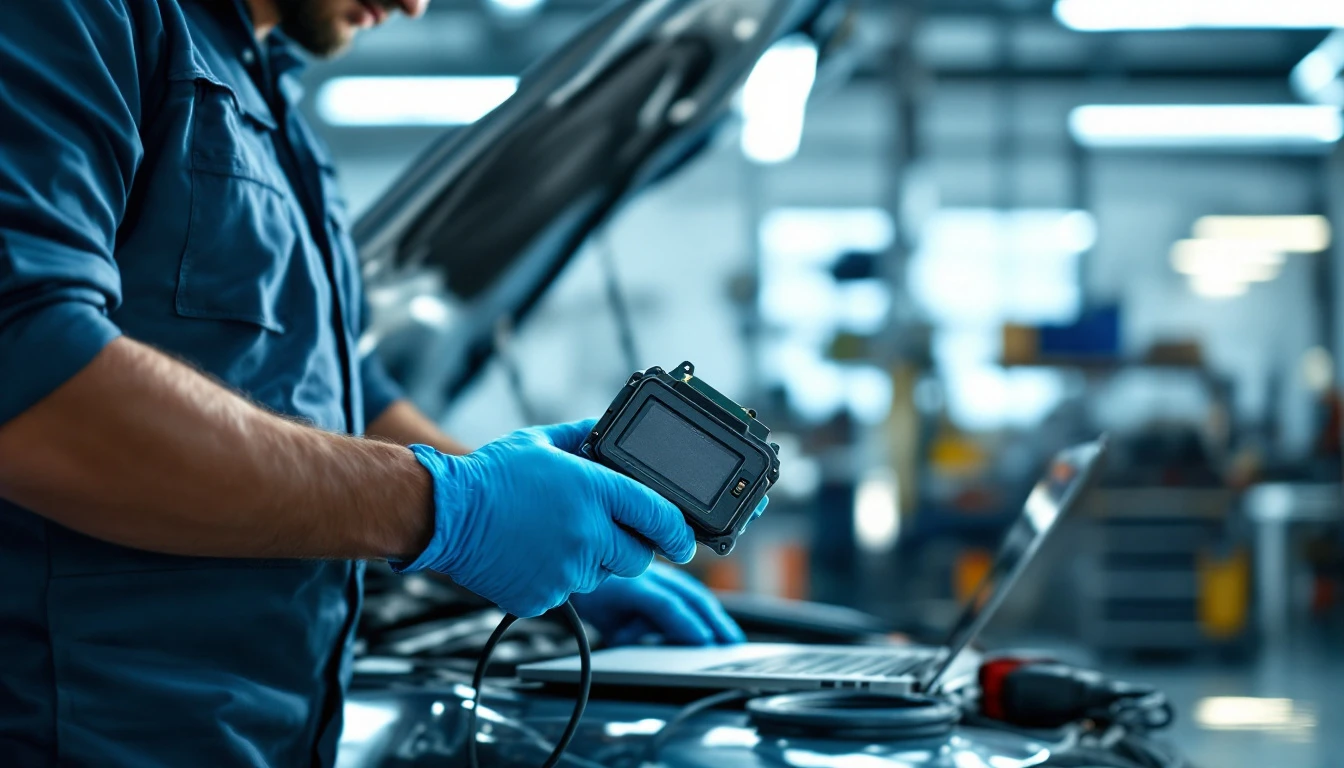
You replaced the module. The part number matched, the connectors clicked home, and the car does exactly what it did before — cranks and will not start, or does not crank at all, or starts and dies. Here is the short answer: a replacement control module is a blank component wearing your part number. Until somebody writes your vehicle's calibration, identity, and security data into it, it is a stranger sitting on your car's network, and the network treats it accordingly.
This is the single most common call we get from people who have already spent money. The mechanical work was done correctly. The step that was never done is the one that has no bolts.
This guide covers what a replacement module is actually missing, a diagnostic ladder for working out which step failed, what each remaining path costs, and how to tell whether the module was ever the problem in the first place.
What a Replacement Module Is Missing
Four things, in roughly the order that matters.
Your calibration. The software and parameter set matched to your exact engine, transmission, axle ratio, emissions configuration, and options. Two vehicles that look identical in a parking lot can carry different calibrations. A module without one either does nothing or does the wrong thing confidently.
Your vehicle identity. The VIN, which other modules on the network check. A module announcing no VIN, or a donor vehicle's VIN, is a durable source of faults that appear weeks after the repair looked successful.
Your security data. On engine, body, gateway, and cluster modules, the anti-theft handshake value. Without it the immobilizer refuses to enable fuel and spark, which produces the classic starts-and-immediately-dies symptom, or a crank with no start at all.
Configuration and relearns. Which options your vehicle actually has, plus whatever the module must learn after installation — idle relearn, transmission adaptations, crank sensor variation relearn, steering angle calibration, theft deterrent relearn. These are not optional polish. A transmission module without adaptations shifts badly enough that people assume the transmission is failing.
The question "are factory auto control modules plug-and-play?" is one of the most-searched things in this whole subject, and our ECU programming explained guide answers it in depth. The short version: almost never, and the handful of exceptions are not the ones people are usually holding.
The Diagnostic Ladder
Work these in order. Each rung is cheaper than the one after it, and skipping ahead is how people end up with two modules and one problem.
Rung 1 — Does the module have power and ground?
Before assuming anything electronic, confirm the basics. A replacement module fitted after a flood, a jump-start incident, or a rodent problem frequently sits on a circuit that is still faulted. Check the module's fused feeds and its ground points, not just battery voltage at the post. A corroded ground behind a fender liner produces symptoms identical to a dead module and costs nothing to find.
Battery condition matters here too, and more than people expect. Programming sessions demand stable voltage; a marginal battery can both cause the original symptom and cause a subsequent flash to fail partway through.
Rung 2 — Does the module communicate?
Connect a scan tool and ask whether the module answers. Three outcomes:
It answers and reports no calibration or a default identity. Normal for a blank module. Programming is the next step, and this is the good outcome.
It answers with a VIN that is not yours. A used module still carrying donor data. It needs re-VIN work, which is a different and more expensive job than flashing a blank part. Our used module programming cost guide covers the price gap and why it exists.
It does not answer at all. Either the module is dead on arrival, it is on a network segment with a wiring fault, or a gateway between the tool and the module is blocking. On Stellantis vehicles from 2018 onward, check whether the security gateway is refusing the session before condemning the new part.
Rung 3 — Was the calibration ever written?
A module that communicates but has no calibration will typically report a generic or zeroed software identifier. This is the most common state of the cars that arrive at this problem: the part is fine, it was installed correctly, and nothing was ever written to it because the installer's tooling could not do it.
Rung 4 — Is the immobilizer refusing?
If the engine cranks strongly, fires for half a second, and dies, suspect security rather than mechanical fueling. That signature — a brief catch followed by shutdown — is what an anti-theft refusal looks like from the driver's seat, and it appears constantly after an engine or body module swap.
The fix is writing your security data to the module and relearning the keys to it. On some platforms the module can be married to existing keys; on others the keys have to be re-registered afterward. Either way it is programming, not parts.
Rung 5 — Was the original module ever the fault?
The uncomfortable rung. If the replacement is correctly programmed and the symptom is completely unchanged, the module was not the problem. Common actual causes that get misdiagnosed as module failure include crankshaft or camshaft position sensor faults, fuel supply problems, network wiring damage, failed relays, and immobilizer components upstream of the module such as an antenna ring or a failed key.
Our guide to BCM symptoms and when replacement is genuinely warranted covers this pattern for body modules, where it is especially common. A car that will not shift out of park, for instance, is frequently blamed on the transmission module when the actual cause sits elsewhere.
What Each Remaining Path Costs
As of August 2026, in the Fort Worth area, performed mobile at your location:
| Situation after the module is already installed | Typical cost | What the work involves |
|---|---|---|
| New or blank module, straightforward flash and configure | $150–$500 | Calibration write, VIN, configuration, relearns |
| New module on a platform requiring online security authorization | Upper half of the above | The flash plus a paid, logged manufacturer session |
| Used module carrying a donor VIN, port-based re-VIN possible | $325–$700 | Clearing donor identity, writing yours, calibration, relearns |
| Used module on a platform that blocks re-VIN through the port | $700–$1,200 | Bench-level memory work, then reinstall and verify |
| Module needs immobilizer data plus key relearn | Programming plus key work | Security value written, keys re-registered |
| Module communicates but is confirmed dead | Diagnostic charge only | We tell you it is dead rather than flashing a brick |
| Fault turns out not to be the module at all | Diagnostic charge | Findings and a direction, not a second module sale |
The bottom two rows exist because they are real outcomes. A shop that never reports them is a shop that never looks for them.
Timing is covered separately in our guide to how long module programming actually takes, which matters if the vehicle is blocking a driveway or a bay.
The Mistake That Costs the Most Money
Buying the module first.
Connector fit tells you almost nothing about whether a donor or replacement part will accept your calibration. Hardware revisions differ within the same part number. Some platforms flatly refuse used modules. Some require the replacement to be sourced through a channel that can supply it in a programmable state.
A large share of the modules people bring us were never going to work on their vehicle, and the discovery happens after the part is bought, often after it is installed, and sometimes after the return window closed. The check takes five minutes: the VIN, the module type, and the part number of the part you are considering. Asking before buying is free. Asking after is a diagnostic charge attached to a part you cannot use.
This applies equally to marketplace listings advertised as pre-programmed. Those can be legitimate — the seller writes your VIN before shipping — but confirm what exactly was written, because "programmed to VIN" and "calibrated for your configuration and security-matched" are different claims, and only one of them starts your car.
Module-Specific Notes
Engine control (ECM/PCM). Calibration and security both required on nearly every platform. Idle and crank sensor relearns afterward. See ECU versus ECM versus PCM if the terminology is part of the confusion, and used ECM and PCM programming to VIN for salvage parts.
Transmission (TCM). Calibration plus adaptations. A correctly flashed TCM with no adaptations still shifts poorly for the first drive cycles, which is normal and worth knowing before you conclude the programming failed. Used TCM programming to VIN covers the salvage case. On BMW automatics the transmission module is its own specialty — see BMW EGS transmission module programming.
Body control (BCM). Configuration-heavy, because the BCM has to be told which options the vehicle actually has, and security-relevant on most platforms. What BCM programming is and when it is needed covers the scope.
Instrument cluster. Carries security data on many platforms, which is why a cluster swap can immobilize an otherwise healthy car. See instrument cluster programming.
Restraint and airbag modules. A separate discipline with its own rules, and one where a module carrying stored crash data will not simply resume working. Airbag module programming versus crash reset explains the distinction. Note plainly: resetting a module does not replace deployed airbags, pretensioners, or any other spent restraint hardware, and no reset should ever be performed in place of that replacement.
When to Stop and Call
Call once you have confirmed power and ground and the module either does not communicate, communicates with no calibration, or communicates with somebody else's VIN. Those three states are all programming work and none of them get better with more parts.
Call sooner if the vehicle is a security-gateway platform and your tooling cannot authorize past it, because everything downstream of that gate is invisible until it is opened.
Call before buying if you have not bought the part yet. That is the call that saves the most money and it is the one people make least often.
Frequently Asked Questions
Why won't my car start after I replaced the module?
Because almost no control module works plug-and-play. A replacement arrives without your vehicle's calibration, without your VIN, and without your immobilizer security data, so the network sees a module that cannot prove it belongs. The part is physically installed and electronically anonymous. What is missing is the programming step, and on security-relevant modules a key or immobilizer relearn as well.
Are replacement control modules plug-and-play?
A small number are, and the exceptions get quoted so often that people assume the rule. Some simple body-side and comfort modules are configured by the vehicle automatically. Engine, transmission, body, gateway, and restraint modules essentially never are. If a parts listing says plug-and-play, it usually means the seller pre-programmed it to a VIN you supplied, which is programming performed elsewhere rather than programming avoided.
Can the module be programmed with the car in my driveway?
Usually yes. Calibration flashing, VIN writing, configuration, and immobilizer relearns are all performed at the vehicle with a laptop and a regulated power supply on the battery. The exceptions are modules that are locked or unreadable through the diagnostic port and have to come to a bench, and sessions requiring a manufacturer online authorization, which is arranged rather than improvised.
How much does it cost to program a module I already installed?
As of August 2026 in Fort Worth, programming a new or blank module runs roughly 150 to 500 dollars depending on the module and platform. Programming a used module to your VIN runs roughly 325 to 1,200 dollars, because the donor's identity has to be cleared before yours can be written. A diagnostic charge applies first when the fault has not been confirmed to be the module at all.
I bought a used module from a salvage yard. Will it work?
Sometimes, and less often than the connector fit suggests. A used module carries another vehicle's VIN, security data, and learned values, all of which must be cleared before yours can be written, and some platforms refuse used modules entirely. The check that matters takes five minutes and happens before purchase: send the VIN and the donor part number and find out whether your platform accepts it.
Could the original module have been fine all along?
It happens more often than anyone likes. A no-start that looks like module failure is frequently a power or ground fault, a failed network circuit, a bad crank sensor, or an immobilizer problem, and replacing a healthy module changes nothing except the bill. If the new module produces exactly the same symptom as the old one and it has been correctly programmed, the fault was never in the module.
Does a replacement module need my immobilizer data too?
On engine, body, gateway, and instrument cluster modules, usually yes. Those modules participate in the anti-theft handshake, so a replacement has to be taught your vehicle's security value and, on many platforms, have the keys relearned to it afterward. This is the step most commonly missed by an installer who is comfortable with mechanical work but does not do security programming.
How long does module programming take?
Most single-module flashes and configurations take 45 to 90 minutes at the vehicle, including verification. Sessions requiring manufacturer online authorization run at the server's pace and can add meaningful time. Bench-level work on a locked module is a half-day rather than an hour, because the module has to be removed, opened, read, written, reinstalled, and then tested on the vehicle.
Module Programming in Fort Worth
Fort Worth Locksmith & Computer Programming flashes, configures, VIN-writes, and security-matches control modules as a mobile service — including the immobilizer and relearn steps that decide whether a module works or merely installs. If the module turns out not to be your fault, we say so and tell you what we found instead of selling you a second one.
Call or text (817) 668-3801 or email contact@fwlocksmith.com with your year, make, model, which module was replaced, and the part number. Available 24/7 across Fort Worth and the surrounding cities. See our module programming service for full scope, or ECU programming for engine-side work — what computer programming for a car actually covers is a good primer if this is new territory.
Texas locksmiths are licensed and regulated by the Texas Department of Public Safety Private Security Bureau.