Used TCM Programming to VIN: What It Takes and When It Fails (2026)
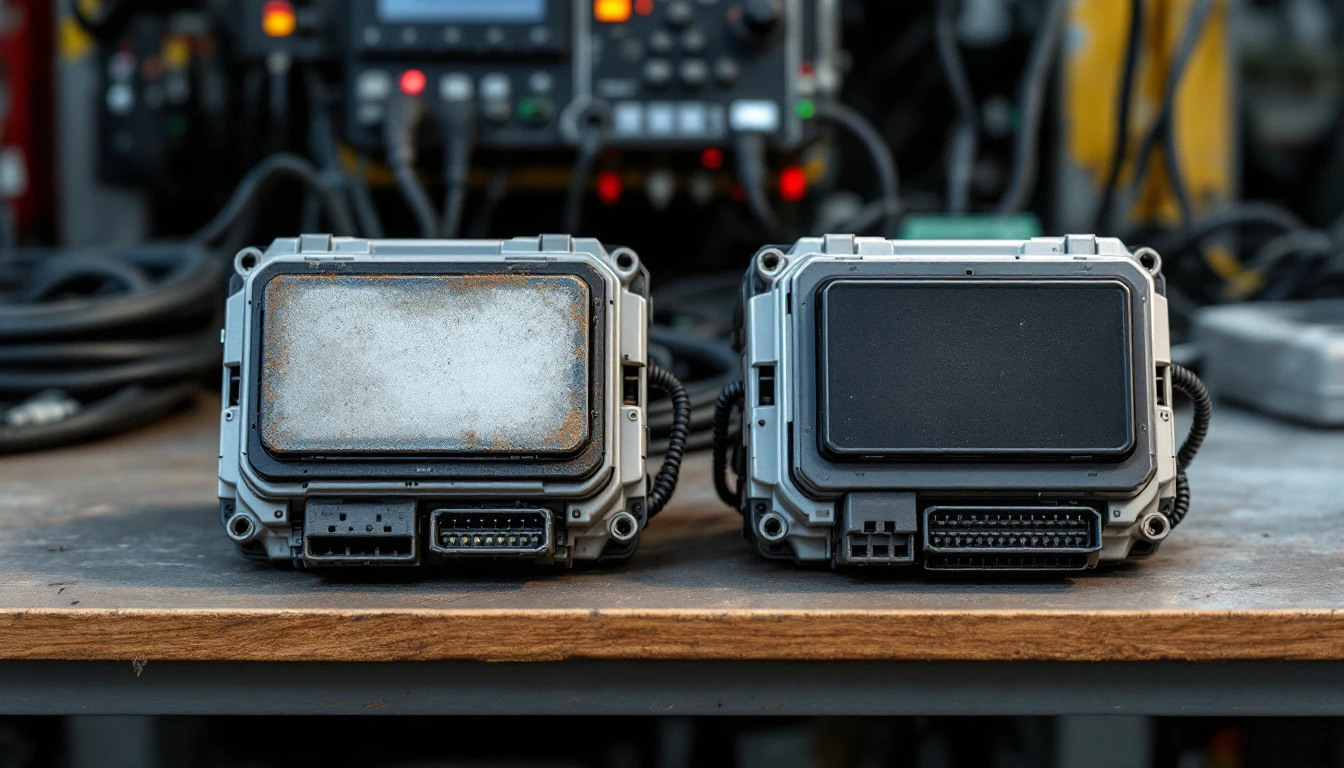
The economics are obvious enough that the question comes up constantly: a transmission control module from a salvage yard costs a fraction of a new one from the parts counter. As of August 2026, the honest answer to "can you program a used TCM to my truck" remains what it has been for years — often yes, sometimes no, and the difference is decided before you ever hand money to the yard.
This guide covers what a donor module actually carries, the three different programming paths and when each applies, which platforms permit a used module and which lock it out, why adaptation relearn is not optional, and the single most misunderstood point in this entire subject: matching the exact part number and calibration level matters far more than whether the connector fits.
What the Donor Module Brings With It
A transmission control module pulled from another vehicle is not a blank component. It arrives carrying:
The previous vehicle's VIN. Written into memory and visible to every other module on the network. Other modules check it. Diagnostic tools report it. A module still announcing a donor VIN is a persistent source of confusing faults.
The donor's adaptive shift learn. Every transmission module accumulates learned compensation values over its service life — adjustments for clutch pack wear, solenoid response variation, fluid condition, and driving pattern. Those values are specific to the transmission the module grew up with. Dropped into your vehicle, they describe a transmission that is not yours.
The donor's calibration. The software and parameter set for the donor's engine, transmission variant, axle ratio, and emissions configuration.
Whatever fault history and hardware condition it had. Salvage modules come out of vehicles for reasons. Sometimes the reason was a collision. Sometimes the reason was that the module was failing.
Every one of those has to be addressed. Ignoring any of them is how a "successfully installed" used module produces a vehicle that shifts badly, throws faults, or refuses to leave limp mode.
Three Paths: VIN Write, Clone, Fresh Flash
There is not one procedure for a used module. There are three, and the platform plus the condition of your original module decides which applies.
1. Reset and VIN write. The used module is returned to a neutral, unmarried state — the donor VIN and learned data cleared — then written with your vehicle's identity and loaded with the correct calibration. This is the standard path on platforms that permit it, and it produces the cleanest result. Skipping the reset step and simply writing over the donor data is a classic cause of intermittent faults weeks later.
2. Clone the original onto the donor. If your original module's memory is still readable, its contents can be copied onto a matching donor unit. This preserves security data and learned values and can sidestep a fresh marriage procedure. It is often the most practical route on older platforms where factory calibration files are hard to obtain. It only works when the donor is the correct hardware revision — a clone onto mismatched hardware fails or behaves unpredictably.
3. Fresh flash onto a new or reset module. Not strictly a used-part path, but it belongs in the decision. A new service module arrives blank and is flashed to your calibration and VIN directly. The part costs more; the labor is simpler and the outcome more predictable. On locked platforms this is frequently the only viable route.
This is the same three-way decision we walk through in our guide to used ECM and PCM programming to a VIN, and the reasoning transfers cleanly — the transmission module simply adds adaptation as a fourth consideration.
Which Platforms Permit It
This is where salvage savings live or die, and it is worth being specific about the shape of the landscape rather than naming every model.
| Platform group | Used TCM re-VIN | Typical route | What to watch |
|---|---|---|---|
| GM, many platforms | Usually supported | Port based reset and VIN write | Calibration must match axle and engine |
| Ford, many platforms | Usually supported | Port based reflash and configuration | Later years may need authorized session |
| Stellantis, many platforms | Usually supported | Port based, security gateway on newer | Gateway authorization on recent years |
| Toyota, Honda, Nissan, many | Often supported | Port based re-VIN | Some require additional relearn steps |
| BMW with shared security value | Frequently blocked | Bench level work and alignment | Module must agree with engine module |
| Mercedes, later platforms | Frequently blocked | Bench level work | Effectively VIN locked |
| Audi and VW Group, later | Frequently blocked | Bench level or authorized access | Component protection applies |
Two honest observations about that table. First, it is a generalization across model years that transitioned gradually — a nameplate can appear in a permissive row one year and a restrictive row the next, which is why the check is always by VIN rather than by badge. Second, the European rows are not a judgment about those manufacturers. Tying the transmission module to the engine module using a shared security value is an effective anti-theft measure. It simply means the salvage route stops being cheap.
The BMW case is a good illustration of the mechanism, and we cover it in detail in our guide to BMW EGS transmission module programming: the transmission module and the engine module share a security value, and a used module installed without aligning that value leaves a mechanically healthy gearbox in limp mode. The transmission is fine. The handshake failed.
Part Number and Calibration: Why the Connector Lies
If there is one point in this article worth remembering, it is this one.
A transmission control module that physically plugs into your harness may still be the wrong module. Connector compatibility is a packaging decision by the manufacturer, not a statement about what the module inside can do. What actually determines whether a donor works:
Hardware revision. The same nominal part can exist in several revisions with different internal capability. A superseding part number is usually acceptable; an earlier or divergent one may not be.
Calibration family. The module's parameter set is written for a specific combination of engine, transmission variant, axle ratio, and emissions configuration. A module calibrated for a different combination can command wrong line pressures and wrong shift timing even after a successful-looking flash.
Transmission variant specifics. Modern automatics from suppliers such as ZF and Aisin appear across many vehicles in variants that differ in clutch arrangement, solenoid characteristics, and torque capacity. The characterization data the module uses is variant-specific. A module carrying the wrong characterization will shift, and it will shift wrongly.
Software level compatibility. The module has to be at a software level that plays correctly with the other modules on your vehicle's network.
The practical instruction is short: before you buy, give the programmer your VIN and the donor module's part number. A five-minute compatibility check ahead of purchase is the entire difference between a module that saves you money and a module that becomes a paperweight. This is the same pre-purchase discipline we insist on for diesel platforms, covered in our guide to used PCM and ECM programming to VIN on Ram diesels.
Adaptation Relearn: The Step That Gets Blamed on the Module
Here is a scenario that plays out regularly. A used TCM is programmed correctly. The vehicle drives away. Two miles later the owner calls: the shifts are firm, one gear change is late, the vehicle feels wrong. The conclusion drawn is that the used module is bad.
Usually it is not. It is adaptation.
A transmission module continuously learns. It observes how long a clutch takes to apply, how a solenoid responds, how the fluid behaves at temperature, and it adjusts its commands to compensate for wear and variation. Those learned values accumulate over thousands of miles. A freshly programmed module has generic starting values.
The result is exactly what owners describe: firm or abrupt shifts, slight delays, occasionally a flare between gears. These typically settle as the module observes the actual transmission through a relearn drive cycle — a defined pattern of driving conditions that exercises the shift range and lets adaptation converge. Some platforms also permit a directed relearn procedure with a scan tool.
What matters is that the customer is told about this before the vehicle leaves, not after they call back concerned. A module job that ends with "it may shift firmly for the first few dozen miles while it relearns" is a professional job. One that ends with silence generates an unnecessary second visit and an unfairly condemned module.
What the Work Actually Involves
A used TCM job, done properly, follows a fixed order:
- Compatibility verification against your VIN and the donor part number, before purchase where possible.
- Full network scan to identify faults elsewhere that would change the diagnosis. A transmission complaint caused by a wiring fault, low fluid, or a failing solenoid is not fixed by any module.
- Stable power supply on the battery. A write operation that loses voltage partway through can corrupt a module permanently. This is not optional and it is not negotiable.
- Reset, clone, or flash as the platform requires.
- VIN write and configuration for your exact drivetrain.
- Security alignment where the platform ties the transmission module to the engine module or an immobilizer value.
- Adaptation reset and relearn, with the drive cycle explained to the owner.
- Verification — clean scan, correct module identity, and a road confirmation.
Step two deserves emphasis. A meaningful share of "I need a TCM" calls turn out to be something else: a solenoid, a wiring fault, low or degraded fluid, or a mechanical problem inside the transmission. Condemning a module on a fault code alone is how people spend hundreds of dollars without fixing anything. Our overview at TCM programming near me covers that diagnostic split.
What It Costs
Used module re-VIN work — the class of job where a donor module has to be reset, identified to your vehicle, and brought into security alignment — generally runs 325 to 1,200 dollars depending on the platform, whether bench-level work is required, and how much recovery the donor unit needs. Straightforward module programming without the re-VIN component sits lower, in the 150 to 500 dollar band.
The salvage part is a separate cost, and the whole point of the exercise is that the part is cheap. That saving is only real when your platform supports the sync through the diagnostic port. On a locked European platform, the bench work required can consume the entire difference between a used module and a new one — which is precisely why the compatibility question comes first and the purchase second.
We confirm your year, make, model, transmission variant, and the donor part number, then give an all-in quote before any part is bought or any truck is dispatched. For related work across module types, see our module programming and ECU programming service pages.
Frequently Asked Questions
Can a used transmission control module be programmed to my VIN?
On many domestic platforms, yes. The donor module has to be reset or reflashed, written with your vehicle identification number, loaded with the correct calibration for your exact transmission, and then taken through an adaptation relearn. On a number of European platforms the module is effectively locked to its original vehicle and a used unit cannot be re-VINed through the diagnostic port at all.
Why does the donor module still matter if the connector fits?
Because connector fit tells you almost nothing. What matters is whether the donor module is the correct hardware revision and calibration family for your engine, transmission, axle ratio, and emissions configuration. A module that plugs in perfectly can still refuse your calibration or command entirely wrong shift pressures. Match the part number and calibration level before buying, not after.
What is transmission adaptation and why does it need a relearn?
Adaptation is the set of learned values a transmission module accumulates over time to compensate for clutch wear, solenoid variation, and fluid condition. A replacement module starts with generic values, so early shifts often feel firm, delayed, or slightly abrupt. A relearn drive cycle lets the module observe the actual transmission and settle in. Skipping it produces complaints that get misdiagnosed as a bad module.
What is the difference between a VIN write, a clone, and a fresh flash?
A VIN write assigns your vehicle identity to a module that has been reset to a neutral state. A clone copies the memory contents of your original module onto a matching donor, which preserves learned and security data when the original is still readable. A fresh flash loads a factory calibration onto a blank or reset module. Which one applies depends on the platform and on whether your original module can still be read.
Which platforms block used TCM programming?
Many European platforms tie the transmission module to the engine module or to a vehicle security value, so a used unit installed without that alignment leaves the vehicle in limp mode or refusing to drive. Recovering those generally requires bench level work rather than a port based procedure. Domestic and many Asian platforms are considerably more permissive. Confirm your specific platform before purchasing a salvage module.
How much does used TCM programming cost?
Used module re-VIN work generally falls in the 325 to 1200 dollar range depending on platform, whether bench level work is required, and how much recovery the donor module needs. Straightforward module programming without a re-VIN component sits lower, in the 150 to 500 dollar range. The salvage part itself is a separate cost and only saves money when your platform supports the sync.
Can used TCM programming be done at my location?
Much of it can. VIN writes, calibration flashes, and adaptation relearn setup are performed at the vehicle with a laptop and a dedicated power supply on the battery. What cannot be done in a driveway is bench level memory work on a locked module, and on platforms requiring manufacturer online authorization the session has to be arranged rather than improvised.
Used TCM Programming in Fort Worth
Fort Worth Locksmith & Computer Programming resets, clones, VIN-writes, and configures used transmission control modules as a mobile service across Fort Worth and the surrounding metroplex — with security alignment and adaptation relearn included, not treated as an afterthought. We check your platform's compatibility against your VIN and the donor part number before you buy the module, because a salvage part only saves money when your vehicle can actually accept it.
Call or text (817) 668-3801, or email contact@fwlocksmith.com with your year, make, model, transmission, and the donor module's part number. We are mobile and available 24/7 across Fort Worth and nearby cities.
Texas locksmiths are licensed and regulated by the Texas Department of Public Safety Private Security Bureau.