TCM Programming Near Me in Fort Worth: Transmission Control Module Reflash & VIN Sync
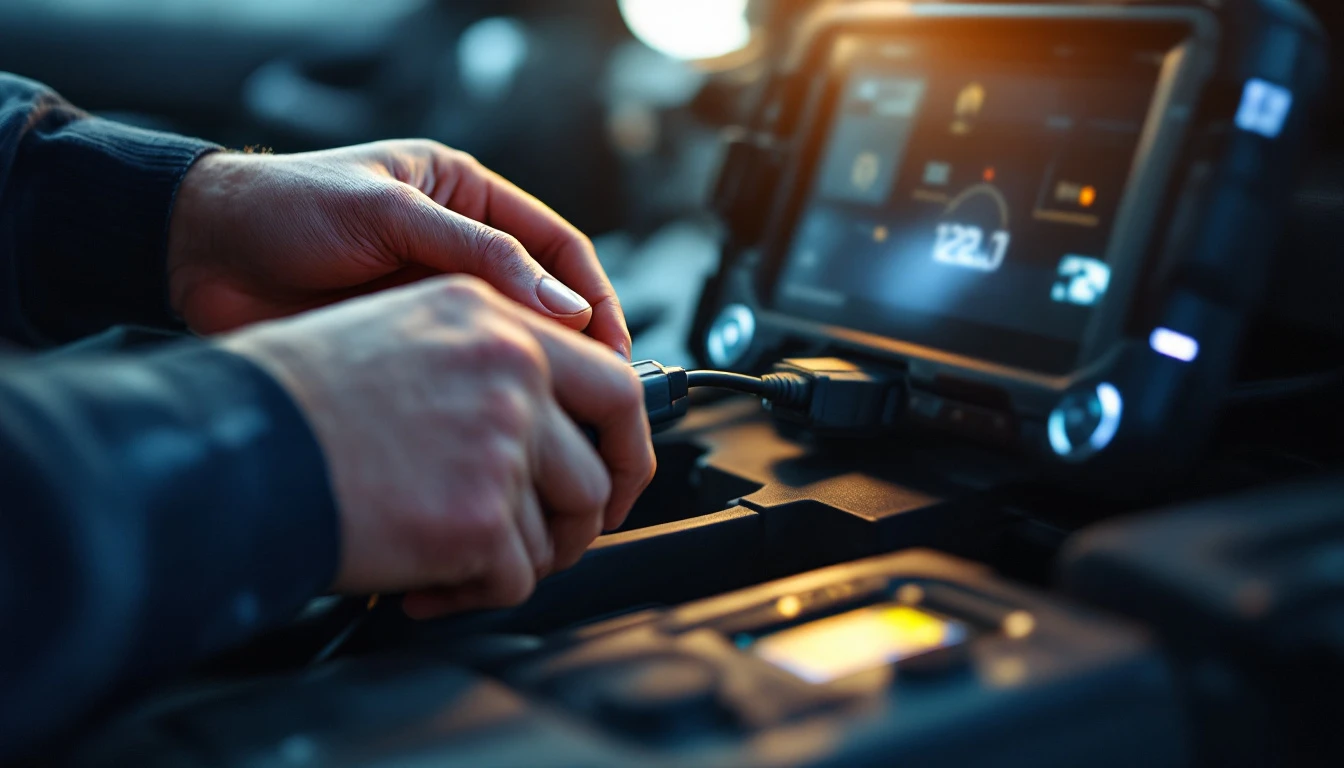
As of July 2026, "TCM programming near me" is one of the most common transmission-related searches in the Fort Worth area — and one of the most misunderstood. Drivers land on it after a transmission shop tells them the mechanical unit is fine but the module needs to be replaced or reflashed, after a used Transmission Control Module bought online refuses to sync, or after a check-engine light pairs with shifting that suddenly went wrong. The Transmission Control Module is a computer, and like every computer in a modern vehicle it has to run the right software, married to the right vehicle, before it behaves.
This guide explains what a TCM actually does, the specific situations that require programming, the difference between a firmware reflash and a transmission adaptive relearn, and how the work happens in your driveway instead of a dealership bay. If you want the broader picture on automotive computers first, our ECU programming explained guide and our PCM programming near me breakdown cover the neighboring modules this article references.
What a Transmission Control Module Actually Does
The Transmission Control Module is the dedicated computer that runs a modern automatic transmission. On vehicles that use a standalone TCM, it is a separate sealed module — often mounted on or near the transmission, inside the valve body on some designs, or under the dash — that reads a stream of inputs and commands the transmission's behavior in real time.
Its inputs include vehicle speed, input and output shaft speed, throttle position, engine load, transmission fluid temperature, gear-selector position, and on many platforms brake and traction-control signals. Its outputs control the shift solenoids, the torque-converter clutch lockup, line pressure, and the precise timing and firmness of every gear change. On dual-clutch and CVT designs the TCM also manages clutch engagement pressure or pulley ratio thousands of times per minute. When the module runs the correct calibration for your exact transmission and drivetrain, shifts are smooth and predictable. When it does not, the transmission can shift late, slip, hunt between gears, or drop into a protective "limp" mode that holds a single gear.
Crucially, not every vehicle has a separate TCM. Many domestic trucks and SUVs — the GM, Ford, and Stellantis platforms common on Fort Worth roads — combine engine and transmission control into a single Powertrain Control Module. On those vehicles there is no standalone TCM to program; the transmission calibration lives inside the PCM. Knowing which architecture your vehicle uses is the first thing a competent programmer establishes, because it changes what gets flashed and what it costs.
When You Actually Need TCM Programming
After a TCM Replacement
The most common reason. A TCM can fail from heat (transmission-mounted modules live in a punishing thermal environment), vibration cracking internal solder joints, water intrusion, or an internal driver circuit burning out. When it is replaced, a brand-new service module from the parts counter arrives blank. It has to be flashed with the correct calibration for your VIN, drivetrain, and transmission variant using the manufacturer's programming software, then — on platforms that tie the module to the vehicle — synced to your VIN so the rest of the network trusts it.
After a Used or Salvage-Yard TCM Install
Sourcing a used TCM from a salvage-yard donor is a legitimate cost-saving move, and it works on many platforms — but the donor module still carries the previous vehicle's VIN and calibration. To run in your car it has to be reflashed with your calibration and, where the platform enforces a VIN lock, re-synced to your VIN. Skip that and you get communication faults, a stored VIN-mismatch code, or a transmission that will not come out of limp mode. Before you buy a used module, ask whether your specific platform supports a used-TCM VIN sync through the OBD-II port or requires bench-level work — the answer decides whether the salvage part is worth it.
After a Manufacturer TSB Reflash
Automakers issue Technical Service Bulletins that update TCM software to cure specific complaints — a shudder at light throttle, a harsh 2-3 shift, a torque-converter lockup that engages too aggressively, or a driveability issue tied to an emissions calibration. The dealer performs these under warranty; out of warranty, an independent specialist can load the same updated calibration file using the OEM service tool. This is a pure reflash — no VIN sync, no hardware change — and it is one of the most cost-effective fixes when a known software revision addresses your symptom.
When Shifting Faults Trace to Software, Not Hardware
Not every bad shift is a worn clutch pack. A corrupted TCM calibration, a failed prior flash, or a module that lost sync after a battery or wiring event can produce shifting complaints that look mechanical but are not. A proper scan-tool diagnosis — reading transmission-specific trouble codes, live solenoid data, and adaptive values — separates a module problem from an internal transmission problem before anyone spends money on either. This matters: reflashing a TCM will not fix a physically failed transmission, and rebuilding a transmission will not fix a software fault. The diagnosis decides.
After an Immobilizer or Network Event
On integrated platforms where the transmission module shares a data bus with the security system, certain immobilizer faults or a botched key-programming attempt can leave the TCM unable to authenticate on the network. Clearing that requires a programming session to reset the module's communication and, if needed, re-establish its place in the vehicle's security handshake.
Reflash vs. Adaptive Relearn: Two Different Steps
These get confused constantly, so it is worth being precise.
A reflash is writing software to the module — either a new calibration onto a blank replacement, an updated calibration on a TSB, or a fresh copy onto a used module. It is a data-write operation that takes 15 to 45 minutes and must never lose power partway through.
An adaptive relearn is the transmission re-learning its own physical characteristics after its stored values are wiped. Modern automatics continuously learn your specific transmission's clutch wear, line pressure, and shift timing and store those "adaptive" values. Reflashing resets them to factory defaults. Until the transmission relearns — which happens automatically over a series of normal drive cycles, or can be force-initiated with a scan tool — you may feel firm, late, or slightly clunky shifts. That is expected, not a failure. A programmer who hands the keys back without mentioning the relearn is one who may not understand the transmission side of the module they just flashed. A competent visit resets or initializes the adaptives and tells you what the first 50 to 100 miles will feel like.
TCM Programming: The Procedure in Your Driveway
Mobile TCM programming follows a disciplined sequence:
- Diagnose first. Confirm the fault is the module, not the transmission, using a scan tool that reads transmission-specific codes and live data. Establish whether your vehicle uses a standalone TCM or an integrated PCM.
- Stabilize voltage. A dedicated power supply or high-capacity maintainer goes on the battery before any write. A TCM flash that loses voltage mid-write can corrupt the module — turning a programmable part into one that needs bench recovery. This single step separates programmers who have bricked modules from those who have not.
- Reflash. Load the correct calibration for your VIN and transmission variant using the OEM platform (or a current professional aftermarket platform with the matching pack). On modern vehicles this pulls the calibration and a security token from the manufacturer's server in real time.
- VIN sync / configure. On platforms that lock the module to the vehicle, write your VIN and configure any drivetrain options so the rest of the network accepts the module.
- Reset adaptives and verify. Initialize or reset the transmission adaptive learning, clear post-flash codes, confirm a clean scan, and road-confirm gear engagement.
The whole visit is typically well under the multi-hour bay stay a dealer books, because there is no tow, no service-writer queue, and no bay overhead.
What It Costs Near Fort Worth
TCM programming pricing depends on two variables: whether the module is new or used, and whether your platform is domestic, Asian, or European. Rather than quote a single number that will be wrong for half of vehicles, here is how the work maps to the module-programming ranges we publish across our other guides:
| Scenario | What's involved | Typical framing |
|---|---|---|
| New-module flash (domestic) | Blank service TCM, calibration + VIN sync | Same range as a standard module reflash on domestic platforms |
| Used-module VIN sync (domestic / Asian) | Reflash + re-sync a salvage module to your VIN | Higher than a new-module flash; runs into the used re-VIN range |
| Used-module VIN sync (European) | Often bench-level EEPROM work | Highest tier; European re-VIN range |
| TSB / calibration reflash only | Software update, no hardware change, no VIN sync | Lowest tier; a calibration-only reflash |
| Integrated PCM (engine + trans) | No standalone TCM — the PCM is programmed | Priced as PCM programming, not TCM |
A dealership typically bills TCM work as two to three hours of bay labor plus the module cost plus a per-flash software fee, and adds a tow if the vehicle cannot drive. Mobile pricing is flat-rate for the programming and comes to you. Because the fair price swings so widely with module condition and platform, we give an all-in quote only after confirming your year, make, model, and whether your replacement module is new or used — but the ranges above tell you which tier you are in. For the full mobile-vs-dealer cost picture on the sibling module, see our PCM programming near me guide.
Why TCM Work Needs Specialized Equipment
Three things separate real TCM programming from plugging in a code reader. First, a basic scan tool can only read codes and live data — it has no programming capability. A programming-capable platform (the OEM tool or a professional aftermarket equivalent) is a four- to five-figure investment with annual software subscriptions per OEM. Second, most modern reflashes require a live connection to the manufacturer's programming server for the calibration file and a security access token; the credentialing system that lets independent specialists reach those gateways legally is NASTF Secure Data Release. Third, voltage stability during the write is non-negotiable for the reasons above.
This is also why a general repair shop or quick-lube cannot do the work — the tooling, subscriptions, and credentials are a specialist's overhead. A mobile module programming specialist who carries them can come in below dealer pricing precisely because they skip the bay overhead, not the equipment. Our can a locksmith program an ECM or PCM guide covers exactly which operations a credentialed specialist can and cannot perform.
Fort Worth Platforms We See Most
Domestic trucks dominate the local mix. Many Ford F-150, Dodge Ram, and GM Silverado owners who search for "TCM programming" actually have an integrated PCM — the transmission calibration lives in the powertrain module, so the fix is PCM programming, not a standalone TCM flash. Plenty of Asian and European vehicles, by contrast, do use a dedicated transmission module, and those follow the reflash-and-sync path above — BMW EGS transmission module programming is the clearest local example of a standalone unit that has to be flashed and adapted on its own. The correct starting point is always confirming which architecture your specific vehicle uses, which is why a good provider asks for your VIN before quoting anything firm.
Frequently Asked Questions
What is TCM programming and when do I need it?
TCM programming loads the correct calibration onto a Transmission Control Module and, on a replacement, syncs it to your vehicle's VIN. You need it after a TCM is replaced, when a used module still carries a donor vehicle's VIN, after a manufacturer TSB reflash, or when erratic shifting is traced to corrupted module software rather than a mechanical transmission fault.
Can a used or salvage-yard TCM be programmed to my car?
Often yes. A used TCM has to be reflashed with your vehicle's calibration and, on platforms that lock the module to a VIN, re-synced to your VIN. Many domestic and Asian platforms allow this through the OBD-II port; some require bench-level work. Confirm your platform is supported before you buy the module.
What is the difference between a TCM reflash and a transmission adaptive relearn?
A reflash writes new firmware or calibration to the module. An adaptive relearn is the transmission re-learning its own clutch wear, line pressure, and shift timing after the stored values are wiped. A reflash usually forces a relearn, which is why shifts feel firm or slightly late for the first 50 to 100 miles.
Why does my transmission shift hard after TCM programming?
Reflashing resets the transmission's learned adaptive values to factory defaults. Firm, late, or slightly clunky shifts for the first 50 to 100 miles are normal while the transmission relearns your driving. It smooths out on its own or can be sped up with a scan-tool adaptive reset.
Is the TCM the same as the PCM or ECM?
Not always. Many domestic trucks combine engine and transmission control into one Powertrain Control Module (PCM), so there is no separate TCM. Other vehicles use a standalone TCM alongside the engine module. Knowing which your vehicle has determines what gets programmed and how much it costs.
How much does TCM programming cost near Fort Worth?
Programming pricing depends on whether the module is new or used and whether your platform is domestic, Asian, or European. A new-module flash on a domestic platform typically falls in the same range as other module reflash work, while a used module that needs a VIN sync runs higher. We give an all-in quote after we confirm your year, make, model, and module condition.
Do I have to go to the dealer for TCM programming?
No. A mobile specialist with the correct OEM platform and, where required, NASTF security access can flash and VIN-sync a TCM for most vehicles on site. That eliminates the tow and the dealership bay-labor markup while doing the same procedure the dealer would.
Get TCM Programming Near You in Fort Worth
Fort Worth Locksmith & Computer Programming performs mobile TCM, PCM, ECM, and module programming throughout Fort Worth and the DFW metroplex — reflash, VIN sync, and adaptive reset handled in the same visit, with a proper power supply on the battery and the correct OEM platform for your make. We diagnose whether your vehicle uses a standalone TCM or an integrated PCM before we touch anything, so you pay for the work your vehicle actually needs. Explore our full automotive locksmith and ECU programming services, or see how we cover Fort Worth and the surrounding cities.
Call (817) 668-3801 or email contact@fwlocksmith.com with your year, make, model, and whether your replacement module is new or used. We are mobile and available 24/7. We will confirm the right procedure, name the tool we will use, and give you an all-in quote before we dispatch. You can also reach us through our contact page.
Texas locksmiths are licensed and regulated by the Texas Department of Public Safety Private Security Program.