Computer Programming for a Car in Arlington, TX — What It Covers & Costs
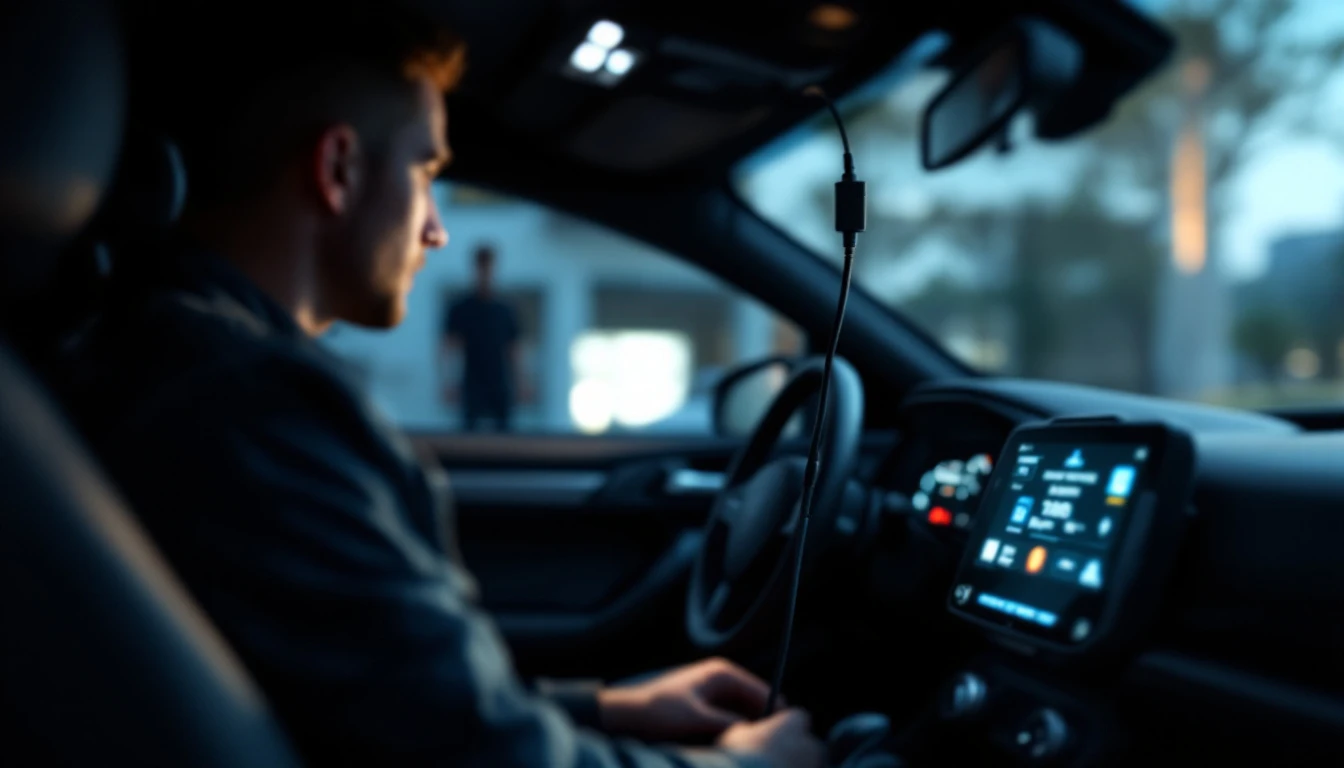
Car computer programming is the process of writing software and vehicle-specific data into one of your car's electronic control modules so that it recognizes your VIN, your options, and your keys. As of July 2026 in Arlington, that work runs roughly $150–$500 for ECM/PCM engine-computer programming, $150–$350 for BCM body-control programming, $100–$300 for an airbag/SRS crash-data reset, and $325–$1,200 to program a used module to your VIN — with key and immobilizer programming falling between $120–$250 for a transponder key and $250–$650+ for a push-to-start smart key.
That is the direct answer. The rest of this guide explains what each of those services actually is, when you need it, what the mobile process looks like at your house or shop in Arlington, and where a dealership is genuinely the better call.
We are a fully mobile locksmith and automotive computer-programming shop covering Arlington, Fort Worth, and Tarrant County. Call (817) 668-3801 with your year, make, model and VIN and you will get a real number, not a range that changes on arrival.
What "Computer Programming for a Car" Actually Means
Modern vehicles are networks of small computers. The engine has one, the transmission has one, the body electronics have one, and depending on the vehicle there may be dozens more handling everything from the transfer case to the instrument cluster to the airbag system. Each of these is an electronic control module, and each one runs software and holds data specific to your car.
Two different things get called "programming," and knowing the difference will make you a much better-informed customer:
Flashing or reprogramming means loading updated software into a module that is already the correct module for your car. This is what happens when a manufacturer issues a software update to fix a driveability complaint, or when a repair procedure calls for a fresh calibration.
Configuring or re-VINing means taking a module — new or used — and writing your vehicle's identity and options into it so the car accepts it as its own. This is what a replacement module needs before it will work, and it is the step most people do not know exists until a part they bought online refuses to function.
Both are done through the vehicle's diagnostic port with equipment that speaks the manufacturer's protocols. Neither is something you can do with a generic code reader from a parts store. Our deeper explainer on how ECU programming works walks through the mechanics in detail.
What Each Module Does and When It Needs Programming
ECM / PCM — the engine and powertrain computer
The ECM (engine control module) or PCM (powertrain control module, when it also manages the transmission) is the big one. It controls fuel, ignition timing, emissions systems, and on many vehicles the shift strategy. When it fails, the symptoms are dramatic: no start, a crank-but-no-fire condition, a stubborn check-engine light that returns after every repair, or a vehicle that runs but performs badly.
Programming is required when the module is replaced, when a manufacturer software update applies to your complaint, or when a used unit needs to be matched to your VIN. Expect $150–$500 for programming a correct-application ECM/PCM in Arlington, and $325–$1,200 if a used module has to be programmed to your VIN — the wider spread reflects how much the make and the module type vary. Diesel trucks in particular tend toward the upper end because of the volume of data involved.
An honest note that saves people money: a check-engine light is very rarely a bad ECM. Sensors, wiring and connectors fail far more often than computers do. Diagnose before you buy a module.
BCM — the body control module
The BCM is the computer that runs the "everything else" of your car's electrical system: interior and exterior lighting, power locks, windows, wipers, chimes, and on many vehicles part of the keyless entry and immobilizer chain. When a BCM fails, the symptoms are usually electrical weirdness rather than a clean failure — lights behaving strangely, locks cycling on their own, dash warnings that make no sense together, intermittent no-start.
A BCM needs programming whenever it is replaced, because it has to be configured for your VIN and the exact option content of your car — a truck with heated mirrors and remote start is not configured the same as a base model. Expect $150–$350. Because BCM faults are so often misdiagnosed, our guide on BCM programming near me walks through how to tell a module that needs programming from one that needs replacing.
TCM — the transmission control module
The TCM manages shift timing, line pressure, and torque converter behavior. Failures show up as harsh or delayed shifts, a transmission stuck in limp mode, or shifts that never adapt properly after a repair. A replacement TCM needs programming for your VIN and often a relearn procedure afterward so the transmission adapts to your vehicle. Pricing generally sits in the same neighborhood as other module work, and the exact figure depends on the make and whether a used unit is involved.
Immobilizer and key systems
The immobilizer is the security computer that decides whether a key is allowed to start the engine. This is the overlap between locksmithing and module programming, and it is where a lot of vehicles end up stranded. Immobilizer work covers adding a key, recovering from all keys lost, and reprogramming the immobilizer after a module replacement — because replacing an ECM, BCM or ignition module on many vehicles breaks the security relationship and the car will not start until it is re-established.
That last point is the one people learn the hard way: swapping a computer can immobilize an otherwise healthy car. Key work itself runs $120–$250 for a transponder key and $250–$650+ for a push-to-start smart key.
Airbag / SRS crash-data reset
After a collision, the airbag control module stores crash data and sets fault codes, and it will keep the SRS warning light on permanently until that data is cleared. An airbag/SRS crash-data reset clears the stored crash data and codes so the module can function again. Expect $100–$300.
Now the part that must be said plainly, because it is a safety issue: a reset does not replace deployed airbags, seat-belt pretensioners, or any other pyrotechnic component. Those are physical, single-use parts. Clearing the module makes the light go out; it does not make the safety system able to protect anyone. Anyone who implies otherwise is putting you at risk. A reset belongs at the end of a proper collision repair where the deployed hardware has already been replaced by a qualified repairer — never as a substitute for it. If you want the details, we cover this under airbag and crash module reset.
Instrument cluster programming
The cluster is a computer too. When one is replaced, it needs to be programmed so it displays correctly for your vehicle, communicates properly with the rest of the network, and reflects accurate vehicle data. On many makes the cluster is also part of the security chain, so a cluster swap can immobilize the car until it is properly configured. Our instrument cluster programming guide covers the legal and technical requirements — and there are real legal requirements here, so this is not a corner to cut.
Used-module re-VIN
Buying a used module from a salvage yard or an online seller is a legitimate way to save money on an expensive part. What surprises people is that a used module arrives carrying another vehicle's VIN and configuration, and modern cars reject foreign modules by design. That is an anti-theft feature, not a defect.
Making a used module work in your car means writing your VIN, options and security data into it — $325–$1,200 depending on the module and the make. On some makes and some modules it is not possible at all, which is why we ask what module you bought before you buy it, not after. Our used ECM and PCM programming to VIN guide covers which situations work and which do not.
Car Computer Programming Prices in Arlington, TX
Ranges only, as of July 2026. Your VIN determines the exact figure, because module content, data volume, and make-specific procedures all vary.
| Service | What it covers | Typical price, July 2026 |
|---|---|---|
| ECM / PCM programming | Flash or configure the engine/powertrain computer to your VIN | $150–$500 |
| BCM programming | Configure the body control module to your VIN and options | $150–$350 |
| Used module programmed to VIN | Re-VIN a salvage or donor ECU/BCM/other module | $325–$1,200 |
| Airbag / SRS crash-data reset | Clear stored crash data and codes (does not replace deployed parts) | $100–$300 |
| Transponder key programming | Key with a chip, immobilizer authorization | $120–$250 |
| Push-to-start smart key | Proximity fob, keyless authentication layer | $250–$650+ |
| Late-model European immobilizer work | Manufacturer-authorization platforms | Quote required after diagnosis |
Dealer pricing on the same work runs higher once bay-rate labor — commonly $165–$215 an hour across DFW, billed in blocks — and a possible tow are counted. A vehicle that will not start cannot drive itself to a service department.
What the Mobile Process Looks Like
Module programming does not require a lift, so there is no good reason to tow a car for most of it. Here is what an appointment actually looks like in Arlington.
On the phone, we take the year, make, model, VIN, and a description of the symptom or the part being replaced. The VIN is not a formality — it tells us the exact module application and whether the vehicle has manufacturer-authorization requirements that change the answer. You get a real price before we roll.
At the vehicle, we verify ownership, then check the battery. This step matters more than people expect: programming writes data into a module, and losing power partway through can leave that module in an unusable state. We either confirm the battery is healthy or connect a stable power supply before writing anything. A shop that skips this step is gambling with your car.
Then the work: we connect to the diagnostic port, confirm the module's current state, write the software or configuration, and complete any relearn procedures the vehicle requires — throttle relearn, transmission adaptation, key learn, whatever the specific job calls for. Finally we verify: codes cleared, module communicating, the original symptom actually resolved. Most single-module jobs land in the 45-minute to two-hour range on site.
Dealer vs Mobile Specialist — the Honest Comparison
The dealership has one genuine advantage: factory authorization. For a handful of makes and modules — particularly some late-model European vehicles where the manufacturer requires an online transaction to legitimize a new part — the dealer route is the correct one, and we say so when it applies to your car.
Everywhere else, the mobile specialist advantage is straightforward. There is no tow for a vehicle that will not start. There is no service queue, and no leaving your car overnight. The work happens where the vehicle already is — your driveway, your workplace lot, or an independent shop that does mechanical work but does not own programming equipment. And we handle both sides of the security fence: when a module replacement breaks the immobilizer relationship, the same visit that programs the module can also re-establish the keys, instead of two separate appointments at two different businesses.
If you want the fuller service overview rather than the explainer, our module programming and ECU programming pages cover what we handle and how it is priced.
How to Know Which Service You Actually Need
Most people arrive at this page with a symptom, not a module name. A rough guide:
- Crank but no start, no check-engine light, security light flashing → immobilizer or key, not the engine computer.
- Crank but no start with a check-engine light and multiple communication codes → possible ECM/PCM, but diagnose first.
- Erratic lighting, locks, windows or chimes → likely BCM.
- Harsh, delayed or limp-mode shifting → likely TCM, after mechanical causes are ruled out.
- SRS light on after a collision → airbag module, and only after deployed hardware has been properly replaced.
- A replacement part you already bought that "does not work" → almost certainly needs programming to your VIN.
We would rather talk you out of a module than sell you one. A large share of the calls we take end with "that is a sensor, not a computer," and that is a good outcome for everyone.
Serving Arlington, Fort Worth and Tarrant County
We are fully mobile across Arlington, Fort Worth, and the surrounding Tarrant County cities, and we work only on vehicles you can prove you own. As a Texas locksmith we operate under the Texas Department of Public Safety (DPS) Private Security Bureau.
Frequently Asked Questions
What is computer programming for a car and what does it cost near me?
Car computer programming is the process of writing software and vehicle-specific data into one of your car's electronic control modules so it works with your VIN and options. As of July 2026 in Arlington, ECM/PCM programming runs about $150–$500, BCM programming about $150–$350, airbag/SRS crash-data reset about $100–$300, and programming a used module to your VIN about $325–$1,200.
What modules can actually be programmed?
The common ones are the ECM/PCM engine computer, the BCM body control module, the TCM transmission controller, the immobilizer or key system, the airbag/SRS module, and the instrument cluster. Many other modules — transfer case, power steering, keyless entry hubs — are programmable too, and the same principle applies to all of them.
Does an airbag module reset put my airbags back?
No. An airbag or SRS reset clears the stored crash data and fault codes so the module can function again — it does not replace deployed airbags, seat-belt pretensioners, or any other pyrotechnic component. Those are physical parts that must be replaced by a qualified repairer before the system can protect anyone.
Can a used ECU or module from a junkyard just be plugged in?
Almost never on a modern vehicle. Used modules arrive carrying another car's VIN and security data, so they have to be programmed to your VIN before your car will accept them. That work generally runs $325–$1,200 depending on the module and the make.
Do I have to go to the dealer for module programming?
Not usually. A properly equipped mobile specialist can complete most ECM/PCM, BCM, TCM, immobilizer, airbag and cluster work at your location. The genuine exceptions are makes with manufacturer-side authorization requirements — some late-model European vehicles — where we tell you up front that the dealer is the right route.
How long does car computer programming take in Arlington?
Most single-module jobs take roughly 45 minutes to two hours on site, depending on the module and how much data has to be written. Used-module re-VIN work and immobilizer all-keys-lost work take longer, and we give you a realistic window on the phone once we have your VIN.
What do you need before you can program my car's computer?
Proof you own the vehicle, the year, make, model and VIN, and a description of the symptom or the module being replaced. A healthy battery matters too — programming must not lose power partway through, so we either verify the battery or connect a stable supply before writing anything.
Get a Real Number for Your Vehicle
Tell us the symptom and read us the VIN, and you will get a straight answer about which module is involved, what the programming costs, and whether it is a job we complete at your location or one that genuinely belongs at a dealer. Call (817) 668-3801 anywhere in Arlington, Fort Worth, or Tarrant County — we come to the vehicle.
Written by the Fort Worth Locksmith & Computer Programming team — mobile ECM/PCM, BCM, TCM, immobilizer, airbag and cluster programming across Arlington, Fort Worth, and Tarrant County.