Instrument Cluster Programming & Odometer Correction in Fort Worth (2026)
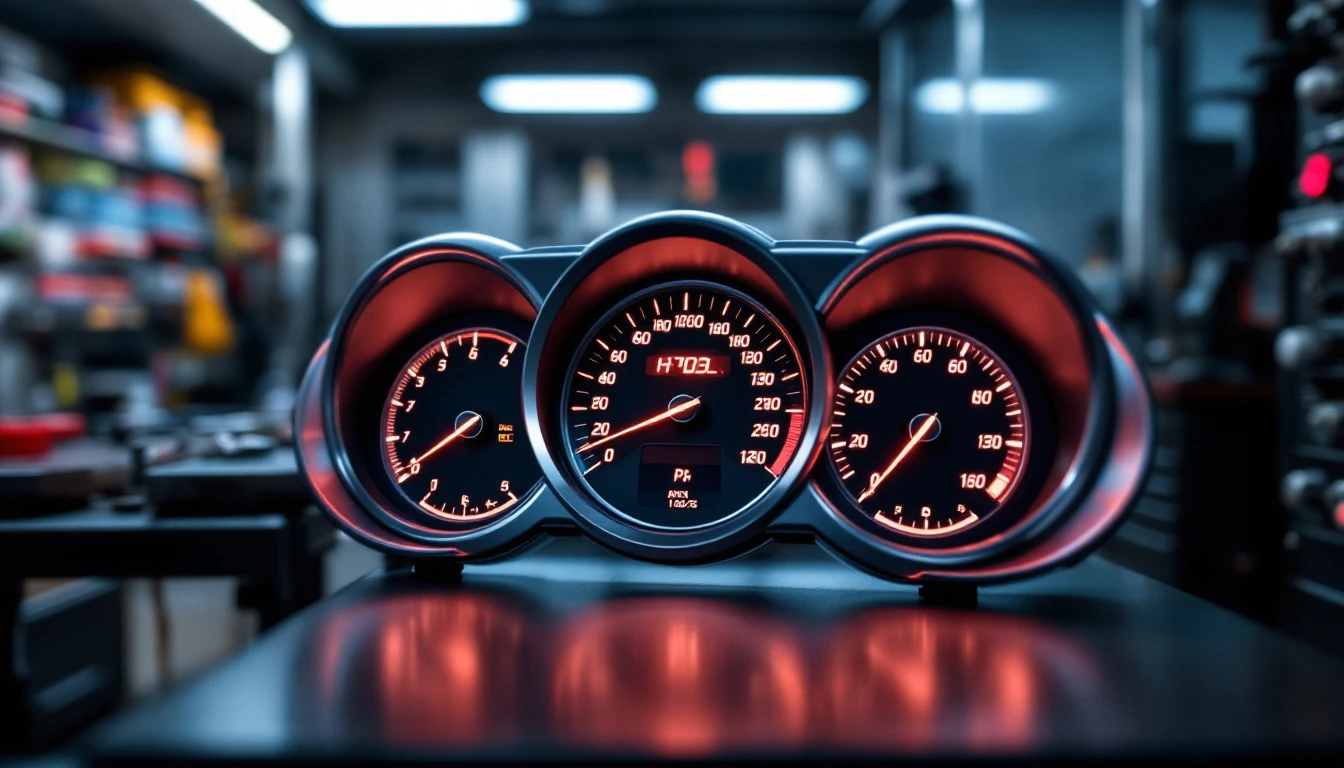
Your instrument cluster — the panel of gauges behind the steering wheel, also called the IPC (instrument panel cluster) or gauge cluster — is far more than a set of dials. On a modern vehicle it is a networked computer module that stores the odometer reading in permanent memory, drives every warning lamp, and on a large share of cars and trucks participates directly in the immobilizer system that lets your key start the engine. When that module fails or has to be replaced, the new one has to be programmed to your specific vehicle, and the true recorded mileage has to be carried over correctly.
That last part is where honesty matters most. As of July 2026, there is a legitimate, everyday version of "odometer correction" — transferring the real, documented mileage onto a replacement cluster so the odometer keeps telling the truth — and there is an illegal version, rolling the number back to defraud a buyer. This guide from Fort Worth Locksmith & Computer Programming explains the difference in plain terms, walks through why cluster swaps so often tangle up with your keys, and covers what fair mobile pricing looks like in Fort Worth compared to a dealership.
What the Instrument Cluster Actually Stores
The cluster is a sealed electronic module, and inside it are several things that matter when you replace it:
- The odometer value, held in non-volatile EEPROM or flash memory. This is the vehicle's permanent mileage record. It is written and re-written as you drive and survives the battery being disconnected.
- Warning-lamp logic and gauge calibration, which tells the module how to interpret sensor signals for the speedometer, tachometer, fuel level, and temperature.
- Configuration/coding data — which options your trim has, what units to display, which lamps are active.
- On many platforms, immobilizer security data. The cluster either stores the transponder key codes directly or acts as the gateway that relays them between the key, the BCM, and the engine computer.
Because those four categories are all baked into one physical module, you cannot simply unplug a dead cluster and clip in a replacement. The donor cluster brings its own stored mileage, its own configuration, and often its own immobilizer pairing. Everything has to be reconciled to your car. This is the same class of work as module programming on any other networked control unit — the module is hardware, but the identity is software, and the software has to be corrected.
Legitimate Mileage Transfer vs. Illegal Rollback — The Line We Do Not Cross
Let us be completely direct, because this topic attracts confusion and, occasionally, bad actors.
Legitimate work is transferring the true recorded mileage from your failed cluster (or from your documented history) onto the replacement cluster, so the odometer continues to display the actual distance the vehicle has traveled. If your truck genuinely has 168,412 miles and the cluster failed, the replacement should read 168,412 — not zero, not the donor's number. Writing that correct figure, and documenting the before-and-after, keeps the odometer accurate. That is a normal, disclosed repair.
Illegal work is altering the odometer to show fewer miles than the vehicle has actually traveled — rolling it back to make a car look newer or worth more. Under federal odometer law, specifically 49 U.S.C. §32703, it is a federal crime to disconnect, reset, or alter a vehicle's odometer with intent to change the mileage reading, or to operate a vehicle knowing the odometer is disconnected or nonfunctional. The National Highway Traffic Safety Administration (NHTSA) enforces these rules, and odometer fraud carries both civil penalties and criminal prosecution. Federal law also requires accurate mileage disclosure at the time of sale.
Our policy is simple: we transfer true mileage, we document it, and we refuse rollbacks. If someone asks us to set an odometer lower than the vehicle's real mileage, we decline the job. If you are buying a used vehicle in the DFW area and the seller's story about the odometer doesn't add up, that is a red flag worth investigating before money changes hands — the Federal Trade Commission publishes buyer guidance on exactly this.
Why a Cluster Swap So Often Breaks Your Keys
Here is the connection that surprises most people. On a very large number of vehicles — many GM, Ford, Chrysler/Dodge/Ram/Jeep, Nissan, and European platforms — the instrument cluster is an active node in the immobilizer chain. It may store the encrypted key codes, or it may sit between the key antenna, the BCM, and the engine ECU as the security relay.
The practical consequence: install an uncoded replacement cluster and the immobilizer may no longer recognize your perfectly good transponder key. The engine cranks but will not start, because the security handshake fails. To fix it, the replacement cluster has to be synchronized with the existing immobilizer data, or the keys have to be re-learned to the new module. This is why cluster replacement so frequently rolls into transponder key programming or a broader key/immobilizer session. A specialist who does both — key work and module programming — can complete the whole thing in one visit instead of sending you to two different vendors.
If your cluster failure is also leaving you without a working key, our automotive locksmith and car key replacement services cover the key side of the same job.
The Tools and Process Behind Cluster Programming
Cluster programming and mileage transfer is a tool-and-software operation. A mobile specialist typically arrives with a professional programming platform — an Autel IM608 or MaxiSys, an Abrites AVDI, an Advanced Diagnostics Smart Pro, or a Lonsdor K518 — plus a stable power supply to hold voltage during any flash step.
The general workflow looks like this:
- Read the outgoing cluster (or the vehicle's other modules) to recover the true mileage, VIN, and immobilizer status where possible. On a totally dead cluster, mileage may instead be pulled from a supporting module or reconstructed from documented records.
- Identify the replacement and its stored donor data — donor mileage, donor VIN, donor security pairing.
- Write the correct configuration: your VIN, your true mileage, and the proper option coding for your trim.
- Reconcile the immobilizer — sync the cluster with existing key data or re-learn the keys so the engine will start.
- Clear stored faults and verify: no mileage-mismatch code, no tamper flag, gauges reading correctly, key starting reliably.
Some older or European clusters cannot be handled through the OBD-II port alone and require bench-level EEPROM work — the module is removed, opened, and the memory chip is read and written directly. That is more involved and is quoted after we see the exact platform. Newer European models with encrypted security gateways sometimes require dealer-level or bench-level access; a tech confirms your exact platform before promising a turnaround. This is the same honesty principle we apply to ECU programming: some newest models require dealer or bench-level work, and we say so up front.
Fort Worth & DFW 2026 Pricing: Mobile vs. Dealer
Pricing depends heavily on the platform and on whether the immobilizer has to be re-coded or the keys re-learned. The table below reflects typical DFW ranges as of July 2026. Every figure assumes legitimate, accurate mileage transfer — we do not price rollbacks because we do not perform them.
| Service | Mobile specialist | Dealership | Notes |
|---|---|---|---|
| Cluster programming + true mileage transfer (domestic/Asian) | $150–$350 | $325–$650 | Plus cost of the cluster itself |
| Cluster swap with immobilizer re-coding | $250–$450 | $525–$900 | Keys re-synced to new module |
| Cluster + key re-learn (all keys) | Quoted after diagnosis | Often refused | Platform-dependent |
| Bench-level EEPROM cluster repair (older/EU) | Quoted after diagnosis | $700–$1,600+ | Module removed and opened |
| European / gateway-protected cluster | Quote required after diagnosis | Dealer-level | Some newest models need dealer/bench |
Two things drive the dealership premium. A dealer bills two to three hours of bay labor at roughly $185–$260 per hour in DFW, then adds module and software-access fees on top. A mobile specialist is flat-rate with no bay overhead — and many dealers will not perform a used-cluster mileage transfer at all, only the programming of a brand-new module bought through their parts counter. That refusal is exactly where an independent specialist saves you money, because a sound salvage-yard cluster correctly programmed is far cheaper than a new OEM unit.
Common Cluster Failures We See Around Fort Worth
Water and heat damage. Fort Worth's thunderstorm season and long summers are hard on electronics. A leaking windshield or cowl seal can let moisture reach the dash and corrode cluster connectors; sustained cabin heat cycles crack solder joints over time. Symptoms range from dead gauges and flickering backlighting to a completely dark cluster.
Stepper-motor gauge failure. A classic on 2003–2013 GM trucks and SUVs (Silverado, Sierra, Tahoe, Suburban) — the little stepper motors that move the needles wear out, so the speedometer or tach reads wrong or sticks. Sometimes the motors are repaired; sometimes the cluster is replaced and reprogrammed with the correct mileage.
Immobilizer/no-start after a cluster is disturbed. A body shop or DIYer swaps a cracked cluster, the car won't start, and the real fix is immobilizer coding — not a new starter or battery. We see this misdiagnosed regularly across Arlington, Hurst, and North Richland Hills.
Total electronic failure. Age, a voltage spike, or a botched jump-start kills the module outright. Replacement plus correct programming is the path back.
For customers in the surrounding cities, we cover cluster and module work through routes like module programming and across the wider metroplex — the same mobile service, dispatched to you.
What to Do If Your Cluster Fails
If your gauges have gone dark, your speedometer is erratic, or your car cranks but won't start after any dash work, get it diagnosed before assuming the worst. A few practical steps:
- Note your current mileage now, from any recent record — an oil-change receipt, a state inspection, an insurance document. This documentation supports an accurate mileage transfer later.
- Don't buy a used cluster until you've confirmed your platform supports programming and mileage transfer through the OBD port versus requiring bench work — the answer changes the cost and timeline.
- Keep the old cluster. Even a dead one often still holds a readable mileage value that makes the transfer cleaner and better documented.
- Ask up front whether the immobilizer will need re-coding, so the key side is handled in the same visit and you're not stranded with a no-start.
Instrument cluster programming sits at the intersection of module work and immobilizer/key work, which is exactly the combination a locksmith-and-programming specialist is built for. Fort Worth Locksmith & Computer Programming is mobile and available 24/7 across Fort Worth and DFW at (817) 668-3801, or email contact@fwlocksmith.com. We are licensed through the Texas DPS Private Security Bureau, we transfer only true, documented mileage, and we will always refuse an odometer rollback.
Frequently Asked Questions
Is odometer correction legal in Texas?
Transferring the true, recorded mileage from a failed cluster to a replacement cluster is legal when it is accurate and disclosed — the odometer keeps reading what the vehicle actually traveled. What is illegal is rolling back or altering the mileage to show fewer miles than the vehicle has driven. Federal odometer law (49 U.S.C. §32703) and NHTSA rules make tampering a federal crime, and we refuse any rollback request.
My gauge cluster died and I bought a used one — will it just plug in and work?
Usually not. A replacement instrument cluster arrives with the donor vehicle's stored mileage, VIN data, and often immobilizer/key information. It has to be programmed to your vehicle — the correct mileage written in, the VIN matched, and on many models the immobilizer re-synced so your keys still start the car. A raw plug-and-play swap typically triggers a no-start or a mileage mismatch warning.
Why does replacing a speedometer cluster affect my keys?
On a large number of vehicles the instrument cluster is part of the immobilizer system — it stores or relays the security data that authorizes your transponder key. Swap the cluster without coding it and the car may no longer recognize a valid key, causing a crank-no-start. That is why cluster replacement and key/immobilizer programming are usually done together.
How much does instrument cluster programming cost in Fort Worth?
Cluster programming and mileage transfer on most domestic and Asian vehicles falls in a similar range to BCM work — roughly $150–$350 depending on platform and whether immobilizer re-coding is required. If all keys have to be re-learned or a European security gateway is involved, it is quoted after diagnosis. A dealership typically charges considerably more once bay labor and module fees are added.
Can you correct the mileage if the odometer already reads wrong after a repair?
If a shop installed a used cluster and the odometer now shows the donor vehicle's mileage instead of yours, we can write the correct, documented mileage — the figure supported by your prior records, inspection history, or the original cluster — so the display matches what the vehicle actually traveled. We document the before-and-after reading. We will not set a number lower than the vehicle's true mileage.
Do you offer mobile instrument cluster service, or do I need a shop?
Most cluster programming and mileage transfer is done mobile, at your home or workplace anywhere in Fort Worth and the DFW metroplex. The work is tool-and-software based rather than bay-based, so a mobile specialist can complete it in your driveway. Some bench-level EEPROM repairs on older or European clusters may take longer or require the module to be removed.
Will the 'mileage discrepancy' or red dot warning go away after programming?
Yes, when the job is done correctly. Many vehicles flag a tamper indicator or store a mileage-mismatch code when a cluster's recorded miles don't agree with other modules. Writing the correct mileage and clearing the stored fault removes the warning. If the warning persists, another module (like the BCM or engine ECU) may hold a conflicting mileage value that also needs to be reconciled.