Security Gateway (SGW) Module Programming for Dodge, Ram & Jeep — Fort Worth (2026)
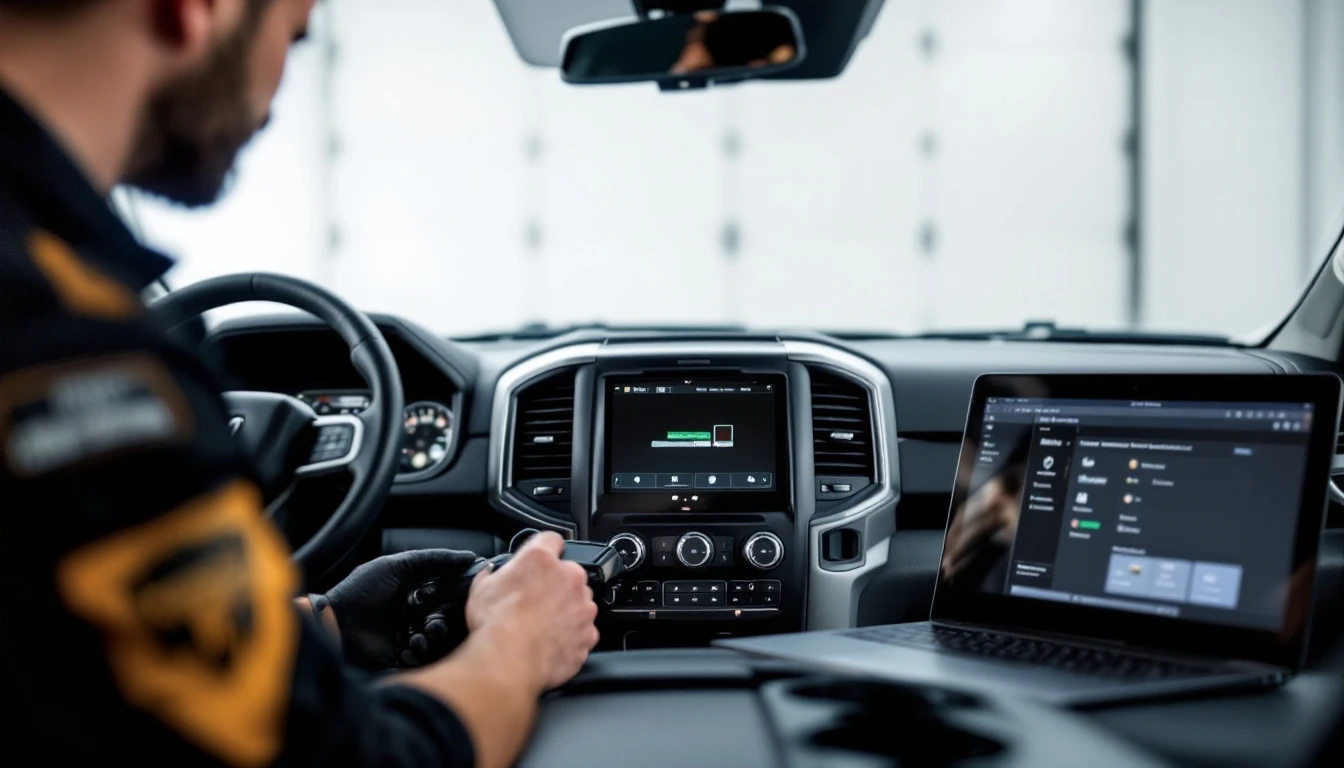
If you drive a 2018-or-newer Dodge, Ram, Jeep, or Chrysler here in Fort Worth and you have ever searched "security gateway bypass Dodge" after a dealer told you a spare key would cost a small fortune, this guide is for you. The Security Gateway Module — SGW for short — is one of the most misunderstood pieces of hardware in modern Stellantis vehicles. It is not a scam, it is not a gimmick, and it does not mean you are stuck paying dealership prices for a second key. It does mean the way a locksmith accesses your vehicle changed, and it is worth understanding why.
As of July 2026, virtually every Ram truck, Jeep SUV, and Dodge or Chrysler vehicle built in the last several years ships with this security module standing between diagnostic tools and the rest of the vehicle's computer network. This article explains what the gateway actually does, why aftermarket tools need authorized access to work through it, and how a NASTF-credentialed mobile locksmith completes key and module programming the legitimate way — no shady defeat, no compromised security. Our Dodge/Chrysler WIN module service and broader module programming service both live downstream of this gateway, so understanding it clears up a lot of confusion.
What the Security Gateway Actually Does
Think of your vehicle's electronic architecture as a building full of offices — the engine controller, the transmission controller, the body control module, the instrument cluster, the WIN module that manages your keys — all connected by internal hallways (the CAN bus network). Before 2018, anyone with an OBD-II tool could walk in the front door and speak directly to any of those offices. That openness was convenient for repair, but it was also a genuine cybersecurity weakness.
Stellantis (the parent company of the former Fiat Chrysler Automobiles, or FCA) responded by installing the Security Gateway: a dedicated firewall module wired between the OBD-II diagnostic port and the internal network. When a tool connects, the gateway lets it read freely — you can still pull trouble codes and live data all day. But the moment a tool tries to write anything — program a key, change a configuration, clear an adaptation — the gateway blocks it unless the tool authenticates first.
The intent is straightforward and, frankly, good for owners: it stops relay attacks, unauthorized reflashing, and the kind of network intrusion that security researchers demonstrated on earlier Jeep platforms. The National Highway Traffic Safety Administration has pushed the whole industry toward exactly this kind of layered vehicle cybersecurity. The tradeoff is that legitimate independent repair — including locksmith key work — now requires a proper credential to get past that write-block.
Why "Bypass" Is the Wrong Word
Search traffic for "security gateway bypass" is enormous, so let's be honest about the language. In the earliest days after the SGW appeared, the only aftermarket workaround was crude: physically unplug the gateway module and splice a small cable so the tool could reach the network directly. That worked, but it left the gateway disconnected — meaning the vehicle's security firewall was defeated until someone plugged it back in. It was a genuine bypass, and it was a stopgap nobody loved.
That era is over. A responsible locksmith today does not defeat your gateway. Instead we authenticate through it using AutoAuth, the manufacturer-endorsed access program (more on that below), or a factory-sanctioned service procedure. The distinction matters: authenticating means the gateway does its job, verifies our credential, and grants temporary write access — then re-secures the vehicle when we disconnect. Your firewall stays intact. Nothing is left spliced or unplugged.
So when you see "SGW bypass" advertised, read it as shorthand for "we can get past the gateway to do the work you need." A reputable, Texas DPS Private Security Bureau-licensed locksmith does that through credentials, not by compromising your truck's security.
AutoAuth: The Legitimate Access Path
AutoAuth is the system Stellantis endorsed to let registered aftermarket tools and technicians authenticate to the Security Gateway. A locksmith or shop registers, pays for access, links their diagnostic equipment, and from then on the gateway recognizes their tool as authorized. When we connect an Autel IM608, a Smart Pro, an AVDI, or a similar professional programmer to your Ram or Jeep, the tool completes an AutoAuth handshake, the gateway opens the write path, and we proceed with key programming exactly as the manufacturer intended.
This is why the credential layer behind the scenes matters so much. The National Automotive Service Task Force (NASTF) runs the broader framework — its Secure Data Release Model and Vehicle Security Professional registry are what let a vetted, background-checked independent locksmith access OEM security functions across brands. AutoAuth for Stellantis, and NASTF credentialing generally, are the reason your local mobile locksmith can legally do work that used to be dealer-only. Anyone doing 2018+ Stellantis key work without these credentials is either defeating the gateway the old crude way or not really doing the work at all.
The SGW, the WIN Module, and Your Keys
The Security Gateway does not program your key — the WIN module does. The WIN (Wireless Ignition Node) is the Stellantis component that houses the ignition, the immobilizer antenna, and the key authentication logic on many Dodge, Ram, Jeep, and Chrysler models. When you turn the ignition or press start, the WIN module challenges the key's transponder chip, and only a valid response lets the engine crank.
Here is how the two relate in a real key job. The gateway is the locked lobby door; the WIN module is the office where the actual key programming happens. On a pre-2018 vehicle we walked straight to the office. On a 2018+ vehicle, we first authenticate through the gateway lobby, then reach the WIN module to add or replace keys. If the WIN module itself has failed — a common issue on higher-mileage Ram and Jeep platforms — that becomes a WIN module repair or replacement job, which also has to be coordinated through the gateway. And if a used module from a donor vehicle is involved, a VIN swap / re-VIN procedure may be required to marry it to your truck.
For deeper background on how Chrysler's immobilizer family — SKIM, SKREEM, WIN, and the associated PCM security — fits together, our companion piece on Mopar SKIM/WIN/PCM programming walks through the full lineage.
What a Gateway-Era Key Job Looks Like in Your Driveway
A mobile locksmith arrives at your home, office, or a Fort Worth parking lot with the whole kit: a gateway-capable programmer with active AutoAuth registration, blank keys or fobs cut to your VIN, and a stable power supply. The sequence is roughly this:
- Connect the programmer to the OBD-II port and confirm the vehicle and build.
- Complete the AutoAuth authentication so the gateway grants write access.
- Read the WIN module and current immobilizer data.
- Program the new transponder key or push-to-start smart fob, pairing it to the WIN module.
- For all-keys-lost, initialize a fresh key sequence and clear any old keys from memory.
- Verify start, verify remote functions, and confirm the gateway re-secures on disconnect.
Add-key jobs (you still have one working key) are faster. All-keys-lost jobs take longer because the system may enforce a security wait timer and requires a full re-initialization. Either way, the work happens where your vehicle sits — no tow to a dealer, which is a real advantage for a heavy Ram 2500 or a Jeep that will not start in a driveway off Camp Bowie or out in Aledo.
Fort Worth Pricing: Mobile vs. Dealer for Gateway-Era Stellantis Key Work
Because the gateway adds authentication steps and paid credentials, some people assume mobile pricing spikes. It does not — it stays within the normal ranges, and it stays well under the dealer. Here is a representative comparison for common 2018+ Dodge, Ram, and Jeep key and module jobs in the DFW market.
| Service (2018+ Stellantis) | Mobile specialist | Dealership | Notes |
|---|---|---|---|
| Transponder key (add-key) | $120–$250 | $220–$400 | Gateway auth included |
| Push-to-start smart fob (add-key) | $250–$450 | $400–$700 | Prox fob + programming |
| Smart key all-keys-lost | $350–$650+ | $600–$950+ | Security timer applies |
| WIN module programming | $150–$350 | $350–$600 | Plus module if replaced |
| Used-module re-VIN | $325–$700 | Often refused | Platform-dependent |
Two honest notes on the numbers. First, a dealership typically bills two to three hours of bay labor at roughly $185–$260 per hour in DFW, plus the module or fob, plus a software-access fee — which is how a "simple" spare key balloons past $600. Mobile pricing is flat-rate with no bay overhead. Second, dealers frequently refuse used-module re-VIN work entirely, selling you a new part instead; a properly equipped mobile specialist can often re-VIN a salvage module and save you real money. Every figure above is a range confirmed after we diagnose your specific vehicle — no vehicle gets a blind quote.
When the Gateway Itself Is the Problem
Usually the SGW is invisible — it does its job and you never think about it. But it is hardware, and hardware fails. Fort Worth's brutal summer thunderstorms and the occasional flooded underpass mean water intrusion is a genuine risk, and a water-damaged or failed gateway can scramble network communication across the whole vehicle. Symptoms include no-start, a cluster full of unrelated warning lights, lost immobilizer function, or a truck that cranks but will not authenticate the key.
This is exactly why we diagnose before quoting. A no-start on a 2020 Ram might be a dead key battery, a failed WIN module, or a gateway fault — three very different repairs at three very different prices. Guessing wastes your money. If diagnosis points to the gateway, the fix might be reprogramming, module replacement and configuration, or related key and immobilizer work. For Jeep and Dodge owners the same logic applies — see our make-specific pages for Jeep keys and Dodge keys.
Why This Is Specialist Work
Three things keep gateway-era Stellantis key programming out of the quick-lube and general-repair world. First, the tooling: a gateway-capable programmer with current software runs into the thousands of dollars, and the AutoAuth and NASTF credentials behind it require registration, background vetting, and annual fees. Second, the network sensitivity — a botched write to a modern CAN bus can disable modules, so the work demands someone who understands the architecture, not just someone with a scan tool. Third, the security responsibility: the whole point of the gateway is to keep your vehicle safe, and only a credentialed professional can access it without leaving it compromised.
That combination is why a legitimate mobile locksmith earns the price of the job — and why the cheapest "I'll unplug your gateway" offer on a marketplace app is the one to avoid. The Associated Locksmiths of America maintains standards and a public directory for exactly this reason.
Frequently Asked Questions
What is a Security Gateway (SGW) bypass, and is it legal?
The Security Gateway is a Stellantis firewall module that blocks unauthorized writes to your vehicle's network. A legitimate specialist does not "bypass" it in the illegal sense — they authenticate through AutoAuth, the manufacturer-sanctioned access system, or use a factory-authorized service position. Working through the gateway with proper credentials is completely legal; physically defeating it to hide unauthorized work is not what a reputable locksmith does.
Which Dodge, Ram, Jeep and Chrysler models have the Security Gateway?
Most 2018 and newer Stellantis (formerly FCA) vehicles have the SGW, including Ram 1500/2500/3500, Jeep Wrangler, Grand Cherokee, Cherokee and Compass, Dodge Charger, Challenger and Durango, and Chrysler Pacifica and 300. A few late-2017 models also received it. A tech confirms your exact year and build during diagnosis.
Can you still program a key on a 2018+ Ram without going to the dealer?
Yes. A NASTF-credentialed mobile locksmith with AutoAuth access can authenticate through the gateway and program keys, add-key or all-keys-lost, at your location in Fort Worth. The gateway changed the access method, not whether independent locksmiths can do the work.
Does the Security Gateway make key programming more expensive?
Slightly, because authenticating through the gateway adds steps and requires paid credentials and subscriptions. Transponder and smart-key programming still fall within our normal ranges — typically $120 to $250 for transponder keys and $250 to $650 or more for push-to-start smart keys, with the exact figure confirmed after we see your vehicle.
What is AutoAuth and why does it matter for SGW work?
AutoAuth is the Stellantis-endorsed system that lets registered aftermarket tools and technicians authenticate to the Security Gateway. It replaced the early workaround of unplugging the module. A locksmith registered with AutoAuth can perform secure-gateway operations the way the manufacturer intended, which keeps your vehicle's network security intact.
Is the SGW related to the WIN module and immobilizer on my Dodge?
Yes — they work together. The WIN (Wireless Ignition Node) module handles the immobilizer and key authentication, while the Security Gateway controls whether a diagnostic tool is even allowed to talk to the WIN and other modules. Key programming on a 2018+ vehicle usually requires clearing the gateway first, then working with the WIN module.
Can a Security Gateway problem leave my truck unable to start?
A failed or water-damaged gateway can disrupt communication across the network and cause no-start, warning lights, or lost immobilizer function. Diagnosis determines whether the fix is reprogramming, module replacement, or related key and WIN work. We diagnose before quoting so you are not paying for the wrong repair.
Service Throughout Fort Worth and the DFW Metroplex
Mobile Security Gateway, WIN module, and key programming for Dodge, Ram, Jeep, and Chrysler is available throughout Fort Worth and the metroplex, including Arlington and the surrounding communities. Whether your truck is parked at home near the Stockyards, at a job site off Alliance, or stranded in a lot in Mansfield, the work comes to you.
For gateway-era Stellantis key and module programming, contact Fort Worth Locksmith & Computer Programming at (817) 668-3801 or contact@fwlocksmith.com. We are mobile, available 24/7, licensed through the Texas DPS Private Security Bureau, and equipped with AutoAuth-registered, gateway-capable programming tools.