How Long Does ECU Programming Take? Real Timelines
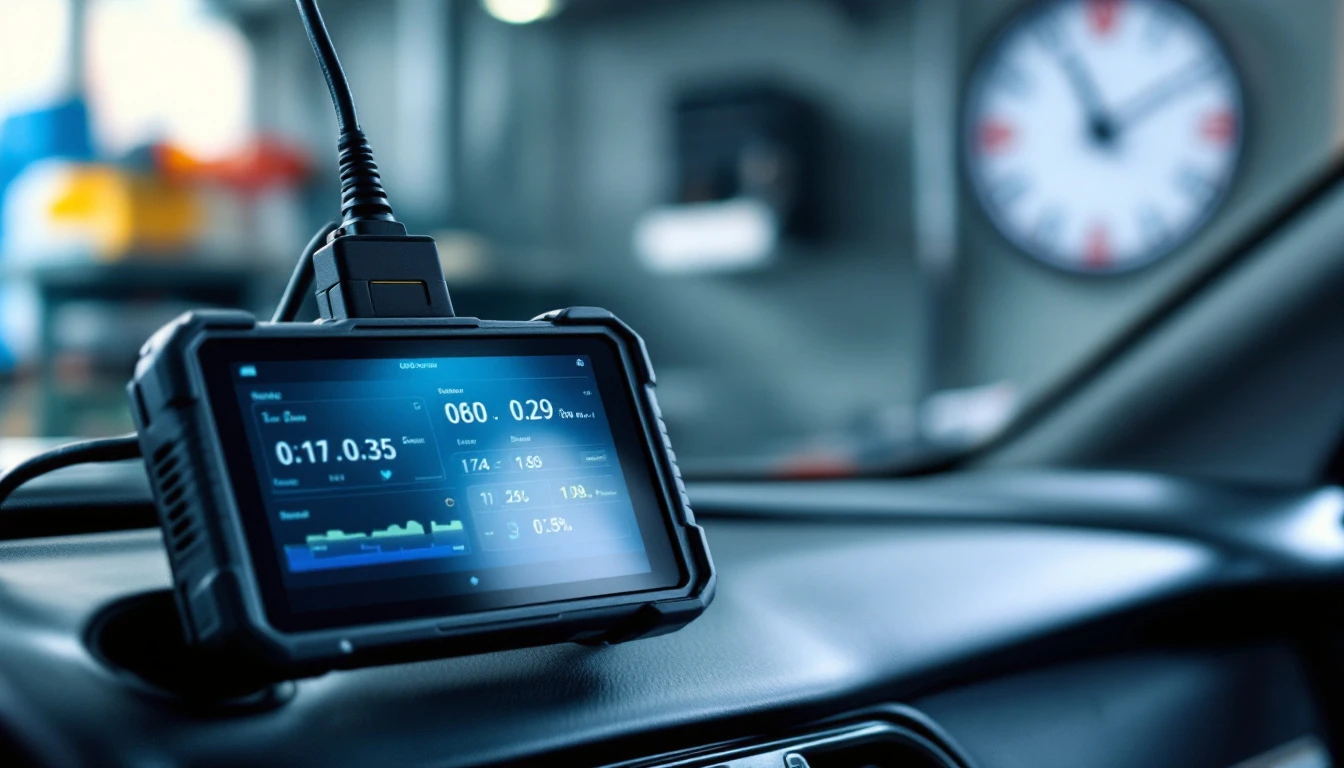
When a control module has to be programmed — after a failure, a replacement, a used-module swap, or a manufacturer reflash — the first question most Fort Worth drivers ask is simple: how long is this going to take? The honest answer is "it depends on the module and the platform," but that is not very useful when you are trying to plan your day. This guide gives you real timelines, module by module, and explains exactly what makes one job 40 minutes and another two hours.
As of July 2026, most locksmith-grade module programming in the DFW area is a single-visit, on-site job. The idea that you have to surrender your vehicle for a day comes from dealership scheduling, not from the technical work itself. Our module programming service and ECU programming service are both mobile — the technician comes to your driveway with the tools that do the work.
The Two Clocks: Flash Time vs. Total Appointment Time
There are two different numbers people mix up. Flash time is how long the module spends actively receiving new firmware — the progress bar on the scan tool. Total appointment time is everything: identifying the vehicle, setting up power, unlocking security gateways, running the flash, performing adaptations, and verifying the result with a clean diagnostic scan.
Flash time is usually 15 to 45 minutes. Total appointment time is usually 45 minutes to two hours. When someone online says "ECU programming only takes 20 minutes," they are quoting flash time and ignoring the setup and verification that make the difference between a job that sticks and a bricked module. A responsible technician spends real time on the bookends, not just the flash.
Timeline by Module Type
Here is a realistic breakdown of total appointment time by the kind of work involved. These are typical ranges for a mobile job in Fort Worth — your exact vehicle can land anywhere in the band.
| Programming job | Typical total time | What drives the range |
|---|---|---|
| New ECU/PCM flash (domestic) | 45–75 min | File size, adaptations, post-flash scan |
| New ECU/PCM flash (European) | 75–150 min | Online auth, VIN lock, component protection |
| Used ECU/PCM re-VIN | 60–120 min | Clearing donor data, EEPROM on some platforms |
| BCM programming or replacement setup | 45–90 min | Immobilizer sync, option coding |
| TCM programming + adaptive relearn | 45–90 min | Relearn drive cycle, PCM-combined vs. standalone |
| Add a key to existing immobilizer | 20–45 min | Key type, security access |
| All-keys-lost immobilizer reset | 60–120 min | System access, re-initialization, new keys |
| Airbag/SRS crash-data reset | 30–60 min | Module access, hard-code vs. soft-code storage |
| Security-gateway (SGW) unlock added | +5–20 min | OEM server response time, network speed |
Notice that adding a security-gateway unlock is a modifier on top of the base job. On 2018-and-newer FCA/Stellantis (Ram, Jeep, Dodge, Chrysler), VW Group, and many GM platforms, the tool has to complete a real-time authorization through the manufacturer's gateway before it can even talk to the target module. That step depends on the OEM server and your cellular signal, not on the technician.
What Actually Makes a Job Slow
Big Calibration Files and Online Authorization
A small BCM option-coding change might write in a couple of minutes. A full powertrain reflash on a modern turbo-diesel can push hundreds of megabytes and require a live connection to the OEM server for the entire download. If the job site has weak cell signal, that download crawls. Experienced mobile technicians carry signal boosters and will reposition for a stronger connection, but physics is physics.
VIN Locks and Component Protection
European brands are the classic time sinks. Mercedes (FBS), BMW (post-CAS3), and Audi/VW (component protection on MQB and newer) lock modules to a specific VIN. A donor or replacement module cannot simply be flashed — it has to be re-VINed, and on some platforms that means bench-level EEPROM work or an online component-protection removal that adds real minutes. Our VW/Audi immo-off, BMW FRM repair, and Mercedes ELV/steering-lock work all fall into this longer-appointment category by nature.
Multi-Module Sequences
Some repairs are not one module. Replace a PCM on certain platforms and the BCM has to be re-synced so the immobilizer handshake still works — that is two programming operations in sequence, each with its own verification. A BCM-plus-PCM combo naturally takes longer than either alone.
Adaptive Relearns
Transmission control modules are the obvious example. After a TCM reflash, the transmission has to relearn clutch wear and shift pressures. The programming is quick; the relearn happens over the next 50 to 100 miles of driving. Your appointment does not include that mileage, but expect firm shifts for a day or two afterward — that is normal, not a fault.
What Makes a Job Fast
Speed comes from preparation, not shortcuts. The fastest jobs share a few traits:
- The vehicle and module are correctly identified up front. A five-minute VIN and part-number confirmation prevents a 40-minute wrong-file mistake.
- Power is stabilized before the flash. A proper 50 to 70 amp bench supply means the flash never has to pause or retry.
- The platform is domestic and gateway-free. A pre-2018 Ford, GM, or Chrysler with no security gateway is often the quickest kind of job.
- The technician already carries the licensed calibration software. No waiting on a subscription download in the driveway.
Key and Immobilizer Programming: A Separate Clock
Key programming is often bundled with module work, but it runs on its own timeline. Adding a transponder key or smart key to a system that already has a working key is fast — usually 20 to 45 minutes. The system already trusts the vehicle; the tool just teaches it one more key.
All-keys-lost is the slow version. With no working key, the immobilizer has to be accessed and, on many platforms, re-initialized before it will accept anything new. That is where the 60-to-120-minute range comes from, and on locked European systems it can be longer. If you are pricing a car key replacement and the quote seems to assume more time than a spare-key job, all-keys-lost is usually why.
Pricing Follows Time — But Not Linearly
Longer jobs generally cost more, but the relationship is not one-to-one. As of September 2026, typical DFW mobile ranges look like this: a transponder key runs about $120–$250; a push-to-start smart key $250–$650 and up; ECM/PCM programming $150–$500 depending on new versus used and platform; BCM work $150–$350; a used-ECU re-VIN $325–$1,200 on European platforms; and an airbag/SRS reset $100–$300. Genuinely complex or luxury jobs are quoted after a diagnosis rather than off a chart, because the time and tool requirements vary too much to promise a number sight-unseen. For a deeper cost breakdown, see our module programming cost guide. If the vehicle in question has already had a module fitted and still will not start, the timeline question is usually secondary to a diagnostic one — see new module installed and the car still won't start.
Timings reviewed 28 August 2026. The ranges above still hold. One recent appointment illustrates the gap between flash time and appointment time better than any table: a truck booked as "a quick reflash" needed the module configured and then relearned afterward, which turned a 25-minute write into a 90-minute visit. The customer had been quoted 30 minutes elsewhere, which was accurate about the flash and wrong about the job. Ask what the appointment takes, not what the flash takes.
The reason a shop quotes after diagnosis on hard jobs is honesty: a used European module that turns out to need bench EEPROM work is a different appointment than one that re-VINs over OBD, and no ethical technician promises the cheap number before confirming which one you have. That is also how you spot a trustworthy provider versus a bait quote — see our guide on avoiding locksmith scams.
The Part of the Clock Nobody Quotes
Three things routinely add time to an appointment and none of them appear in a flash-duration estimate.
Confirming what is actually wrong. A meaningful share of module-programming calls turn out not to be programming calls. A module that was never configured, a key that has failed, a reader coil that has opened, or a voltage event that left stored faults across several controllers all present as "it needs to be programmed." Establishing which one it is takes fifteen to thirty minutes and it is time well spent, because the alternative is flashing a module that was never the problem.
Stabilising voltage before touching anything. A flash interrupted by a sagging battery can leave a module unusable. A maintainer goes on the battery before the session starts, every time, and on a vehicle that has been cranking for a while it may need a few minutes to bring things up.
Post-flash relearns. Throttle position, transmission adaptation, steering angle and idle strategy do not survive every procedure, and re-establishing them is part of the job rather than an extra. Skipping them produces complaints a week later that get misdiagnosed as a bad flash.
As of September 2026 the practical guidance has not changed: budget for the appointment, not for the flash. A job quoted as "forty minutes of programming" is realistically a ninety-minute visit once diagnosis, power setup and relearns are counted, and a shop that tells you otherwise is describing one step rather than the work.
Timelines also stretch when the symptom turns out to be temperature dependent, because the fault has to be present to be measured — see car will not restart when it is hot.
Why Mobile Is Usually Faster End-to-End
Compare the full timeline. At a dealership you schedule an appointment (often days out), drive or tow the vehicle in, wait in the service line, leave the car in a shared bay queue, and pick it up later — sometimes the next day. The connected programming time is the same 30-to-90 minutes a mobile tech would spend, but the calendar cost is enormous.
A mobile specialist collapses all of that. The tool, the power supply, the licensed software, and the internet connection come to you. For most Fort Worth drivers the difference between "fixed today in my driveway" and "maybe by Thursday at the dealer" is the whole point. Fort Worth Locksmith & Computer Programming is a mobile, service-area business covering Fort Worth and Tarrant County; we bring the programming to wherever the vehicle sits.
Credentials and Legitimacy
Programming a module means writing to a vehicle's security systems, so legitimacy matters. In Texas, automotive locksmiths operate under the Texas Department of Public Safety (DPS) Private Security program and a reputable technician verifies vehicle ownership before performing key or immobilizer work. Professional module programming aligns with the practices supported by the National Automotive Service Task Force (NASTF), which coordinates secure OEM access for independent locksmiths and repairers, and with vehicle-security standards published by SAE International.
A Realistic Timeline: What a Two-Hour Appointment Looks Like
To make the abstract concrete, here is how a typical mid-complexity job — say, a used PCM re-VIN on a domestic truck — actually unfolds in the driveway:
- Minutes 0–10: Arrival and confirmation. The technician verifies the vehicle, reads the VIN, confirms the part number matches, and checks ownership. This is where a wrong-part problem gets caught before any time is wasted.
- Minutes 10–20: Power and pre-scan. A bench power supply is clamped on to hold voltage steady, and a full pre-flash scan documents the existing fault codes so nothing gets blamed on the programming later.
- Minutes 20–55: The flash. The calibration is loaded and written. On a used module this includes clearing the donor VIN and writing yours. The technician watches the progress and does not touch the vehicle's electrical system during the write.
- Minutes 55–80: Adaptations and immobilizer. The module's adaptation values are set and the immobilizer is re-paired to your keys so the engine will actually start.
- Minutes 80–100: Verify. A post-flash scan confirms a clean result, the engine is started, and every affected function is checked.
That is where the "one to two hours" figure comes from — and why the flash being 35 minutes does not mean the job is 35 minutes.
How You Can Make Your Appointment Faster
A few things on your end genuinely shorten the visit:
- Have your documents ready. Proof of ownership and your ID prevent delays on any immobilizer job.
- Know your exact vehicle. Year, make, model, trim, and — if you have it — the VIN let the technician confirm the right calibration before arriving.
- If you bought a part, have the part number. A quick match avoids the worst time-waster: discovering the wrong module in the driveway.
- Park somewhere with signal and shade. Many reflashes need a live internet connection to the OEM server; a strong cell signal keeps big downloads moving, and shade keeps you and the technician comfortable during a long write.
None of this changes the flash time, but it can trim 15–20 minutes of setup friction off the total. When you call, tell us the vehicle and the module involved and we will give you a realistic window before we roll.
Frequently Asked Questions
How long does ECU programming take on average?
As of July 2026, a straightforward new-module flash on a domestic vehicle usually takes 30 to 60 minutes of connected time, plus 15 to 20 minutes of setup, verification, and a post-flash scan. The flash itself is often 15 to 45 minutes; the rest is vehicle identification, module setup, adaptations, and a clean DTC check. European platforms and used-module re-VIN work run longer.
Why does module programming take longer on some cars?
Larger calibration files, mandatory online OEM server authorization, security-gateway unlocks on 2018-and-newer FCA, VW Group, and GM platforms, multi-module sequences (a PCM that also needs the BCM synced), and slow cellular internet at the job site all add time. European brands that lock the module to a VIN add bench-level or online re-VIN steps.
How long does it take to program a used or salvage ECU?
A used module that has to be re-flashed and re-synced to your VIN typically takes 60 to 120 minutes because it needs its previous vehicle's data cleared, your calibration written, and immobilizer re-pairing. On some European platforms it requires EEPROM bench work, which extends the appointment further.
Can programming brick my module if it runs long?
A properly equipped technician clamps a 50 to 70 amp bench power supply to hold voltage above 12.5V for the whole flash, so a long session does not risk the module. The real brick risk is a voltage drop mid-flash from running off the car battery alone — which is exactly why the setup step, not the flash length, matters most.
Do I have to leave my car overnight for programming?
Almost never for locksmith-grade module programming. The vast majority of ECU, PCM, BCM, TCM, and immobilizer jobs are completed on-site in a single visit of one to two hours. Overnight stays are a dealership scheduling issue, not a technical requirement for most reflash and adaptation work.
How long does key or immobilizer programming take separately?
Adding a transponder or smart key to an existing immobilizer is usually 20 to 45 minutes. An all-keys-lost situation, where no working key exists, takes longer — often 60 to 120 minutes — because the system has to be accessed and re-initialized before new keys can be learned.
Is mobile programming slower than a dealership?
No. A mobile specialist runs the same flash procedure with the same class of tool, and skips the tow, the check-in line, and the shared-bay queue. The connected programming time is identical; the total time from problem to fixed is usually shorter because there is no waiting for a service appointment.
Need a module programmed today in Fort Worth? Call or text Fort Worth Locksmith & Computer Programming at (817) 668-3801. Tell us your year, make, model, and what module needs work, and we will give you a realistic time and price before we roll — no surprises in the driveway.