Immobilizer Programming & All-Keys-Lost in Fort Worth: How It Works
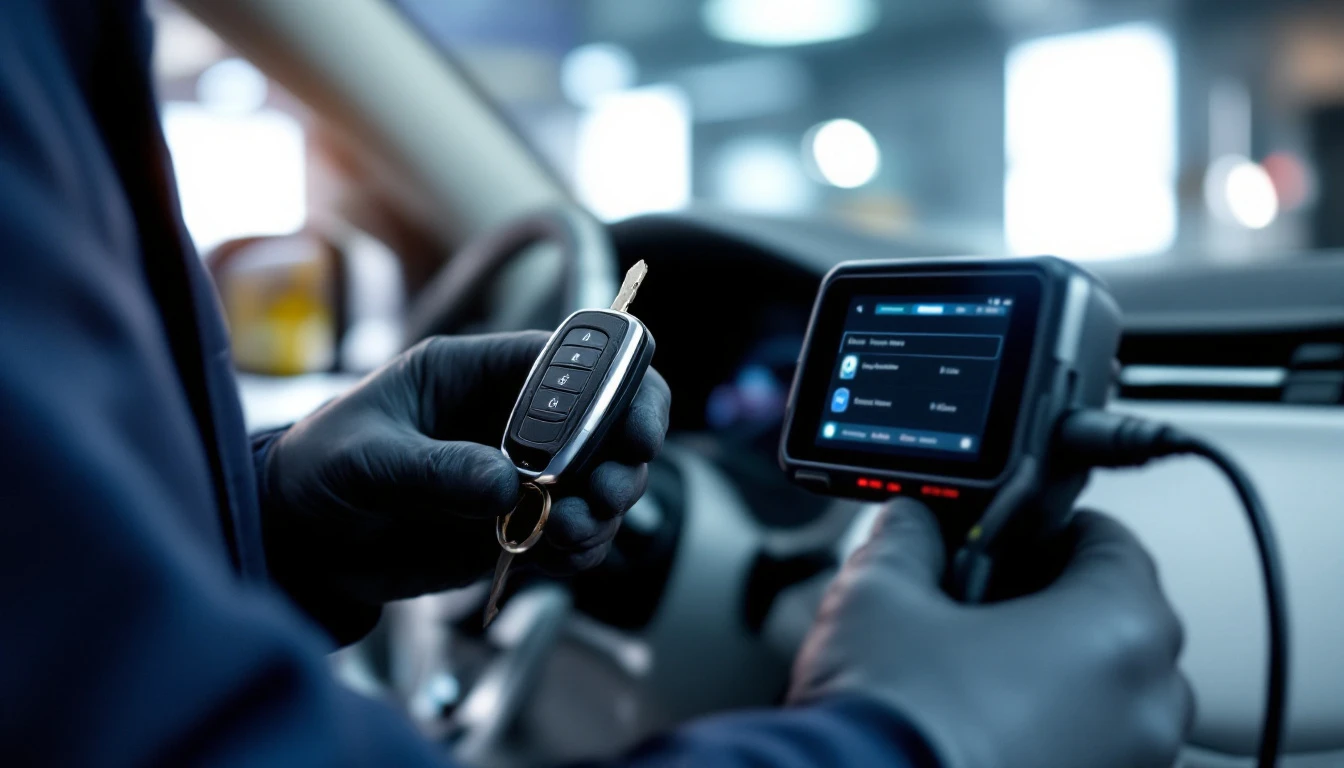
You reach into your pocket and there is nothing there. The only key to your car — and the spare you were sure was in a drawer somewhere — are both gone. This is the "all-keys-lost" situation, and it is the moment a lot of Fort Worth drivers discover that a modern car key is not just a piece of cut metal. It is a programmed electronic credential, and without one the engine will crank and immediately die, or never fire at all.
This guide explains how automotive immobilizer systems work, why a lost-all-keys job requires programming and not just cutting, how the all-keys-lost procedure is actually performed — through the OBD port or at the bench — and what to expect by make and by price in the DFW market. It builds on our transponder key programming guide and the deeper EEPROM all-keys-lost specialist walkthrough.
What an Immobilizer Actually Is
An automotive immobilizer is an electronic anti-theft system that prevents the engine from running unless it detects an authorized key. It became near-universal after the late 1990s — driven in part by anti-theft standards under 49 CFR Part 541 — and it is the reason car theft by "hot-wiring" largely disappeared from newer vehicles.
The mechanism is a short radio conversation. Inside the head of your key (or the fob, on push-button cars) is a tiny transponder chip with no battery — it is powered by the magnetic field of an antenna ring around the ignition or start button. When you turn the key or press start, the antenna energizes the chip, the chip transmits a unique coded value, and a control module — the immobilizer unit, often integrated with the Body Control Module — checks that code against the list of keys it has stored. Only if the code matches does the module authorize the engine computer to deliver fuel and spark.
Crank the engine with an unprogrammed key and you will typically see it turn over and stall within a second or two, or refuse to start with a "key not recognized" or immobilizer warning on the dash. The starter works. The security handshake does not.
Transponder Generations, Briefly
Not all transponders are equal, and the generation drives both the tools and the price:
- Fixed-code chips (early) — transmit the same static value every time. The easiest to clone and program.
- Rolling-code / crypto chips — each authentication uses a changing, encrypted value, so the chip cannot be simply copied. These need a tool that knows the manufacturer's algorithm.
- High-security / encrypted platforms (modern) — use strong encryption and, on newer cars, an online security-gateway check with the manufacturer's server before any key can be added.
The higher the security tier, the more the job leans on OEM-level access and, sometimes, bench work — which is exactly where the AKL split comes in.
Why "Cut" and "Programmed" Are Two Different Things
A car key job has two halves, and confusing them is the single most common misunderstanding:
- Cutting shapes the mechanical blade so it physically turns the lock cylinder (or, on many fobs, fits the emergency blade slot). A key-cutting machine or a code from the VIN produces this.
- Programming registers the transponder chip inside that key with the vehicle's immobilizer so the engine will actually run.
A hardware store or big-box kiosk can do the first half. Only a properly equipped automotive locksmith or dealer can do the second. A cut-but-unprogrammed key will unlock the door and turn the ignition — and the car will not go anywhere. Every all-keys-lost job needs both halves, which is why our car key replacement service and this work are inseparable.
The All-Keys-Lost Procedure
Here is where AKL differs from simply adding a spare. When you still have one working key, most systems let a technician use it to authorize a new one in minutes. With no working key, that shortcut is gone — the immobilizer has no trusted key to vouch for the new one. So the security data has to be obtained another way. There are two paths.
Path 1: OBD (onboard) all-keys-lost
On a large share of vehicles, the immobilizer's security data — often called the PIN, secret code, or ISN depending on the platform — can be read, calculated, or reset through the OBD-II diagnostic port using a professional programming tool. The workflow:
- Confirm the vehicle and verify ownership.
- Cut the mechanical blade from the VIN code or by decoding the lock.
- Connect the programming tool to the OBD-II port and enter all-keys-lost mode for that platform.
- Read or reset the immobilizer security data (some platforms require a timed security-access wait — anywhere from minutes to, on a few, tens of minutes).
- Program the new transponder key(s), then erase previously registered keys where the system allows, so lost originals can no longer start the car.
- Verify start and confirm the immobilizer light behaves normally.
This is fully mobile. The whole thing happens at your vehicle.
Path 2: EEPROM (bench) all-keys-lost
On platforms where the OBD port is deliberately locked out for all-keys-lost — common on many European cars and some high-security Asian platforms — the security data cannot be pulled through the port. The technician must remove the immobilizer, BCM, or instrument-cluster module, open it, and read the EEPROM or flash memory chip directly to recover the secret code, then write the new key data and reinstall. This is the specialty end of the trade; our EEPROM all-keys-lost guide covers the chips, the tools, and why it commands a premium. Bench jobs frequently start at your vehicle and finish there after the module round-trips to the bench.
The determining factor between Path 1 and Path 2 is not preference — it is your specific make, model, and year. A good technician knows which path your car needs before quoting.
Per-Make Notes
Every platform has its own personality on all-keys-lost. A few patterns worth knowing:
- Ford / Lincoln — many are OBD-friendly for AKL, though some require a timed security-access wait before keys can be added.
- GM (Chevrolet, GMC, Buick, Cadillac) — broad OBD support; older platforms overlap with VATS/PassLock anti-theft covered in our GM VATS and PassLock guide.
- Stellantis (Dodge, Chrysler, Jeep, Ram) — many use the WIN or RFH immobilizer modules; some AKL cases need PIN extraction that leans toward bench work.
- Toyota / Lexus, Honda / Acura, Nissan / Infiniti — largely OBD for common years; certain smart-key AKL cases require dealer-style security codes or bench reads.
- Hyundai / Kia — mostly OBD, with newer high-security fobs needing gateway-level access.
- VW / Audi, BMW, Mercedes — the platforms most likely to require bench EEPROM work on all-keys-lost, because the security data is locked to the module and the port is closed for AKL.
The takeaway is not that any brand is impossible — it is that the method and price vary, and that variance is normal and honest.
Fort Worth All-Keys-Lost Pricing: 2026
As of July 2026, here is how all-keys-lost work is typically priced in the DFW market. These are ranges; key type, security tier, and the OBD-versus-bench path all move the figure, and the final number comes after your VIN is confirmed.
| Scenario | Mobile (DFW) range | What drives it |
|---|---|---|
| Standard transponder AKL (common domestic/Asian) | $200–$450 | Key type, platform security |
| Smart-key / push-to-start AKL | $350–$650 | Proximity fob cost + programming |
| WIN / RFH module AKL (Stellantis) | $350–$700 | PIN extraction method |
| European OBD AKL (where supported) | $400–$800 | Encrypted platform, gateway access |
| Bench EEPROM AKL (locked/European) | $700–$1,400 | Module removal + chip-level read |
Two notes. First, these are all-in mobile figures — cutting, the key/fob, programming, and the trip are included, and there is no tow because the technician comes to the car. Second, none of this should be quoted blind. The responsible practice is an exact quote after confirming year, make, model, and VIN — the same way our module programming work is priced.
Brand-specific detail matters more on some platforms than others — for the Korean makes in particular, Hyundai and Kia key programming covers which model years accept a straightforward registration and which need a security session.
Ownership Verification Is Not Optional
Because all-keys-lost work hands someone the ability to start a vehicle, verifying ownership first is a non-negotiable professional standard. A legitimate provider checks the title or registration against a matching photo ID before any programming, consistent with ALOA trade practice and NASTF security expectations. This protects you — it is what makes replacing your own lost keys legitimate maintenance. A provider who is willing to skip that check on a car you cannot prove you own is telling you something important about how they operate; our locksmith scam guidance covers the other red flags.
What To Do If You've Lost Every Key
A calm, ordered approach saves money and time:
- Confirm they are truly gone. A five-minute search now can turn a full AKL into a simple spare-add — a very different price.
- Gather your ownership documents. Title or registration plus photo ID; the technician will need them.
- Have your VIN ready. It is on the dash by the windshield and the driver door jamb. It lets the technician confirm key type and the AKL path before dispatch.
- Call a mobile specialist, not a hardware store. A kiosk can cut a blade but cannot program the immobilizer, and you will still need a programmer afterward.
Because the car cannot be driven without a working key, mobile all-keys-lost service throughout Fort Worth and the DFW metroplex is the practical answer — the technician comes to the stranded vehicle.
Frequently Asked Questions
What does 'all keys lost' mean?
All-keys-lost (AKL) means there is no working key left to the vehicle — every original has been lost, stolen, or destroyed. It matters because many immobilizer systems use an existing working key to authorize adding a new one. With no working key, the technician must extract or reset the immobilizer's security data another way, which is a more involved procedure than adding a spare.
Why can't I just get a key cut at a hardware store?
A hardware-store key is only the mechanical blade. Almost every vehicle since the late 1990s carries an electronic immobilizer that will crank the engine but refuse to let it run unless a programmed transponder is present. A cut key with no programmed chip opens the door and turns the ignition, but the engine dies immediately or never starts. The key must be electronically programmed to the immobilizer.
How is all-keys-lost programming done?
There are two main paths. On many vehicles the security data can be read or reset through the OBD-II diagnostic port and new keys programmed on-site. On platforms where the port is locked out for AKL, the technician removes the immobilizer or related module and reads its EEPROM chip directly on the bench to recover the security code, then writes and programs new keys. The right path depends entirely on your make, model, and year.
How long does all-keys-lost take in Fort Worth?
A straightforward OBD all-keys-lost — cutting the mechanical blade and programming new keys — is often completed on site in about 45 minutes to two hours. A bench EEPROM job takes longer because the module must be removed, read, and reinstalled. A technician gives a realistic time estimate once they know your exact vehicle.
How much does all-keys-lost programming cost near Fort Worth?
As of July 2026, DFW all-keys-lost pricing commonly runs from around $200–$450 for a straightforward OBD job on a common vehicle up to roughly $700–$1,400 for bench-level EEPROM work on a locked or European platform. The number depends on key type, security level, and whether the port supports AKL. You get an all-in quote after your year, make, model, and VIN are confirmed.
Do you need proof of ownership for all-keys-lost?
Yes. Any reputable locksmith verifies ownership before performing all-keys-lost work — typically the title or registration matched to a photo ID. This is a baseline professional standard that protects vehicle owners and is expected of legitimate providers under ALOA guidance. A provider who skips the ownership check is a red flag.
Can all keys lost be done mobile, or does the car have to be towed?
Most all-keys-lost jobs are fully mobile — the technician comes to your vehicle, cuts the key, and programs it on site, with no tow. Only certain bench EEPROM jobs require the module to leave the vehicle briefly, and even those usually start and finish at your location. Because the car cannot be driven without a working key, mobile service is the practical default.
Will programming new keys erase my old lost keys?
It can, and often should. When all keys are lost, best practice is to program the new keys and, where the system allows, erase all previously registered keys from the immobilizer. That way any lost or stolen original can no longer start the vehicle. Whether a full immobilizer reset is possible depends on the platform, and the technician will tell you what your system supports.
Get Back on the Road in Fort Worth
If you have lost every key to your vehicle, Fort Worth Locksmith & Computer Programming provides mobile all-keys-lost and immobilizer programming throughout Fort Worth, Arlington, Dallas, Irving, and the DFW metroplex — 24/7, because a car with no key cannot come to you. We verify ownership, cut and program on site where the platform allows, and handle bench EEPROM work on the platforms that require it.
Call or text (817) 668-3801 with your year, make, model, and VIN, or email contact@fwlocksmith.com, and we will confirm the path and an all-in quote before we dispatch. See related work on our transponder key programming and car key replacement pages.