Mobile Module Programming Near Me in Fort Worth: On-Site ECU, PCM, BCM & TCM
Modern vehicles are rolling computer networks. A typical 2020s car carries 30 to 100 or more electronic control modules — the engine computer, the transmission controller, the body electronics hub, the anti-lock brake module, the airbag controller, the instrument cluster, the infotainment head unit, and on up. When one of those modules is replaced, repaired, or needs a manufacturer update, it usually has to be programmed — configured to your specific vehicle by VIN, mileage, calibration file, and security pairing — before the car will run right or run at all.
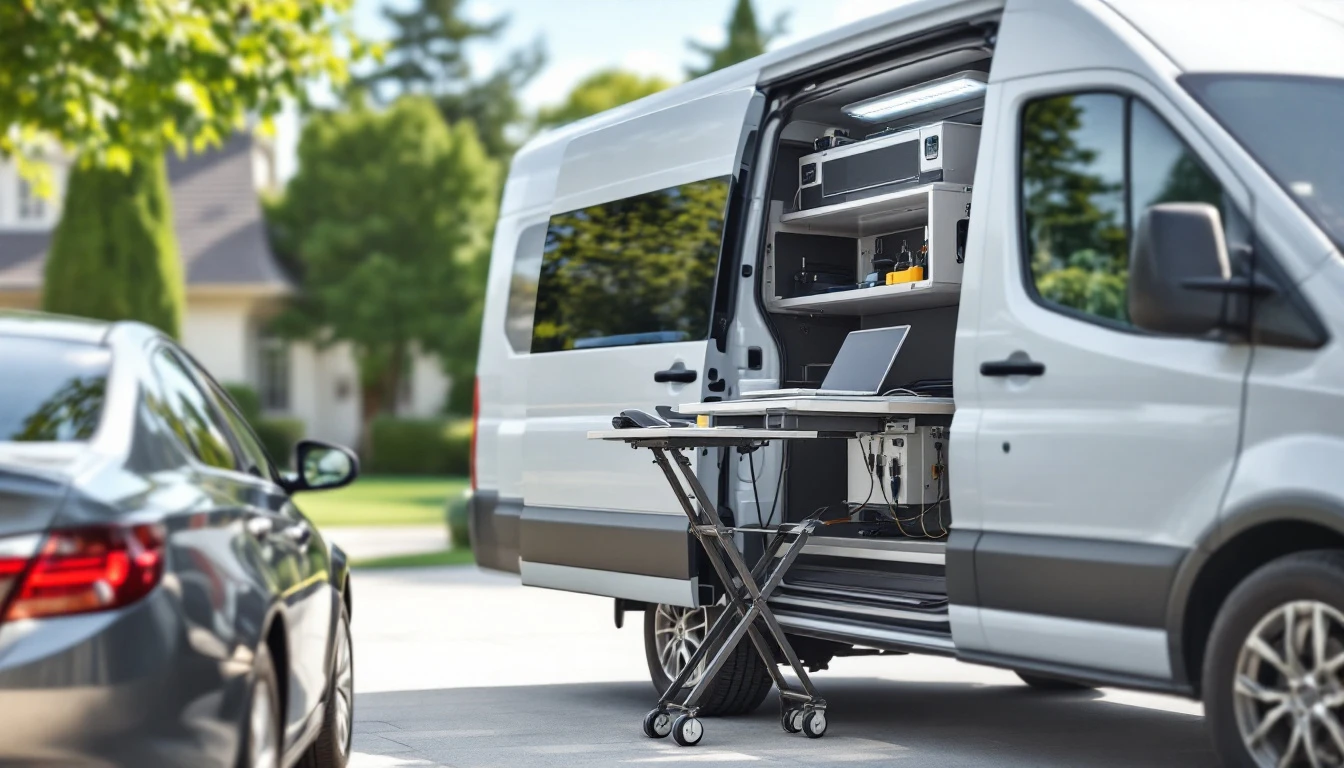
The good news for Fort Worth drivers is that most of this work no longer requires a tow to the dealership. A properly equipped mobile technician can do the majority of it in your driveway or a parking lot. This guide is the umbrella overview: what "mobile module programming near me" actually means in 2026, which modules can be handled on-site versus on the bench, how the process works, and what fair DFW pricing looks like. It pairs with our module programming service page and the deeper single-module guides linked throughout.
What "Module Programming" Actually Covers
Programming is not one task — it is a family of related operations, and knowing the difference helps you understand a quote:
- Configuration / setup — a brand-new replacement module ships blank. It must be told which vehicle it lives in: VIN, mileage, option content, and the correct calibration file.
- Flashing / reflashing — writing updated firmware or a Technical Service Bulletin (TSB) calibration onto an existing module to fix a driveability, shift, or emissions complaint.
- Adaptation / relearn — teaching a module to work with new components: keys to an immobilizer, a throttle body to the engine computer, a steering-angle sensor to the ABS.
- VIN-write / re-VIN — reassigning a used donor module from its old vehicle identity to yours.
- Coding — enabling or disabling optional features the module supports (common on European platforms).
A single job can involve several of these at once. Installing a used PCM, for example, may require a re-VIN, a calibration flash, and an immobilizer relearn before the engine will crank.
On-Site vs. Bench: The Key Distinction
The single most useful thing to understand before booking is the split between OBD programming and bench programming.
OBD programming happens through the vehicle's OBD-II diagnostic port with the module still bolted in the car. The technician plugs in, communicates with the module over the vehicle network, and performs the flash, configuration, or relearn live. The clear majority of ECU, PCM, BCM, and TCM work falls here — and all of it is fully mobile. This is what makes a driveway appointment possible.
Bench programming is required when the security or memory data cannot be reached through the OBD port — typically an all-keys-lost immobilizer read, a locked donor module, or a bricked flash recovery. The module is physically removed, opened, and its EEPROM or flash chip is read and written directly on a bench. Many of these jobs still start at your vehicle (diagnosis and removal) and finish on the bench, then the module is reinstalled and verified. Our EEPROM all-keys-lost guide walks through exactly when the bench is unavoidable.
The honest version of this: a good mobile provider tells you which path your vehicle needs before dispatching, because it changes both the time on site and the price.
The Module Types, One by One
ECU / ECM — the engine's brain
The Engine Control Unit (also ECM, or Engine Control Module) runs the engine: fuel injection, ignition timing, variable valve control, throttle position, boost, and emissions devices. It is the module nothing else matters without — if it will not start the engine, no other system counts. New, used, or repaired ECUs almost always need programming to the vehicle. Our full ECU programming explainer covers the failure modes and the process in depth, and the ECU programming service page handles booking.
PCM — engine and transmission combined
On many domestic vehicles the engine and transmission share a single Powertrain Control Module. Because it manages both, a PCM swap or reflash touches shift logic as well as engine tuning, and a re-VIN plus calibration is standard on a used unit. The PCM programming guide breaks down what that involves and why a used PCM is not simply plug-and-play.
BCM — the body electronics hub
The Body Control Module governs lights, locks, windows, wipers, chimes, and — critically — often the immobilizer handshake that authorizes the engine to start. A failed or replaced BCM can cause everything from dead power windows to a full no-start. Because the security data frequently lives here, BCM work overlaps with key and immobilizer programming. See BCM programming near me and the deeper what is BCM programming and when it's needed for the details.
TCM — the standalone transmission controller
On platforms that separate transmission control from the engine computer, the Transmission Control Module manages shift timing, torque-converter lockup, line pressure, and adaptive shift learning. A replacement TCM needs configuration to the vehicle and, on most modern automatics, an adaptive relearn drive cycle so shifts smooth out. TCM work is squarely within mobile module programming and is covered under the module programming service.
The others
Beyond the big four, the same tools and credentials handle airbag/SRS controllers (see airbag module reset after a crash), ABS modules, instrument clusters, and immobilizer/steering-lock units. If it is an electronic control module with a security or calibration requirement, it is in scope.
How a Mobile Programming Visit Actually Works
Here is what a professional on-site appointment looks like from arrival to handoff:
- Verify the vehicle and the request. The technician confirms year, make, model, and VIN, and confirms ownership — a baseline standard for any security-related automotive work, consistent with ALOA professional practice.
- Stabilize power. A high-amperage bench power supply (typically 50–70 amps) is clamped to the battery so voltage cannot sag mid-flash.
- Connect and identify. The programming tool links to the OBD-II port, identifies the target module, and reads its current state and stored fault codes.
- Authorize security access if required. Most 2018-and-newer platforms route protected operations through the manufacturer's security gateway. The technician completes a real-time authorization using NASTF Secure Data Release credentials.
- Perform the operation. Configuration, flash, relearn, or VIN-write runs — usually 15 to 45 minutes depending on file size and platform.
- Verify and clear. A fresh scan confirms the module took the programming cleanly; post-flash adaptation codes are cleared and a road-test or relearn drive cycle is done where the platform needs one.
The whole thing happens at your address. No tow, no dealership wait, no rental.
Why Choose Mobile Over the Dealership
Three practical reasons drivers pick a mobile specialist:
- No tow on a no-start. If the vehicle will not run because the module is the problem, mobile service comes to the dead car instead of you paying to drag it in.
- Used-module re-VIN the dealer won't touch. Dealers generally program only brand-new modules sold at their parts counter. A mobile specialist with bench tools can re-VIN a salvage-yard donor module on many platforms, saving the cost of a new OEM unit.
- No bay overhead. Dealership module jobs bill two to three hours of bay labor plus module cost plus a software-access fee. Mobile pricing is flat-rate for the operation and excludes the bay labor entirely.
The tradeoff is that legitimate mobile programming is a real specialty — the tools, subscriptions, and credentials are expensive, which is exactly why you should be wary of a quote that sounds too cheap. Our guide on whether a locksmith can program an ECM or PCM explains what separates a genuine programming specialist from a key duplicator.
Fort Worth Mobile Module Programming: 2026 Pricing
As of July 2026, here is how on-site module programming is typically priced in the DFW market. These are ranges, not fixed quotes — the module, the platform, and whether OEM gateway access is needed all move the number. The final figure comes after your VIN is confirmed.
| Module / job | Mobile (DFW) range | Typical notes |
|---|---|---|
| TSB reflash / calibration update | $175–$325 | No charge if under factory warranty |
| ECU / ECM configuration (new module) | $275–$475 | Plus module cost |
| PCM programming (engine + trans) | $325–$525 | Re-VIN + calibration on used units |
| BCM programming / setup | $250–$475 | Often paired with key/immobilizer work |
| TCM configuration + adaptive relearn | $250–$450 | Relearn drive cycle included |
| Multi-module sequence (e.g. BCM+PCM) | $425–$725 | Order-dependent programming |
| Bench EEPROM (AKL / locked module) | $700–$1,400 | Module removed and read chip-directly |
Two notes on reading this table. First, a used-module re-VIN is something most dealerships decline outright, so the mobile column is often the only path short of buying a new OEM module. Second, none of these should ever be quoted sight-unseen — the responsible practice is an all-in quote after confirming year, make, model, and VIN, exactly as our car key replacement and programming services are quoted.
All Makes, Domestic to European
Mobile module programming in Fort Worth spans the full range of platforms:
- Domestic (Ford, GM, Stellantis) — generally the most OBD-friendly for reflashes and configuration; used-module re-VIN is supported on many lines.
- Asian (Toyota, Honda, Nissan, Hyundai/Kia, Subaru, Mazda) — broad OBD support; some immobilizer operations need bench work on all-keys-lost.
- European (VW/Audi, BMW, Mercedes) — powerful coding capability, but several platforms lock modules to their original VIN (BMW CAS4+, Audi/VW post-2009, Mercedes post-2009), which pushes used-module jobs to bench EEPROM or online gateway authorization.
The point is not that any one brand is off-limits — it is that the path differs by platform, and the technician should confirm yours against the VIN before quoting.
What To Do Next
If a module has failed, been replaced, or a shop told you a computer "needs to be programmed," the first step is not to buy a new module — it is to get the correct diagnosis and confirm whether the fix is OBD-mobile or bench-level. If you are sourcing a used module from a salvage yard, ask whether re-VIN is supported on your platform before you pay for it. And if a dealer quoted a large bay-labor number, a second opinion from a mobile specialist typically saves a meaningful share of that on real DFW jobs.
Mobile ECU, PCM, BCM, and TCM programming is available throughout Fort Worth and the surrounding DFW cities, with 24/7 dispatch for no-start situations.
Frequently Asked Questions
What is mobile module programming?
Mobile module programming is when a technician comes to your location — home, work, or roadside — with programming-capable diagnostic tools, a stable power supply, and OEM software access, and configures an electronic control module (ECU, PCM, BCM, TCM, and others) to your specific vehicle. It replaces a trip to the dealership for the majority of flash, calibration, VIN-write, and key-adaptation jobs, with no tow required.
Can every module be programmed on-site in my driveway?
Most can. The majority of ECU, PCM, BCM, and TCM work — new-module configuration, TSB reflashes, immobilizer pairing, and key adaptation — is done through the OBD-II port right at your vehicle. The exception is bench-level EEPROM work, where a module has to be removed and read chip-directly. Those jobs often start mobile and finish on the bench, and a good technician tells you which path yours needs before dispatching.
How much does mobile module programming cost near Fort Worth?
As of July 2026, DFW mobile module programming commonly runs from roughly $175 for a straightforward reflash or calibration up to $700 or more for a multi-module sequence or bench-level EEPROM work. The exact figure depends on the module, the platform, and whether OEM security-gateway access is required. A reputable provider gives an all-in quote after confirming your year, make, model, and VIN — never a blind flat rate.
Is a mobile technician using the same equipment as the dealership?
For most jobs, yes. Programming-capable tools such as Autel MaxiSys, Snap-on, and OEM interfaces, paired with NASTF-credentialed access to the manufacturer's security gateway, perform the same flashes and configurations the dealer bay performs. The difference is the mobile provider does not charge dealership bay overhead, so the same work usually costs less.
What is the difference between the ECU, PCM, BCM, and TCM?
The ECU/ECM manages the engine; the PCM combines engine and transmission control in one module; the TCM is a standalone transmission controller; and the BCM (Body Control Module) governs body electronics — lights, locks, windows, and often the immobilizer handshake. Each is a separate computer that may need programming after replacement, repair, or a manufacturer calibration update.
Why does module programming need a stable power supply?
During a flash, the module sits in a vulnerable bootloader state for several minutes. If battery voltage dips below roughly 12.5 volts mid-flash, the firmware can corrupt permanently and turn a good module into a paperweight. That is why professional mobile programming always includes a high-amperage bench power supply clamped to the battery — it is not optional.
Do you program modules for all makes in Fort Worth?
Yes. Mobile module programming covers domestic, Asian, and European platforms — Ford, GM, Stellantis, Toyota, Honda, Nissan, Hyundai/Kia, VW/Audi, BMW, and Mercedes among them. Some European platforms lock modules to their original VIN and require bench EEPROM work or online gateway authorization, which a technician confirms against your VIN before quoting.
Book Mobile Module Programming in Fort Worth
If a module needs configuring, reflashing, or replacing, Fort Worth Locksmith & Computer Programming provides mobile ECU, PCM, BCM, and TCM programming throughout Fort Worth, Arlington, Dallas, Irving, and the wider DFW metroplex — 24/7 for no-start situations. We diagnose first, confirm whether your job is OBD-mobile or bench-level, and give an all-in quote after we have your VIN.
Call or text (817) 668-3801 with your year, make, model, and a short description of the symptom, or reach us at contact@fwlocksmith.com. See the full scope on our module programming page, or start with the contact form.