Smart Key & Push-to-Start All Keys Lost Replacement — Fort Worth (2026)
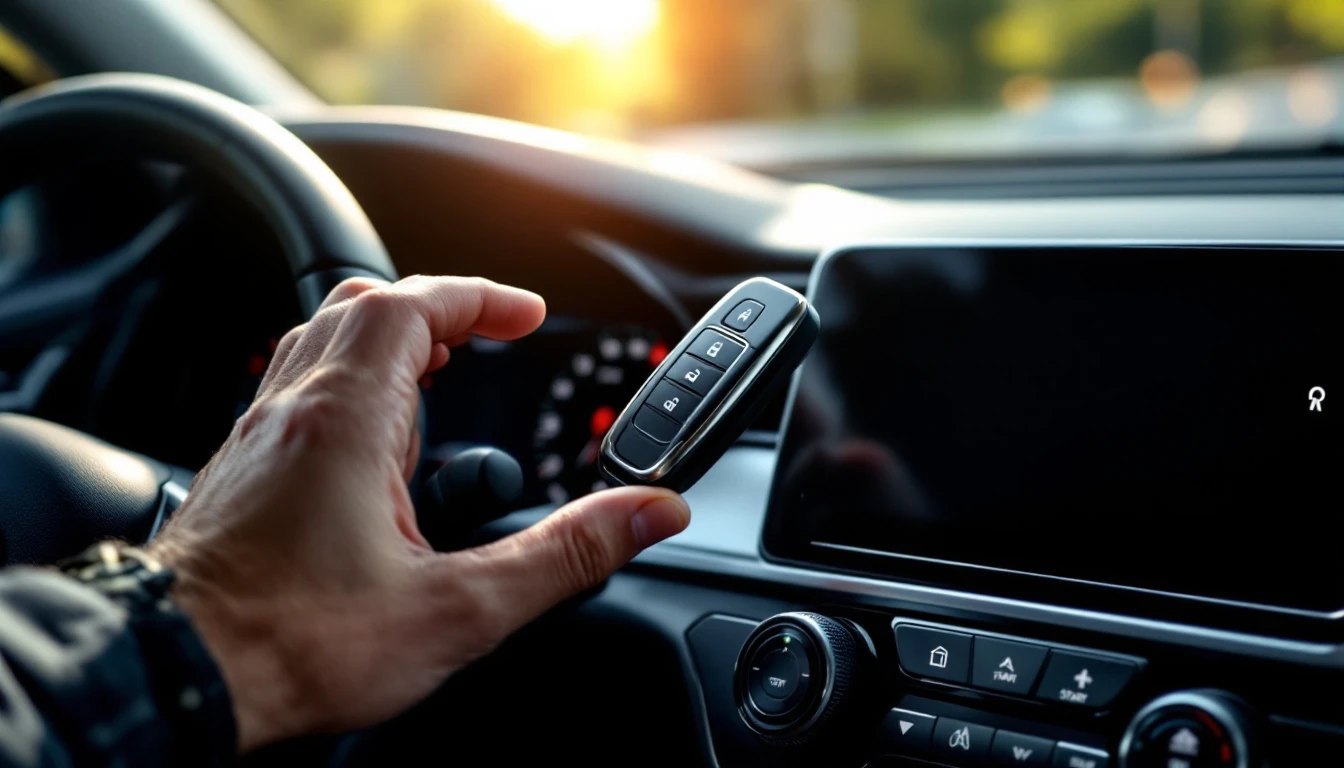
Losing your car keys is stressful. Losing every key to a push-to-start vehicle — no spare in a drawer, no backup fob anywhere — feels like a genuine emergency. The good news, as of July 2026, is that an all-keys-lost situation on most proximity-key vehicles is very much solvable, usually right where your car is parked, without a tow to the dealership. This guide walks through exactly what "all keys lost" means for a smart-key car, how the replacement process works, why it costs more than a simple spare, and the handful of luxury platforms where the honest answer is "a technician has to confirm."
If you searched "smart key all keys lost near me" from a Fort Worth parking lot with a dead-quiet car and no way in, that is the situation this article is written for. Our smart key programming service handles the booking; the detail below explains the mechanics so you know what you are paying for and what to expect.
Add-Key vs. All-Keys-Lost: Why the Difference Matters
Every proximity-key job falls into one of two categories, and the category drives everything — the process, the time, and the price.
An add-key job is when you still have at least one working fob and you want a spare. Because a valid key is already present, the vehicle's immobilizer trusts the session immediately. The locksmith plugs in, the car authenticates the existing key, and a new fob is paired in minutes. It is the easy end of the spectrum.
An all-keys-lost (AKL) job is when there is no working key left at all. Now the vehicle has nothing to trust. The locksmith has to reach into the immobilizer system, read or generate the security data, create a brand-new key credential from scratch, and convince the car to accept a key it has never seen — all without an existing key to vouch for the session. That is a fundamentally more secure, more involved operation, and it is why AKL is its own specialty.
The immobilizer is the anti-theft heart of all of this. Every modern proximity fob contains a transponder that exchanges an encrypted challenge-and-response with the car's immobilizer every time you start it. No valid response, no start. When all keys are lost, the locksmith is essentially re-establishing that trusted relationship from zero — which is exactly what the system is designed to make difficult for a thief and requires professional tools and credentials to do legitimately. Our transponder key programming page covers the underlying chip technology in more depth.
What Actually Happens During an All-Keys-Lost Smart Key Job
Here is the sequence a mobile locksmith follows when there is no working key to start from:
- Confirm the vehicle and platform. The make, model, year, and specific immobilizer system determine the method and the tooling. This step also flags whether your car is one of the newest platforms that needs dealer or bench work.
- Access the vehicle. If the doors are locked with no fob, the locksmith gains non-destructive entry first — a manual door pick or the hidden mechanical key blade many fobs still hide.
- Read the immobilizer data. Using professional equipment — an Autel IM608, AVDI, Smart Pro, or Lonsdor K518 depending on the platform — the tech reads the immobilizer or gathers the security data needed to generate a key.
- Wait out any security timer. Some platforms enforce a mandatory anti-theft delay when no key is present (more on this below).
- Generate and cut the new key. A blank proximity fob is prepared and, where the fob includes an emergency blade, the mechanical portion is cut to your vehicle.
- Program and pair the fob. The new key credential is written into the immobilizer and the fob is paired to the car.
- Re-initialize and clear old keys. For a true AKL, the system is re-initialized so previously lost keys are wiped from memory — a security must, so a lost fob cannot be used against you later.
- Verify everything. Push-button start, passive entry, remote lock/unlock, and trunk or liftgate functions are all tested before the tech leaves.
The whole visit for a straightforward AKL typically runs from under an hour to a couple of hours, with the security timer — when a platform has one — being the biggest variable.
Security Wait Timers: The Delay Nobody Warns You About
One of the most misunderstood parts of all-keys-lost work is the security wait timer. Several manufacturers build a deliberate delay into the immobilizer: when a tool requests a new key with no existing key present, the car forces a waiting period before it will accept the new key. On some platforms it is a few minutes. On others it can be a matter of hours, during which the vehicle has to stay powered in a specific state.
This is not the locksmith stalling, and it is not a tooling limitation — it is a factory anti-theft feature working exactly as designed. The idea is to make a smash-and-grab key theft impractical: a thief is not going to sit with a stolen car for hours waiting on a timer. A good technician knows which platforms have these timers and will tell you upfront so you can plan — for instance, dropping the car at home and letting the timer run rather than standing in a hot Fort Worth parking lot in July. It is one more reason the AKL price sits above a simple spare.
Why All-Keys-Lost Costs More
It is a fair question — why is losing all your keys more expensive than losing all but one? The honest answer is time, tooling, and skill:
- More procedure. Reading immobilizer data, generating a credential, and re-initializing the system is several steps beyond simply cloning a spare.
- Security timers. When a platform enforces a wait, that is billable time the tech spends on your job.
- Specialized equipment. AKL often demands more capable tools and more platform coverage than a basic add-key.
- Higher risk and responsibility. Establishing a new trusted key on a car that trusts nothing is precise work, and mistakes on a modern network are costly.
That is why push-to-start smart-key work generally ranges from about $250 to $650 or more, with all-keys-lost landing toward the upper part of that band and the most complex European platforms quoted only after diagnosis. It is still, in almost every case, well below what a dealership charges once you add a tow.
Fort Worth Pricing: What Smart-Key Replacement Costs
Here is a representative comparison for the DFW market. Every figure is a range confirmed after we see your specific vehicle — no blind quotes.
| Smart-key situation | Mobile specialist | Dealership (plus tow) | Notes |
|---|---|---|---|
| Add spare proximity fob | $250–$450 | $400–$700 | Working key present |
| All-keys-lost (mainstream) | $350–$650+ | $600–$1,000+ | Immobilizer re-init |
| All-keys-lost (luxury/European) | Quote after diagnosis | Frequently dealer-only | Platform-dependent |
| Transponder (non-prox) key | $120–$250 | $220–$400 | Older systems |
A dealership generally bills two to three hours of bay labor at roughly $185–$260 per hour in DFW, plus the fob and a software-access fee, plus the cost of towing a no-key vehicle to their lot. Mobile pricing is flat-rate, comes to you, and skips the bay overhead and the tow entirely. For a car that cannot move under its own power because you cannot start it, avoiding that tow is a real chunk of the savings.
The Honest Part: Platforms That May Need the Dealer
We would rather tell you the truth than overpromise. The current generation of aftermarket tooling covers the overwhelming majority of push-to-start vehicles on Fort Worth roads — but not all of them for all-keys-lost. A few high-security luxury platforms may require dealer programming or bench-level work when every key is gone:
- BMW CAS4+ and later encryption systems.
- Mercedes-Benz FBS4 immobilizer platforms.
- Some 2020-and-newer Toyota and Lexus proximity systems.
On these, an add-key while you still have a working fob is often doable, but a true AKL can push the job into dealer or bench territory. This is a real limitation of what the tooling can currently do, not a sales tactic — and it is exactly why we confirm your specific make, model, and year before committing to a job or a price. If your car is one of these, we will tell you plainly and point you the right direction. For related high-security work, our ECU programming service and general car key replacement service cover the broader range of what mobile programming can and cannot reach.
If you want to go deeper on the technical side, our detailed guide to immobilizer programming and all-keys-lost and our piece on EEPROM all-keys-lost work explain the bench-level methods used when the standard OBD route will not do.
Local Context: Why Mobile Wins in DFW
Fort Worth and the wider metroplex are spread out, and a dead push-to-start car does not care whether you are near the Stockyards, out by Alliance, downtown by Sundance Square, over in Arlington, or across in Dallas. A tow to a dealership means finding a wrecker, waiting for it, riding along or arranging a ride home, and then coming back days later when the service department fits you in. A mobile locksmith collapses all of that into a single visit at the car's current location.
There is also the weather factor. DFW summers are hard on electronics, and our thunderstorm season produces water-damaged fobs and vehicles every year. Sometimes what looks like "all keys lost" is really a pair of dead or water-killed fobs — worth diagnosing before assuming the worst, because a battery or a single reprogram can be far cheaper than a full AKL. We check.
What to Do the Moment You Realize Every Key Is Gone
A little presence of mind saves money and time. First, look harder before you call it a true all-keys-lost — check jacket pockets, a partner's bag, the last vehicle you rode in, and any spare you tucked away when you bought the car. A genuine spare turns a costly AKL into a quick add-key. Second, gather your vehicle information: the exact year, make, model, and trim, plus the VIN if you can reach it through the windshield or door jamb. That lets the locksmith confirm your platform and whether it is one of the few that needs the dealer before anyone drives out. Third, if the car is in an unsafe or tow-away spot, note that when you call — a mobile locksmith can prioritize, but a car about to be ticketed changes the plan. Finally, be wary of the cheapest online "we make any key instantly" ad: real all-keys-lost work takes proper tools, sometimes a security timer, and a licensed, credentialed technician. Fast and legitimate beats suspiciously cheap every time.
Frequently Asked Questions
What does 'all keys lost' actually mean for a push-to-start car?
All keys lost (AKL) means there is no working proximity fob left for the vehicle — you cannot present a valid key to the car at all. That is different from adding a spare when you still have one. AKL requires the locksmith to establish a brand-new key from scratch through the immobilizer, which is a more involved and more secure procedure than adding a duplicate.
Can a locksmith make a smart key with no keys at all?
In most cases, yes. A mobile locksmith with professional programming equipment can generate and pair a new proximity fob to your immobilizer with no existing key present. Some of the newest luxury platforms are the exception and may require dealer or bench-level work — a technician confirms your exact make, model and year before quoting.
Why does all-keys-lost cost more than a spare key?
A spare is added while a working key already authenticates the car, so the process is quick. All-keys-lost requires reading the immobilizer, generating a new key credential, sometimes waiting out a factory security timer, and re-initializing the system — more time, more specialized tooling, and more skill. That is why AKL sits at the higher end of the smart-key range.
What is a security wait timer and how long does it take?
Some manufacturers build in a mandatory anti-theft delay before a new key can be programmed when no key is present. Depending on the platform it can range from several minutes to many hours. It is a factory security feature, not a delay the locksmith controls, and a good tech will tell you upfront if your vehicle has one so you can plan around it.
Do I need to tow my car to get a new smart key when all keys are lost?
No. Smart-key all-keys-lost service is mobile — the locksmith comes to wherever your vehicle is parked in Fort Worth or the DFW area and programs the new fob on site. Avoiding a tow is one of the biggest cost and hassle savings of using a mobile specialist instead of a dealership.
Will a new smart key restore push-to-start and remote functions?
Yes. A properly programmed proximity fob restores full function — push-button start, passive entry, remote lock and unlock, and trunk or liftgate control where equipped. The locksmith verifies every function before finishing so you drive away with everything working.
Are there any push-to-start cars a mobile locksmith cannot make a key for?
A few. The newest BMW CAS4+ and later, Mercedes FBS4, and some 2020-and-newer Toyota and Lexus platforms may require dealer or bench-level programming for all-keys-lost. This is an honest limitation of the current tooling, not a sales tactic. We confirm feasibility on your specific platform before committing to the job.
Get Your Smart Key Replaced in Fort Worth
If you have lost every proximity fob for your push-to-start vehicle, you do not have to tow it to a dealer and wait days. Mobile all-keys-lost smart-key service comes to you anywhere in Fort Worth and the DFW metroplex, including Arlington and Mansfield, and gets you a fully working key on site.
Contact Fort Worth Locksmith & Computer Programming at (817) 668-3801 or contact@fwlocksmith.com. We are mobile, available 24/7, licensed through the Texas DPS Private Security Bureau, and equipped with professional programming tools for the vast majority of proximity-key platforms — with an honest heads-up on the few that are not.