GMC Yukon & Sierra Ignition Lock Cylinder Repair (2026)
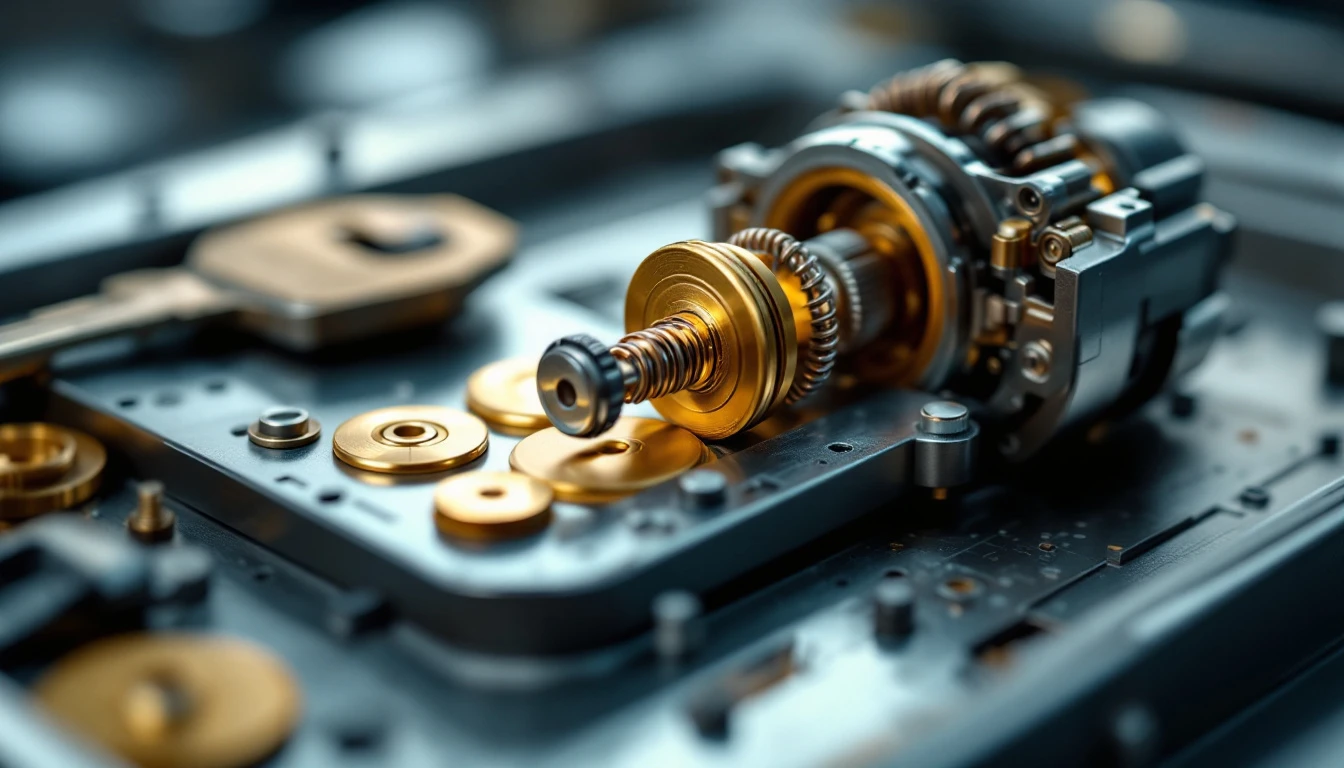
The GMC Yukon and Sierra are among the longest-lived vehicles on Tarrant County roads, and one of the most reliable ways to find out how many miles a truck has really done is to feel how its ignition turns. A key that has to be wiggled, lifted, or persuaded is not a quirk. It is wear, it is progressive, and it ends with a truck that will not start in a parking lot on a hot afternoon.
As of August 2026, ignition repair on these trucks is quoted after diagnosis — the price genuinely depends on whether the cylinder, the housing, the electrical switch, or the anti-theft system is at fault. If a key has to be cut and programmed as part of the repair, a GM transponder key runs about $120–$250 and a push-to-start fob runs $250–$650+.
This guide covers why these ignitions wear, how to tell a mechanical fault from an anti-theft fault, what the security light is actually telling you, and the real difference between repairing a cylinder, replacing the housing, and replacing the whole assembly.
Quick Answer — What Fails and In What Order
A GM truck ignition is a stack of parts, and the useful diagnostic question is what happens when you turn the key.
It turns hard, or only from one angle. Mechanical wear in the lock cylinder, usually paired with a worn key.
It will not turn at all, but frees when you rock the wheel. The steering lock is loaded against the column.
It turns fine but nothing electrical happens. The electrical ignition switch behind the cylinder, which is a separate component.
It turns, the engine cranks and dies, and a security light behaves oddly. Anti-theft, not mechanics.
Those four outcomes have four different repairs, and the diagnostic difference between them takes minutes to establish and saves hundreds of dollars.
Why Heavy Keychains Kill Truck Ignitions
This is the most preventable failure in this trade and almost nobody hears about it until it is too late.
Inside a lock cylinder is a stack of small spring-loaded wafers. The correct key pushes every wafer to exactly the right height, which lets the cylinder rotate inside its housing. It is a precise mechanism with tight tolerances.
Now hang a fistful of keys, a fob, a bottle opener, and a gym tag off it. Every time the truck goes over a bump — and this is Texas, so that is constantly — the mass of that keyring pulls down on the key, which levers against the wafers inside the cylinder. Over a decade of daily driving that leverage rounds off wafer edges and enlarges the cylinder's tolerances.
The key wears at the same time. Brass and nickel-silver blades lose their sharp cut definition through ordinary use, and a slightly worn key in a slightly worn cylinder is a much bigger problem than either one alone. That is why the failure feels sudden even though the wear took years — the two wear curves cross, and the day they do, the truck stops.
The practical advice is embarrassingly simple. Put the ignition key on its own small ring. Everything else goes on a separate ring you can detach. That single change measurably extends the life of any lock cylinder.
The Anti-Theft Layer — VATS, Passlock, and Transponders
GM has used several generations of anti-theft on these trucks and they behave differently enough that mixing them up leads to the wrong repair.
VATS and Passlock — the resistance era
Older GM vehicles used VATS, where the key blade carries a small resistor pellet. The vehicle measures the resistance of that pellet and only permits starting if it matches. Passlock evolved the idea, moving the sensing into the lock housing itself rather than the key.
The failure mode here is distinctive. Because the system depends on reading a small resistance through a physical contact, any degradation in that contact — wear, corrosion, a stretched harness at the column — makes the vehicle read the wrong value and refuse to start. Owners describe a truck that "starts if you wait ten minutes," which is the system's own timed lockout behavior after failed attempts.
Critically, this failure has nothing to do with your key being lost or damaged. The key can be perfect and the vehicle still refuses. If you own a truck of this vintage, our GM VATS and Passlock bypass service covers the diagnosis and the legitimate repair paths.
Transponder-era trucks
Later Yukons and Sierras moved to a transponder chip in the key head, read by an antenna ring around the ignition. No resistance measurement, no contact wear — a wireless handshake between chip and antenna, checked against a list of authorized keys the vehicle holds.
Failures here look different. A damaged transponder, a failed antenna ring, or a module that has lost its key list all produce a crank-and-stall with a security indicator. The mechanical half of the ignition can be flawless.
Push-to-start trucks
The newest generation has no ignition cylinder to wear at all. There is no key to turn, so the classic mechanical wear failure simply does not exist. What replaces it is a set of electronic failure modes — fob detection, antenna coverage, start permission logic — which is a different article's worth of material.
For the Chevrolet side of the same platforms, our guide to Chevrolet and GMC ignition switch repair covers the shared architecture in more depth.
Reading the Security Light
The security indicator is the most informative thing on your dash during a no-start, and most owners never learn to read it.
Light on solid during a crank-and-stall. The anti-theft system actively rejected the key. This is an authorization failure, not a mechanical one.
Light flashing in a repeating pattern. Many GM systems use flash patterns to signal a specific state, including the timed lockout after repeated failed reads. If waiting a documented period and retrying works, you have learned something important about which system you are dealing with.
No security light at all, engine cranks and never fires. This is usually not an anti-theft problem. A vehicle that cranks without catching and shows no security warning is more often fuel, spark, or a sensor, and it belongs with a mechanic. We will say so.
Light behaves normally, but the key will not physically turn. Purely mechanical. The anti-theft system never got a chance to participate.
That last distinction is the one worth internalizing. If the key never turns, no amount of key programming helps. If the key turns perfectly and the engine dies, no amount of cylinder work helps.
Repair, Housing, or Full Assembly
Once the fault is located, there are three levels of intervention and they cost meaningfully different amounts.
| Level | What it involves | When it applies |
|---|---|---|
| Cylinder repair | Rebuild the existing lock cylinder with fresh wafers and a correctly cut key | Wear confined to the cylinder, housing still sound |
| Cylinder replacement | Fit a new lock cylinder into the existing housing | Cylinder worn beyond rebuild, housing intact |
| Housing replacement | Replace the larger assembly the cylinder mounts into | Housing worn, cracked, or damaged by forced entry |
| Electrical switch | Replace the separate electrical switch behind the cylinder | Key turns normally but circuits do not energize |
| Anti-theft repair | Address sensing, antenna, or key authorization | Security light behavior, crank-and-stall |
| Column assembly | Larger column-mounted work | Damage beyond the ignition components themselves |
The reason this matters is that a shop quoting the most expensive option without having established which level applies is not diagnosing — it is defaulting. Ask which of these rows your truck is in and why. A good answer is specific.
Why Repair Usually Means Re-matching the Key
Here is the step owners are least prepared for.
The lock cylinder and the key are a matched pair. Change the cylinder, and unless the replacement can be keyed to your existing key, your old key no longer fits. On anti-theft-equipped trucks there is a second layer — the new hardware may also need the vehicle's security system to accept it.
There are two paths and we will tell you which one your truck is on:
Retain your existing keys. Where the replacement assembly can be coded to your current key, nothing changes for you. Your spare keys keep working. This is the preferred outcome whenever it is available.
New keys required. Where the replacement arrives with its own coding, keys have to be cut to it and, on transponder trucks, programmed to the vehicle. That is transponder key programming done as part of the ignition job, and it is why an ignition quote sometimes includes key work you did not expect.
If you are on a transponder truck and the ignition failure has left you with no working key at all, the procedure changes again — see our GM all keys lost programming guide for what that path involves.
What This Looks Like on Other Platforms
Worth a brief note for context, because GM is not unique here. Ford trucks of similar vintage suffer the same mechanical wear from the same cause, with their own platform-specific details — our Ford ignition lock cylinder repair guide covers those. The physics of a loaded keyring do not care what badge is on the grille.
What differs between manufacturers is the anti-theft layer sitting on top and how it responds to hardware changes. That layer is why an ignition job on a modern truck is a locksmith and programming job rather than purely a mechanical one.
What a Mobile Visit Involves
We are mobile only. The truck does not go anywhere.
- Feel the fault. How the cylinder behaves through its full rotation, whether it binds at a specific point, whether the steering lock is loading, and whether a worn key is contributing.
- Check the key. A blade worn past tolerance is diagnostic in itself, and comparing it against a freshly cut blade from the code frequently resolves the question immediately.
- Read the vehicle. Anti-theft status and relevant fault codes, which separates a mechanical failure from an authorization failure conclusively rather than by inference.
- Quote the specific level. Cylinder repair, cylinder replacement, housing, electrical switch, or anti-theft work — with the reason.
- Do the work and test it. Full rotation through every position, engine start, and a check that all your existing keys still operate every lock they should.
That final check catches something people forget: your door locks and your ignition may be keyed together, and a change to one should not silently orphan the other.
Booking runs through ignition repair, key work through car key replacement and our GMC key service page. We cover Fort Worth, North Richland Hills, and the rest of Tarrant County around the clock.
Ownership, Licensing, and Choosing a Provider
Ignition work gives someone the ability to start your vehicle, so ownership verification is not a formality. Expect to show a driver's license and registration or title in your name. A provider who offers to skip that step is describing their business model.
Texas locksmiths are licensed through the Texas Department of Public Safety Private Security Bureau. Professional standards for the trade more broadly are maintained by organizations such as the Associated Locksmiths of America, which is a reasonable reference point when you are evaluating who to call.
Two more practical filters. Insist on a firm quote before work begins, not a range that becomes a number after the column is apart. And be wary of any diagnosis delivered over the phone with total confidence — the whole point of this article is that these faults look alike from the driver's seat.
Having this work done outside a dealership does not affect your factory warranty; the Magnuson-Moss Warranty Act protects that right.
Frequently Asked Questions
Why will my GMC Yukon key not turn in the ignition?
The usual cause is wear inside the lock cylinder combined with a worn key, so the wafers no longer line up cleanly. A steering lock loaded against the column will also stop rotation, which is why rocking the wheel sometimes frees it. Both are mechanical and both are repairable.
What does the security light on a GMC Sierra mean?
It means the anti-theft system did not accept the key it read. On older Passlock and VATS trucks that is often a resistance reading problem. On transponder trucks it means the key identity was not recognized. Either way the engine will crank and stall rather than run.
Do I need a new key after an ignition cylinder repair?
Often yes. Where the original key coding can be retained your existing keys keep working. Where the replacement assembly comes with its own coding, keys have to be cut and matched to it. As of August 2026 a GM transponder key runs about $120–$250 and a push-to-start fob runs $250–$650 or more.
Is a heavy keychain really bad for a truck ignition?
Yes, and it is the single most preventable cause of this failure. A loaded keyring hangs from the key and applies constant downward leverage inside the cylinder every time you drive over a bump, accelerating wafer wear over years rather than decades.
What is the difference between repairing and replacing a GMC ignition?
Repair means restoring the existing lock cylinder, often with fresh wafers and a correctly cut key. Replacement means fitting a new cylinder or the larger housing assembly it sits in. Which one applies depends on how far the wear has gone and whether the surrounding housing is still sound.
Can you fix a GMC ignition at my house or work?
Yes in most cases. We are fully mobile and diagnose and repair truck ignitions wherever the vehicle is parked. If a specific part has to be ordered we confirm exactly what is needed on the first visit and return with it.
How much does GMC ignition repair cost in Fort Worth?
Ignition repair is quoted after diagnosis because the price depends on whether the fault is the cylinder, the housing, the electrical switch, or the anti-theft system. If a key has to be made as part of the job, the transponder and smart key ranges above apply on top.
Do Not Wait for It to Strand You
A Yukon or Sierra ignition that has started to bind is telling you exactly what is going to happen. The wear does not reverse and it does not plateau. The only variable is whether the repair happens on a scheduled afternoon or in a parking lot with a tow truck on the way.
Call or text (817) 668-3801 with your model year and VIN, or email contact@fwlocksmith.com. Describe exactly what the key does — whether it binds, whether the wheel is involved, and whether any dash light appears — and we will tell you what we expect to find before we roll out.