Pickup Truck Spare Key Cost in Fort Worth (2026): F-150, Silverado, Ram, Tundra
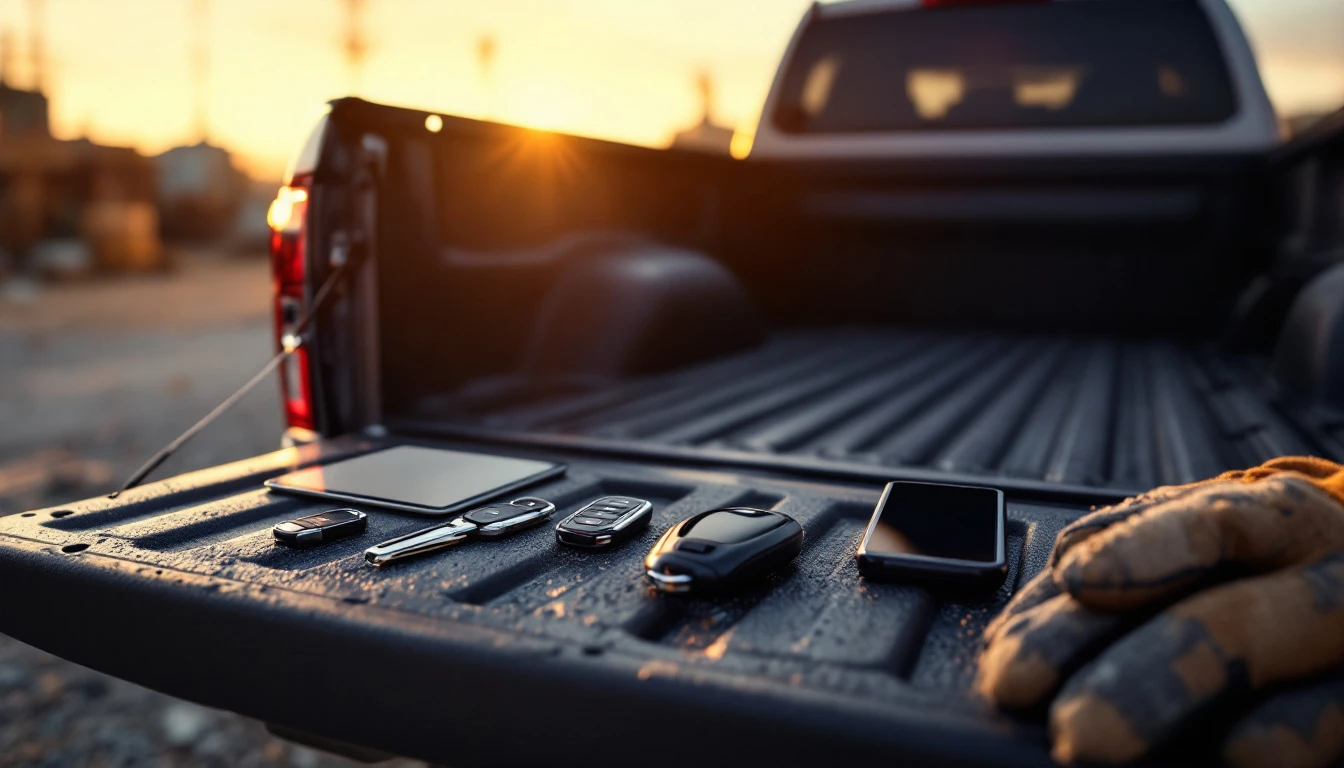
As of October 2026, a spare key for a full-size pickup in Fort Worth costs $120–$250 for a transponder chip key, $175–$300 for a remote-head or flip key, and $250–$450 for a push-to-start proximity fob, with the blank, cutting and programming included and the work done at your truck. Older trucks with no chip in the key are $50–$150. Trucks that need an online manufacturer security session can run higher.
Those four bands cover nearly every F-150, Silverado, Sierra, Ram 1500 and Tundra on the road in Tarrant County. Which band your truck falls in depends on two things: the generation of the truck and the trim level it was built with. This guide maps both, explains what moves the price inside a band, and shows why the cheapest key you will ever buy for a truck is the second one, bought while the first still works.
Spare Key Cost by Key Type
These are the same ranges published in our spare key cost by key type guide, applied to pickups.
| Key in your hand | Typical spare cost | Common on these trucks |
|---|---|---|
| Plain metal key, no chip | $50–$150 | Late-1990s to mid-2000s GM trucks, base-trim older Rams, pre-1999 Fords |
| Transponder chip key, plastic head, no buttons | $120–$250 | Many 1999–2014 F-150s, 2007–2013 Silverado and Sierra, 2002–2008 Ram, 2007–2021 Tundra |
| Remote-head or flip key with buttons | $175–$300 | 2011–2020 turn-key F-150s, 2014–2021 Silverado and Sierra, many Tundra trims |
| Pod-style fob that inserts in the dash | $175–$300 | 2009–2012 Ram and other turn-fob Rams |
| Push-to-start proximity fob | $250–$450 | Upper-trim F-150s from 2015, upper-trim GM trucks from 2014, Ram with Keyless Go, newer Tundras |
| Proximity fob on a platform needing an online security session | Higher end of the range or above; quoted | Newest GM architecture trucks, Ram behind the secure gateway, 2022+ Tundra |
Year ranges are approximate and overlap by trim. The reliable way to find your band is to look at the key you have now. If it has no plastic head or a thin plastic head with no chip, it is the first row. If it has a thick plastic head and no buttons, the second. Buttons on the key, the third. No blade visible and a start button on the dash, the proximity rows.
By Truck: What to Expect
Ford F-150
Ford put a chip in F-150 keys in the late 1990s, so nearly every F-150 still on the road needs a programmed key. Turn-key trucks through the 2014 model year mostly use a plain transponder key, with a remote-head version on better-equipped trims. From 2015, work-oriented trims kept a turn-key ignition with a remote-head key, while upper trims moved to push-button start with a proximity fob.
Ford has a feature worth knowing about. On many turn-key Fords, if you already have two working programmed keys, the truck will let you add a third yourself with a short ignition sequence from the owner's manual. With only one working key, that door is closed and a programming tool is required. This is the strongest argument for a truck owner to stay at two keys at all times. More on the platform in our F-150 key replacement guide.
Chevrolet Silverado and GMC Sierra
GM trucks are the main exception to the chip rule. Many Silverados and Sierras from the 1999–2006 generation, and the carry-over "Classic" trucks, use a plain metal key with no transponder. The anti-theft system on those trucks reads the lock cylinder, not the key. A spare for one of those is the least expensive truck key there is.
From the 2007 redesign, a transponder chip arrived. From 2014, keys moved to a side-cut blade with a flip-style remote on most trims and push-button start on upper trims. The current generation that launched for 2019 uses a flip key or a proximity fob, and trucks on GM's newest electrical architecture require an authorized online session to add a key. That session is why a newer truck can cost more for the same-looking fob. Our guide to Silverado and Sierra key and module programming on the newer architecture explains the difference, and brand-level detail is on our Chevrolet key page.
Ram 1500
Ram went through three key styles. Trucks from roughly 2002 to 2008 use a transponder key, though some base-trim trucks of that era were built without the anti-theft option. From 2009, Ram moved to a pod-style fob that inserts into a module in the dash and turns. Later trucks added Keyless Go push-button start with a proximity fob, and it became common across the 2019-and-newer generation.
Ram trucks from the 2018 model year have a secure gateway between the diagnostic port and the vehicle's modules. Adding a key requires an authorized session through that gateway. It is routine for a properly equipped programmer, but it is a step a general hardware store cannot perform. We cover the whole lineup, including heavy-duty models, in our Ram 1500 and 2500 spare key guide.
Toyota Tundra
The 2007–2021 Tundra kept a turn-key ignition on most trims for its entire run, using a transponder key or a remote-head key, with a proximity smart key on upper trims in later years. The redesigned Tundra for 2022 moved to push-button start across the lineup. Toyota's newest platforms use a security process that requires online authorization, which puts those trucks toward the top of the proximity range. See our Tundra and 4Runner spare key guide for year-by-year detail.
GMC, Nissan and others
The GMC Sierra follows the Silverado exactly. Nissan Titan and Frontier trucks use a transponder key on turn-key trims and Nissan's Intelligent Key on push-button trims, and they fall in the same price bands. For work vans rather than pickups, see our ProMaster and Transit spare key guide.
What Changes the Price
Trim level, not just model year
Two trucks of the same year can sit in different rows of the table. A 2018 F-150 XL with a turn-key ignition uses a remote-head key. A 2018 F-150 Lariat with push-button start uses a proximity fob. Trim decides the key type, and key type decides the band.
Remote start, tailgate and extra buttons
Fobs with more functions cost more as parts. A fob with factory remote start, a power tailgate release or a power running-board button is a different part number from the base fob. The replacement has to match the truck's equipment or the extra button will do nothing. If you only need the truck to lock, unlock and start, tell us, because on some trucks a simpler compatible fob costs less.
OEM or aftermarket fob
For most trucks there is a choice between an original-equipment fob and a quality aftermarket one. Aftermarket is less expensive and works well on many platforms. On some newer trucks only the original part will program reliably. We tell you which applies before cutting anything.
Online security sessions
Newer GM trucks, Rams from 2018 and the newest Toyota trucks need an authorized, logged connection to the manufacturer's security system to add a key. Independent professionals get that access through the vehicle security credentialing system administered by the National Automotive Service Task Force. The session has a cost, and it is why the newest trucks sit at the top of their band.
Whether your existing key is healthy
A spare is cut from your existing key or from the truck's key code. If the only key you have is badly worn, copying it copies the wear. In that case the key is cut to the original code so the new one is better than the old one. A worn single key is also a warning in itself, which our guide on what happens when your only key is failing covers.
Keys bought online
Customers often ask us to program a fob they bought themselves. We will, with two cautions. The part has to be the exact match for the truck's year, trim and region, and used fobs from many platforms are locked to their first vehicle and cannot be reused. A fob that will not program is still a service call.
Spare vs. All Keys Lost: The Real Comparison
The number that matters is not the price of a spare. It is the gap between a spare and the alternative.
With a working key in the ignition, the truck's anti-theft system is already satisfied and will accept an additional key through a normal add-key routine. With no working key, the technician has to obtain security access first. Depending on the truck, that is a timed wait, a paid manufacturer session, or reading data directly from a module. The key blade also has to be created from a code or decoded from a lock, since there is nothing to copy.
Using the ranges from our all keys lost cost guide:
- A transponder-key truck: a spare is $120–$250. All keys lost is $200–$450.
- A push-to-start truck: a spare is $250–$450. All keys lost is $350–$650.
- A truck needing online security authorization: all keys lost is $450–$800.
Add to that the things a price table does not show: the truck is stuck where the last key was lost, which may be a boat ramp or a job site, and whatever the truck was supposed to be doing that day does not get done. GM truck owners can read how the no-key process works in our GM all keys lost guide.
Where Truck Keys Actually Get Lost
Trucks lose keys in ways sedans do not. From the calls we take across Tarrant County, the pattern is consistent:
- Shared drivers. A crew truck or a ranch truck passes through several hands, and a key goes home in someone's pocket.
- Water. Lake days, boat ramps and river crossings. A proximity fob that goes swimming often dies even when it is recovered.
- Job sites. Keys set on a bumper, a tailgate or a stack of material, then buried or driven over.
- Worn single keys. High-mileage trucks on their original key, where the blade has worn until it no longer turns the cylinder reliably.
None of these are preventable by being careful. They are preventable by having a second key that is not in the truck.
How to Get the Best Price on a Truck Spare
- Do it while a key still works. This is the entire saving.
- Have the VIN and the trim level ready when you call, so the quote is for the right key type.
- Decide which functions you need. Start-and-lock only, or full remote start and tailgate.
- Do two at once if you are down to one. The visit and the programming session are shared, so a second spare added in the same call costs less than a separate trip.
- Bring proof of ownership. A legitimate locksmith will ask for identification and registration or title before programming a key. That check protects you.
Texas locksmiths are licensed through the Texas Department of Public Safety's Private Security Bureau. Ask any key provider for their license number before they start.
Getting a Truck Spare Key in Fort Worth
Fort Worth Locksmith & Computer Programming is mobile-only and available 24/7. We cut and program spare keys at your truck anywhere in Fort Worth and the surrounding area, and the same visit can cover transponder key programming, smart key programming or a full car key replacement if the last key is already gone. Call (817) 668-3801 with the year, model and trim for a quote before we roll.
Frequently Asked Questions
How much does a spare key for a pickup truck cost in Fort Worth?
As of October 2026, a spare key for a full-size pickup in Fort Worth runs $50 to $150 for a plain metal key on older trucks with no chip, $120 to $250 for a transponder chip key, $175 to $300 for a remote-head or flip key, and $250 to $450 for a push-to-start proximity fob. Those prices include the blank, cutting and programming, done at your truck. Newer trucks that require an online security session can run higher.
Why is a spare key so much cheaper than replacing a lost only key?
With a working key present, the truck's anti-theft system is already unlocked and a second key can be added directly. With no working key, the technician first has to gain security access, which can mean a timed wait, a paid manufacturer security session, or reading a module directly. That is why an all-keys-lost job on a push-to-start truck is typically $350 to $650 or more, while a spare for the same truck is typically $250 to $450.
Can I program a spare truck key myself?
On some older trucks, yes. Many Ford trucks with a turn-key ignition let you add a key yourself if you already have two working programmed keys, using a sequence described in the owner's manual. Most push-to-start trucks and most newer trucks from every brand require a programming tool. The key still has to be cut correctly first, and a key bought online has to be the exact right part for your truck.
Will a hardware store key copy start my truck?
Only if your truck has no immobilizer chip, which is mainly older trucks. On a chip-equipped truck, a plain copy will turn the lock and the ignition but the engine will not start, or will start and shut off, because the anti-theft system does not see a registered chip. Some stores can clone certain older chips. Newer encrypted keys and all proximity fobs need to be programmed to the truck.
Do I need to bring my truck to a shop for a spare key?
No. We are a mobile service, so the key is cut and programmed where the truck is parked, whether that is your driveway, a job site or a parking lot. The truck has to be present because the key is registered to that specific vehicle. Have your existing working key and proof that the truck is yours.
How long does it take to make a spare truck key?
Most spare keys take 20 to 45 minutes once we are at the truck. A plain or transponder key is at the short end. A proximity fob takes a little longer, and trucks that require an online security authorization or enforce a wait before accepting a new key can take longer still.
Should a work truck have more than one spare?
If more than one person drives it, yes. A truck shared across a crew or a family loses keys more often than a single-driver vehicle, and a truck that cannot start costs a day of work. Many truck owners keep two keys in use and a third stored somewhere safe. Check your owner's manual for the maximum number of keys your truck will accept.