Restraints Control Module (RCM) Programming vs Airbag Reset (2026)
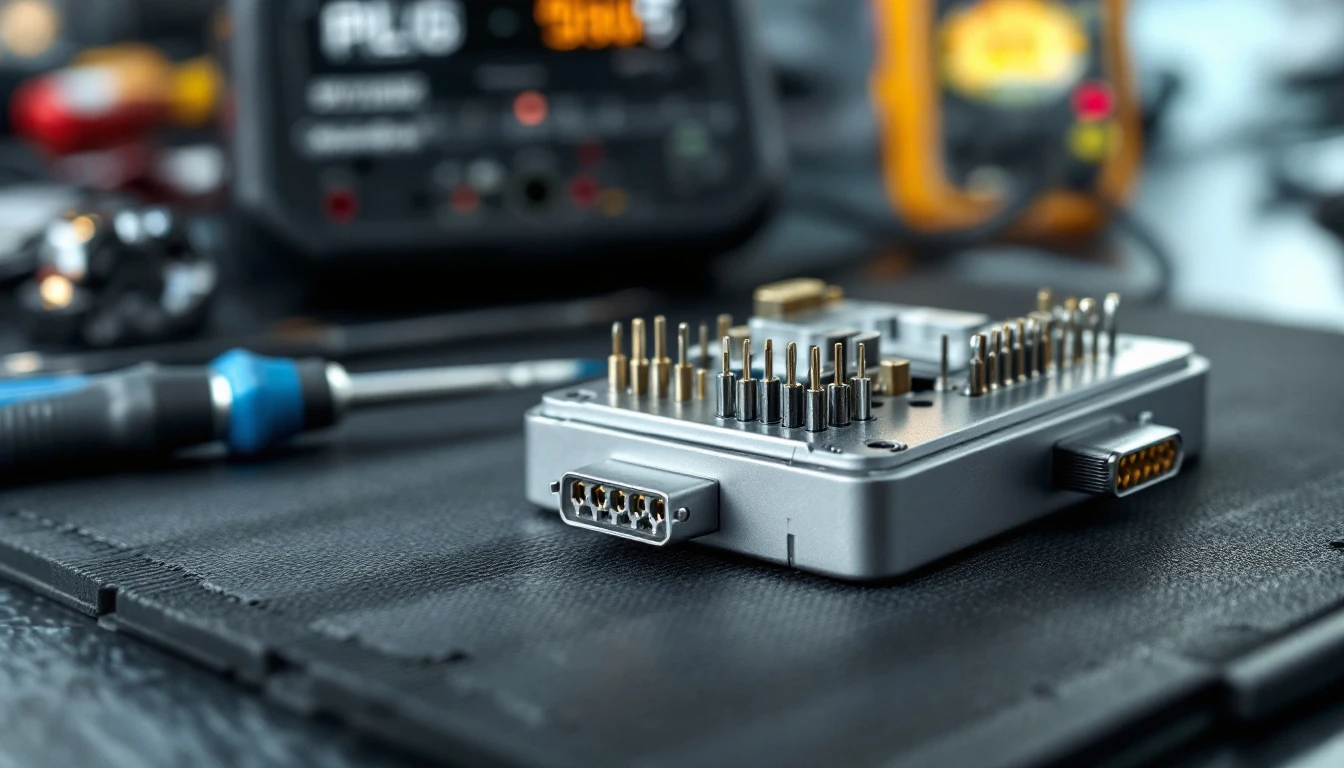
There is a category of automotive work where being technically capable is less important than being clear about limits, and restraint system electronics is that category. As of August 2026, a large share of the calls we receive on this subject start from a genuine misunderstanding — the caller believes that clearing the airbag light is the repair. It is not, and no amount of technical skill changes that.
This guide separates three operations that get conflated constantly: clearing stored crash data, programming a replacement restraints module to a vehicle, and actually repairing a restraint system after it has done its job. It also covers where hard-coded crash data requires bench-level work, which modules are single-use by design, why occupant classification recalibration matters, and the circumstances under which the correct professional answer is to decline the job.
The Safety Statement, Up Front
Before anything technical, the position that governs all of it:
Resetting a crash module restores the module's ability to communicate. It does not repair or replace anything in your restraint system. Deployed airbags do not un-deploy. Fired seat belt pretensioners are spent. Crushed sensor brackets, stretched wiring, and damaged mounting structure remain damaged. A module operation changes what the module reports; it changes nothing about whether the system will protect you in the next collision.
A vehicle whose restraint system has deployed should not be returned to service until every deployed and damaged component has been physically replaced by a qualified repair facility and the system verified. The National Highway Traffic Safety Administration treats occupant restraint systems as safety-critical equipment for exactly this reason, and it is worth understanding that an airbag that fails to deploy in a crash is not a warranty inconvenience — it is the difference between injuries.
If someone offers to "clear your airbag light" on a vehicle with deployed airbags and does not raise any of this with you, that is the moment to end the conversation.
What the RCM Actually Is
Depending on manufacturer, the same computer goes by different names — RCM (Restraints Control Module) on Ford platforms, ORC (Occupant Restraint Controller) on Stellantis vehicles, SRS control unit, SDM (Sensing and Diagnostic Module) on GM, or simply the airbag module in general conversation.
Its job is continuous and unglamorous. It monitors:
- Acceleration and deceleration through internal and remote crash sensors
- The electrical integrity of every airbag squib circuit
- Seat belt buckle switches and pretensioner circuits
- Occupant classification input from the passenger seat
- Side impact and rollover sensors where fitted
And it makes one decision, in milliseconds, based on all of it: whether to deploy, which devices to deploy, and in what sequence and stage. When it does deploy, it writes a record of the event into its own memory — the crash data. That record is why the module will not simply resume normal operation afterward.
Three Different Operations, Constantly Confused
Here is the distinction that this entire article exists to make.
| Operation | What it does | What it does NOT do | Typical cost band |
|---|---|---|---|
| Crash data clear (reset) | Removes stored crash event data so the module communicates normally | Repair or replace any physical restraint component | 100 to 300 dollars |
| RCM programming and configuration | Configures a replacement module to your VIN and restraint configuration | Repair or replace any physical restraint component | 150 to 500 dollars |
| Restraint system repair | Physically replaces deployed airbags, pretensioners, sensors, wiring | Nothing electronic on its own; needs the above afterward | Collision repair facility work |
The third row is the one that actually makes a vehicle safe again, and it is not module work. It is collision repair. The first two rows are supporting operations that come after the third, never instead of it.
An honest sequence after a deployment event looks like this: full restraint system inspection, physical replacement of every deployed and damaged component, then module reset or replacement and configuration, then verification that the system reports healthy with no stored faults. Reversing that order produces a vehicle that looks repaired and is not.
Crash Data: Soft, Hard, and Permanent
Not all stored crash data behaves the same way, and this determines what is even possible.
Soft-stored data. On some platforms, crash event data can be cleared through the diagnostic port with the correct tooling and authorization. This is the simplest case and it is what most people picture when they say "airbag reset."
Hard-coded data. On many platforms, crash data is written into the module's non-volatile memory in a location and format that no port-based tool will clear. Recovering these modules means physically removing the unit and reading or writing its memory chip directly on a bench — EEPROM-level work. It requires the module in hand, proper equipment, and genuine care, because a mistake at that level destroys the module.
Permanently locked. Some manufacturers deliberately design the module so that once a crash event is written, the module can never be returned to service. There is no legitimate reset. Replacement is the only path. This is a design decision made for safety reasons, and it should be respected rather than defeated.
The practical implication: anyone who quotes a flat reset price for any vehicle without knowing the platform is guessing. The same nominal job spans a port operation, a bench operation, and an impossible operation depending on what you drive.
The bench-level dimension of this work is the same discipline described in our general automotive ECM programming overview — when a module cannot be reached through the vehicle's diagnostic port, the work moves to the bench, and the skill requirement rises accordingly.
Programming a Replacement RCM
When a module must be replaced rather than reset, installing it is the easy part. Configuring it is the job.
A replacement restraints module needs:
The correct part for the exact configuration. Restraint configurations vary enormously within a single model line — side airbags or not, curtain airbags or not, knee airbags or not, rollover sensing or not, different seat belt pretensioner arrangements. A module for a differently equipped version of the same vehicle may not match the physical system it is being asked to supervise.
VIN and configuration written to the module. The module has to know which vehicle it is in and which restraint devices exist. A module expecting devices that are not present, or unaware of devices that are, will report faults at best and behave incorrectly at worst.
A used module considered very carefully. Used restraints modules are a category where we are more conservative than we are with infotainment or body modules. A used module may already carry crash data from the donor vehicle. Its history is unknown. On platforms where crash data cannot be cleared, a used module from a crashed donor is worthless. We would rather explain why a new module is the right call than save a customer money on a component whose entire job is to work correctly once.
Verification after installation. A clean scan with the ignition cycled, no stored or pending restraint faults, and the warning lamp completing its normal self-test sequence and then extinguishing on its own.
Occupant Classification: The Step That Gets Skipped
The front passenger seat on most modern vehicles contains an occupant classification system — a sensor arrangement that estimates whether someone is in the seat and approximately how large they are. The restraint system uses that input to decide whether to deploy the passenger airbag at all, and at what stage.
This matters because the system's whole purpose is to suppress deployment for a small child in that seat while permitting it for an adult.
Any work that disturbs the seat, the sensor mat, the wiring beneath the seat, or the seat's mounting can require recalibration of that system. Seats get removed during collision repair, during interior work, during upholstery work. If the calibration is not performed afterward, the possible outcomes are a passenger airbag suppressed when it should deploy, or a system that misclassifies an occupant.
There is no acceptable version of "we'll skip that one." If seat work has occurred, the calibration is part of the job.
When We Decline the Work
We turn down restraint system jobs, and it is worth being explicit about when, because a customer deserves to know the reasoning rather than a vague "we can't help you."
When airbags have deployed and have not been replaced. Clearing a module on a vehicle with deployed airbags still installed produces a vehicle that reports healthy and is not. We will not do it.
When the request is explicitly to make the light go away. If the stated goal is passing an inspection or selling the vehicle rather than repairing it, that is not a job, it is a misrepresentation with a future buyer on the other end of it.
When the platform designates the module single-use. If the manufacturer designed the module to be replaced after a deployment, that is the answer, and we say so.
When the vehicle's history does not add up. If a customer cannot account for why crash data exists, the conversation slows down until it makes sense.
None of this is unique to us — it is the standard position of the professional trade associations in this field, including ALOA, whose ethical framework covers exactly this kind of situation.
What It Costs and What Is Included
Crash module reset work generally runs 100 to 300 dollars, depending on whether the platform allows a port-based operation or requires bench-level work with the module removed. Programming and configuring a replacement restraints module falls into the broader module programming band of 150 to 500 dollars.
Both of those numbers cover the module operation only. Neither includes:
- Replacement airbags, pretensioners, or their installation
- Sensor, wiring, or bracket replacement
- Any structural or collision repair
- The restraint system inspection that should precede all of it
We say this in the quote, not after. It is the most common source of misunderstanding in this work and it is entirely avoidable by being direct.
For the module operation itself, see our airbag reset and crash module service page. For related module configuration work on other domains, our module programming page and our guide to computer programming for a car in Arlington cover the broader category. Owners dealing with multi-module electrical faults after a collision may also find our Durango and Grand Cherokee TIPM module programming guide relevant, since power distribution faults frequently accompany front-end damage.
Frequently Asked Questions
What is the difference between an airbag reset and RCM programming?
An airbag reset clears stored crash data from the restraints module so the module can communicate normally again. RCM programming is configuring a replacement restraints module to your VIN and your vehicle's specific restraint configuration so it knows which airbags, pretensioners, and sensors exist. They are different operations with different purposes, and neither one repairs anything mechanical.
Does resetting the airbag module fix my airbags?
No. This is the single most important point on the subject. Clearing crash data restores the module's ability to communicate and can turn off a warning light, but it does not replace deployed airbags, does not reset fired pretensioners, and does not repair damaged wiring, sensors, or mounting structure. Deployed restraint components are single use and must be physically replaced by a qualified shop.
Is it safe to drive with the airbag light on after a collision?
No. An illuminated restraint warning generally means the system has detected a fault and may not deploy as designed in a subsequent crash. After any collision the correct sequence is a full inspection of the restraint system by a qualified repair facility, physical replacement of every deployed or damaged component, and only then any module work. Clearing a light to make the dash look normal is not a repair.
What is hard coded crash data and why does it need bench work?
On many platforms crash data is written into the module's memory in a way that a diagnostic tool cannot clear through the vehicle port. Recovering those modules requires removing the unit and reading or writing its memory chip directly on a bench. Some manufacturers design the module so that once crash data is written it can never be cleared, which makes replacement the only legitimate route.
Are some airbag modules single use and non resettable?
Yes. A number of manufacturers treat the restraints module as a one time use item after a deployment event. On those platforms no legitimate reset exists, and a replacement module has to be installed and configured to the vehicle. Anyone claiming to reset a module the manufacturer designed as single use is describing something that should not be trusted with a safety system.
What is occupant classification recalibration and when is it needed?
The occupant classification system uses a sensor in the front passenger seat to judge whether an occupant is present and roughly how large they are, so the system can decide how or whether to deploy. Any work that disturbs the seat, its sensor, or its wiring can require recalibration. Skipping it can leave the passenger airbag suppressed or deploying inappropriately, which is a genuine safety consequence.
How much does airbag or crash module reset cost?
Crash module reset work generally falls in the 100 to 300 dollar range depending on the platform and whether the module can be handled through the vehicle port or requires bench level work. That price covers the module operation only. It never includes replacing deployed airbags, pretensioners, sensors, or structural repair, which are separate work performed by a collision repair facility.
Restraint Module Work in Fort Worth
Fort Worth Locksmith & Computer Programming performs crash module reset and restraints module configuration as a mobile service across Fort Worth and the surrounding metroplex — on vehicles where the physical restraint system has already been properly repaired. We will tell you when a platform requires bench-level work, when a module is single-use by design, and when the honest answer is that the vehicle needs a collision repair facility before it needs us.
Call or text (817) 668-3801, or email contact@fwlocksmith.com with your year, make, model, and what happened to the vehicle. We are mobile and available 24/7. See our airbag reset and crash module page or how we serve Fort Worth.
Texas locksmiths are licensed and regulated by the Texas Department of Public Safety Private Security Bureau.