Subaru Outback & Forester Spare Key in Fort Worth (2026)
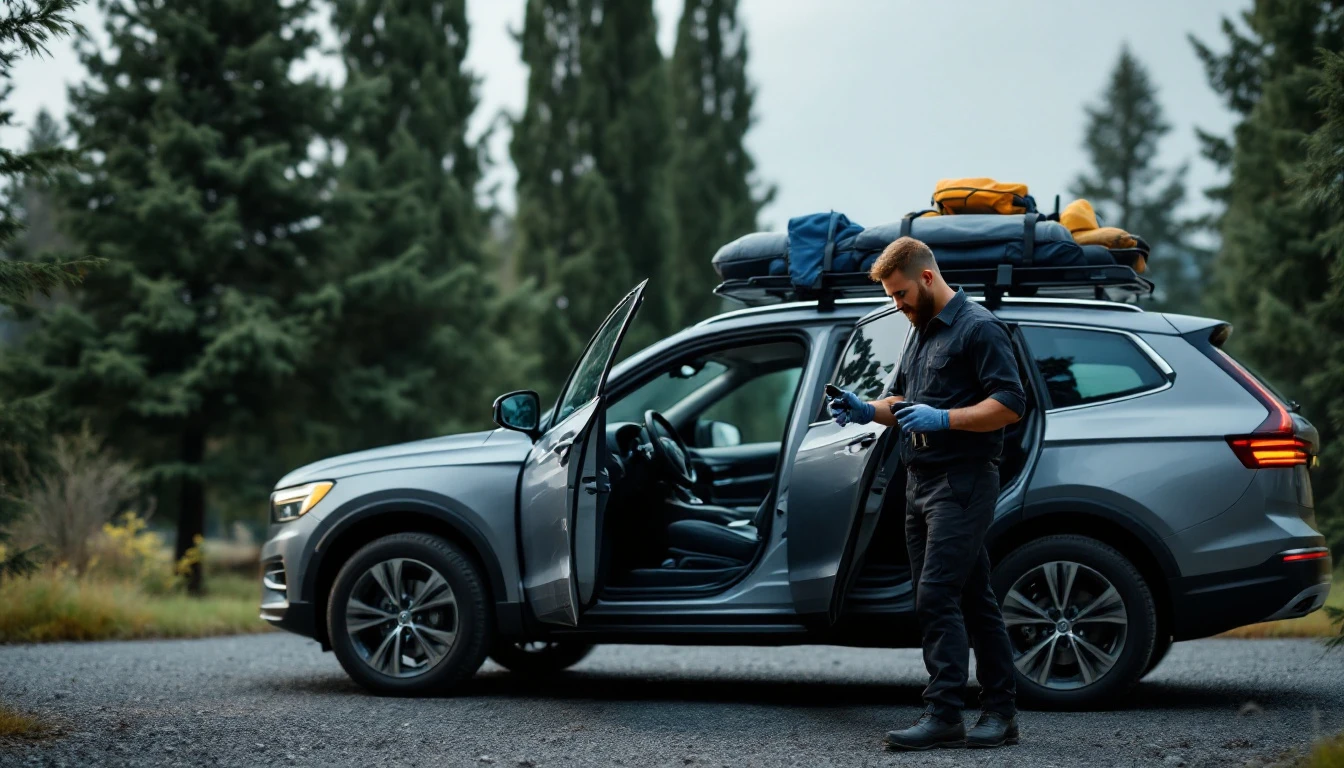
There is one fact about Subaru key work that belongs before anything else, because it is the fact that costs people money: on many Subaru model years, registering a new key rewrites the list of accepted keys, and any key not physically present during the procedure stops working.
That is not a warning about bad workmanship. It is designed behaviour. But it means a Subaru spare-key appointment has a rule attached that most makes do not have, and an owner who leaves a second fob in a desk at the office can come home to a key that no longer starts the car. Everything else in this guide is downstream of that.
Bring Everything: The Rule That Shapes the Whole Job
Empty the drawer. The valet key you never use, the fob with the cracked case, the spare the dealer handed over when you bought it, the one you assume is dead because the buttons stopped working — all of it comes to the appointment.
Three reasons, in descending order of how expensive they are to ignore:
A key left at home may be dropped from the accepted set. This is the big one. If the procedure on your model year writes a fresh list, only what is on the table gets written.
A key you wrote off may still be good. Dead remote buttons and a dead transponder are unrelated failures. A fob whose lock button does nothing may still start the engine perfectly, which changes what you actually need to buy.
The existing set can be assessed before anything is consumed. Knowing what you have before adding to it is simply better information, and it occasionally reveals you need one key rather than two.
None of that costs anything. All of it is regularly skipped.
What the Body Integrated Unit Is Doing
Subaru centralises a large share of body electronics in the Body Integrated Unit, and on many models the BIU is also where the list of accepted keys lives. It works alongside the engine control module: the BIU decides whether a presented key is one it recognises, and the engine side has to agree before the vehicle will actually run rather than crank and stall.
That division of labour explains a symptom that confuses owners. A key can be mechanically perfect, cut precisely to the locks, turning the ignition smoothly — and the engine still fires for a second and dies, with a security indicator on the dash. Nothing mechanical failed. The BIU did not recognise the transponder, and the engine side was told not to permit combustion.
It also explains why a genuine module fault cannot be fixed with hardware. If the BIU itself has a problem, buying fobs is buying nothing. That situation is a module diagnosis rather than key cutting, and it should be diagnosed rather than guessed at.
Two Key Formats, One Decision
The transponder blade key. Older Outbacks and Foresters use a conventional cut key with a passive chip in the head, sometimes with the remote buttons built into the same head and sometimes with the remote as a separate fob on the ring. The chip has no battery — the antenna ring around the ignition energises it briefly each time you turn the key.
The keyless access fob. Subaru's push-button-start vehicles use a proximity fob. The car detects it nearby, unlocks on a handle touch, and permits a push-button start with the fob still in a jacket pocket. Inside the fob is a mechanical emergency blade for the driver's door, and there is a defined low-battery start procedure that involves holding the fob at a specified spot so the vehicle can read it at very short range.
The format decides the cost band far more than the model year does, because the fob hardware itself is the dominant expense on a proximity vehicle. Blade-key work sits under transponder key programming; proximity work sits under smart key programming.
Outback and Forester Across the Last Fifteen Years
Both nameplates crossed from blade keys to proximity fobs gradually, and trim level moved the boundary as much as model year did.
Outback. The early-2010s Outback is broadly a transponder blade-key vehicle. Keyless access with push-button start appeared on upper trims through the mid-2010s generation, meaning two Outbacks of the same year could be entirely different jobs depending on how they were optioned. From the generation launched for 2020, push-button start is standard across most of the range.
Forester. The same pattern runs a year or two offset. Early-2010s Foresters are blade-key vehicles. Keyless access arrived on higher trims during the mid-2010s generation, and by the generation launched for 2019 proximity fobs are the normal configuration across most of the line, with the current generation continuing that.
The reliable answer is the one that comes from your VIN and a look at the dashboard. A start button means a proximity fob. A key cylinder means a blade key, and the presence of an immobilizer on that blade key still needs confirming rather than assuming. A technician confirms your exact setup before hardware is ordered.
Why Subaru Owners Around Fort Worth Are Particularly Exposed
Subaru ownership in DFW has a recognisable shape, and it interacts badly with a single-key household.
These are the vehicles people take out of the metroplex. Weekend runs west toward Palo Pinto and Possum Kingdom, longer hauls to Colorado or New Mexico, trailheads and campgrounds and gravel parking areas where the nearest locksmith is a long way away and the nearest Subaru dealer is further. Losing a sole key inside the 820 loop is an inconvenience with a known solution. Losing it at 8,000 feet on a Saturday is a different kind of day.
Second, a very large share of used Subarus change hands with one key, because the second was lost by a previous owner and never replaced. Buyers frequently do not notice until months later. If you bought an Outback or Forester used and have never actually counted your keys, count them now.
Third, these vehicles get used hard in ways that punish keys. Roof boxes, dog crates, muddy tailgates, keys in cargo shorts and dry bags and jacket pockets. Blade keys bend, fob cases crack, and the difference between two keys and one key is the difference between an inconvenience and a recovery.
The same reasoning applies with even sharper economics to vehicles that earn money, which is covered in our guide to work van spare keys for the Ram ProMaster and Ford Transit — the argument there is identical, just with a day of lost revenue attached to it.
The Numbers
These are the established bands for this work. As of August 2026 they are ranges rather than quotes; hardware is priced separately from labour, and nothing is promised as a firm total before the vehicle is identified.
| Subaru Outback / Forester key work | Range (as of August 2026) | What moves the number |
|---|---|---|
| Transponder blade key, cut and programmed, working key present | $120 – $250 | Blade type, integrated remote, hardware supply |
| Keyless access proximity fob, working fob present | $250 – $650+ | Fob hardware is the dominant cost |
| Mechanical-only blade, doors and cargo area | Low end of the key band | Will not start the engine |
| All keys lost, either format | Quoted after diagnosis | Entry, extended security path, longer session |
| Body or engine control module work, if the fault is not a key | $150 – $500 | Only after diagnosis says so |
The gap between the spare row and the all-keys-lost row is the whole argument of this article. With a working key the vehicle already trusts something and the session is routine. With nothing working, the job adds physical entry, a longer security path with no existing key to lean on, and a vehicle that cannot be driven to anybody — so a tow or a worse-conditions mobile visit lands on top of the labour.
Inside the Appointment
Ownership verification comes first. Government-issued photo identification checked against the registration, title, or an insurance card in a matching name. Proof of ownership is required before any key is cut, without exception. Independent professionals doing security-relevant vehicle work operate through established channels — the National Automotive Service Task Force runs the Vehicle Security Professional registry covering identity-verified access to secured data — and in Texas, companies performing this work operate under the Texas Department of Public Safety Private Security Program.
The vehicle and the key set are assessed. Year, trim, VIN, which format you have, how many keys exist, and the condition of each one. This is where bringing everything pays for itself.
Battery condition is checked before a procedure starts. Registration sessions on a marginal 12-volt battery fail more often than owners expect, and a Subaru that has sat through two weeks of Texas August heat is worth testing before anyone opens a tool.
The blade is cut or the fob prepared, then registration is run. The full accepted set gets written with every key present on the table.
Everything is verified before anyone leaves. New key starts the engine. All existing keys re-tested and confirmed still working. Remote lock, unlock, and rear gate operation checked. On keyless access vehicles, the low-battery start procedure demonstrated once so you have seen it work.
Cases That Are Not Key Cases
Some Subaru symptoms look like key problems and are not, and being told so is more useful than being sold a fob.
A vehicle that cranks and dies with a security indicator is an immobilizer recognition issue, which may be the key or may be the module holding the list. A push-button Outback insisting no key is detected while a known-good fob sits on the console usually points at the receiving side, the vehicle's own battery, or interference. A key that will not turn at all is a cylinder problem and belongs under ignition repair.
And where the fault genuinely sits inside the engine control module rather than in the key, the work becomes a programming job rather than a locksmith job — our explainer on automotive ECM programming covers what that involves and when it is actually warranted, which is far less often than internet diagnosis suggests.
Frequently Asked Questions
Why does Subaru key programming require all of my keys to be present?
On many Subaru model years the registration routine writes a complete new set of accepted keys rather than appending one to an existing list. Any key that is not physically presented during that session is left out of the new set and stops starting the vehicle. This is designed behaviour rather than a fault or a mistake by the technician. It is the reason every Subaru appointment should begin with you emptying the key drawer into a bag and bringing all of it.
What is the Body Integrated Unit and why does it matter for keys?
The Body Integrated Unit is Subaru's central body electronics module, and on many models it holds the list of keys the vehicle will accept. It coordinates with the engine control module so that both agree a presented key is valid before the engine is permitted to run. Because it holds the key authority, essentially all Subaru key registration work goes through it. If that module itself has a fault, no amount of key cutting or fob buying will resolve the symptom.
How much does a Subaru Outback or Forester spare key cost in Fort Worth?
As of August 2026 a transponder blade key cut and programmed with a working key present generally falls in the $120 to $250 range, while a keyless access push-button fob generally falls in the $250 to $650 or higher range. Fob hardware is the largest variable in the higher band. Those figures assume at least one working key exists and that the vehicle is in normal condition. All-keys-lost Subarus are quoted after inspection rather than over the phone.
Can I program a Subaru key myself with an online video?
Subaru immobilizer registration requires a capable tool and a security access step, so the self-service path that exists on a few other makes does not apply here for the engine-start half of the job. Some remote functions can be paired by procedure on certain model years, which is why videos exist and why they mislead. A fob whose remote pairs and whose transponder is not registered will lock the doors and refuse to let the engine run. Attempting a partial procedure on a Subaru also risks running the very routine that drops your other keys.
Is a Subaru spare cheaper than an all-keys-lost recovery?
Considerably, and the difference is not a matter of pricing policy. With a working key present the vehicle already trusts something, so the session is an ordinary registration through the diagnostic port in your driveway. With no working key the job adds physical entry, a longer security path with nothing to lean on, and a vehicle that cannot be driven anywhere, which usually means a tow or a mobile visit under worse conditions. The gap is large enough that the spare frequently pays for itself the first time it is needed.
Do Outback and Forester keyless access fobs work if the fob battery dies?
Yes, there is a defined backup. Subaru keyless access vehicles allow the engine to be started by holding the fob in a specified position, usually against or very near the start button, so the vehicle can read it at extremely short range. There is also a mechanical emergency blade concealed in the fob for the driver's door. Both are worth practising once in your own driveway rather than discovering at a trailhead after dark.
I bought my Subaru used with only one key. What should I do first?
Book a spare before anything else, and bring the one key you have plus any spare the seller mentioned but did not hand over. A single-key vehicle is one dropped keyring away from a recovery job, and used Subarus very commonly arrive with one key because the second was lost by a previous owner. Getting a second key made also creates a natural moment to confirm the existing key is healthy. Proof of ownership in your name is required, which for a recent purchase means the title or the new registration.
Book It With the Whole Key Drawer in Hand
A Subaru spare is a short driveway appointment with one condition attached: bring every key you own. That single habit protects you from the registration behaviour described at the top of this article and gives you the cheapest version of a problem that gets expensive quickly.
Call or text (817) 668-3801, email contact@fwlocksmith.com, or use the contact page with your year, trim, and VIN. Mobile Subaru key service and car key replacement are available throughout Fort Worth and the surrounding cities, evenings and weekends included. Proof of ownership is required before any key is made.