Throttle Body Relearn & Programming in Fort Worth (2026)
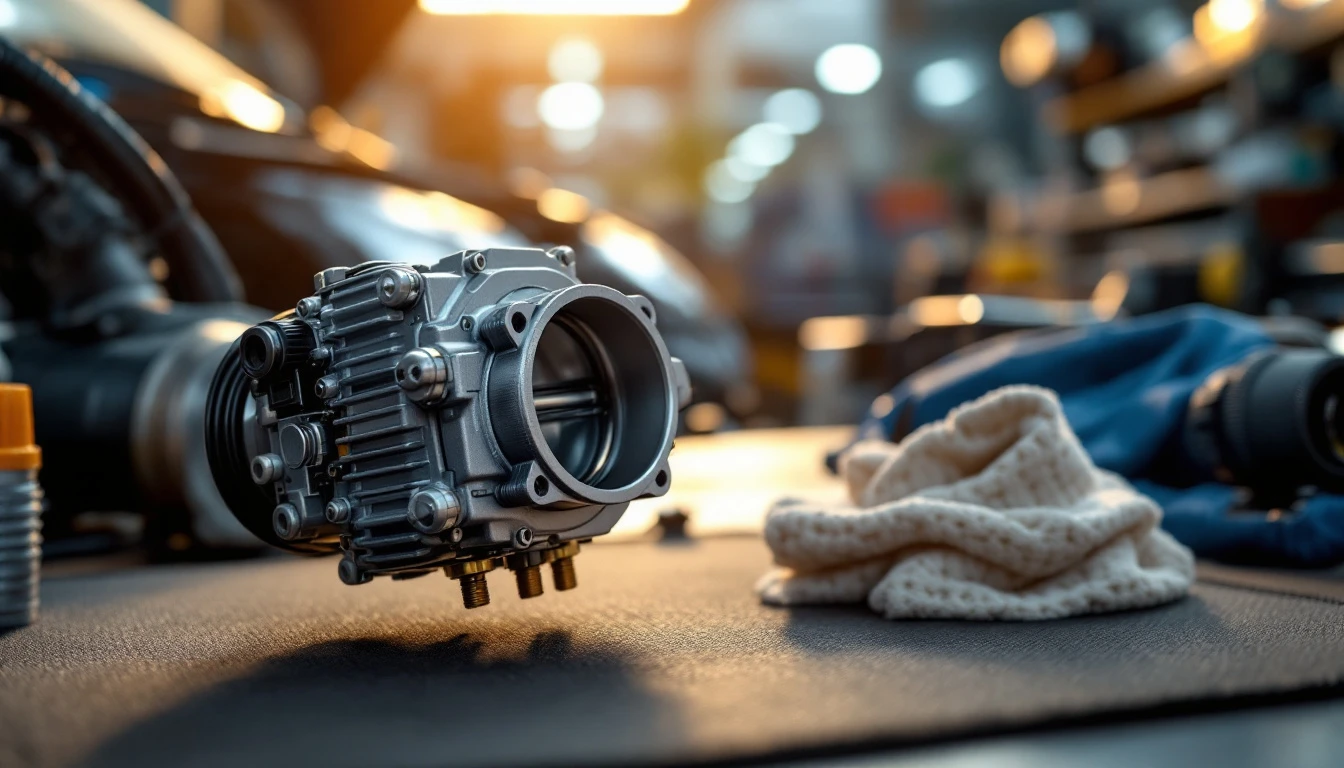
Someone cleans a throttle body on a Saturday afternoon. It is a genuinely worthwhile job — the bore was black, the plate edge was crusted, and the car had been idling rough for a year. Everything goes back together correctly.
Then the engine idles at 1,400 rpm. Or it hunts up and down. Or it will not idle at all unless a foot stays on the pedal, and a check-engine light shows up by Monday.
Nothing was broken during the cleaning. The engine computer is simply still running the numbers it learned from a dirty throttle body, and it has no way of noticing that the hardware underneath it changed.
The Adaptation Nobody Sees
Modern engine management is adaptive by design. The computer does not run fixed tables and hope the hardware matches — it measures outcomes, compares them to targets, and stores correction values so its next command lands closer.
For throttle control specifically, the engine computer maintains a set of learned references that together answer one question: for a given commanded position, how much air actually gets past this plate?
That block of learned data typically includes:
- The closed-plate reference position — the electrical output of the throttle position sensors when the plate is against its mechanical rest stop
- The open reference at the other end of travel
- The relationship between commanded plate angle and measured airflow across the operating range
- The idle correction the computer needs to apply to hit its target idle speed under current conditions
- Longer-term fuel trim data that reflects, indirectly, how much air has actually been arriving
Carbon deposits build slowly. A throttle body that accumulates a millimetre of crust around the plate edge over three years reduces the airflow at idle gradually, and the computer compensates gradually — nudging the plate a little further open each month to keep idle where it belongs. From the driver's seat nothing dramatic happens. The adaptation absorbed the change.
Cleaning reverses three years of that in twenty minutes. The stored corrections are now wildly wrong in the other direction: the computer commands a plate position it learned was necessary to overcome deposits that no longer exist, and the engine gets far more air than intended. High idle. Hunting. On platforms whose correction loop is aggressive, an over-correction that drops idle far enough to stall.
The same logic explains why replacing a throttle body without a relearn produces the same class of symptoms for a slightly different reason. Every throttle body has its own mechanical rest stop and its own sensor output at a given angle. Manufacturing tolerance is small but the control system is looking at small numbers. The learned reference from the old unit does not describe the new one, and a mismatch between commanded and measured position is exactly the condition that triggers throttle-correlation fault codes and reduced-power mode.
Cable Throttles and Drive-by-Wire Are Different Problems
It is worth separating the two architectures, because advice written for one does not transfer.
On a cable throttle, the pedal pulls the plate open through a physical linkage. The driver controls the plate directly. Idle is a separate subsystem — an idle air control valve bypasses a metered amount of air around the closed plate, and the computer varies that bypass to hold idle. Relearn on these systems mostly concerns the idle air control counts and the throttle position sensor's closed reading, and older vehicles were far more forgiving about it.
On drive-by-wire, sometimes called electronic throttle control, the cable is gone. The accelerator pedal is a sensor assembly reporting driver demand. The computer decides what the plate should do, and a motor in the throttle body moves it. There is normally no separate idle air valve at all: idle is controlled by commanding the main throttle plate to a very small opening.
That last point is the whole reason relearn matters more now than it did twenty years ago. When idle is set by cracking the main plate open by a fraction of a degree, the reference for where "closed" sits is not a housekeeping detail — it is the origin point of the entire idle control strategy. A closed reference that is off by a small amount is off by a large fraction of the idle opening.
Drive-by-wire systems also run redundant throttle position sensors, typically two, reporting on opposite slopes so the computer can cross-check them. Disagreement beyond a threshold is treated as a safety-relevant fault and lands the vehicle in a reduced-power state, which is the correct behaviour for a system that can open a throttle without a driver's foot on anything.
Why "Just Disconnect the Battery" Stopped Working
This is the most persistent piece of outdated advice in the category, and it was genuinely true once.
On earlier engine management, adaptive values lived in keep-alive memory that depended on continuous battery power. Pull the negative cable, wait, reconnect, and the adaptations were gone — the computer started fresh.
That is no longer a safe assumption. Adaptation data on current vehicles is commonly written to non-volatile memory that survives a power interruption entirely. Many vehicles also maintain a backup feed to the engine computer for exactly this reason, so a battery change does not destroy learned data. The result is that a battery disconnect on a modern car may clear nothing relevant at all.
It does, however, reliably clear things you wanted to keep: radio and comfort settings, window and roof one-touch calibrations, steering angle references on some platforms, and transmission adaptation blocks. On European vehicles it introduces its own follow-on work, because a battery event on those cars has consequences of its own.
The dependable path is the documented relearn procedure for that specific vehicle, which is either a defined key-and-pedal sequence or a scan-tool routine.
Key-Cycle Sequences Versus Scan-Tool Routines
Manufacturers split roughly into two camps, and a fair number of vehicles need both.
Key-cycle and pedal sequences exist on a good many platforms and are exact rather than approximate. A typical shape: ignition on without starting, wait a defined number of seconds while the actuator cycles audibly, ignition off, wait again, then start and allow the engine to idle without touching the accelerator until it reaches operating temperature. Several Japanese manufacturers use an idle air volume learn built on precisely this pattern, with pedal presses at specified intervals and a defined tolerance for timing. The sequences work reliably when followed exactly and fail silently when improvised, which is why "I tried the thing I read online and it did not help" is such a common report.
Scan-tool routines perform the reset explicitly. The tool commands the engine computer to erase the stored throttle adaptation block, after which the computer runs its own initialisation — driving the plate against both mechanical limits with the engine off, recording the sensor output at each end, and rebuilding the reference set. Idle values then converge over the first minutes of running. On German platforms this appears under names like throttle valve adaptation or basic setting, and it is often a prerequisite for any related work to hold.
The advantage of the tool-based path is verification. You can read the adaptation values afterward and confirm they are within range, rather than inferring success from whether the idle sounds acceptable.
Adaptations That Travel With the Job
Throttle relearn rarely arrives alone. Which companions apply depends on what was actually done.
Crankshaft position variation learn. General Motors platforms use this routine after engine computer replacement or reprogramming and after crank-sensor or timing-related work. It teaches the computer the small tooth-spacing variations of that specific engine's reluctor so misfire detection can distinguish a genuine misfire from mechanical variation. Skipping it is a well-known cause of phantom misfire codes on an engine that runs fine.
Idle air volume learn. The Japanese-platform routine mentioned above, with its own sequence and its own preconditions around coolant temperature and electrical load.
Fuel trim reset. After intake, vacuum, or throttle work it is often worth clearing long-term fuel trims so the computer is not carrying corrections for a leak that has since been fixed. Leaving badly skewed trims in place slows convergence and can mask the outcome of the repair.
Full engine computer programming, which is a different and larger job. Reflashing or replacing an engine control unit involves software, calibration and vehicle identity — a category covered in our explainer on automotive ECM programming, and in its most demanding form when a used unit has to be adopted, as with used PCM and ECM programming to VIN on Dodge Ram diesels. A throttle relearn is a small adaptation within that world, not a substitute for it. If you are unsure which category your vehicle's problem falls into, our overview of what car computer programming covers maps the territory.
What a Relearn Will Not Fix
Being clear about this saves money.
A relearn does not repair a failing throttle actuator motor. If the motor is weak or the internal gearing is worn, the plate will not follow commands accurately no matter what references are stored.
It does not fix a vacuum leak. Unmetered air entering downstream of the throttle plate produces a high or unstable idle that looks similar and has nothing to do with adaptation. A relearn on a car with a leak simply teaches the computer to accommodate the leak, which is worse than leaving it alone.
It does not fix a binding plate or a bore that was cleaned badly. Some throttle bodies carry a coating that aggressive solvents and scrubbing will remove, and a bore cleaned down to bare metal can behave differently afterward. Manually forcing an electronic throttle plate open during cleaning is likewise a good way to damage the gear train.
It does not fix a bad pedal position sensor. Driver demand originating from a faulty sensor produces symptoms upstream of anything the throttle adaptation controls.
And it does not undo a mismatched tune. Where calibration work has been done to an engine, adaptations and calibration interact, and the sequence matters — which is its own conversation covered under performance tuning.
The diagnostic order is therefore: confirm the mechanical and electrical health of the throttle system first, then relearn. Relearning a broken system produces a broken system with fresh numbers.
What This Costs in Fort Worth
As of August 2026, the established ranges below apply. Relearn work is labor; throttle bodies, sensors and modules are hardware priced separately by supply.
| Work | Established range | Notes |
|---|---|---|
| ECM / PCM programming | $150 – $500 | Full software and calibration work, varies by platform |
| BCM programming | $150 – $350 | Software and configuration, no part included |
| Used ECU / module re-VIN to your vehicle | $325 – $1,200 | Donor-unit identity work, bench-level on some platforms |
| Throttle relearn / adaptation reset | Low end of the BCM programming band above | Exact figure confirmed once the vehicle and module are identified |
| Related adaptations (crank variation, idle volume) | Low end of the BCM programming band above | Usually bundled when performed on the same visit |
What moves a job within those ranges is the platform, whether a scan-tool routine or a documented sequence applies, whether related adaptations are required, and whether the vehicle needs authenticated manufacturer access for the work. On the newest platforms some routines run only through an online manufacturer session, and that is identified before booking rather than discovered in a driveway.
Frequently Asked Questions
Why does my car idle high or stall after the throttle body was cleaned?
Carbon buildup narrows the effective opening around a closed throttle plate, and over months the engine computer adapts to that restriction so idle stays correct. Cleaning removes the deposits in minutes, which means the same commanded plate position now passes far more air than the computer expects. The result is a high or hunting idle, or on some platforms a stall as the computer over-corrects. A relearn discards the stale adaptation and lets the computer establish new values against the clean hardware.
What is a throttle position adaptation reset?
It is the scan-tool routine that erases the stored throttle adaptation block and instructs the engine computer to re-learn it. On most drive-by-wire systems the computer then cycles the throttle actuator against its mechanical limits with the engine off, records the closed and open reference positions from the throttle position sensors, and rebuilds the relationship between commanded angle and expected airflow. Idle values are then refined once the engine is running and warm. It is a write to the computer's adaptive memory, not a code clear.
Will disconnecting the battery reset the throttle body?
On modern vehicles it is unreliable and often does nothing useful. Adaptation values are commonly held in non-volatile memory that survives loss of power, and many vehicles maintain a backup supply to the engine computer specifically so learned data is not lost. Disconnecting the battery also wipes unrelated learned data across the car and, on European platforms, can create its own set of problems. The dependable path is the documented relearn procedure for that specific vehicle.
Does a new throttle body have to be programmed?
It has to be relearned, and on some platforms the computer also has to be told the part is new. Every throttle body has slightly different mechanical stops and slightly different sensor output at a given plate angle, so the reference positions the computer learned from the old unit no longer describe the new one. Fitting a replacement and driving away commonly produces a wrong idle, a check-engine light for throttle position correlation, or reduced-power mode. The relearn is part of the installation, not an optional extra.
What is the difference between drive-by-wire and a cable throttle?
A cable throttle physically links the pedal to the throttle plate, and idle is managed separately by an idle air control valve that bypasses air around the closed plate. Drive-by-wire removes the cable — the pedal is a sensor, the throttle plate is moved by a motor under computer control, and idle is set by commanding the plate itself. That difference matters because on a drive-by-wire system the closed-plate reference is the foundation of idle control, so a wrong reference affects everything from idle quality to how the car responds off-throttle.
What other adaptations are done at the same time?
Which ones apply depends on the platform and on what work was performed. General Motors vehicles use a crankshaft position variation learn that must be run after engine computer or crank-sensor work so misfire detection stays accurate. Several Japanese platforms use an idle air volume learn with its own defined key and pedal sequence. Fuel trims and long-term adaptation blocks are frequently worth resetting after intake work so the computer is not carrying corrections for a problem that no longer exists.
How much does a throttle relearn cost in Fort Worth?
A throttle relearn or adaptation reset sits at the low end of the module-programming band, with the exact figure confirmed once the vehicle and the module are identified. Full ECM or PCM programming is a larger and separately established service running $150 to $500, and parts such as a throttle body or sensor are priced separately by supply. If the relearn is performed alongside other programming on the same visit it is normally cheaper than a dedicated call-out.
Get the Idle Sorted Without Guessing at Sequences
If a throttle body was cleaned or replaced and the car has not idled right since, the missing step is almost always a relearn the vehicle never received — and the correct procedure is specific to your platform rather than something to improvise from a forum thread.
Call or text (817) 668-3801, email contact@fwlocksmith.com, or use the contact page. Say what was done and when the symptom started; that usually identifies the routine before anyone drives out. Mobile ECU programming and adaptation work covers Fort Worth and the surrounding DFW cities. Proof of ownership is required.