Toyota & Lexus Hybrid Inverter and Battery Module Programming — Fort Worth
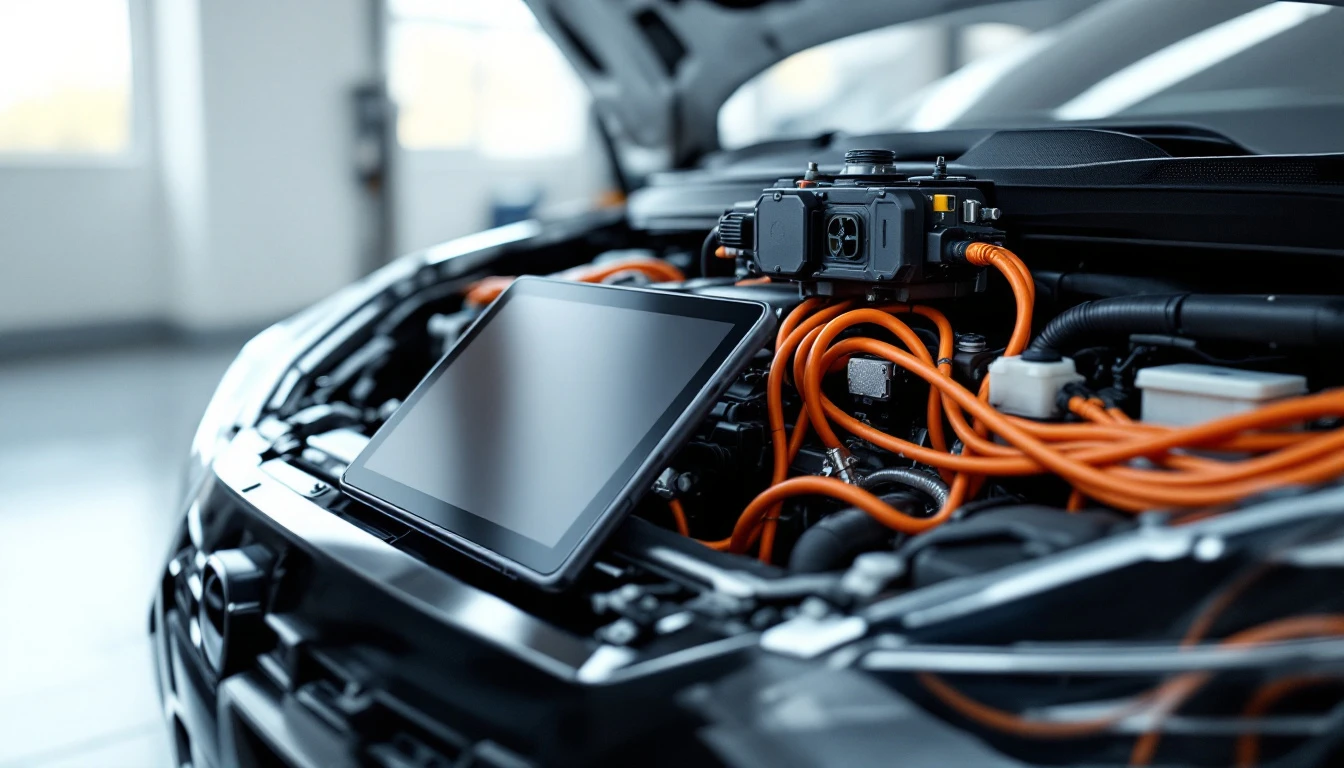
A Toyota Prius, Camry Hybrid or RAV4 Hybrid — or a Lexus RX or ES hybrid — that has just had a battery ECU or inverter assembly replaced will frequently do exactly one thing: sit there with the dash lit and the READY light stubbornly off. Nothing is broken. The hybrid vehicle control ECU simply has not been told that the new hardware belongs to this car. As of July 2026, the programming and registration work that resolves that in Fort Worth generally falls in the $150–$500 module programming band, with a used donor module requiring re-VIN work landing in the $325–$1,200 range.
Before going further, the boundary that matters most: we do the programming, registration and initialization side. High-voltage battery pack replacement and physical inverter replacement are hybrid-specialist and dealer work. Hybrid traction systems carry lethal voltage, and we would rather tell you plainly what we do and do not do than take on work outside our lane. What we bring is the module programming capability that makes replaced hardware talk to the rest of the car.
Quick Answer: Why a Replaced Hybrid Module Needs Registration
Toyota's hybrid architecture is built around mutual verification. Several computers each hold a piece of the picture, and the system will not enter READY unless every one of them agrees the hardware is legitimate, healthy, and part of this specific vehicle.
Replace one of those computers and you break the agreement. The new module has no VIN, no stored history, and no learned data about the pack it is now supervising. It reports itself as an unknown participant. The hybrid vehicle control ECU, which is the referee for the whole system, refuses to allow high-voltage contactor closure. No contactors, no traction power, no READY light.
Registration writes your vehicle's identity into the module. Initialization gives the system a clean, known starting point for the data the module is supposed to accumulate. Together they restore the agreement.
The Three Computers That Matter
Hybrid module names vary a little by model year and market, but three roles cover the great majority of programming work on these cars.
The Hybrid Vehicle Control ECU
This is the coordinator. It arbitrates between the gasoline engine, the two motor-generators, the transaxle, the brake system's regenerative blending, and the traction battery. It decides moment to moment how much of the demand is met by the engine and how much by electric drive, and it is the module that ultimately permits or denies READY.
Because it sits above everything else, a fault here produces symptoms that look like everything else. A car that will not enter READY, that enters READY and immediately drops out, or that runs the engine constantly and refuses to use electric drive can all trace back to this module or to the data it is receiving.
The Battery ECU (Battery Management Module)
Sometimes called the battery smart unit depending on generation, this module lives with the traction pack. Its job is to monitor and protect: it tracks voltage across the pack, temperature at several points, current in and out, and — critically — the condition of individual blocks of cells.
The pack is not treated as one giant battery. It is divided into blocks, and the battery ECU keeps running data on each. That is how the system detects a section that is drifting weak while the rest of the pack is fine, which is the normal aging pattern rather than a sudden total failure. This accumulated battery block data is genuinely valuable diagnostic information, and it lives in the battery ECU.
Which is exactly why replacing the battery ECU is not a simple parts swap. The new module arrives with none of that history. It has to be registered to the vehicle and initialized so the system starts collecting fresh, valid data instead of comparing against nothing or against a previous car's records.
The Inverter / Converter Assembly
The inverter converts the pack's high-voltage DC into the AC that drives the motor-generators, and back again during regeneration. The assembly also handles conversion down to the 12-volt system that runs the ordinary electronics.
Inverter assemblies carry their own control electronics and, on many applications, their own identity and calibration data. Replacing one frequently requires the vehicle to be told the new assembly is present and to run the initialization routine that establishes the system's baseline. Skip that and the READY light stays off, or the car enters a limited state.
The Safety Reality — Stated Plainly
This section is not boilerplate. Hybrid high-voltage systems are the one area of automotive electronics where getting it wrong is not an expensive mistake, it is a fatal one.
The traction pack and inverter operate at voltages far beyond anything in a conventional 12-volt vehicle. The orange cabling throughout the car marks high-voltage circuits, and it is orange precisely so that nobody opens it by accident. Proper procedure before any physical work near those systems involves removing the service plug to break the pack into two isolated halves, waiting the manufacturer-specified discharge period for the inverter's capacitors to bleed down, and then verifying isolation with properly rated equipment rather than assuming it.
None of that is something to improvise from a video. It requires rated gloves, rated meters, the correct procedure for the specific model, and the training to know what a failed isolation check looks like.
So here is our honest position. Programming, registration and initialization are work we do, and they are done through the vehicle's diagnostic interface — no high-voltage disassembly involved. Pack replacement, module physical replacement inside the high-voltage envelope, and inverter swaps belong with a hybrid specialist or the dealer. If you call us and the job is really the second category, we will say so and you will not be billed for finding that out.
What Programming and Initialization Actually Do
On the diagnostic side, a hybrid module job typically involves some combination of the following.
VIN registration. Writing your vehicle's identity into the replacement module so the network accepts it as a legitimate participant rather than an unknown device.
Configuration to the vehicle's build. Hybrid variants differ — pack chemistry and capacity, motor-generator specification, regenerative braking calibration, whether the car has certain optional systems. The module has to be configured for what your car actually is.
System initialization. Clearing the module's accumulated data to a known-good starting state so it begins collecting valid history for your pack rather than working from stale or foreign data. On battery ECU replacement this is the step that matters most.
Clearing inhibit codes across the network. A hybrid fault does not stay contained. When the system inhibits READY, several modules store related codes. Those have to be cleared in the right order after the underlying condition is resolved, or the inhibit persists.
Verification. Confirming the pack reports sane block voltages, temperatures read correctly, contactors close, the car enters READY, and the system holds through a full power cycle and a short drive.
Fort Worth Pricing Bands, As of July 2026
Ranges only, and the VIN determines the real number. Model, year, which module was replaced, and whether the module is new or used all move the figure.
| Hybrid module work | Mobile specialist | Notes |
|---|---|---|
| Battery ECU registration and initialization | $150–$500 | Plus the module cost |
| Hybrid vehicle control ECU programming | $150–$500 | Configuration to vehicle build included |
| Inverter assembly initialization after replacement | $150–$500 | Physical replacement not included |
| Used or donor hybrid module re-VIN | $325–$1,200 | Not available on every platform |
| High-voltage battery pack replacement | Not offered — hybrid specialist or dealer | Outside our scope by choice |
| Diagnosis when the READY light will not come on | Quote required after diagnosis | Confirms module vs pack vs wiring |
Anything outside these bands is quoted after diagnosis. We will not put a number on a job before we know what the car actually needs.
Why the READY Light Is the Single Best Diagnostic Clue
Owners describe hybrid faults in a dozen ways, but the READY light narrows things fast.
No READY at all, dash lights normal. The system is inhibited. Something in the high-voltage chain has not satisfied the vehicle control ECU. After a recent module replacement, unregistered or uninitialized hardware is the leading suspect. With no recent work, it points toward an actual fault in the pack, the contactors, or the isolation monitoring.
READY comes on, then drops out. Usually a condition that only appears under load or as temperatures change — a weak pack block, a thermal issue, or a contactor problem. Registration work does not fix this.
READY normal, but the engine never shuts off and electric drive is unavailable. The system has entered a protective limited mode. It is running as a conventional car because it does not trust the hybrid side.
Warning triangle with no other symptom. Codes are stored. This is the good case — the car is telling you something before it strands you, and a scan gives real information.
Reading which of these you have before parts get ordered saves a great deal of money. It is the same discipline described in our ECU programming explained guide: diagnose, then decide, then buy.
The Used-Module Question
Hybrid modules from donor vehicles are widely available, and the temptation is obvious given what new assemblies cost. The honest answer is: sometimes, and it depends on the platform.
A donor battery ECU or control module carries the previous vehicle's identity. Whether it can be re-registered to your car depends on how tightly that particular model year locks the module to its original VIN. Some platforms permit it cleanly. Others resist it, and on those the used part is a false economy — you spend money on hardware that will never be accepted.
Ask before you buy. We will tell you whether re-VIN is realistic on your specific model year, and if it is not, you have saved the cost of a module rather than discovering the problem in your driveway.
How a Hybrid Module Appointment Runs
It begins on the phone with your model, year and VIN, and — importantly — with what work has already been done. A car that has just come back from a shop with a new inverter needs something completely different from a car that has simply lost READY with no recent history.
At the vehicle, we start with a full network scan across every module, not just the hybrid ones, because inhibit conditions cascade. We read stored and pending codes, check the battery ECU's reported block data for anything obviously abnormal, and confirm whether the vehicle control ECU is refusing contactor closure and why.
If the job is registration and initialization, we connect a stable power supply before writing anything. Hybrid modules are as intolerant of voltage sag during a write as any engine module, and the 12-volt auxiliary battery on these cars is frequently the small one that has been quietly dying for months. With the supply steady, we register, configure, initialize, clear the network in the correct order, and then verify: contactors close, READY illuminates, block data reads sensibly, and everything holds through a power cycle.
If the diagnosis instead points at the pack itself or at hardware inside the high-voltage envelope, we tell you that and point you toward the right specialist. That is the honest outcome sometimes, and you are better served hearing it early.
Where Hybrid Work Meets Key and Immobilizer Work
Many of the hybrid owners who call us started with something simpler — a lost smart key, a fob that stopped working, or a push-button start that would not respond. On a Toyota or Lexus hybrid, a key problem and a hybrid-system problem can look identical from the driver's seat, because both end with a car that will not go.
If your issue turns out to be keys rather than hybrid modules, that is a very different and usually cheaper job. Our Toyota RAV4 and Camry spare key guide covers the Toyota side, and the Lexus smart key replacement guide covers Lexus. Sorting out which category you are in is the first thing we do on the phone. Broader engine and powertrain module work lives under ECU programming.
We serve Fort Worth and all of Tarrant County as a fully mobile automotive locksmith and computer programming specialist, operating under the Texas Department of Public Safety Private Security Bureau, and working only on vehicles you can prove you own. Call (817) 668-3801 with your model, year and VIN.
Frequently Asked Questions
How much does hybrid module programming cost in Fort Worth?
As of July 2026, programming or registering a replacement hybrid control or battery ECU generally falls in the $150–$500 module programming band, and a used donor module needing re-VIN work sits in the $325–$1,200 range. High-voltage battery pack replacement itself is a separate hybrid-specialist job that we do not quote.
Why does my Prius or RAV4 Hybrid have no READY light after a repair?
The READY light only illuminates when the hybrid vehicle control ECU is satisfied that every high-voltage component has reported in and passed its checks. A replaced battery ECU or inverter that has not been registered and initialized will not clear those checks, so the system stays inhibited and READY never appears.
Does a replacement hybrid battery ECU need to be programmed?
Yes, in almost every case. A replacement battery ECU arrives without your vehicle's identity and without the stored history of your pack, so it must be registered to the vehicle and initialized before the hybrid system will operate normally.
What is battery block data on a Toyota or Lexus hybrid?
The high-voltage pack is divided into blocks of cells, and the battery ECU tracks the voltage and state of each block over time. That accumulated block data is how the system spots an imbalanced or weak section of the pack, and a replacement ECU starts with none of it.
Is hybrid high-voltage work dangerous?
Yes. A hybrid traction battery and inverter carry voltages that are lethal, and the orange high-voltage cabling is not something to open casually. Proper service requires pulling the service plug, waiting the specified discharge period, and verifying isolation with rated equipment before anything is touched.
Do you replace hybrid batteries?
No. We handle the programming, registration and initialization side — the module work that makes replaced hardware talk to the vehicle. High-voltage pack replacement and inverter physical replacement are properly a hybrid specialist or dealer job, and we will tell you so rather than take on work outside our lane.
Do you come to me in Fort Worth for hybrid module programming?
Yes. We are fully mobile across Fort Worth and Tarrant County and bring programming tools and a stable power supply to the vehicle. Call (817) 668-3801 with your model, year and VIN so we can confirm what your car needs.
Get the READY Light Back On
A hybrid that will not enter READY after a module replacement is not a broken car — it is an unregistered one, and that is a fixable problem that does not require touching anything at high voltage. The trick is knowing which of the two situations you are actually in before parts and labor pile up.
Call (817) 668-3801 with your model, year and VIN. We come to you anywhere in Fort Worth and Tarrant County, run the diagnosis first, and give you a straight answer — including telling you when the job belongs with a hybrid specialist instead of us.
Written by the Fort Worth Locksmith & Computer Programming team — mobile hybrid control module registration and automotive computer programming across Fort Worth and Tarrant County.