VW Jetta & Passat Ignition Lock Cylinder and Switch Repair — Fort Worth
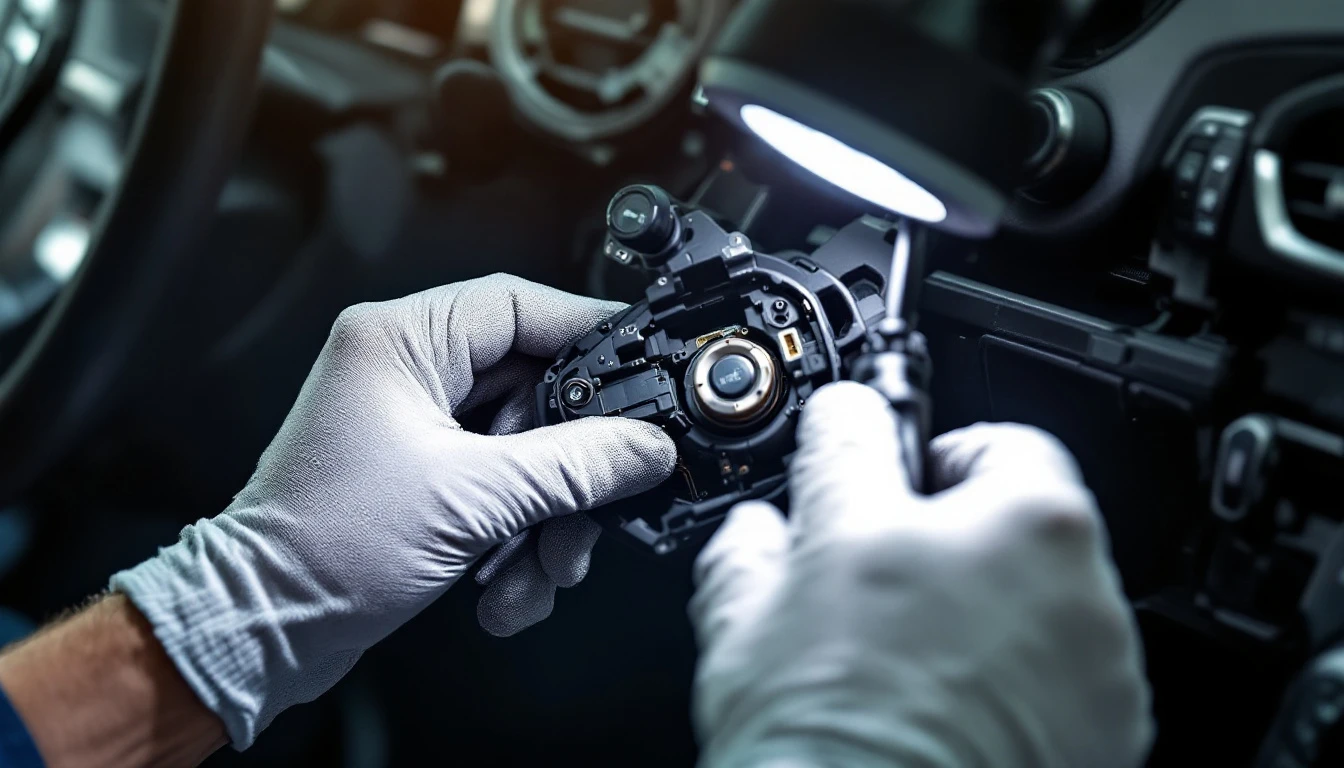
The Volkswagen ignition failure is one of the most recognizable jobs in this trade, because owners describe it in almost identical words: "it turns, but I have to fight it," or "it turns and the dash is dead," or "the key won't come back out of start." Those three complaints are three different failures inside the same assembly. As of July 2026, VW ignition repair itself is quoted after diagnosis — the price depends entirely on which half has failed — and if a key has to be made as part of the fix, a VW transponder key runs about $120–$250 while a proximity key runs $250–$650+.
This guide covers the MK5, MK6, and MK7 Jetta and the B6, B7, and B8 Passat — the generations that account for nearly all of the VW ignition calls we get in Fort Worth. It explains why the housing wears, what the separate electrical switch does, why the immobilizer antenna ring around the cylinder changes how the repair has to be approached, and how to tell which of the three failures you actually have. We are a mobile ignition repair and automotive computer programming specialist covering Fort Worth and Tarrant County.
Quick Answer: Three Failures, One Assembly
Everything people call "the VW ignition" is really a stack of parts, and the useful first question is what happens when you turn the key.
It will not turn, or only turns with effort and a particular wiggle. That is the mechanical half — the lock housing and cylinder. Wear in the housing lets the cylinder sit slightly off-axis, and eventually it binds.
It turns normally but the car has no power, or power that cuts out. That is the electrical half — a separate switch behind the cylinder. The mechanical part is doing its job and handing off to a switch that is no longer making reliable contact.
It turns to start and stays there, or the key will not come back out. That is the return mechanism, which is a mechanical fault of a different kind — the cylinder is not springing back from the momentary start detent.
It turns, the dash lights normally, but the engine will not run. That is not the ignition at all. That is the immobilizer or key credential side, and it is a different repair.
Sorting this before parts are ordered is the whole game. All four complaints get described as "bad ignition" by owners and by more shops than you would expect.
Why the VW Ignition Housing Wears
The mechanical portion of these ignitions has a well-earned reputation, and the reason is structural rather than mysterious.
The lock cylinder sits inside a housing mounted to the steering column, and the cylinder has to be held precisely concentric for the wafers to clear the shear line and for the drive tang at the back to engage cleanly. That alignment is maintained by the housing. Once the housing itself develops wear — or once a plastic locating feature loses its grip — the cylinder is free to sit fractionally off-center.
That tiny misalignment has an outsized effect. The wafers no longer present squarely, the drive tang at the rear no longer engages the electrical switch on axis, and the whole assembly starts fighting itself. What the driver experiences is a key that needs a specific angle, then a specific angle plus pressure, then a specific angle plus pressure plus a shove on the steering wheel.
Two things accelerate it.
Weight on the keyring. A key carrying fobs, house keys, and tags hangs mass off a cylinder that was designed for a key, and every bump on a Texas road drives that mass into the assembly as a lever. This is the single biggest controllable factor.
Key wear. The blade cuts wear shallower over the years. Survivable alone, but combined with a worn housing it becomes a cylinder that will not release.
The Progression Owners Recognize
It practically always goes in this order:
- Occasionally needs a jiggle.
- Reliably needs a specific angle.
- Needs the steering wheel rocked to unload the column lock.
- Sticks on the way back to OFF.
- Will not turn at all, in a parking lot, at the worst possible moment.
Stage two is the right time to fix it. Stage five is a car that needs a flatbed if you go the dealership route.
The Electrical Ignition Switch — The Half Behind the Cylinder
This is the part most owners do not know exists, and it explains an entire class of symptoms that make no sense otherwise.
When you rotate the lock cylinder, a drive tang at the rear turns the electrical ignition switch, a separate component that actually energizes the circuits: accessory, run, and start. The cylinder is a mechanical key-validation device. The switch is what turns things on.
When the switch fails, the mechanical side behaves perfectly and the electrical side does not. Symptoms include:
- The key turns to accessory and nothing comes on, or the radio works intermittently.
- The dash flickers or drops out while driving, especially over rough pavement.
- The engine cuts out on a bump and restarts if you jiggle the key.
- The key turns all the way to start and the starter never engages, with no click.
- Some circuits work and others do not in the same key position.
Any of those with a cylinder that turns freely points at the switch rather than the lock. It is a different part, a different price, and replacing the wrong one is a wasted repair. On a misaligned assembly, though, both can be involved at once — the cylinder wear that let things sit off-axis also chewed the switch's drive engagement. That is why proper diagnosis looks at the whole stack.
The Immobilizer Ring — Why VW Ignition Work Is Not Purely Mechanical
Here is the part that separates a VW ignition job from a plain lock repair on an older vehicle.
Encircling the lock cylinder is the immobilizer antenna ring — a coil of wire in a plastic carrier. When you insert the key, the ring energizes the passive transponder chip in the key head with a magnetic field. The chip has no battery; it draws its operating power from that field, then transmits back a credential. The immobilizer receives it, validates it against what it expects, and only then permits the engine control module to fuel and spark.
That has three practical consequences for ignition repair on a Jetta or Passat.
The ring has to be preserved or correctly re-fitted. Ignition hardware work happens with that antenna in the immediate work area. A ring that gets damaged, or that is left slightly out of position, produces a car that turns over and will not start — and the owner reasonably concludes that "the locksmith broke it." Careful handling is not optional.
The ring can fail on its own. A cracked coil or a broken lead means the key is never read. The symptom is a perfect mechanical ignition and a car that cranks but will not run — often intermittently at first, worse when cold or hot.
Coding may or may not carry over. Where the original key coding can be retained, your existing keys keep working after the repair. Where the assembly comes with new coding, keys have to be matched to it, which means transponder work as part of the job. Which case applies depends on the generation and the parts used, and it is settled during diagnosis, not guessed at.
For the electronic side in depth — key credentials, adaptation, and the immobilizer itself — see our Volkswagen immobilizer and key programming guide. On the newer MQB-platform cars, component protection adds a further layer that our Audi immobilizer repair guide covers, and it applies to VW as much as to Audi.
Generation Notes: Jetta MK5/MK6/MK7, Passat B6/B7/B8
Across these generations the architecture is broadly consistent — a mechanical cylinder in a column-mounted housing, an antenna ring, and a separate electrical switch — but the details shift.
The MK5 and MK6 Jetta, along with the B6 and B7 Passat, are the classic bladed-key cars where the housing-wear complaint is most familiar. These are the ones that generate the "needs a wiggle" progression described above, and where cylinder and switch work is the most common repair.
The MK7 Jetta and B8 Passat move onto the newer platform generation. Depending on trim and market, some of these carry keyless entry and push-button start, which changes the picture completely — there is no lock cylinder to wear out, and a no-start becomes a question of key detection, the start switch, the electric steering lock, or authentication. Component protection also becomes relevant on the newer architecture, which is why module-side work on those cars needs to be scoped carefully rather than assumed.
Trim and equipment matter as much as model year here, which is why we ask for the VIN before quoting anything.
Fort Worth Pricing, As of July 2026
Ignition repair is quoted after diagnosis, because the housing, the cylinder, and the electrical switch are three different repairs. What we can publish are the key ranges, since key work is frequently part of the job. Approximate figures; the VIN sets the exact number.
| Volkswagen work | Mobile locksmith | Notes |
|---|---|---|
| Transponder key cut and programmed | $120–$250 | Bladed Jetta and Passat generations |
| Proximity / push-to-start key | $250–$650+ | Later keyless-equipped models |
| Ignition lock cylinder or housing repair | Quote required after diagnosis | Depends on wear and which parts are involved |
| Electrical ignition switch replacement | Quote required after diagnosis | Separate part behind the cylinder |
| Immobilizer or antenna ring related no-start | $150–$350 | When the key turns but the engine will not run |
| Diagnosis on an unclear VW no-start | Quote required after diagnosis | Sorts mechanical from electrical from immobilizer |
A shop that quotes a firm ignition price before seeing the car is guessing. The honest answer before diagnosis is a range and a plan for narrowing it.
How We Diagnose a VW Ignition Complaint
The order matters, because each step eliminates a category.
Does the cylinder rotate. If not, mechanical. If yes, we move on and the immobilizer becomes a live possibility.
What happens electrically in each position. We check whether accessory, run, and start circuits energize as the cylinder moves through its detents. Circuits that fail to energize with a cylinder that turns cleanly point at the electrical switch. Circuits that come and go with vibration point there even more strongly.
Unload the steering lock. If the column was parked under tension against the wheel lock, the cylinder can refuse to turn while being perfectly healthy. Gentle rocking of the wheel while turning identifies this in seconds and saves an unnecessary teardown.
Check the key. Worn cuts are compared against the vehicle's original code. Occasionally a fresh key cut to code restores enough precision to buy real time on a cylinder that is worn but not finished.
Scan the network if the key turns and it still will not start. This tells us whether the transponder is being read at all, whether the immobilizer is authorizing, and whether some other module is inhibiting the start. If the transponder is never seen, the antenna ring or the key chip is the suspect. If the car will not accept keys at all, deeper immobilizer work — the territory covered by our VW immo-off service and our all-keys-lost immobilizer programming guide — comes into scope.
Only then do we commit to a part.
Why Mobile Repair Makes Sense Here
A VW with a failed ignition typically will not start, and a car that will not start has to be towed if you take it to a shop. That tow is real money before any repair begins, and on a car that is otherwise fine it is money spent on nothing.
Mobile ignition work removes it. We come to the car, diagnose it where it sits, and carry out cylinder work, switch replacement, key cutting, and any required transponder key programming in the same visit. For an ignition that has reached the "cannot turn it at all" stage in a parking lot, that is the difference between a same-day fix and a two-day ordeal.
We serve Fort Worth, Arlington, and Tarrant County as a fully mobile operation under the Texas Department of Public Safety Private Security Bureau, and we work only on vehicles you can prove you own. Call (817) 668-3801 with your year, model, and VIN.
Making the Next Ignition Last Longer
The wear pattern on these cars is well documented, which also means the countermeasures are known.
Get the vehicle key on its own ring. Nothing else is as effective. The lever arm of a loaded keyring is what drives housing wear in the first place.
Straighten the wheel before shutting off. A steering lock engaged under load is the most common reason a good cylinder refuses to turn, and it stresses the assembly every time you fight it.
Cut a fresh key when the old one looks rounded. A worn key accelerates wear on everything it touches. Compare your daily key against a spare kept in a drawer and the difference is usually obvious.
Do not push through the jiggle stage. Every forced turn on a binding cylinder removes material. Repairing at the first sign is a scheduled visit; repairing at the last sign is a recovery.
Frequently Asked Questions
How much does VW ignition repair cost in Fort Worth?
Ignition repair is quoted after diagnosis because the price depends on whether the housing, the lock cylinder, or the separate electrical switch has failed. If a key has to be made or programmed as part of the job, as of July 2026 a VW transponder key runs about $120–$250 and a proximity or push-to-start key runs $250–$650 or more.
Why won't my Jetta key turn in the ignition?
On these platforms it is usually wear in the lock housing and cylinder assembly rather than the key alone, though a worn key makes it worse. A steering lock loaded against the column will also stop rotation, which is why wiggling the wheel sometimes frees it.
My VW key turns but the car has no power to accessories — what is that?
That points to the electrical ignition switch, which is a separate component sitting behind the mechanical lock cylinder. The cylinder rotates fine, but the electrical half is no longer making clean contact, so the accessory or run circuits do not energize.
Why does my Passat key stay stuck in the start position?
The cylinder is not returning from the momentary start detent to the run position, usually because of wear in the return mechanism or binding in the housing. It leaves the starter engaged or the key trapped, and it should be repaired rather than worked around.
What is the immobilizer ring around a VW ignition?
It is the antenna coil that encircles the lock cylinder and reads the transponder chip in your key head. It energizes the chip and passes the response to the immobilizer, which is why ignition hardware work has to preserve or correctly re-fit that ring.
Will replacing my VW ignition cylinder mean new keys?
Not always. Where the original key coding can be retained, your existing keys keep working. Where the assembly is supplied with new coding, keys have to be matched to it, which means transponder programming as part of the repair.
Do you come out to Fort Worth for VW ignition work?
Yes. We are fully mobile across Fort Worth, Arlington, and Tarrant County and come to wherever the car is parked. Call (817) 668-3801 with your year, model, and VIN so we can confirm which generation and setup your VW uses.
Get Your Jetta or Passat Starting Again
The VW ignition problem is common enough that owners often assume the worst and start pricing dealership visits before anyone has established which half of the assembly failed. Frequently it is the cheaper half. Occasionally it is not the ignition at all.
Call (817) 668-3801 with your year, model, and VIN. We come to you anywhere in Fort Worth, Arlington, and Tarrant County, diagnose before quoting, and handle cylinder work, electrical switch replacement, and any transponder programming in a single visit — no tow required for most cars.
Written by the Fort Worth Locksmith & Computer Programming team — mobile Volkswagen ignition repair, key replacement, and immobilizer programming across Fort Worth, Arlington, and Tarrant County.