BMW Comfort Access & Mercedes Keyless-Go Programming (2026)
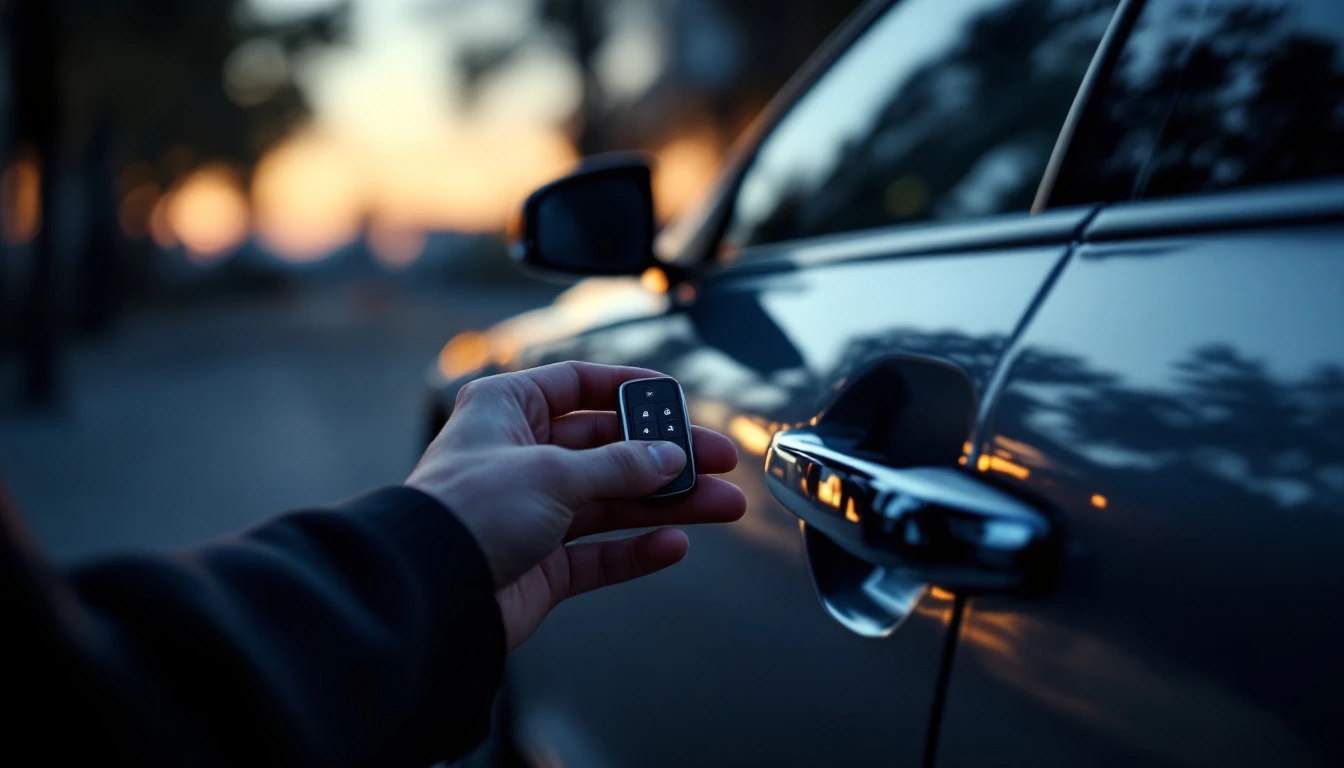
If you drive a BMW or a Mercedes-Benz, you already know the convenience of walking up with the key in your pocket, pulling the handle, and pressing start. BMW calls this system Comfort Access; Mercedes calls it Keyless-Go. Both are passive-entry, push-button-start systems, and both sit on top of some of the most sophisticated immobilizer architectures in the industry. That sophistication is exactly why replacing or adding one of these keys is a premium, specialized job — not a parking-lot cut-and-copy.
As of July 2026, this guide breaks down how Comfort Access and Keyless-Go actually work, the immobilizer systems behind them — BMW's CAS, FEM, and BDC families and Mercedes's FBS and EIS systems — and why these are honestly quote-after-diagnosis jobs. Whether you're a Fort Worth owner who lost both keys to a 5 Series, cracked the Keyless-Go fob on an E-Class, or bought a used X5 with a single remote, the goal here is to tell you the truth about what's involved before anyone quotes you a number.
How Passive Entry and Push-Button Start Work
Comfort Access and Keyless-Go do the same thing under two brand names. The vehicle continuously emits low-frequency signals around the doors and cabin. When your fob enters that field, it wakes, exchanges an encrypted challenge-and-response with the car, and — if the exchange checks out — authorizes unlocking as you touch the handle and starting when you press the button. The fob also carries a conventional radio-frequency remote for lock/unlock and, importantly, an immobilizer transponder that proves the key is authentic to the car's drive-authorization system.
That last piece is the heart of the matter. The remote and proximity features are about convenience; the immobilizer is about security, and it's what makes programming hard. A new fob doesn't just need to talk to the doors — it has to be trusted by the immobilizer as a valid key to start the engine. On BMW and Mercedes, that trust is enforced by hardened, encrypted control units, which is why credentialed tools and platform-specific know-how are required. Our smart key programming service is built around exactly this class of work.
BMW: CAS, FEM, and BDC Immobilizer Families
BMW's drive-authorization has evolved through several generations, and knowing which one your car uses is the first step in any key job.
- CAS (Car Access System). Found on a huge range of 2000s and 2010s BMWs (CAS2, CAS3, CAS3+, CAS4, CAS4+). The CAS module stores the key data and works with the immobilizer to authorize starting. Earlier CAS generations are frequently serviceable by a well-equipped independent specialist; the later CAS4+ tightened security significantly.
- FEM/BDC (Front Electronic Module / Body Domain Controller). BMW moved key and body functions into the FEM and later the BDC on newer platforms. These are more integrated and more secured. Working keys on FEM/BDC cars — especially all-keys-lost — can require careful, sometimes bench-level procedures.
BMW keys also tie into the vehicle's broader electronics, which is why BMW owners sometimes arrive with related module issues. If your no-start or lighting fault turns out to be a footwell or front-electronic module rather than the key, that's a different repair — see our BMW FRM repair service and the deeper technical walkthrough in BMW CAS/FEM/FRM programming and coding in Fort Worth. The ISN (Individual Serial Number) — the secret shared between the CAS/FEM/BDC and the engine computer — is central to BMW key work: adding or replacing a key means the new key must be aligned with that immobilizer data.
Mercedes: FBS and the EIS/EZS Ignition Module
Mercedes-Benz calls its drive-authorization system FBS (Fahrberechtigungssystem), and it works hand-in-hand with the EIS/EZS (Elektronisches Zündschloss — the electronic ignition switch module). When you insert a Keyless-Go key or bring it into range on a push-start car, the EIS is the gatekeeper that authenticates the key against the FBS data and releases the start.
Mercedes immobilizer generations matter just as much here:
- Earlier FBS3-era cars are often recoverable by an experienced specialist with the right tooling, even in tougher scenarios, though the work is meticulous.
- FBS4 cars — the newer platforms — are substantially hardened. All-keys-lost on FBS4 can require dealer programming or bench-level work with proper credentials, and honest specialists say so up front rather than over-promise.
Mercedes key faults also overlap with the EIS and, separately, the electronic steering lock (ELV/ESL) — a notorious Mercedes wear item that can cause a no-crank/no-start that looks like a key problem but isn't. Our Mercedes ELV steering lock repair service addresses that failure, and the full immobilizer picture is covered in Mercedes FBS/EIS/ELV programming in Fort Worth. The EIS data is to Mercedes what the ISN is to BMW: the security anchor a new key must be reconciled with.
Adding a Spare vs. All-Keys-Lost
Across both brands, the single biggest variable in cost and feasibility is whether you still have one working key.
Adding a Spare (Working Key Present)
This is the good scenario. With a valid key in hand, a specialist can frequently read or authenticate the immobilizer relationship and register an additional key. On many BMW and Mercedes model years this is the most straightforward path, often completed on site, and it lands in the smart-key pricing band rather than the open-ended luxury band. If you own one of these cars and only have a single fob, adding a spare before anything goes wrong is the smartest money you'll spend on the vehicle.
All-Keys-Lost (No Working Key)
All-keys-lost is where BMW and Mercedes fully earn their premium reputation. Without a working key to authenticate through, the specialist has to recover or reconstruct the immobilizer relationship — reading ISN/EIS data, working with the CAS/FEM/BDC or EIS/FBS as the platform allows, and on hardened newer cars potentially using bench-level methods or routing to the dealer. Because the answer genuinely varies by chassis and year, all-keys-lost on these brands is quoted after a diagnosis, never blind over the phone.
Why These Are Premium, Quote-After-Diagnosis Jobs
It's worth being direct, because it protects you from both overpaying and being lied to. BMW and Mercedes key work is premium for concrete reasons:
- Multiple immobilizer generations. A CAS3 BMW and a BDC BMW are different jobs; an FBS3 Mercedes and an FBS4 Mercedes are different jobs. Tooling support and procedures vary by generation.
- Hardened newest platforms. The current BDC and FBS4 cars are designed to resist exactly the kind of independent key generation that older cars allowed. Some are dealer-only for all-keys-lost.
- Credentialed, legitimate access. Doing this work correctly and legally on modern cars runs through frameworks like the National Automotive Service Task Force (NASTF) Secure Data Release Model. A shop promising to bypass a modern BMW or Mercedes instantly with no diagnosis and no credentials is a warning sign.
- High cost of getting it wrong. These are expensive vehicles with sensitive electronics. A careless approach can leave you worse off than when you started.
The honest bottom line: a technician confirms your exact chassis and year first. Older CAS and EIS cars are often recoverable by a capable independent specialist; some of the newest models require dealer or bench-level work, and a good specialist tells you which camp your car is in before quoting.
Dealer vs. Mobile Locksmith for BMW and Mercedes Keys
Both dealers and qualified mobile specialists can do this work; the trade-offs are cost, convenience, and — for all-keys-lost — whether the platform is independently serviceable at all. A BMW or Mercedes dealer typically bills two to three hours of bay labor at roughly $185–$260 per hour in DFW, plus the key hardware and any software-access fees, and you have to get the car there (a tow if you're all-keys-lost). A mobile specialist prices flat-rate for the service and comes to you — the Cultural District, Alliance, Southlake, Grapevine, or wherever the car is parked.
The table below compares common scenarios. Luxury all-keys-lost and newest-platform work is intentionally shown as quote-after-diagnosis rather than a fabricated flat figure.
| Scenario (BMW / Mercedes) | Mobile locksmith | Dealership | Notes |
|---|---|---|---|
| Proximity key, spare added | $250–$650+ | $400–$900+ | Working key present |
| All-keys-lost, older CAS/EIS | Quote after diagnosis | $500–$1,200+ | Often independently doable |
| All-keys-lost, BDC/FBS4 | Quote after diagnosis | Dealer/bench likely | Newest platforms hardened |
| Fob remote/battery/no-start diagnosis | $100–$300 | $150+ per hour | Confirms key vs. module fault |
| Related module fault (FRM, EIS, ELV) | Quote after diagnosis | Higher, bay labor | Not always a key at all |
The recurring theme: spare-key work on compatible platforms is where a mobile locksmith saves you the most versus the dealer, while true all-keys-lost on the newest cars is a diagnosis-first conversation with either party.
Fort Worth and DFW Local Context
A couple of North Texas realities shape these jobs. Weather is one. Fort Worth's storm season is tough on electronics-dense modules, and both the BMW body/front modules and the Mercedes EIS/ELV can develop faults after water intrusion — a flooded street, a clogged drain, a car left through a downpour. When that happens, a no-start can look like a dead key but really trace to a module. Mention any recent water exposure so the diagnosis checks the right thing.
Coverage is the other. Mobile luxury-key service runs across the metroplex — the TCU area and Cultural District, Camp Bowie, the Alliance corridor, and out to Arlington, Southlake, Keller, Colleyville, and Grapevine. If you're stranded, a mobile call means you're not towing a $60,000 car across the county to a dealer. Start with your city page — for example Fort Worth locksmith service — to confirm local coverage, and browse the make pages for BMW keys and Mercedes-Benz keys for model detail.
And the same buy-a-spare-now math applies here even more strongly than on mainstream brands: because all-keys-lost is the pricey, quote-after-diagnosis case, programming a spare while a working key exists is the cheapest protection you can get.
Frequently Asked Questions
How much does a BMW Comfort Access or Mercedes Keyless-Go key cost in Fort Worth?
A push-to-start proximity key for these platforms generally starts in the smart-key band of $250–$650 or higher, and luxury all-keys-lost work is quoted after diagnosis rather than pinned to a fixed number. BMW and Mercedes are premium platforms with secured immobilizer systems, so the price depends heavily on the exact chassis, model year, and whether one working key still exists. A short diagnosis is the only honest way to give you a real figure.
What's the difference between BMW Comfort Access and Mercedes Keyless-Go?
They are each manufacturer's name for the same idea: passive entry with push-button start, where the key stays in your pocket. Comfort Access is BMW's term and Keyless-Go is Mercedes's term. Under the surface they use different immobilizer architectures — BMW's CAS/FEM/BDC families and Mercedes's FBS/EIS systems — which is why programming approaches and tooling differ between the two brands.
Can a locksmith add a spare BMW or Mercedes proximity key?
On many model years, yes — adding a spare when a working key is present is the most doable scenario and often can be handled on site. The catch is platform age and security generation: the newest BMW BDC and Mercedes FBS4 cars are hardened, and some require bench-level or dealer programming. A technician confirms your exact chassis and year before promising an in-driveway spare.
Why are BMW and Mercedes keys 'quote-after-diagnosis' instead of a flat price?
Because these platforms span many immobilizer generations with very different security. A key on an older CAS3 BMW or an early EIS Mercedes is a different job from a current BDC or FBS4 car, and all-keys-lost changes the work again. Rather than quote a wrong number blind, a specialist runs a quick diagnosis to identify the exact system and then gives an accurate price.
What are CAS, FEM/BDC, FBS, and EIS?
They're the immobilizer and body-control systems that authorize starting. On BMW, CAS (Car Access System) was used on many 2000s–2010s cars, and FEM/BDC (Front Electronic Module / Body Domain Controller) followed on newer models. On Mercedes, FBS (Fahrberechtigungssystem, the drive-authorization system) works with the EIS/EZS ignition switch module. Key programming means authenticating against whichever of these your car uses.
Is all-keys-lost possible on a newer BMW or Mercedes?
Sometimes, but it is the hardest case and the most platform-dependent. Older CAS and EIS cars are frequently recoverable by a well-equipped specialist; the newest BDC and FBS4 platforms may require dealer programming or bench-level work with credentialed access. The honest process is a diagnosis first, then a clear answer on whether it's doable independently or has to route through the dealer.
Should I program a spare before I lose my only BMW or Mercedes key?
Absolutely. Because all-keys-lost on these luxury platforms is the expensive, quote-after-diagnosis scenario, adding a spare while you still have a working key is the cheapest insurance you can buy. It turns a potential worst-case emergency into a routine, lower-cost appointment.
Talk to a Fort Worth Luxury Key Specialist
BMW Comfort Access and Mercedes Keyless-Go keys are premium jobs done right — with the correct tooling, real credentials, and honesty about what your specific chassis and year allow. The right first step is a diagnosis that identifies your immobilizer system (CAS/FEM/BDC or FBS/EIS) and tells you whether it's a straightforward spare-add, a recoverable all-keys-lost, or a case that routes to the dealer.
For mobile BMW and Mercedes proximity-key programming across Fort Worth and the DFW metroplex, contact Fort Worth Locksmith & Computer Programming at (817) 668-3801 or get in touch through our contact page.