Mazda CX-5 & Mazda3 Ignition Switch and Lock Cylinder Repair — Fort Worth
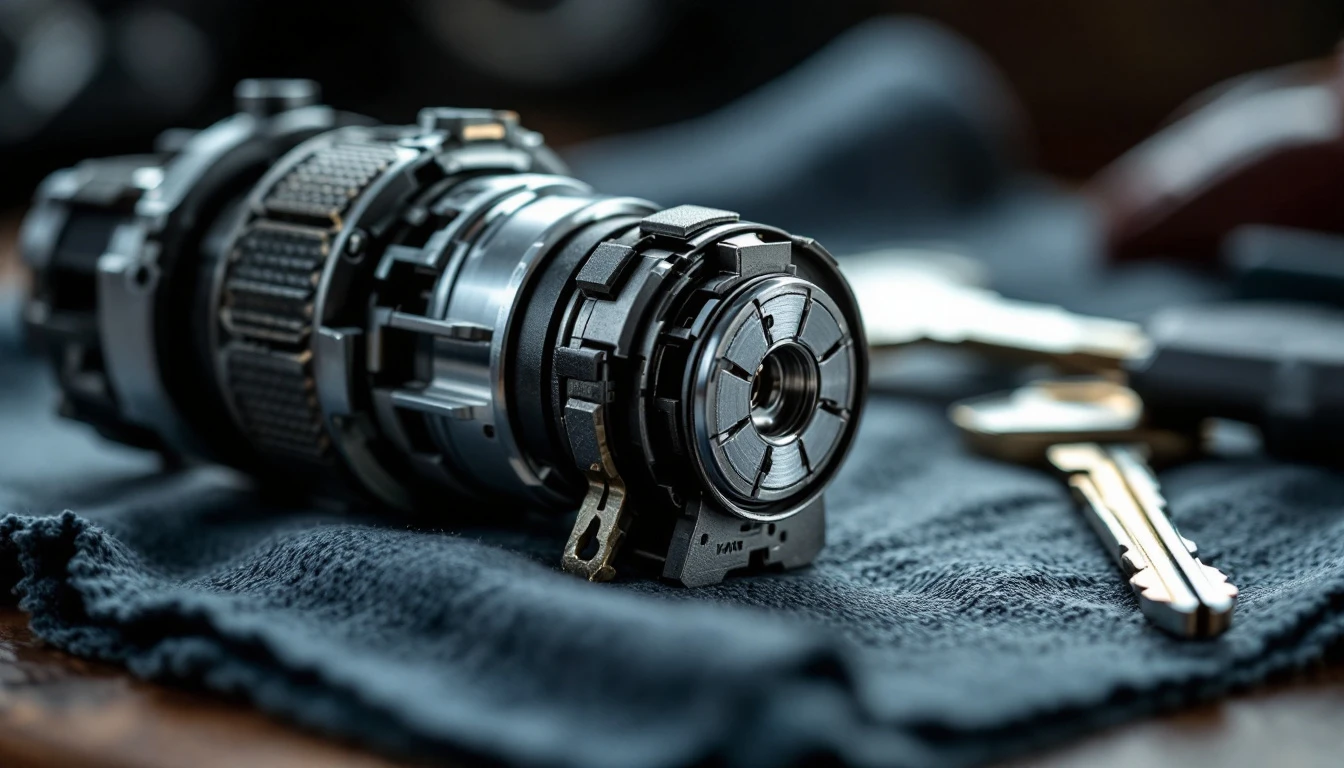
A Mazda CX-5 or Mazda3 that will not start splits into two completely different repairs, and the fork happens in about three seconds. Turn the key. If it rotates and the dash comes alive but the engine will not catch, you have an electronic problem — key authentication or immobilizer. If the key will not turn at all, you have a mechanical problem in the ignition lock cylinder, and no amount of computer work will help. As of July 2026, ignition repair itself is quoted after diagnosis, and if a new key is part of the fix, a Mazda transponder key runs about $120–$250 while a push-to-start smart key runs $250–$650+.
This guide walks through both paths on the CX-5 and Mazda3 — how the wafer cylinder wears out, why a key gets stuck, what changes on Advanced Keyless Entry and Start cars where there is no mechanical ignition at all, and how to tell which category you are in before anyone opens a steering column. We are a fully mobile ignition repair and automotive computer specialist covering Fort Worth and Tarrant County.
Quick Answer: Which Kind of Mazda No-Start Do You Have?
The single most useful diagnostic on these cars costs nothing.
Key turns, engine does not start. Mechanically the ignition is fine. The car is refusing to run because the security system has not authorized it, because the key's transponder is not being read, or because something else in the start chain has failed. This is electronic work.
Key will not turn, or turns hard, or gets stuck. The lock cylinder is the problem. The internal wafers are worn, the key is worn, something is binding, or the steering lock is loaded. This is mechanical work and the immobilizer is irrelevant.
Push-button car, nothing happens on the button. There is no cylinder to blame. The fault is in the start switch itself, in the electric steering lock, in key detection, or in the chain that has to line up before a start is permitted.
Getting this right first matters because the two paths cost different amounts and involve different parts. We have seen owners buy keys for a car whose cylinder was simply worn out, and we have seen columns opened on cars whose real problem was a dead fob battery.
How a Mazda Ignition Lock Cylinder Actually Wears Out
The bladed-key CX-5 and Mazda3 use a wafer-tumbler cylinder. Inside the housing sits a plug with a stack of flat spring-loaded wafers. Push the correct key in and each wafer is lifted or lowered to sit flush with the plug's outer surface, clearing the shear line so the plug can rotate. Rotate the plug and it drives the mechanical portion of the switch and releases the steering lock.
It works beautifully when everything is within tolerance. Wear ruins tolerance from both directions at once.
The key wears down. Brass and nickel-silver key blanks are softer than the steel wafers they push against. Every insertion drags the cuts across the wafer edges. After enough years and enough turns, the cut depths on the key are measurably shallower than when it was new — especially if it lives on a heavy keyring.
The wafers wear too. Repeated contact rounds their edges and the springs lose tension.
Individually neither is fatal. Together they stack: a slightly shallow key lifting slightly rounded wafers no longer positions everything cleanly at the shear line. The plug binds. You wiggle it and it goes. Then one day it does not.
Why the Heavy Keyring Matters
This is worth calling out because it is preventable and because owners rarely believe it. A key carrying a fob, a house key, a gym tag, and a bottle opener hangs several ounces off a plug supported by small bearing surfaces. Every bump on a Fort Worth road transmits that mass into the cylinder as a lever. Over years it accelerates plug wear and can eventually cause the whole assembly to sit off-axis. Drivers who keep the vehicle key on its own ring genuinely get more life out of the cylinder.
The Symptom Progression
Cylinder failure almost never happens overnight. The sequence is:
- The key needs a bit of jiggling to turn, occasionally.
- You find a specific angle or pressure that "works."
- It only turns with the wheel wiggled to unload the steering lock.
- It will not come back to OFF cleanly, and the key sticks.
- It will not turn at all.
If you are at stage two or three, you are on borrowed time. Fixing it at that point is a scheduled repair. Fixing it at stage five is a car that will not move.
Key Stuck in the Ignition
A key that goes in and turns but will not come back out is its own complaint and has a couple of distinct causes.
The cylinder is not returning fully to OFF. The plug has to rotate all the way back to a specific detent before the key can withdraw. A binding wafer, a worn detent, or a weak return spring leaves it a few degrees short, and the key is trapped.
The shifter interlock has not released. The car must believe it is in Park before the key is allowed out. If the interlock solenoid, the park switch, or the linkage is not reporting Park, the key stays put. On this one the fix is not the cylinder at all — a real diagnosis saves an unnecessary part.
Either way, the wrong move is force. Pliers and yanking round out the plug, snap key blades, and turn a moderate repair into a bigger one. A snapped blade left in the cylinder is a considerably worse day than the one you started with.
Advanced Keyless Entry and Start: There Is No Cylinder to Blame
On push-button CX-5 and Mazda3 models with Advanced Keyless Entry and Start, the mechanical ignition is gone entirely, and the mental model has to change with it.
Pressing the button does not connect anything. It requests a start. Before the car complies, several things have to be true: the key fob has to be detected inside the cabin by the antenna array, the fob's credential has to authenticate against the immobilizer, the brake pedal has to be depressed, the shifter has to report Park, and the electric steering lock has to release.
That last one is the piece owners never expect. Even without a key cylinder, the steering column still locks — it is just done by a small electrically actuated unit that receives a release command. If it does not release, or does not report that it released, the car will not start, and the symptom from the driver's seat is identical to a dead battery or a bad button.
So a push-button no-start could be any of:
- A dead or failing fob battery, which is the cheapest and most common cause and always worth eliminating first.
- Interference — some phones, tablets, and even other fobs stacked against the key can block detection.
- A start button that has physically failed after tens of thousands of presses.
- The electric steering lock failing to release.
- A key that has genuinely lost its programming or a receiver that is not reading it.
- Brake switch or Park position not reporting correctly.
Most cars provide a backup: holding the fob against or near a specified spot on the column or dash lets the system read the transponder directly at close range even with a flat fob battery. If that gets your car started, you have learned something valuable — the fob's battery or its long-range transmission is the fault, not the vehicle.
The immobilizer and key-authentication side of Mazda's system is covered in more depth in our Mazda smart key and immobilizer programming guide.
The Diagnostic Path We Actually Follow
Ignition complaints get misdiagnosed more than almost anything else, so the sequence matters.
Step one: does it turn or not. On a bladed car, that single question sorts mechanical from electronic and eliminates half the possibilities immediately.
Step two: check the key itself. We compare the key against its expected cut depths. A visibly worn key on a cylinder that still has decent wafers can sometimes be resolved by cutting a fresh key to the vehicle's original code rather than replacing hardware — the cheapest good outcome available on these cars.
Step three: unload the steering lock. If the column is under tension because the wheel was turned against the lock when the car was parked, gentle side-to-side pressure on the wheel while turning the key often frees it. That is not a repair, but it tells us the cylinder still functions and the complaint is really a loading issue.
Step four: scan the network on an electronic no-start. If the key turns and the dash lights but nothing fires, a scan tells us whether the immobilizer is authorizing, whether the key is being read, and whether some other module is inhibiting the start. Body-side faults can produce exactly this picture, which is why our BCM programming near me comparison is worth reading if the symptoms wander across systems.
Step five: commit to the repair. Only after the above do we decide between a fresh key, a cylinder repair or replacement, an electrical switch, or module-side work.
Fort Worth Pricing, As of July 2026
Ignition work itself is quoted after diagnosis, because a worn cylinder, a failed electrical switch, and an immobilizer fault are three different jobs at three different prices. What we can publish are the key ranges, since keys are frequently part of the repair. All figures are approximate and the VIN sets the exact number.
| Mazda work | Mobile locksmith | Notes |
|---|---|---|
| Transponder key cut and programmed | $120–$250 | Bladed CX-5 and Mazda3 models |
| Push-to-start smart key | $250–$650+ | Advanced Keyless Entry and Start |
| Ignition lock cylinder repair or replacement | Quote required after diagnosis | Depends on wear and what else is involved |
| Electrical ignition switch replacement | Quote required after diagnosis | Separate part from the cylinder |
| Immobilizer or module-side no-start work | $150–$350 | When the fault is electronic, not mechanical |
| Diagnosis on an unclear no-start | Quote required after diagnosis | Sorts mechanical from electronic before parts |
If a shop gives you a firm ignition price over the phone without knowing which of these you have, treat it with suspicion. The honest answer before diagnosis is a range and a plan.
Cylinder Versus Electrical Switch: Two Parts, One Assembly
A point of confusion worth clearing up. What people call "the ignition" on a bladed Mazda is really two components stacked together.
The lock cylinder is the mechanical half — the plug, the wafers, the part your key goes into. It fails from wear and produces "will not turn" and "key stuck" complaints.
The electrical switch is the half behind it. Rotating the cylinder drives this switch, which is what actually energizes accessory, run, and start circuits. It fails from electrical wear on its internal contacts, and it produces a completely different symptom set: accessories that cut out when the key is in a position they should work in, a dash that flickers, a car that dies when you hit a bump, or a crank that never happens even though the key turned all the way.
Diagnosing which half has failed determines which part gets replaced. Ford owners see a nearly identical split, which our Ford ignition lock cylinder repair guide covers from that platform's angle — the failure physics are the same even though the parts are not.
Why Mobile Repair Fits This Job
A Mazda with a failed ignition is, by definition, a car that will not start — which means the shop route begins with a flatbed. That tow frequently costs a meaningful fraction of the repair itself.
Mobile ignition work skips it. We come to wherever the car sits, do the diagnosis there, and carry out cylinder work, switch work, key cutting, and programming on site. If a fresh key is part of the answer, that gets handled in the same visit through our transponder key programming or smart key programming capability rather than a second appointment.
We cover Fort Worth, Arlington, and the rest of Tarrant County, fully mobile, operating under the Texas Department of Public Safety Private Security Bureau, and we work only on vehicles you can prove you own. Call (817) 668-3801 with your year, model, and VIN.
Preventing the Next One
Three habits genuinely extend the life of a Mazda ignition.
Get the key off the heavy ring. The single highest-value change, and it costs nothing.
Replace a visibly worn key before the cylinder gives up. If your key's cuts look rounded and shallow compared to a spare that has lived in a drawer, a fresh key cut to the vehicle's code takes load off the wafers and can add years.
Park with the wheel unloaded. Straightening the wheel before shutting off keeps the steering lock from jamming against the column, one of the most common reasons a healthy cylinder refuses to turn.
Stop when it gets hard. The jiggle-to-start stage is a warning, not a workaround. Repairing then is a planned appointment. Waiting is a car stuck in a parking lot.
Frequently Asked Questions
How much does Mazda ignition repair cost in Fort Worth?
Ignition work is quoted after diagnosis because the price depends entirely on whether the fault is a worn cylinder, a failed electrical switch, or an immobilizer problem. If a new key has to be made as part of the repair, as of July 2026 a Mazda transponder key runs about $120–$250 and a push-to-start smart key runs $250–$650 or more.
Why won't my Mazda3 key turn in the ignition?
The most common cause is worn wafer tumblers inside the lock cylinder combined with a worn key, so the two no longer line up well enough to release the sidebar. A bent or damaged key, or a steering lock loaded against the column, can also stop rotation.
My key is stuck in the ignition — what does that mean?
A key that will not come back out usually means the cylinder is not returning fully to the OFF detent, either because a wafer is binding or because the shifter interlock is not releasing. Forcing it makes the wear worse, so it is better to stop and have it checked.
Do push-to-start Mazdas have an ignition switch?
Not a mechanical one. On Advanced Keyless Entry and Start models the start button is an electronic switch that requests a start, and the mechanical steering lock is a separate electrically actuated unit. A no-start on these cars is usually the button, the steering lock, or key authentication rather than a cylinder.
Is it the ignition cylinder or the immobilizer on my Mazda?
The simplest test is whether the key turns. If the key physically rotates and the dash lights up but the engine will not start, the fault is electronic — key authentication or immobilizer. If the key will not rotate at all, the problem is mechanical and the immobilizer is not involved.
Can a locksmith repair a Mazda ignition without towing the car?
In most cases, yes. Cylinder and switch work on the CX-5 and Mazda3 is done at the vehicle, and any key that has to be made or programmed as part of the repair is handled on site. That avoids a tow on a car that will not start.
Do you come out to Fort Worth and Arlington for Mazda ignition work?
Yes. We are fully mobile across Fort Worth, Arlington, and Tarrant County and come to wherever the car is parked. Call (817) 668-3801 with your year, model, and VIN and we will confirm which system your Mazda uses.
Get Your Mazda Turning Again
Whether your CX-5 key stopped turning in a grocery store parking lot or your Mazda3 has been getting harder to start for months, the fix begins with the same question: does the key turn or not. Answer that, and the repair path is clear.
Call (817) 668-3801 with your year, model, and VIN. We come to you anywhere in Fort Worth, Arlington, and Tarrant County, diagnose before we quote, and handle cylinder work, switch work, and any key programming in the same visit — no tow required for most cars.
Written by the Fort Worth Locksmith & Computer Programming team — mobile Mazda ignition repair, key replacement, and immobilizer programming across Fort Worth, Arlington, and Tarrant County.