Diesel ECM/PCM Programming Fort Worth — Power Stroke, Duramax, Cummins (2026)
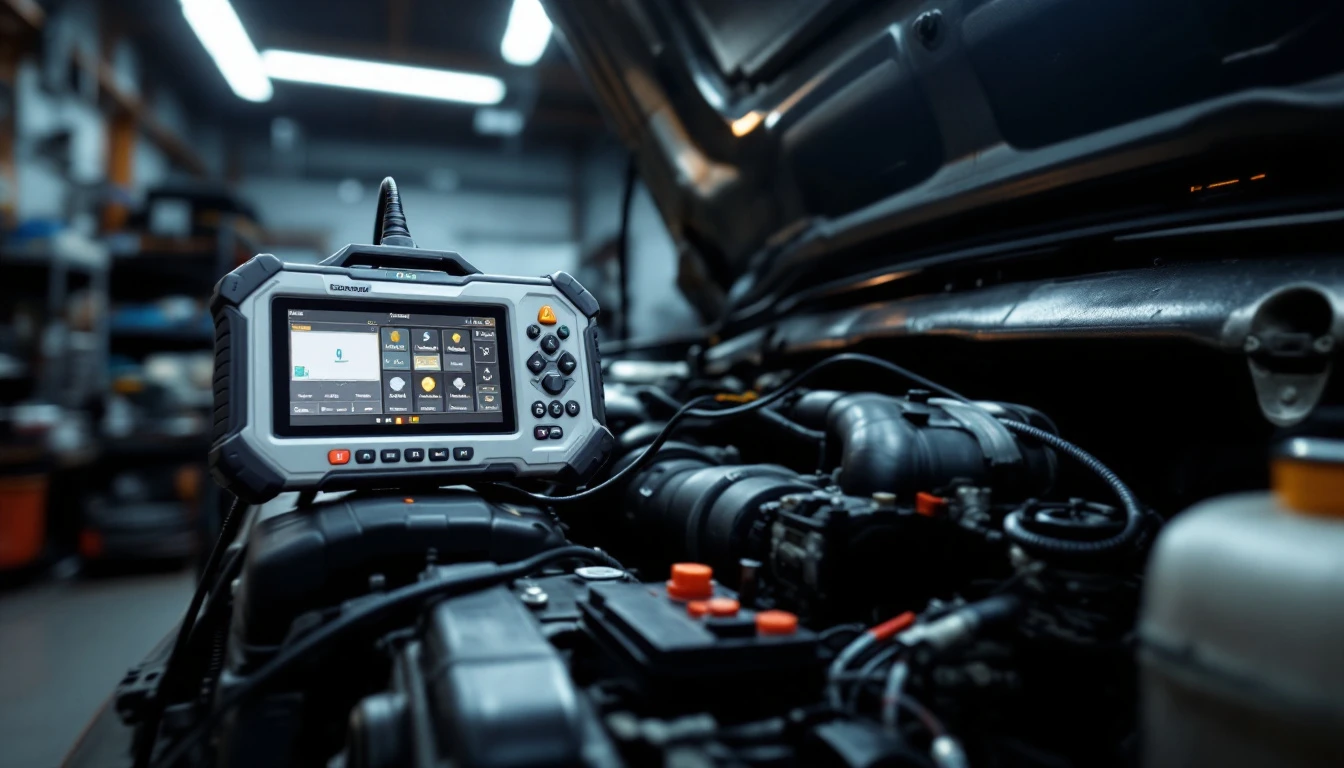
Diesel trucks in Fort Worth work hard — hauling trailers up I-35W, running job sites in Alliance, and idling through Texas summers — and the modules that manage them are under constant thermal and electrical stress. When the Engine Control Module (ECM) or Powertrain Control Module (PCM) on a Ford Power Stroke, GM Duramax, or Ram Cummins fails, gets water-damaged, or has to be swapped, the replacement module has to be programmed and matched to the specific truck before the engine will run reliably.
As of July 2026, diesel module programming remains a specialist service that most quick-lube shops and general repair garages can't perform. This guide explains what diesel ECM/PCM programming actually involves across the three big platforms, when your truck needs it, how a mobile session works in your driveway, and — importantly — where the legal line sits on emissions. If you're weighing a dealership quote against a mobile ECU programming service, the detail below shows why the work costs what it costs.
Power Stroke, Duramax, Cummins: Three Platforms, Three Approaches
Diesel programming isn't one job. The three dominant platforms in DFW each have their own module architecture, their own OEM gateway, and their own quirks.
Ford Power Stroke (6.0L, 6.4L, 6.7L)
Ford diesels use a PCM for overall powertrain control, and the 6.0L generation adds a separate Fuel Injection Control Module (FICM) that drives the injectors at high voltage. A no-start on a 6.0L Power Stroke frequently traces to a failed FICM rather than the PCM — the FICM is a notorious failure point, especially after heat cycling and voltage spikes. A replacement PCM on a 6.7L Super Duty needs its calibration, VIN, and PATS immobilizer data loaded through Ford's service tooling before the truck starts. Ford key and PATS work overlaps here; our Ford key programming page covers the immobilizer side.
GM/Chevy Duramax (LB7, LLY, LBZ, LML, L5P)
The Duramax line spans the early LB7 (2001–2004) through the current L5P (2017+). Older Duramax ECMs are relatively straightforward to program and re-VIN with the right tool; the L5P was a deliberate step change — GM hardened the ECM against tampering, and it requires GM's Service Programming System with live server access for a proper flash. A replacement L5P ECM is not a plug-and-play part. GM key and module work ties into our Chevrolet key programming coverage.
Ram Cummins (5.9L, 6.7L)
The 5.9L Cummins (through 2007) and the 6.7L Cummins (2007.5+) use an ECM plus, on many years, a separate Fuel Injection Control unit and the SGW (Security Gateway Module) on 2018+ Stellantis trucks. That gateway means any protected function on a late-model Ram Cummins requires authenticated access. A replacement Cummins ECM has to be flashed with the correct calibration and paired to the truck's SKREEM/WCM immobilizer. Ram-specific work lives on our Ram key programming page.
When Your Diesel Actually Needs ECM/PCM Programming
Module Replacement After Failure or Water Damage
Fort Worth's thunderstorm season and the low-mounted position of many diesel modules make water intrusion a real risk. A water-damaged ECM presents as intermittent no-start, random stalls, injector-driver faults, or a dash full of warning lights with no clean code pattern. Replacement is the fix, but the new module must be programmed with the truck's VIN, mileage, calibration file, and immobilizer pairing before it will run. This is core module programming work.
Used Module From a Donor Truck
Diesel modules are expensive from the dealer, so pulling a working ECM from a salvage-yard donor is a common cost-saving move. The catch: the donor module carries its previous truck's VIN, mileage, and immobilizer data. To work in your truck, it has to be re-VINed — re-flashed with your VIN, your mileage, and your security codes. Many Power Stroke, Duramax, and Cummins modules support this; some newer ones lock to the original VIN and need bench-level EEPROM work. We cover this in depth in our guide to used ECM/PCM re-VIN programming.
TSB Reflash and Calibration Updates
Manufacturers issue Technical Service Bulletins calling for ECM/PCM firmware updates to address driveability, emissions monitors, transmission shift quality, or regen behavior. The dealer performs these under warranty; out of warranty, an independent specialist can load the same current calibration file through the OEM portal. For the general "why calibrations change" background, our ECU programming explained post is a good primer.
FICM Replacement (Ford 6.0L)
A failing FICM on the 6.0L Power Stroke causes hard cold starts, rough idle, misfires, and eventually a no-start. A replacement or rebuilt FICM generally needs the correct calibration loaded so injector timing matches the engine. Because a 6.0L no-start can come from either the FICM or the PCM, diagnosis before parts is non-negotiable.
The Emissions Line: What Legitimate Programming Will and Won't Do
This deserves its own section because it's where diesel owners get bad advice. Under the federal Clean Air Act §203, it is illegal to manufacture, sell, install, or use a device that defeats or removes a vehicle's emissions controls — that includes "delete" tunes that disable the diesel particulate filter (DPF), exhaust gas recirculation (EGR), or selective catalytic reduction (SCR/DEF) systems. The EPA has pursued enforcement actions against both tuners and installers.
A legitimate diesel programming service preserves every factory emissions control. Replacement programming, used-module re-VIN, and TSB reflashes all keep the truck exactly as compliant as it left the factory. If a shop offers to "delete" your emissions equipment for more power, understand that it exposes you to federal penalties, fails Texas inspection where applicable, and tanks resale on a truck a dealer won't touch. Any performance discussion we have stays inside emissions-intact limits — see our performance tuning page for what's actually legal. The honest answer is that legitimate gains on a stock-emissions diesel are modest, and anyone promising huge numbers is describing a delete.
How a Mobile Diesel Programming Session Works
A mobile diesel programming specialist arrives with three things: a programming-capable diagnostic tool (Autel MaxiSys Ultra, a platform OEM tool like Ford IDS/FDRS, GM MDI2, or a professional bench setup), a live internet connection for OEM server authorization, and a high-amperage bench power supply — 50–70 amps minimum. That power supply matters more on diesels than gas engines because diesel trucks draw hard and a mid-flash voltage drop below roughly 12.5V can permanently brick the module.
The workflow: connect to the OBD-II port, identify the truck and target module, pull the correct calibration from the OEM server or licensed library, initiate the flash, and monitor for 15–45 minutes depending on file size. On gateway-protected platforms (2018+ Ram/Stellantis SGW, GM L5P, current Ford), the tool completes a real-time security authorization through the manufacturer's gateway — an extra step that requires NASTF Secure Data Release credentials. After the flash, a fresh DTC scan verifies a clean write, adaptations are reset, and the truck is test-started before the technician leaves.
DFW 2026 Pricing: Mobile vs Dealer Diesel Programming
| Service | Mobile specialist | Dealership | Notes |
|---|---|---|---|
| Replacement ECM/PCM programming | $175–$475 | $525–$850 | Plus module cost |
| TSB reflash / calibration update | $150–$325 | $350–$525 | No charge under warranty |
| Used module re-VIN (Power Stroke) | $325–$650 | Often refused | Platform-dependent |
| Used module re-VIN (Duramax/Cummins) | $350–$900 | Often refused | Some require bench EEPROM |
| FICM programming (6.0L Power Stroke) | $175–$350 | $400–$600 | Separate from PCM |
| ECM + immobilizer pairing combo | $325–$650 | $650–$1,100 | Multi-step sequence |
Two notes on this table. First, a used-module re-VIN is something most dealerships won't perform at all — they only program brand-new modules sold through their parts counter, so the salvage-yard savings are only available through an independent specialist with the right bench tools. Second, dealership diesel programming typically bills 2–3 hours of bay labor at $185–$260/hr in DFW plus the module and a per-flash software fee, which is why dealer totals run 40–70% higher. Mobile pricing is flat-rate with no bay overhead. Luxury or unusual imports and the very newest locked platforms are quoted after diagnosis rather than pinned to a flat number.
Why Diesel Programming Needs Specialized Equipment
A regular code reader can only read stored trouble codes and live data — it has zero programming capability. Full diesel programming requires a programming-capable tool that's a $4,000–$15,000 investment, plus OEM software subscriptions running $1,200–$3,500 per year per manufacturer. Add the NASTF gateway credentials, a heavy-duty power supply rated for diesel current draw, and platform-specific bench tools for the EEPROM jobs the OBD route can't reach, and it becomes clear why this isn't a corner-shop service.
Voltage stability is the make-or-break variable. Diesel trucks with dual batteries, high accessory loads, and long crank cycles are exactly the vehicles where an under-supported flash goes wrong. Any reflash longer than five minutes runs off a stable bench supply clamped to the battery terminals — full stop. That single discipline is the difference between a clean job and a bricked module recovery.
Common Diesel Module Failures Around Fort Worth
FICM failure on the 6.0L Power Stroke is the classic. Heat cycling and voltage spikes degrade the internal power supply, giving hard starts and misfires that worsen over time. A rebuilt or replacement FICM with the correct calibration usually solves it — after confirming the PCM and injectors are healthy.
L5P Duramax ECM lockouts happen after improper programming attempts with the wrong tool. GM's hardened ECM will refuse further access, and recovery requires proper SPS server authorization. This is not a DIY-tool platform.
Ram Cummins SGW headaches on 2018+ trucks surface when someone tries a protected function without gateway access — the module simply won't respond. Legitimate access through the security gateway resolves it.
Water-intrusion ECM failure across all three brands shows up after Fort Worth storm flooding, from Benbrook to North Richland Hills. A corroded connector is sometimes repairable at a fraction of replacement cost, which is why a proper diagnosis pays for itself. General automotive electronic work is covered on our automotive locksmith page.
What to Do Right Now
If your diesel has intermittent stalls, a no-start after water exposure, or a dash full of unrelated codes, get the modules diagnosed before assuming worst-case replacement. If you're sourcing a used ECM from a salvage yard, ask whether re-VIN is supported on your exact model year before you pay for the donor module — some newer platforms block it without bench work. And if a dealership quoted you $900+ for a diesel programming job, a second opinion from a mobile specialist frequently comes in 40–60% lower on real DFW jobs. Serving Fort Worth, Arlington, and the surrounding metroplex, we carry programming-capable tools with current OEM subscriptions across Ford, GM, and Ram diesel platforms.
Frequently Asked Questions
Can you program a diesel ECM or PCM at my location in Fort Worth?
Yes. Mobile diesel ECM/PCM programming is available across Fort Worth and the DFW metroplex, provided the truck has a stable battery and the module has live OEM server access when the platform requires it. Most replacement and reflash jobs are completed in your driveway or at a job site. A high-amperage power supply is used to hold voltage during the flash.
Do you offer delete or defeat-device tuning for diesels?
No. Under the EPA Clean Air Act, tampering with or removing factory emissions controls is prohibited, and legitimate programming preserves the DPF, EGR, and SCR systems. We perform replacement programming, used-module re-VIN, and TSB reflashes that keep the truck emissions-compliant. Any tuning we discuss stays within legal, emissions-intact limits.
How much does diesel PCM programming cost versus the dealership?
Mobile diesel ECM/PCM programming generally runs $150–$500 depending on the platform and whether it is a reflash or full replacement, plus the module cost. A used-module re-VIN is typically $325–$1,200. Dealerships are usually 40–70% higher because they bill 2–3 hours of bay labor at $185–$260 per hour in DFW plus software-access fees.
Can a used ECM from a salvage yard be programmed into my diesel truck?
Often, yes. Many Ford, GM, and Ram diesel modules can be re-VINed to your truck with the right bench and OBD tools, which saves the cost of a new OEM module. Some newer platforms lock the module to its original VIN and require bench-level EEPROM work. A technician confirms whether re-VIN is supported on your exact model year before you buy the donor module.
What is a FICM and does it need programming after replacement?
The Fuel Injection Control Module (FICM) on the 6.0L Power Stroke drives the injectors and is a common failure point. A replacement FICM generally needs the correct calibration loaded so injector timing matches the engine. It is a separate module from the PCM, so a no-start on a 6.0L can trace to either one, which is why diagnosis comes first.
Why does replacement module programming need an internet connection?
Most modern diesel reflashes pull the current calibration file and a security-access token from the manufacturer's server in real time — Ford, GM, and Stellantis all gate protected functions this way. Independent specialists use NASTF Secure Data Release credentials to access those gateways legally. Without live authorization, the flash cannot complete even with the right hardware.
Will programming fix a no-start on my diesel, or do I need parts first?
Programming only helps if the root cause is a module that needs a calibration, re-VIN, or reflash. A no-start can also come from fuel supply, injectors, batteries, wiring, or a failed sensor. That is why a proper diagnosis comes before any module is ordered — replacing and programming the wrong part is the most expensive mistake on a diesel.