2026: Dealer vs. Locksmith for Module Programming in Fort Worth
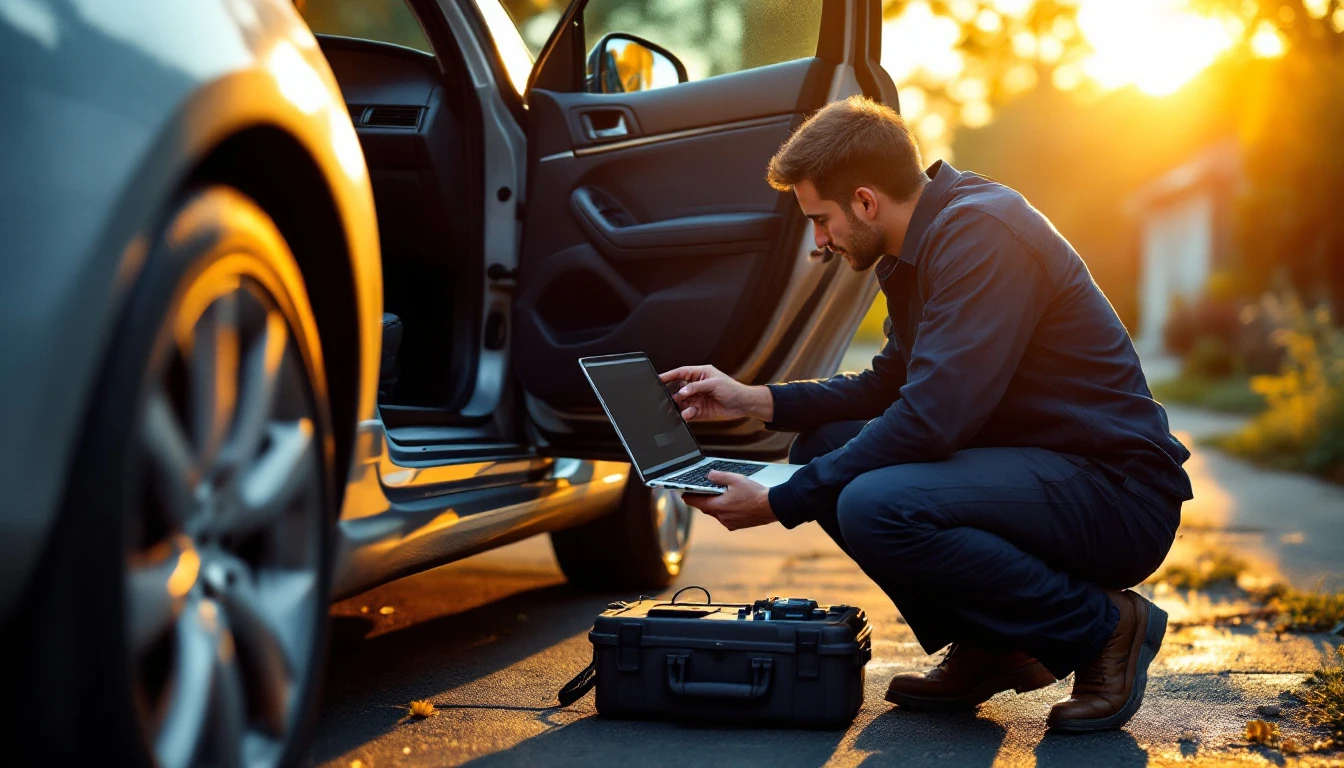
When a control module fails or has to be replaced in your vehicle, you have two realistic places to get it programmed: the franchise dealership or an independent automotive locksmith and programming specialist. Both can do legitimate work. But they differ sharply on cost, speed, convenience, and — in a few specific cases — capability. This 2026 guide lays out the real trade-offs so a Fort Worth driver can pick the right one for the job in front of them.
The short version: for most module programming — key and immobilizer work, BCM, PCM, ECU, TCM, and airbag resets — an independent mobile specialist is faster, cheaper, and comes to you. The dealer wins in a narrow set of cases: warranty work, recall campaigns, and brand-new platforms the aftermarket has not caught up to yet.
The Core Difference: Business Model, Not Magic
Both a dealer technician and a qualified independent specialist write the manufacturer's calibration to your module. The bytes that end up on the chip are the same — our guide to automotive ECM programming breaks down exactly what that write does. What differs is the business around the work.
A dealership runs fixed-rate bays, charges a diagnostic fee, bundles shop labor by the hour, and — if your car will not start — often requires a tow to their lot. An independent mobile specialist carries the tools to your driveway, charges for the specific job, and has a fraction of the overhead. That structural difference, not any secret capability, is why the same reflash can cost meaningfully less from a locksmith.
Cost: Where the Gap Is Widest
As of July 2026, the pricing gap is real and consistent across module types. The table below shows typical DFW ranges. Locksmith figures reflect the mobile market; dealer figures reflect franchise service pricing.
| Programming job | Mobile specialist | Dealership | Notes |
|---|---|---|---|
| New ECU/PCM flash (domestic) | $150–$500 | $525–$900 | Plus module cost |
| Used ECU/PCM re-VIN | $325–$1,200 | Often refused | Platform-dependent |
| BCM programming | $150–$350 | $325–$725 | Immobilizer sync included |
| TCM programming + relearn | $150–$500 | $350–$725 | Standalone vs. combined PCM |
| Airbag/SRS crash-data reset | $100–$300 | $325–$600 | After documented repair only |
| Add a transponder key | $120–$250 | $250–$500 | Plus dealer appointment wait |
| Add a push-to-start smart key | $250–$650+ | $400–$900+ | Luxury/complex quoted after diagnosis |
Two things stand out. First, the "often refused" row: dealers routinely decline used and salvage modules because their workflow assumes a new OEM part ordered against your VIN. A specialist who can re-VIN a used module can do a job the dealer will not touch. Second, genuinely luxury or complex work is quoted after a diagnosis by both — no honest provider promises a hard price on a locked European module sight-unseen.
Speed and Convenience: The Locksmith's Home Turf
Cost aside, the timeline gap is often the deciding factor. A dealership visit means scheduling an appointment (frequently days out), getting the vehicle there (a tow if it will not start), waiting in the service queue, and leaving the car in a shared bay — sometimes overnight.
A mobile locksmith collapses all of that into one visit. The connected programming time is the same 30-to-90 minutes either way, but the calendar cost is not. For a stranded vehicle, "fixed in my driveway this afternoon" versus "towed and maybe ready Thursday" is the entire value proposition. Fort Worth Locksmith & Computer Programming is a 24/7 mobile, service-area business — the programming comes to the car.
Capability: Where Each One Genuinely Leads
This is where honesty matters, because both extremes get oversold.
Where the Independent Specialist Leads
For key and immobilizer work — transponder keys, smart keys, all-keys-lost — independents often lead, not merely match, the dealer. Locksmiths specialize in this work daily, carry multiple tool platforms, and hold NASTF secure-access credentials that let them perform OEM-secure key registration. They also handle brand-specific electronic repairs the dealer treats as full-module replacements: BMW FRM repair, Mercedes ELV/steering-lock, GM VATS/PassLock bypass, and VW/Audi immo-off.
Where the Dealer Leads
The dealer's real advantages are specific and worth respecting:
- Warranty and recall work. If your module failure is covered, the dealer does it at no cost and logs it correctly. Never pay an independent for something your warranty covers.
- VIN-recorded software campaigns. Some manufacturer reflashes must be recorded against your VIN in the OEM database — emissions campaigns, safety-related updates. When the record matters (resale, compliance), the dealer is the right call.
- Brand-new platforms. When a model is fresh to market, aftermarket tool support can lag by months. During that window the dealer may be the only shop with working software.
A trustworthy specialist will tell you when one of these applies and send you to the dealer. That candor is a feature, not a lost sale.
The Warranty Question, Answered Honestly
Drivers worry that independent programming voids their warranty. Under the federal Magnuson-Moss Warranty Act, a manufacturer generally cannot void your warranty just because independent service was performed — it must show that the independent work caused the specific failure being claimed. The Federal Trade Commission enforces this, and its consumer guidance is clear that "you don't have to use the dealer" for routine service to keep coverage.
The practical rule: if a repair is covered, let the dealer do it free. If it is not covered — an out-of-warranty module, a used-part swap, an older vehicle — an independent specialist saves you money without the warranty risk being anything close to what people fear.
How to Choose, Job by Job
Use this quick decision path:
- Is it under warranty or a recall? → Dealer, at no cost to you.
- Does the fix have to be recorded against your VIN in the OEM system? → Dealer.
- Is it a brand-new platform the aftermarket may not support yet? → Call a specialist first to confirm tool coverage; if none exists, dealer.
- Is it a used or salvage module the dealer refused? → Specialist, after confirming the platform supports re-VIN.
- Everything else — keys, immobilizer, out-of-warranty BCM/PCM/ECU/TCM, airbag reset after repair? → Independent mobile specialist, cheaper and faster.
For key-specific decisions, our dealership vs. locksmith for car keys guide goes deeper on the same trade-offs.
Legitimacy: What to Verify Either Way
Whoever you choose, the work touches vehicle security systems, so verify legitimacy. In Texas, automotive locksmiths operate under the Texas Department of Public Safety (DPS) Private Security program. A reputable specialist verifies vehicle ownership before performing key or immobilizer work, carries insurance, and coordinates secure OEM access through the National Automotive Service Task Force (NASTF). Industry credentialing through the Associated Locksmiths of America (ALOA) is another positive signal. Steer clear of any provider who quotes a rock-bottom price sight-unseen on a complex module — see our scam-avoidance guide for the warning signs.
The Bottom Line for Fort Worth Drivers
For most module programming, an independent mobile specialist is the better default: same calibration written to your module, lower cost, faster turnaround, and service at your location across Fort Worth and Tarrant County. Reserve the dealer for warranty work, VIN-recorded campaigns, and platforms too new for aftermarket tools. Knowing which bucket your job falls into is the whole game — and a good specialist will tell you honestly which one you are in.
Real-World Scenarios: Which One We'd Recommend
The abstract rules land better against real situations. Here are five common ones and the honest recommendation for each:
Scenario 1: 2015 Silverado, out of warranty, dead PCM. The truck is well past its powertrain coverage and the module simply failed. A mobile specialist sources a reman or used PCM, programs it in your driveway, and you skip the tow. Recommendation: independent specialist. The dealer here is pure markup.
Scenario 2: 2024 SUV, still under warranty, module failure. The failure is covered. Let the dealer replace and program it at no cost to you, and keep the record clean. Recommendation: dealer. Paying an independent for warranty work is throwing money away.
Scenario 3: Salvage BCM the dealer refused. You bought a used body control module and the dealer will not touch it because their process assumes a new OEM part. A specialist who can re-VIN a used module completes it — once your platform is confirmed to support it. Recommendation: independent specialist. This is often the only path short of buying new.
Scenario 4: Emissions recall reflash. Your vehicle has an open emissions-related campaign that must be recorded against the VIN in the OEM system. Recommendation: dealer. The record matters for compliance and resale, and the campaign is free.
Scenario 5: Lost all keys to a 2018 sedan. No working key remains and you are stranded. A mobile specialist comes to you, verifies ownership, and programs new keys on site — usually the same day, versus a tow and a dealer appointment days out. Recommendation: independent specialist.
The thread through all five: the work is legitimate either way, but the right choice depends on warranty status, whether a VIN record matters, and how fast you need to be moving. A trustworthy specialist will steer you to the dealer in scenarios 2 and 4 without being asked — and that candor is the clearest sign you are dealing with a professional rather than someone chasing the ticket.
One More Factor: Getting the Vehicle There
People underweight the logistics. If your car will not start, a dealership visit is not just an appointment — it is a tow bill on top of the programming, plus the days the vehicle sits in a queue. A mobile specialist absorbs that entire category of cost by coming to the vehicle wherever it sits, across Fort Worth and Tarrant County. For a stranded car, that logistics difference frequently dwarfs the per-job price gap.
Frequently Asked Questions
Is a locksmith cheaper than a dealer for module programming?
Usually yes. As of July 2026, a mobile locksmith avoids dealership bay-labor markup and often programs a module for a fraction of the dealer's quote. For a used-module re-VIN, many dealers refuse the job entirely, so a specialist is not just cheaper — it may be the only option short of buying a new OEM module.
Can a locksmith do the same programming as the dealer?
For the vast majority of key, immobilizer, BCM, PCM, ECU, and TCM work, yes. Independent specialists use professional multi-brand tools and, where required, NASTF-authorized secure OEM access. The dealer's advantage narrows to a handful of brand-new-platform reflashes and warranty campaigns that must be logged in the OEM system.
When should I go to the dealer instead of a locksmith?
Go to the dealer when the work is covered under warranty or a recall, when it is a manufacturer software campaign that must be recorded against your VIN in the OEM database, or when the platform is so new that aftermarket tool support has not caught up yet. Outside those cases, an independent specialist is usually faster and cheaper.
Do locksmiths use real OEM programming for modules?
Reputable ones use OEM or OEM-equivalent calibration files and, on locked platforms, secure gateway access coordinated through NASTF. The result written to your module is the manufacturer's calibration. The difference is the tool brand and the business model, not the data your module ends up running.
Why do dealers charge so much more for programming?
Dealership pricing bundles bay labor at a fixed hourly rate, diagnostic fees, and often a tow if the car will not start. A mobile specialist has far lower overhead, comes to you, and charges for the specific programming job rather than a block of shop time, which is why the same reflash can cost noticeably less.
Will using a locksmith void my warranty?
Independent programming of a module does not automatically void a vehicle warranty. Under the federal Magnuson-Moss Warranty Act, a manufacturer generally cannot void coverage simply because independent service was used, unless it can show that service caused the specific failure. Warranty-covered repairs, however, are best done at the dealer at no cost to you.
Can a locksmith program a module the dealer refused?
Often, yes. Dealers frequently decline used or salvage-yard modules because their process assumes a new OEM part. A specialist who can re-VIN a used module over OBD or on the bench can complete jobs the dealer turns away — as long as the platform supports it, which is confirmed before you buy the part.
Comparing quotes in Fort Worth? Call or text Fort Worth Locksmith & Computer Programming at (817) 668-3801 with your year, make, model, and the module involved. We will tell you honestly whether a mobile specialist or the dealer is the smarter call for your specific job — and give you an all-in price if it is ours.