Car Starts Then Immediately Dies: Immobilizer, Fuel, or Module? (Fort Worth)
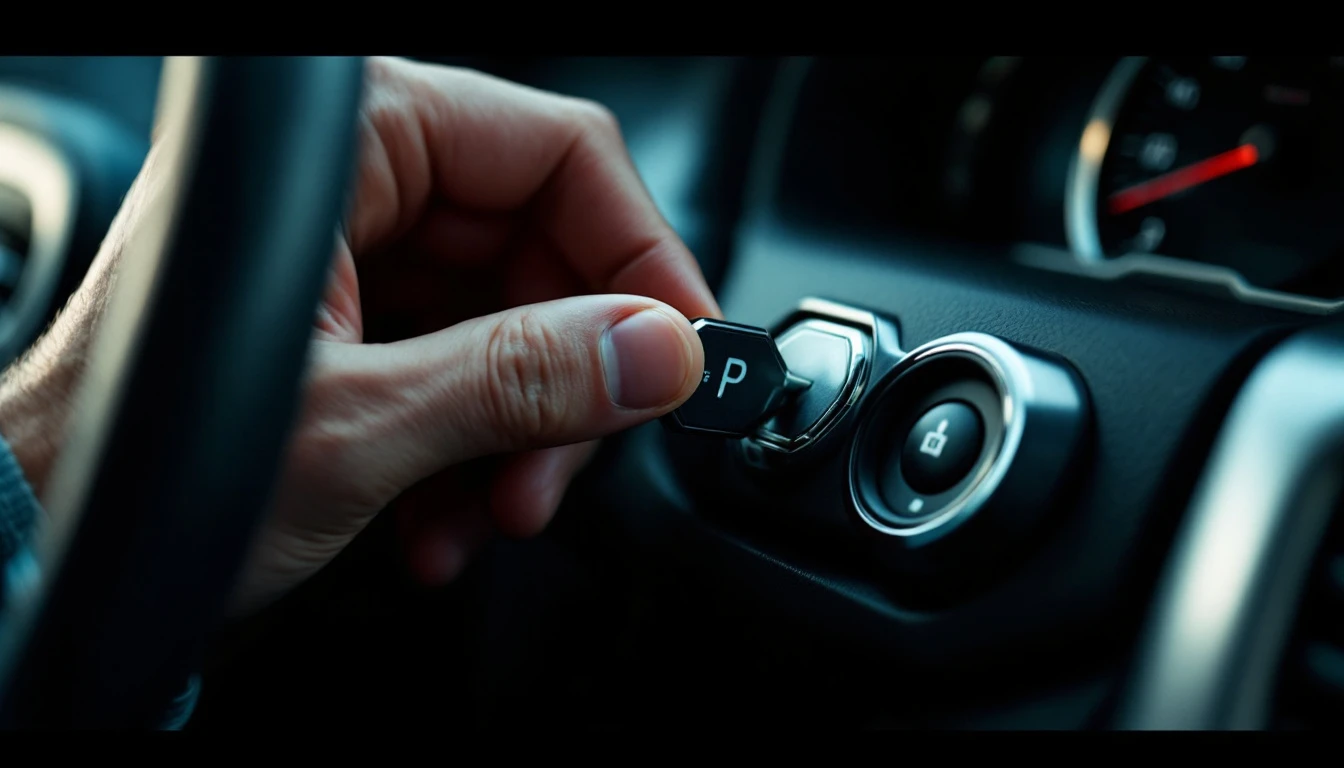
An engine that starts cleanly and dies about two seconds later is one of the more readable symptoms a vehicle produces. It sounds alarming — it sounds mechanical — and most of the time it is not mechanical at all. It is a security system doing precisely what it was designed to do.
As of September 2026, this guide walks through how to separate a deliberate immobilizer shutdown from a genuine fuel or module fault, in the order the checks should actually be made, so that nobody in Fort Worth pays for a fuel pump to fix a key problem.
What the Two-Second Stall Is Telling You
On nearly every vehicle built since the late 1990s, the engine control module does not wait for security authorization before allowing the engine to fire. It allows the start, then listens for the immobilizer to confirm that the key present is a key the vehicle recognizes. If that confirmation does not arrive within a short window, the module cuts fuel, spark, or both.
The engine dies. It dies cleanly, without stumbling, and it dies at almost exactly the same moment on every attempt.
That repeatability is the single most useful diagnostic fact available, and it is free. A mechanical or fuel-side failure rarely produces the same timing twice in a row. An authorization failure produces it every single time, because it is a timer, not a physical process.
First Pass: Three Free Observations
Before anyone connects anything, three things narrow the field substantially.
Watch the security indicator. Most vehicles have a key, padlock, or car-with-a-key icon. If it flashes or stays lit while the engine dies, the security system is announcing itself. If it flashes only during cranking and then goes out, that is often normal. On some platforms the tell is an anti-theft message in the driver information display rather than a dedicated lamp.
Time the stall on three attempts. If all three die at the same point, authorization is the leading suspect. If the duration varies noticeably, fuel and mechanical causes move up the list.
Try the spare key. This is the most valuable test on the page and nearly everyone skips it. If a spare starts and runs the vehicle normally, the diagnosis is complete: the daily-driver key has failed. Our guide to what happens when your only key is worn or failing covers what that looks like and why it tends to appear gradually rather than all at once.
If there is no spare, that is worth addressing regardless of how this particular fault resolves.
Reading the Pattern
| What you observe | What it points to | First thing to do |
|---|---|---|
| Dies at the same point every attempt, security light on | Immobilizer authorization | Try the spare key |
| Dies at the same point, no security light | Immobilizer on a platform without a lamp, or fuel cutoff | Read fault memory across modules |
| Runs a different length each attempt | Fuel delivery or ignition components | Repair shop diagnosis |
| Stumbles and struggles before dying | Fuel, air, or ignition | Repair shop diagnosis |
| Spare key runs normally, daily key does not | Failed transponder in the daily key | Replace the key |
| Neither key works, both fail identically | Reader coil or immobilizer module | Test the reader circuit |
| Started right after a jump start or battery change | Voltage event, stored faults | Read and clear, verify charging |
| Started right after work done elsewhere | Module installed without programming | Confirm what was replaced |
That table is the whole diagnosis compressed. Everything below it is the detail behind each row.
The Common Causes, in Order
1. A degraded or unreadable key
Transponder chips fail. They crack from being dropped, they take on moisture, and the coils inside them degrade. A partially failing chip is the classic producer of intermittent start-then-stall behavior, because it authorizes on some attempts and not others.
The cheapest outcome on this page, and the reason a spare key is always worth testing first. Key programming and replacement is covered under transponder key programming.
2. The reader coil around the ignition or start button
The key is only half the transaction. An antenna ring around the ignition cylinder — or a reader behind the push-button start — energizes the chip and receives its response. When that coil fails or its wiring is damaged, a perfect key reads as no key at all.
This presents identically to a bad key, which is why the spare-key test matters: a failed reader coil rejects both keys equally, while a failed chip rejects only one.
Reader coils fail in two ways worth distinguishing. The coil itself can open, usually from age or vibration, which produces a hard and consistent failure. More often the wiring or connector behind it is the problem — a chafed lead in a steering column that flexes every time the wheel is turned, or a connector that has backed out slightly. The second kind produces intermittency that tracks steering position or road vibration rather than temperature, which is a useful clue when a customer reports that it only fails after a particular turn out of a driveway.
3. An aftermarket remote start or alarm bypass
Any vehicle with an aftermarket remote start has a bypass module sitting between the key and the immobilizer, supplying authorization when the vehicle is started remotely. When that module fails, loses stored data, or develops a bad connection, the vehicle starts and stalls exactly as though the key were unauthorized.
If there is aftermarket remote start on the vehicle, inspect it before suspecting the factory system. This cause accounts for a meaningful share of start-then-stall calls and is routinely diagnosed last, after money has already been spent elsewhere.
4. A recent battery event
A deep discharge, a jump start with reversed polarity, or a battery disconnect during other work can leave modules with corrupted stored data or communication faults. The security system does not get a clean answer and the engine shuts down. These sometimes resolve with a proper fault read, a stable charge, and a clear — one of the less expensive outcomes. The pattern is covered in car acting up after a dead battery or jump start.
5. A module that was replaced without being programmed
An engine module, body module, or cluster installed elsewhere and never properly programmed to the vehicle will produce this exact symptom. The part is correct; it was simply never introduced to the vehicle. Common in cars that arrive after a repair somewhere else, and covered in new module installed and the car still will not start.
6. A genuine security or engine module failure
Real, and the most expensive branch — which is exactly why it is confirmed rather than assumed. A module actually failing produces this symptom, but so do all five causes above it, and those five are collectively far more likely.
7. Actual fuel or mechanical faults
Fuel pumps fail. Crank sensors fail. Anti-theft-adjacent fuel cutoffs exist on some platforms. These are real causes of an engine that starts and dies — they simply produce a less consistent pattern and usually no security indicator. When the timing varies and no security lamp appears, this is where the diagnosis belongs, and it belongs at a repair shop rather than with a locksmith.
Why a Generic Code Reader Often Reads Clean
A common and frustrating sequence: the vehicle stalls repeatedly, an inexpensive scan tool is connected, and it reports no codes. The conclusion drawn is that nothing is wrong.
The problem is scope. Many immobilizer faults are stored in the body control module or a dedicated security module, not in the engine module's emissions memory. A tool that only reads generic powertrain codes will not see them. What is needed is a full read across modules — and on the security side, the ability to interrogate the immobilizer directly and ask whether it saw the key at all.
That is the difference between "no codes" and "the security module logged three unauthorized key events in the last ten minutes." The second answer ends the diagnosis.
Platform-Specific Notes Worth Knowing
Older GM vehicles used resistance-based systems that fail from worn contacts rather than electronics, producing a start-then-stall with a security light. Covered in the GM VATS and Passlock bypass guide.
Push-button-start vehicles add another layer: the fob has to be detected by cabin antennas, so the failure can be in detection rather than authorization. Our guide to push-button start not working covers that branch.
Vehicles where the ignition was recently replaced are a special case, because the new cylinder or switch frequently was not matched to the immobilizer. That has its own guide: ignition replaced, cranks but will not start.
Vehicles where every key is gone are not a diagnosis problem at all — they are a key origination job. See immobilizer programming and all keys lost and, for GM specifically, GM and Chevy all keys lost programming.
What Not to Do
Do not keep cranking. Two or three attempts establish the pattern. Beyond that you are draining the battery and, on some platforms, triggering a timed security lockout that forces a wait before anything can be tested.
Do not buy a fuel pump on a hunch. Consistent timing plus a security indicator is not a fuel pattern. Confirm before spending.
Do not replace a module because a code named it. A module reporting a communication fault is often the module that noticed the problem, not the one causing it.
Do not disconnect the battery to "reset" it. On modern vehicles this rarely clears a security fault and frequently adds new ones by wiping learned values that then need a relearn — throttle position, transmission adaptation, steering angle and idle strategy all have to be re-established, and none of that happens on its own.
The Practical Order of Operations
- Watch the security indicator during a start attempt.
- Time three attempts and note whether the stall is consistent.
- Try the spare key.
- Inspect any aftermarket remote start or alarm system.
- Confirm battery voltage is healthy and note any recent electrical event.
- Read the full fault memory across modules, not just engine codes.
- Query the immobilizer directly to see whether the key was seen and accepted.
Steps one through five cost nothing. They resolve or substantially narrow a large share of these calls before any equipment is connected. Steps six and seven are where a properly equipped mobile technician earns the visit, and for vehicles in Fort Worth and across Tarrant County that work is done at the vehicle — there is no reason to tow a car for a diagnosis that takes a laptop and twenty minutes.
For the underlying service, see ECU programming. If the key turns out to be the cause, the key fob troubleshooting guide covers what to check next.
Frequently Asked Questions
Why does my car start and then die after two seconds?
A clean start followed by a stall within about two seconds is the classic signature of an immobilizer shutdown. The engine module allows the engine to fire, waits for the security system to confirm the key is authorized, does not receive that confirmation, and cuts fuel or spark. Fuel and mechanical problems usually produce a different pattern — rough running, a longer struggle, or a stall that varies in timing rather than landing at the same point every time.
How do I tell an immobilizer shutdown from a fuel problem?
Watch the timing and the dash. An immobilizer shutdown is consistent: the engine catches and dies at almost exactly the same point on every attempt, usually with a security or key indicator illuminated or flashing. A fuel delivery problem is inconsistent: the engine may run three seconds one time and eight the next, may stumble before dying, and typically does not light a security indicator. Consistency and a security light together point strongly at authorization, not fuel.
Can a worn key cause a start-then-stall?
Yes, and it is one of the most common causes people overlook. A transponder chip that is cracked, water damaged, or intermittently readable can authorize on one attempt and fail on the next. The giveaway is intermittency tied to the key rather than to the vehicle. If a spare key starts and runs the car normally while the daily key produces the stall, the diagnosis is finished and the fix is a key, not a repair.
Does an aftermarket alarm or remote start cause this?
Frequently. A bypass module installed for a remote start sits between the key and the immobilizer and provides authorization on the vehicle's behalf. When that module fails, loses its stored data, or has a connection degrade, the vehicle starts and then stalls exactly as if the key were unauthorized. Any start-then-stall on a vehicle with aftermarket remote start should have that system inspected before the factory system is suspected.
Will the check engine light tell me if it is the immobilizer?
Not reliably. Immobilizer shutdowns often store codes in the body or security module rather than setting an engine light, so a scan tool limited to emissions codes can read clean while the security system is actively preventing the engine from running. Reading the full fault memory across modules, not just engine codes, is what separates the two cases in a couple of minutes.
Is it safe to keep trying to start it?
Repeated attempts will not damage the immobilizer, but they are not harmless. Extended cranking drains the battery, and a low battery introduces a second set of faults that muddy the diagnosis. Some systems also enter a timed lockout after repeated failed authorizations, which means waiting out a delay before anything can be tested. Two or three attempts establish the pattern; after that, stop and diagnose.
Can this be fixed at my location?
In most cases yes. Reading fault memory, testing key authorization, checking the reader coil, and programming or replacing a key are all done at the vehicle. The cases that cannot be resolved on-site are the ones where a module has genuinely failed and needs bench-level work, or where a fuel or mechanical fault is confirmed and belongs at a repair shop rather than with a locksmith.