Ignition Replaced, Now It Cranks But Won't Start: Fort Worth Diagnosis
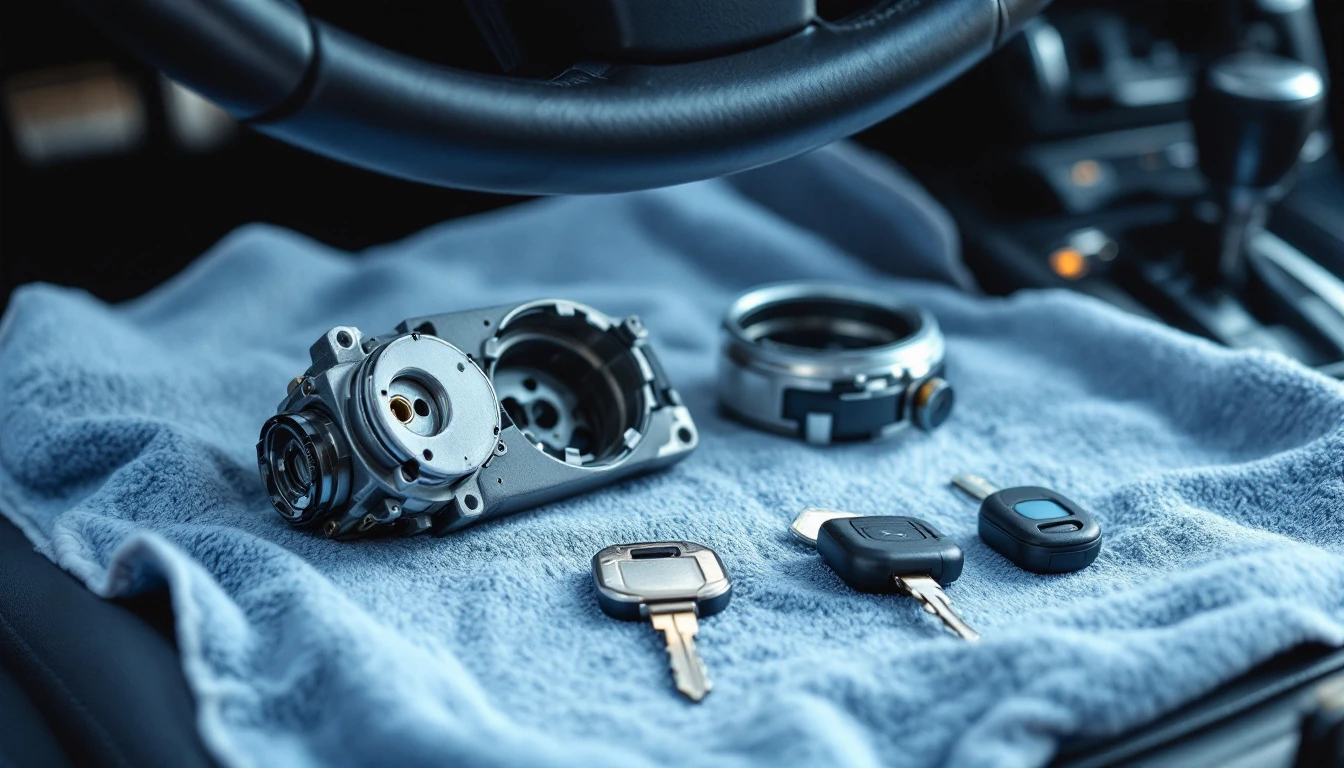
The ignition turns smoothly for the first time in months. The engine cranks strongly, catches for about a second, and dies. Here is the short answer: the mechanical half of your ignition repair succeeded and the electronic half was never performed. A new ignition cylinder almost always means a new key, and a new key carries a transponder chip your vehicle's immobilizer has never been introduced to.
The starter motor does not care about that. It is fed by the ignition switch, which works, so the engine cranks. The immobilizer does care, and it is the thing quietly cutting fuel or spark a heartbeat after the engine catches.
This guide covers how to confirm that diagnosis in about two minutes, the four other things that produce the same symptom after ignition work, what each path costs to finish, and the one question worth asking before an ignition cylinder is replaced that avoids the whole situation.
The Symptom Signature That Tells You Which Half Failed
Different faults sound different from the driver's seat, and after ignition work this distinction does most of the diagnostic work for free.
Cranks strongly, catches for roughly a second, dies cleanly. Anti-theft refusal. The engine had fuel and spark long enough to fire, then the immobilizer completed its check, failed it, and cut the circuit. Clean and immediate, not a stumble.
Cranks strongly, never catches at all. Also possible as a security refusal on platforms that disable injectors before the first combustion event, but wider — this also covers fuel, spark, and sensor faults unrelated to the ignition job.
Does not crank at all, no starter engagement. Points at the ignition switch rather than the cylinder. Those are two different parts that live together: the cylinder is the mechanical lock your key turns, the switch is the electrical assembly it operates. A switch damaged or misaligned during cylinder replacement stops the start signal from ever reaching the starter relay.
Cranks, starts, and runs fine — but the security light stays lit. Usually a completed job with an unresolved stored fault, or a key that programmed but a second one that did not.
The dash tells you the rest. A security or anti-theft indicator that flashes rapidly or stays on after the engine dies is the immobilizer saying, in the only language it has, that it rejected the key.
Why Ignition Work Creates This So Often
Ignition lock cylinder replacement is honest mechanical work. Steering column trim comes off, the lock housing is accessed, the worn cylinder comes out, a new one goes in. Plenty of general repair shops do it well and do it every week.
The problem is that the replacement cylinder comes with its own key, cut to its own code, carrying a chip that has never been near your car. Finishing the job requires cutting or coding a key the immobilizer will accept and then writing it into the vehicle's authorized-key list — which needs key programming equipment and, on many late-model platforms, a licensed security session with the manufacturer.
That is a different trade sitting on the end of a mechanical repair. The shop is not being careless; it simply stops where its capability stops. Our page on ignition repair and replacement covers how the two halves are meant to be sequenced when one provider handles both.
The Diagnostic Ladder
Rung 1 — Confirm the key is the suspect
Try the old key if you still have it and if it still physically fits. On vehicles where the cylinder was rekeyed rather than replaced outright, your original key should work and start the car normally. If it does, the new key is simply unprogrammed and you have a twenty-minute fix.
If the old key no longer turns the new cylinder, that tells you the cylinder was replaced rather than rekeyed, which makes the unprogrammed-chip diagnosis considerably more likely.
Rung 2 — Read the security indicator
Watch the anti-theft or security light through a full attempt: key on, crank, catch, die. A light that changes behavior at the moment the engine dies is a direct statement that the immobilizer acted.
Rung 3 — Check whether the key even has a chip
Not every replacement key blank includes a transponder, and a blank without one can never be programmed — it will cut fine, turn fine, and never start the car. This is a genuinely common outcome when a key was cut at a shop that duplicates blades without handling electronics. Our transponder key programming guide covers how to identify a chipped blank.
Rung 4 — Rule out the switch and the harness
If the vehicle does not crank at all, look at the electrical assembly rather than the lock. Column work involves disconnecting and reconnecting connectors, and a partially seated connector or a pinched wire behind the trim is an ordinary outcome of an ordinary repair. Check that accessories, dash lights, and the starter signal all behave normally through each key position.
Rung 5 — Consider what else the column touches
On some platforms the ignition assembly sits alongside or inside a module that participates in security. Chrysler, Dodge, Jeep, and Ram vehicles use a wireless ignition node — the WIN module — which is both the receiver and part of the anti-theft chain; see Chrysler and Dodge WIN module work. Many European vehicles use an electronic steering lock that can fail independently of the ignition, and our Mercedes ELV steering lock failure guide covers that pattern.
If a module in that chain was disturbed, unplugged with the ignition live, or replaced during the repair, the fault moves from key programming to module programming — a different and larger job.
What It Costs to Finish the Job
As of August 2026, in the Fort Worth area, performed mobile at your location:
| What is actually wrong | Typical cost | What gets done |
|---|---|---|
| New bladed key needs programming | $120–$250 | Transponder key cut and written to the immobilizer |
| Push-to-start vehicle, smart key not registered | $250–$650+ | Proximity fob registered to the smart key system |
| Replacement cylinder rekeyed to your original key instead | $150–$400 | Bench rekey of the new cylinder to your existing code |
| Ignition switch damaged or misaligned during the repair | $150–$400 | Switch replacement or realignment plus function testing |
| Body control module lost or refused its security data | $150–$350 | Module security programming and key relearn |
| Engine or powertrain module immobilizer fault | $150–$500 | Module security programming, then relearn |
| Steering lock or ignition node module involved | Quote after diagnosis | Depends entirely on which module and which platform |
The third row is the one people wish they had known about first, which brings us to the question worth asking before any ignition work starts.
The Question to Ask Before an Ignition Is Replaced
"Can the new cylinder be rekeyed to my existing key?"
On a large number of vehicles the answer is yes. A replacement lock cylinder can be disassembled and re-pinned to your original key code, which means the key you already carry still works, the immobilizer already trusts it, no new key needs cutting, and no programming is required at all. You pay a little more in bench labor and skip the entire key-and-programming line.
It is not universal — some cylinders are not serviceable, and on some platforms the parts availability makes it impractical. But it is common enough that not asking is how people end up with a working ignition, a new key, and a car that will not start.
If a new key is genuinely necessary, the second question is simply whether the shop doing the mechanical work can also program it, and if not, arranging the programming for the same day rather than discovering the gap in the parking lot afterward.
Platform Notes
Ford. Ignition lock cylinder failures are extremely common on several generations, and the follow-on programming runs through PATS. See Ford ignition lock cylinder repair and, for the security side, Ford PATS programming.
General Motors. Older vehicles use a resistive chip in the blade rather than a true transponder, which fails in its own distinctive way — see the GM VATS and Passlock bypass guide. Newer trucks and SUVs are conventional transponder or proximity systems; Chevrolet and GMC ignition switch repair covers the mechanical side and GMC Yukon and Sierra lock cylinder repair the specific column work.
Stellantis. The WIN module blurs the line between ignition and security hardware. Jeep Grand Cherokee WK2 ignition switch repair is a good worked example.
Volkswagen and Audi. Cylinder failures and immobilizer involvement frequently arrive together. See Volkswagen Jetta and Passat ignition lock cylinder repair and Volkswagen Atlas and Tiguan ignition and immobilizer repair.
Mazda. Mazda CX-5 and Mazda3 ignition switch repair covers a platform where the two halves are commonly separated.
When to Call Rather Than Keep Testing
Call once the engine has cranked and caught and died more than twice. Repeated attempts on a security-refused vehicle do nothing useful and, on a few platforms, push the immobilizer into a lockout that adds a timed wait to whatever comes next.
Call immediately if the vehicle does not crank at all after ignition work, because that points at the switch or the harness, and continued cranking attempts on a marginal connection are how a small electrical fault becomes a larger one.
Bring every key you own to the appointment. On platforms where a key write clears the previously learned list, the visit you are already paying for is the one where all your keys should end up working.
Frequently Asked Questions
Why does my car crank but not start after replacing the ignition?
Almost always because the electronic half of the job was never finished. Replacing a worn ignition lock cylinder usually means a new key blade, and a new key carries a transponder chip your immobilizer has never seen. The starter is fed by the switch and works fine, so the engine cranks, but the immobilizer withholds fuel or spark because it does not recognize the key. The mechanical repair succeeded and the security step was skipped.
What does starts-and-dies-in-one-second actually mean?
It is the signature of an anti-theft refusal rather than a mechanical fault. The engine gets enough fuel and spark to catch on residual pressure, then the immobilizer confirms it does not recognize the key and cuts the injectors or the ignition circuit. A fueling or compression problem tends to produce a long unwilling crank; a security refusal produces a confident catch followed by an immediate, clean shutdown.
Can the new ignition cylinder be rekeyed to my original key instead?
On many vehicles yes, and it is often the better answer. Rekeying the replacement cylinder to your existing key code means the key you already own still works, your immobilizer already trusts it, and no programming is needed at all. It costs a little more in labor at the bench and saves the key and programming charge. It is not possible on every platform, but it is worth asking about before anyone cuts a new key.
How much does it cost to fix a car that won't start after ignition work?
As of August 2026 in Fort Worth, if the fault is simply an unprogrammed key, the fix is a transponder key cut and programmed at roughly 120 to 250 dollars, or 250 to 650 dollars on a push-to-start vehicle. If the ignition switch itself was damaged during the repair, the ignition work runs roughly 150 to 400 dollars. If a module was disturbed or is refusing, budget for diagnosis first rather than a fixed number.
The security or anti-theft light is flashing. Is that the problem?
It is the best clue on the dash. A steady light during cranking is often normal on some platforms, but a light that flashes rapidly or stays illuminated after the engine dies is the immobilizer telling you plainly that it rejected the key. That single observation moves the whole diagnosis away from fuel and spark and toward key programming or a module that lost its security data.
Can this happen on a push-to-start car with no ignition cylinder?
Yes, in a different form. Push-to-start vehicles have no lock cylinder to replace, but they do have a steering lock module, an ignition or start switch assembly, and a smart key receiver, and disturbing any of those can end the same way. The symptom looks identical from the driver's seat, and the repair path runs through the smart key system rather than a bladed key.
Did the shop that replaced my ignition do something wrong?
Usually not wrong so much as incomplete. Ignition cylinder replacement is competent mechanical work that many general repair shops do well, and the transponder programming that must follow it needs different equipment and, on many platforms, licensed security access. The result is a job that is genuinely half-finished by capability rather than by carelessness, and finishing it is a straightforward second visit.
Will I need to reprogram my other keys as well?
Sometimes. On platforms where writing a key into an empty or reset system erases everything previously learned, your other keys stop working and have to be re-registered in the same session. That is much cheaper done at the same visit than discovered a week later. Bring every key you own to the appointment, including the one in the kitchen drawer.
Ignition and Immobilizer Work in Fort Worth
Fort Worth Locksmith & Computer Programming handles both halves of this job — ignition lock cylinder repair, rekeying a replacement cylinder to your existing key where the platform allows it, and the transponder or smart key programming that has to follow when it does not. We do it at the vehicle, which matters when the vehicle is the thing that will not move.
Call or text (817) 668-3801 or email contact@fwlocksmith.com with your year, make, model, and what was replaced. Available 24/7 across Fort Worth and the surrounding cities. See ignition repair, transponder key programming, or our overview of ignition repair and replacement near you.
Texas locksmiths are licensed and regulated by the Texas Department of Public Safety Private Security Bureau.