GM RCDLR Keyless Entry Receiver: When Every Fob Quits at Once (Fort Worth)
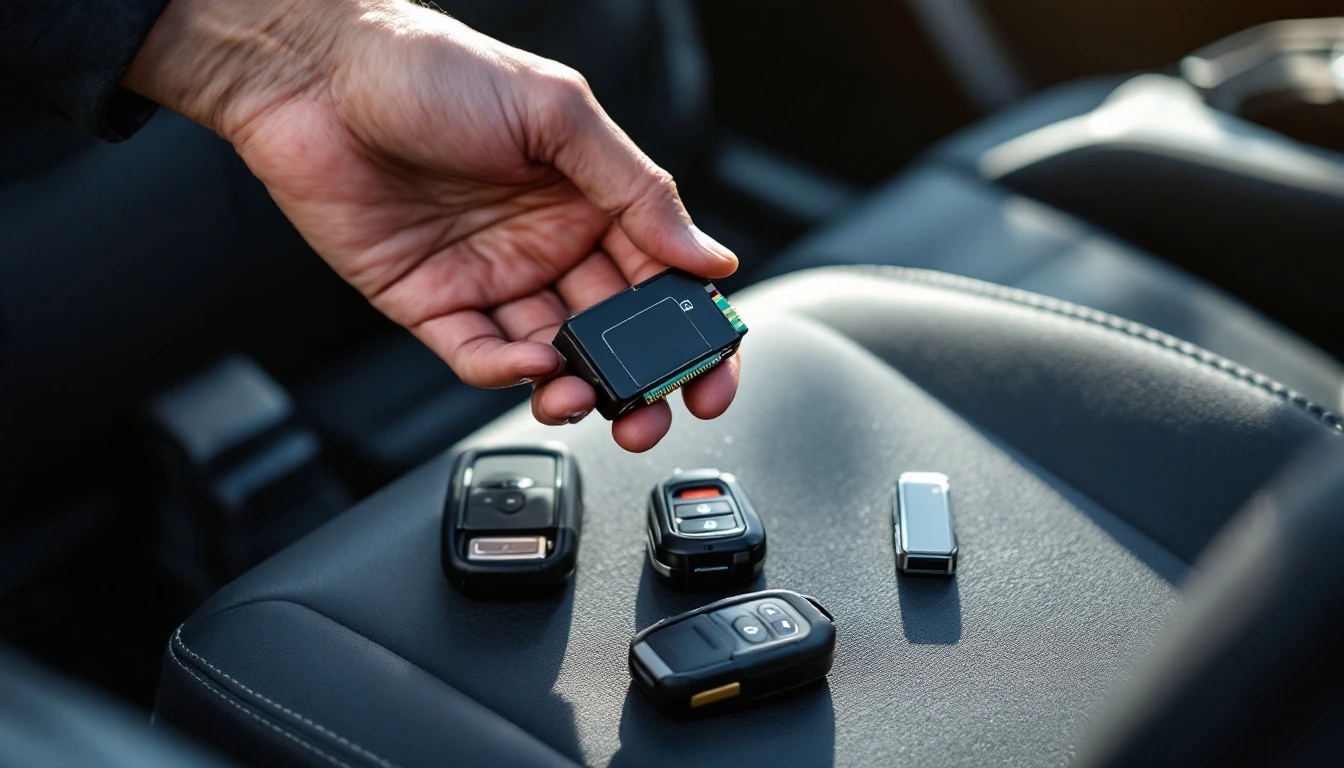
If both key fobs on your Chevrolet, GMC, Buick, or Cadillac stopped working within the same week, the fobs are probably not the problem. Two independent radio transmitters do not fail in unison. What they share is a receiver — on most General Motors vehicles a module called the RCDLR, the Remote Control Door Lock Receiver — and when it fails, every fob goes silent at once.
This is one of the more satisfying diagnoses in module work, because the symptom pattern is specific enough to point straight at the answer, and because the same module often takes a second system down with it in a way that confirms the finding for free.
This guide covers what the RCDLR does, the symptom cluster that identifies it, how to separate a failed receiver from dead fobs and from an interference problem, and what replacing and programming one actually involves in Fort Worth.
What the RCDLR Actually Does
Your key fob is a small radio transmitter. When you press a button it sends a short, rolling-coded burst. Something in the vehicle has to be listening on that frequency, verify the code came from a fob the vehicle knows, and put the resulting command onto the vehicle network where the body control module can act on it.
That listening job belongs to the receiver. On many General Motors vehicles it is a discrete module — a small box tucked behind interior trim, commonly near the headliner, the rear of the console, or behind a quarter panel depending on the platform. On others the same function is integrated into the body control module itself.
Three things follow from that architecture:
The receiver holds the fob list. Not the door locks, not the ignition. The list of remotes the vehicle trusts lives in the receiver, which is why a replacement one has to have every fob written into it.
The receiver often handles tire pressure sensors too. Tire pressure sensors are also low-power radio transmitters in a similar band, and on a great many GM vehicles the same module receives both. This is the single most useful diagnostic coincidence on these platforms.
The receiver is not the immobilizer. This distinction saves people money. Keyless entry and engine anti-theft are separate systems. A failed receiver kills your remotes and leaves the vehicle perfectly able to start with the key in the ignition or the fob in the cabin, because starting runs through the immobilizer path instead.
The Symptom Cluster
Score your vehicle against these. The more that match, the stronger the case for the receiver.
All fobs stopped working, not one. The headline symptom. One fob dying is a fob. Two or three dying together is a receiver.
Nothing responds to any button. Lock, unlock, panic, liftgate, remote start — the whole remote function set is gone rather than one button being intermittent.
The vehicle still starts normally. Because the immobilizer is a separate system. If the vehicle also refuses to start, you are looking at a different or additional fault — our guide to BCM programming versus replacement covers where those overlap.
Tire pressure readings went blank or show dashes. The confirming signal. Two unrelated systems failing simultaneously means a shared component, and on these platforms the shared component is the receiver. If your tire pressure display is fine, the case is weaker but not closed — not every GM vehicle shares the module.
Remote start stopped working. Follows from the same failure, since remote start requests arrive by the same radio path.
Passive entry stopped, on vehicles that have it. Touch-to-unlock door handles stop responding, though the specific architecture varies by model year.
Nothing changed mechanically before it started. No collision, no water intrusion, no recent interior work. Receivers usually fail quietly and on their own schedule.
Ruling Out the Cheaper Explanations First
Do these before anyone orders a module. All are free or nearly free, and all of them are more common than actual receiver failure.
Fob batteries
Obvious, and still the answer often enough to check. Replace both. If they were bought at the same time, installed at the same time, and are the same age, two fobs genuinely can die in the same week — the coincidence people find implausible is actually the most ordinary explanation.
Range and interference
Test up close, with the fob touching the door. Then test somewhere else entirely — a different parking lot, a different part of town. Radio interference from nearby transmitters can suppress fob reception in one specific location while everything works fine a mile away. If the fobs work at the grocery store and not at home, nothing on the vehicle is broken.
Recently added accessories
Dash cameras, aftermarket remote start systems, phone chargers, LED lighting kits, and trailer wiring all generate radio noise, and several of them get mounted near where the receiver lives. If the fobs stopped working within days of an accessory installation, disconnect it and retest before doing anything else.
Battery and charging health
Low system voltage produces an impressive range of electronic misbehavior that resolves itself when the battery is replaced. On modern GM vehicles a weak battery can also leave modules in a degraded state after a jump start, and some platforms want a battery registration or relearn after replacement rather than a straight swap.
Recent interior work
Anything that involved removing headliner, pillar, or quarter trim near the receiver can leave a connector partly seated or an antenna lead disturbed. If the symptom began after a windshield replacement, a headliner repair, or an accessory installation, look there first.
Confirming the Receiver
Once the cheap causes are eliminated, the confirmation is straightforward with the right tooling.
A scan tool asks whether the receiver is present on the network and answering. A module that does not respond at all is either dead, unpowered, or on a faulted circuit — and the difference matters, because a power or ground fault that killed the module will kill its replacement too.
Where the module does answer, the fob programming routine is the real test. Attempting to register a known-good fob and watching whether the module ever reports receiving a transmission separates "the module is deaf" from "the module never learned these fobs."
On vehicles where the receiver function is integrated into the body control module rather than standing alone, the same tests apply to the BCM instead, and the repair becomes a body module job — see what BCM programming is and when it is needed.
What Replacement and Programming Cost
As of August 2026, in the Fort Worth area, performed mobile at your location:
| Path | Typical cost | What is involved |
|---|---|---|
| Fob batteries and reprogramming existing fobs | $75–$150 | Battery, then re-registration if the list was disturbed |
| Replacement fob, cut and programmed | $175–$300 | Remote-head or flip key registered to the receiver |
| Proximity fob on push-to-start GM vehicles | $250–$650+ | Smart key registration to the receiver and immobilizer |
| Programming a new receiver or body module | $150–$350 | Configuration to the vehicle plus fob registration |
| Used receiver from a salvage vehicle | $325–$1,200 | Clearing donor identity before writing yours |
| Diagnosis where the fault turns out to be elsewhere | Diagnostic charge | Findings and a direction, not a module sale |
Two notes. The module itself is a separate parts cost from the programming, and it varies substantially by platform. And on General Motors vehicles built on the newer electrical architecture, the configuration step requires an online security session with the manufacturer, which is a real cost and a real reason a 2021 truck prices above a 2015 one — see our Global B key programming guide and GM SPS and secure gateway key programming for where that line falls.
Why a Replacement Receiver Is Not Plug-and-Play
The module you install arrives blank. It does not know your VIN, it does not know which options your vehicle has, and it certainly does not know which key fobs belong to you.
Programming it means writing the vehicle configuration, then running the fob registration routine with every remote physically present. That last point is worth emphasizing: the receiver's memory is the fob list, so a spare fob left in a drawer at home does not get written and will not work afterward. Bring everything.
If the module is a used one from a salvage vehicle, there is an additional step — the donor's identity has to be cleared before yours can be written, which is a materially harder and more expensive job than flashing a blank part. Our used module programming cost guide covers that gap in detail, and the pre-purchase compatibility check that prevents most of the expensive surprises.
The general principle applies here as it does everywhere in this trade: replacement control modules are not plug-and-play components, and the programming is the job.
Which GM Vehicles This Applies To
Broadly, Chevrolet, GMC, Buick, and Cadillac vehicles from the mid-2000s onward, with the architecture shifting over the years from a discrete receiver toward receiver functions integrated into the body module or, on the newest platforms, into a broader body and gateway arrangement.
Full-size trucks and SUVs are the highest-volume cases simply because there are so many of them on the road here. Passenger cars and crossovers show the same failure pattern. Our Chevrolet and GM ECM and BCM programming guide covers the broader module landscape, Cadillac key replacement and programming covers the luxury side, and Chevrolet Equinox and Traverse spare key and BCM registration is a good worked example of registration on a current platform.
Electric models use the same general approach with their own module names — see Chevrolet Bolt EV and EUV key fob replacement.
If tire pressure sensors were part of your symptom cluster, they may also need relearning after the receiver is replaced, since the new module has no record of your sensor identifiers either. TPMS sensor programming and relearn covers that procedure.
Frequently Asked Questions
What is the RCDLR on a GM vehicle?
RCDLR stands for Remote Control Door Lock Receiver. It is the module that listens for the radio signal from your key fobs and passes valid commands onto the vehicle network to lock, unlock, open the liftgate, or trigger remote start. On many General Motors vehicles it also receives tire pressure sensor transmissions, which is why a failed receiver frequently takes out keyless entry and the tire pressure display at the same time.
How do I know if my receiver failed instead of my fobs?
The strongest clue is how many fobs stopped working and when. A single fob failing while another still works is a fob problem almost every time. Both or all fobs failing within days of each other, especially with the tire pressure monitor also going blank or showing dashes, points hard at the receiver. Fobs are independent devices and do not fail in unison by coincidence.
Does a replacement RCDLR need programming?
Yes. A replacement receiver arrives without your vehicle's identity and without the list of fobs it should trust, so it has to be configured to the vehicle and then have every key fob registered to it. On newer platforms that configuration runs through an online security session with the manufacturer. Installing the module without programming produces a car whose remotes still do nothing.
How much does RCDLR replacement and programming cost in Fort Worth?
As of August 2026, programming a receiver or body module runs roughly 150 to 350 dollars, plus the module itself and plus fob registration if your fobs also need to be rewritten. A used receiver from a salvage vehicle needs its donor identity cleared first, which puts that path in the 325 to 1,200 dollar range depending on the platform. Diagnosis comes first, because dead fobs cost far less to fix.
Why did my tire pressure display stop working too?
On many General Motors vehicles the same receiver handles both key fob transmissions and tire pressure sensor transmissions, since both are low-power radio signals in similar bands. When that module fails, both functions go dark together. It is one of the most useful diagnostic signals available on these platforms, because two apparently unrelated systems failing at once narrows the search to a single shared component.
Can a weak battery or a charger cause this?
It can cause symptoms that mimic it. Low system voltage, a recently jumped vehicle, or an aftermarket accessory installed near the receiver can all disrupt reception without anything being broken. Before condemning a module, confirm the battery is healthy and think about what changed recently — a dash camera, a remote start kit, a phone charger, or a repair that involved removing interior trim near the receiver.
Is the receiver a separate module on every GM vehicle?
No, and the difference matters for the repair. On many vehicles it is a discrete module tucked behind interior trim. On others the receiver function is built into the body control module, which means what looks like a keyless entry fault is a body module fault, with a different part and a different price. Identifying which architecture your vehicle uses is the first step of the diagnosis.
Will my existing key fobs work after the receiver is replaced?
Only after they are re-registered. The new receiver has no record of them, so every fob you own has to be written into it during the programming session. Bring all of them to the appointment, including spares kept elsewhere, because a fob that is not present when the list is written will not work afterward and will need a second visit.
GM Keyless Entry and Module Work in Fort Worth
Fort Worth Locksmith & Computer Programming diagnoses keyless entry faults on Chevrolet, GMC, Buick, and Cadillac vehicles, programs replacement receivers and body modules, and registers every fob you own to them — as a mobile service, at the vehicle. Where the fault turns out to be two dead fob batteries, we will tell you that and charge you accordingly.
Call or text (817) 668-3801 or email contact@fwlocksmith.com with your year, make, model, and how many fobs stopped working. Available 24/7 across Fort Worth, Arlington, and the surrounding cities. See our module programming service or smart key programming for scope, and GM all-keys-lost programming if the ignition side is also involved.
Texas locksmiths are licensed and regulated by the Texas Department of Public Safety Private Security Bureau.