Monitors Not Ready After a Battery Change or ECM Programming: How to Pass in Fort Worth
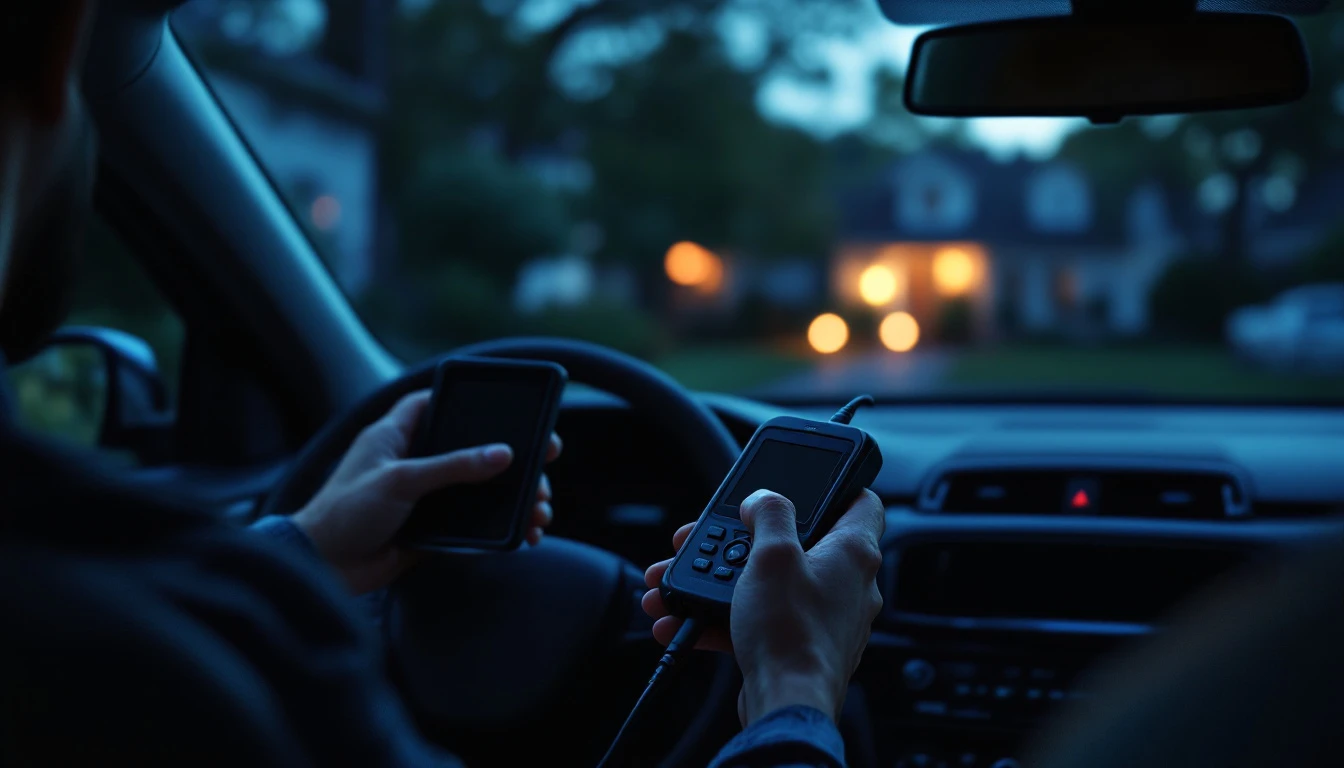
If an emissions station turned your car away for monitors not ready after a battery change, a cleared code or an engine computer replacement, nothing is necessarily wrong with the car. The engine computer erased its record of having tested the emissions system and has not finished re-testing yet. As of October 2026, most vehicles complete their monitors within a few days to a week of mixed driving, and no payment is needed for that. When a monitor refuses to complete because of outdated or corrupted engine computer software, a reflash in Fort Worth runs $175–$325.
This guide explains what the monitors are, why they reset, how to get them to run, what blocks them, and where engine computer programming fits in.
Monitors Reset: Causes and What to Do
| What happened | Monitors reset? | What to do |
|---|---|---|
| Battery disconnected or replaced | Yes on many vehicles | Drive normally for several days; check status before testing |
| Battery went completely dead | Often | Same as above, after the battery is confirmed healthy |
| Codes cleared with a scan tool | Yes, always | Drive the cycle; do not clear codes again |
| Engine computer reflashed | Yes | Drive the cycle; expect idle and shift relearning too |
| Engine computer replaced, new | Yes | Programming, then the drive cycle |
| Engine computer replaced, used | Yes | Program to your VIN first, then the drive cycle |
| Jump start only, battery stayed connected | Usually not | Check status; often nothing is needed |
| A week of driving and still not ready | Not a reset problem | Diagnose what is blocking the monitor |
What Readiness Monitors Are
Every gasoline car and light truck sold in the United States since the 1996 model year has on-board diagnostics, known as OBD II. Part of that system is a set of self-tests the engine computer runs on the emissions equipment. Each self-test is called a monitor.
Some monitors run all the time the engine is running. These are the continuous monitors: misfire detection, fuel system control, and a general check of sensors and circuits. They are effectively always complete.
The rest are non-continuous monitors. They run only when specific conditions are met, and each one stores a status of complete or incomplete:
- Catalyst — checks that the catalytic converter is doing its job
- Evaporative system (EVAP) — checks the fuel vapor system for leaks
- Oxygen sensor and oxygen sensor heater — check sensor response and warm-up
- EGR or variable valve timing — checks exhaust gas recirculation, on vehicles that have it
- Secondary air and heated catalyst — present on some vehicles only
When an inspection station plugs into your car, the equipment reads those statuses. If too many are incomplete, the car cannot be tested. That is a "not ready" result, and it is different from a failure. A failure means the computer found a fault. Not ready means the computer has not finished looking.
The Environmental Protection Agency describes how OBD inspection programs use readiness at epa.gov.
Why a Battery Change Wipes Them
On many vehicles, the completed-monitor record lives in memory that depends on battery power. Disconnect the battery and the record is gone. The engine computer wakes up with no history, every non-continuous monitor reads incomplete, and learned values such as idle speed and fuel trim start over as well. That is also why a car can idle oddly or shift differently for a few days after a battery swap, which we cover in our guide to a car acting up after a dead battery or jump start.
Not every vehicle behaves this way. Some newer cars keep readiness in memory that survives a battery disconnect. You cannot tell from the outside, so the practical rule is: after any battery work, check the status before you drive to the station.
A shop can often prevent the reset entirely by connecting a memory saver that keeps the vehicle powered while the battery is out. If you are having a battery replaced shortly before your registration is due, ask for that.
Why Clearing Codes Makes It Worse
Clearing codes with a scan tool resets all monitors on every vehicle, with no exceptions. This catches owners constantly. The check engine light comes on a week before registration is due, a friend with a code reader clears it, the light goes out, and the car is now untestable.
It does not hide the problem either. If the fault is real, the monitor that detected it will run again and turn the light back on. And on vehicles from roughly the 2010 model year onward, a confirmed emissions fault is also stored as a permanent code that a scan tool cannot erase. It clears itself only after the computer has re-run the relevant monitor and seen the system pass.
If the light is on, read the code, fix the cause, and let the computer clear it.
Why ECM Programming or Replacement Resets Them
Reflashing an engine computer replaces its software and returns its learned data to defaults. Replacing the computer swaps in a unit with no history at all. Either way, readiness starts from zero.
Two additional points apply when the computer has been replaced:
The VIN has to be right. The inspection equipment reads the vehicle identification number stored in the engine computer. A used computer still carrying its donor vehicle's VIN does not match the car it is plugged into. Beyond inspection, a used computer generally will not start the engine at all until it has been married to the vehicle's anti-theft system. Our used ECM and PCM programming guide explains the process, and the same applies to a used transmission control module on vehicles where it is a separate unit.
The calibration has to be right. A computer loaded with software for a different engine, transmission or emissions package may run the car but never complete certain monitors, because it is testing for equipment that is not there or expecting sensor values the vehicle does not produce. This is common after engine swaps, and our engine swap computer programming cost guide goes into it.
If you are planning an engine computer replacement and your registration is close, do the replacement first and leave yourself at least a week of driving before the test.
The Emissions Test in Tarrant County
Texas ended the annual safety inspection for non-commercial vehicles at the start of 2025, but the emissions test did not go away. Vehicles registered in the state's emissions counties, which include Tarrant County and its neighbors in the Dallas-Fort Worth area, still need a passing emissions test before registration can be renewed. The requirement applies to gasoline vehicles within a set age range; diesel vehicles and the newest and oldest model years are treated differently. Check the current rules for your vehicle before assuming it is exempt.
For a 1996-and-newer vehicle the test is an OBD test. The station connects to the diagnostic port and reads three things: whether the check engine light is commanded on, what codes are stored, and the readiness status. Under the EPA guidance these programs follow, a 2001-or-newer vehicle is generally allowed one incomplete monitor and a 1996–2000 vehicle two.
If the station's equipment cannot talk to your car at all, that is a separate problem with its own causes. See our guide to a scan tool that will not connect to the OBD port.
A Drive Cycle That Completes Most Monitors
Every manufacturer publishes its own drive cycle, and the exact version for your vehicle is in the service information. The general pattern below completes the monitors on most vehicles. Follow traffic laws and only do this where it is safe; none of it requires unusual driving.
- Start cold. Let the car sit overnight so the engine is at outside temperature. Have the fuel tank between one-quarter and three-quarters full. This matters for the evaporative monitor.
- Idle for two to three minutes with the air conditioning and rear defroster on. This loads the engine and runs the oxygen sensor heater test.
- Drive in town for several minutes with gentle acceleration and several complete stops.
- Hold a steady highway speed, around 55 to 60 mph, for at least five to ten minutes without using cruise control changes or heavy throttle. This is where the catalyst and oxygen sensor monitors usually run.
- Coast down from highway speed without braking hard, where it is safe to do so, then drive in stop-and-go traffic for a few more minutes.
- Park, shut off, and let the car rest overnight. Many evaporative monitors run during or after a long rest.
- Repeat for two or three days.
Around Fort Worth, a morning commute that includes a stretch of steady driving on I-30, I-35W or Loop 820 followed by surface streets does this naturally.
Check the status before returning to the station. Many inexpensive code readers show readiness, and most parts stores will read it for you. Look for a list of monitors marked complete or incomplete, and do not press anything labeled clear or erase.
When a Monitor Refuses to Complete
If a week or two of mixed driving has not completed a monitor, more driving will not help. Something is preventing the test from running or from passing. The usual causes:
- A pending code. The computer has seen a fault once and is waiting to see it again before turning on the light. A pending fault will block related monitors. It shows on a scan tool even though the light is off.
- Engine not reaching temperature. A thermostat stuck open keeps coolant temperature below the threshold several monitors require. Watch the gauge; if it never reaches its normal position, this is the likely cause.
- A sensor the monitor depends on. Oxygen sensors, the coolant temperature sensor, the fuel tank pressure sensor and the fuel level sender all feed the tests.
- Leaks. A loose or worn gas cap, a cracked vapor hose or an exhaust leak ahead of the oxygen sensors.
- Fuel level. Always nearly full or nearly empty, and the evaporative test never gets its window.
- Outside temperature. Evaporative tests often will not run in very hot or very cold conditions. A Texas August can delay that one monitor on its own.
- Short trips only. A car that never sees ten minutes of steady speed may never run the catalyst monitor.
- Aftermarket parts or tuning. Non-original exhaust components or modified engine software can prevent monitors from running. We do not install software that disables emissions monitoring.
- Engine computer software. Some vehicles have known software defects that stop a monitor from completing, and the manufacturer's fix is an updated calibration.
That last item is the one that falls squarely in our work.
Where Programming Is the Fix
Manufacturers issue technical service bulletins when a calibration has a readiness problem, and the remedy is a reflash to the updated software. If your vehicle has such a bulletin, no amount of driving solves it and no part needs replacing. The engine computer needs the newer calibration.
Programming is also the fix when:
- A replacement engine computer was installed with the wrong calibration or without the vehicle's VIN
- A previous programming attempt was interrupted and left the software incomplete
- The engine computer itself is faulty and will not run its tests, which our guide to the signs of a bad ECM helps you assess
Programming is not the fix for a bad thermostat, a failed sensor or a leak. Those are mechanical repairs. A competent diagnosis separates the two before any money is spent, and we will tell you when the job belongs to your mechanic rather than to us. If you are wondering who does this kind of work, our article on whether a locksmith can program an ECM or PCM explains how programming specialists operate.
Pricing follows the ranges in our ECU programming cost guide: a software reflash is $175–$325, and most ECM or PCM programming jobs fall between $150 and $500, with the module itself separate where one is needed. After any programming, the monitors start over, so the drive cycle above still has to be completed before the test.
Getting Help in Fort Worth
Fort Worth Locksmith & Computer Programming is a mobile-only service, available 24/7. We come to the vehicle, read the readiness status and any pending or permanent codes, check for calibration updates, and program or reprogram the engine computer on site when that is what the vehicle needs. Call (817) 668-3801 or see our ECU programming service and our Fort Worth ECU programming page.
Frequently Asked Questions
Why does my car say monitors not ready after a battery change?
The engine computer runs a set of self-tests on the emissions system and stores a completed or not completed status for each one. On many vehicles, disconnecting the battery erases that stored status, and every monitor returns to not ready until the computer has run each test again under the right driving conditions. Clearing codes with a scan tool and replacing or reprogramming the engine computer do the same thing. Nothing is broken; the tests simply have not been repeated yet.
How long does it take for monitors to be ready after a battery disconnect?
For most vehicles, a few days to a week of mixed driving that includes cold starts, steady highway speed and stop-and-go traffic. Some monitors complete in a single trip. The evaporative system monitor is usually the slowest because it needs a specific fuel level, a mild outside temperature and often an overnight rest before it will run. If a week or two of normal driving has not completed a monitor, something is preventing it from running.
Will my car pass a Texas emissions test with a monitor not ready?
Under the EPA guidance that OBD inspection programs follow, vehicles from model year 2001 and newer are generally allowed one incomplete monitor, and 1996 through 2000 vehicles are generally allowed two. More than that and the vehicle is turned away as not ready, which is not the same as failing for a fault. Confirm the current rule with your inspection station, since program details can change.
Can a scan tool force the monitors to ready?
No. Readiness is earned by the computer actually running each test on a working system. A scan tool can show you which monitors are incomplete and, on some vehicles, command an individual test to start under the right conditions, but it cannot mark a monitor as passed. Devices or software sold to fake readiness are emissions tampering, and we do not offer or support them.
Why will one monitor never complete no matter how much I drive?
A monitor that will not run is usually being blocked. The common causes are a stored or pending fault code, a thermostat that keeps the engine from reaching full temperature, a failed sensor the monitor depends on, an exhaust or vacuum leak, the fuel level being outside the range the test requires, or engine computer software that has a known defect. Finding the blocking condition is a diagnostic job, not a driving job.
Does replacing the engine computer reset the monitors?
Yes. A new, used or reprogrammed engine computer starts with every monitor not ready, and it also has to relearn idle, fuel and transmission adaptations. A used computer must additionally be programmed with your vehicle's VIN, because the inspection equipment reads the VIN from the computer and compares it with the vehicle. Plan the replacement so you have time to drive the car before your registration is due.
How much does it cost to fix monitors that will not set in Fort Worth?
Completing a drive cycle yourself costs nothing. If the cause is outdated or corrupted engine computer software, a reflash from a mobile specialist in Fort Worth runs $175 to $325 as of October 2026, and most ECM or PCM programming jobs fall between $150 and $500. If the cause is a failed sensor, thermostat or leak, the cost is that repair, which a mechanic handles. We tell you which one it is before any programming is done.