ECU Programming Cost in Fort Worth (2026): Reflash, Used-to-VIN, Clone or New
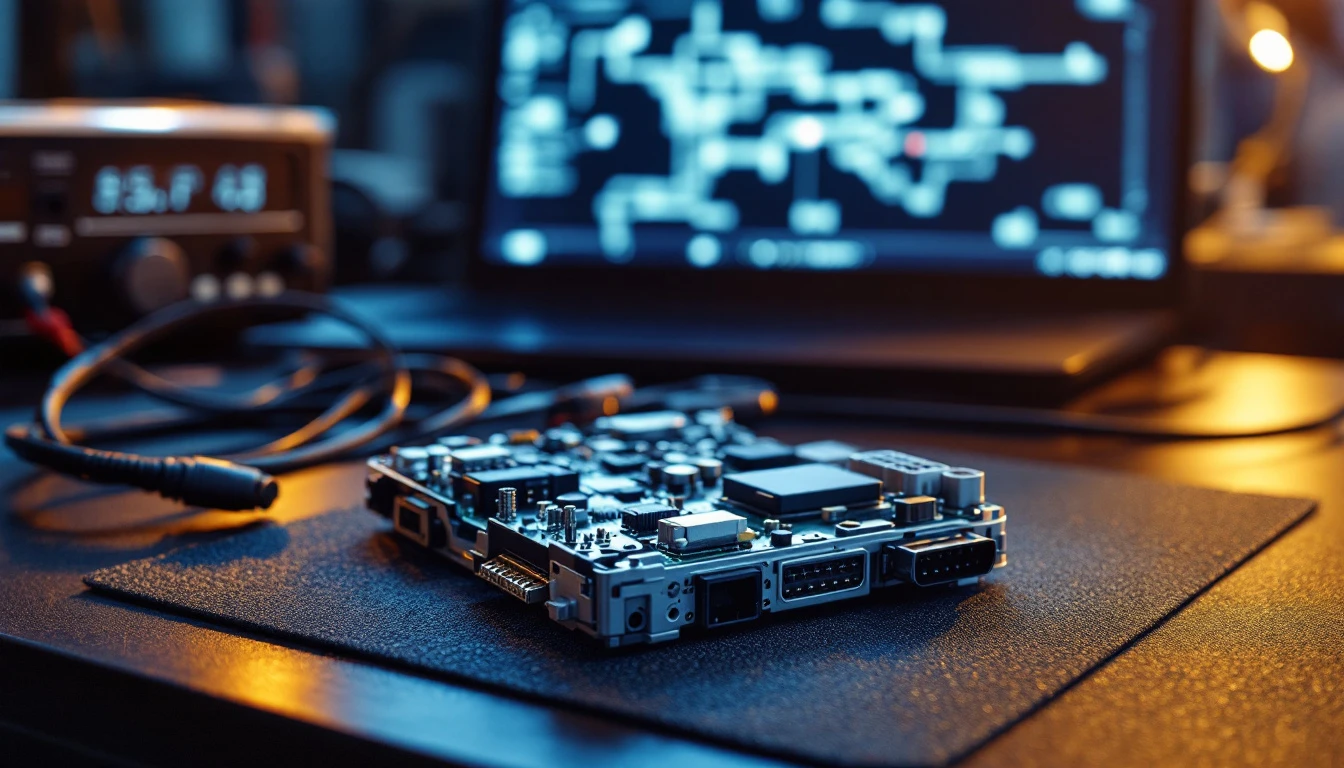
As of September 2026, ECU programming in Fort Worth from a mobile specialist costs $150–$500 for most jobs, with the common domestic cases landing between $200 and $350. A software reflash runs $175–$325, setting up a new replacement ECU on a domestic vehicle runs $275–$475 plus the module, and marrying a used ECU to your VIN runs $325–$500 on supported domestic and Asian platforms or $500–$1,200 on European bench-level work.
The number that matters most is not the make of the car. It is which of five different jobs the engine computer actually needs. This guide explains each one, prices it, and shows how to tell which one you are paying for before the work starts.
A quick note on terms. ECU, ECM and PCM get used interchangeably. Strictly, the ECU or ECM runs the engine and the PCM runs the engine and the transmission in one box. Pricing follows the job, not the acronym, so we use ECU throughout. If you want the distinction in detail, see ECU vs ECM vs PCM: what is the difference.
The Five ECU Programming Jobs and What Each Costs
| ECU job | What it involves | Typical mobile price | Notes |
|---|---|---|---|
| Reflash / calibration update | Rewrite software on the existing ECU | $175–$325 | Free under warranty at the dealer |
| General ECM / PCM programming | Standard setup or reprogram on common platforms | $150–$500 | Most domestic jobs $200–$350 |
| New replacement ECU setup (domestic) | Program a blank module to VIN, options, immobilizer | $275–$475 | Plus the cost of the module |
| Used ECU married to your VIN (domestic / Asian) | Rewrite donor VIN and security data | $325–$500 | Supported platforms only |
| Used ECU married to your VIN (European) | Bench-level memory work on the donor module | $500–$1,200 | Part numbers must match |
| Immobilizer lockout clearance | Restore authorization after a security lockout | $175–$325 | Platform-dependent |
| ECU plus body module sequence | Engine and body modules programmed in required order | $425–$725 | Common on newer domestic trucks |
| All-keys-lost ECU reset and programming | Security reset with no working key present | Quote required after diagnosis | Varies widely by platform |
Those are the same bands we use across our module programming work, and they are consistent with our broader car computer and module programming cost guide, which prices every module type side by side. This page narrows in on the engine computer alone.
Job 1: Reflash or Calibration Update ($175–$325)
A reflash rewrites the software on the ECU that is already in the car. Nothing is unplugged or replaced. The two most common reasons are a factory calibration update that fixes a known drivability complaint, and recovery from corrupted software — for example after a failed update, a low-voltage event during a previous flash, or a tuner install that was removed badly.
This is the least expensive ECU job because the hardware stays and the procedure is published. The main variables are whether the update requires an online factory session and how long the vehicle needs to be on a battery support unit while it runs.
If the vehicle is still under its powertrain warranty and the update addresses a known issue, the dealership may do it free. That is worth checking first. Outside warranty, a mobile reflash avoids the tow and the service-lane wait.
Job 2: General ECM or PCM Programming ($150–$500)
This is the broad middle of the market and where most quotes land. It covers standard reprogramming on common domestic and Asian platforms: configuring the computer to the vehicle's options, clearing adaptation values after a repair, relearning idle and throttle behavior, and similar procedures.
Most of these jobs run $200–$350. They climb toward the top of the band when the vehicle needs an online session with the manufacturer, when several relearns have to follow the programming, or when the car arrives with other faults that have to be cleared before the procedure will complete.
Job 3: New Replacement ECU Setup ($275–$475 Plus the Module)
When the original ECU has failed — water damage, a shorted driver circuit, internal corruption that a reflash cannot fix — a new module is ordered and programmed. On domestic vehicles the programming runs $275–$475. The module is a separate cost, and it varies enormously by platform, which is why no honest quote bundles it without the part number.
A new module arrives blank. It has to be taught the VIN, the vehicle's configuration and, critically, the immobilizer relationship so it will accept your keys. That last step is where a lot of do-it-yourself swaps stall: the new ECU is installed, the car cranks, and it will not start because the security handshake was never completed. We see that often enough that we wrote a whole guide to it — new module installed and the car still will not start.
For a fuller breakdown of the total job including the part, see how much ECM replacement costs.
Job 4: Used ECU Married to Your VIN ($325–$500 Domestic / Asian, $500–$1,200 European)
A used ECU from a salvage vehicle can be the least expensive route back on the road, because the part itself often costs a fraction of a new one. The catch is that the used module still belongs to the donor car. Its VIN, immobilizer data and sometimes its mileage record have to be read and rewritten to match yours.
On supported domestic and Asian platforms, that is done through diagnostic procedures and runs $325–$500. On many European platforms the work happens at the bench: the module is opened, its memory is read directly, the donor data is replaced, and it is written back. That runs $500–$1,200 depending on the platform and the security generation.
Before buying a used ECU, check three things:
- The part number matches exactly — including the software and hardware suffixes where the platform uses them. A close number is not the same number.
- The platform is supported for used-module marriage. Some are not, and no amount of effort makes them work.
- The seller's return policy. A module that turns out to be damaged is a common outcome in the salvage market.
Send us the part number and your VIN before you buy, and we will tell you whether the job is possible. Our dedicated guides cover used ECM and PCM programming to VIN, used module programming cost across every module type, and the transmission side in used TCM programming to VIN.
Job 5: Cloning the Original ECU (Priced With the Used-Module Bands)
Cloning copies the complete data from your original ECU into a replacement unit, so the replacement behaves exactly as the original did — same VIN, same immobilizer data, same adaptations. It is an alternative to a factory setup procedure, and on some platforms it is the only practical route when the factory procedure requires dealer-only access.
Cloning is only possible when the original module can still be read. A module with a shorted power circuit can often still be read at the bench; one with a corrupted memory chip sometimes cannot. We price cloning inside the used-module bands above because the bench work is similar. Our comparison of module cloning versus programming explains when each route makes sense.
What Moves an ECU Programming Quote Up or Down
Once the job type sets the band, these factors decide where inside it a specific vehicle lands:
- Online factory access. Many newer vehicles need a live session with the manufacturer's server, and some need a registered professional security account. That adds time and subscription cost.
- Security gateway modules. On newer Chrysler, Dodge, Jeep and Ram vehicles, the diagnostic port is locked behind a gateway that must be authorized first. See security gateway module programming.
- Immobilizer involvement. An ECU that holds immobilizer data is more involved to replace than one that does not.
- Diesel versus gasoline. Diesel engine computers often carry more calibration data and injector coding. Our diesel ECM and PCM programming guide covers Power Stroke, Duramax and Cummins.
- European bench work. Opening a module and reading its memory directly takes specialized equipment and more time.
- Follow-on relearns. Throttle, idle, crank position and transmission relearns after programming each add time. See throttle body relearn for one example.
- Other stored faults. A car arriving with unrelated communication faults sometimes has to have those cleared before the ECU procedure will run.
- Time and distance. After-hours emergency calls and outlying addresses carry higher service fees than a scheduled weekday visit in Fort Worth.
How to Tell Which Job You Actually Need
Most people calling about ECU programming do not yet know which of the five jobs applies. Here is how the symptoms usually sort:
The car runs, but something is wrong with how it runs — rough idle, hesitation, a known drivability complaint, a check-engine code the manufacturer has issued an update for. That is usually a reflash candidate.
The car will not start after the ECU was replaced — cranks normally, may flash a security light, never fires. The replacement was installed without completing the setup or the immobilizer sync. That is a programming job on the module already in the car, often in the used-to-VIN band if the module came from a salvage vehicle.
The car died suddenly and the scan tool cannot talk to the engine computer at all — the ECU may have failed outright. That is a replacement, then a new-module setup, used-module marriage or clone depending on the route chosen.
The car starts and stalls within about two seconds with a security light — often an immobilizer authorization problem rather than a failed ECU. See car starts then immediately dies before buying any module.
A diagnostic read settles which of these you are looking at, and it should happen before anyone orders a part.
Dealer, Tuner Shop, or Mobile Programming Specialist
The dealership has factory tools for its own brand and is the right answer for warranty work. Outside warranty, expect the car to need to be delivered to the service lane, and expect new-module pricing because dealers rarely program used modules.
A performance tuning shop is set up to modify calibrations for power, not usually to restore factory programming on a failed or replaced module. If the goal is getting a daily driver running correctly again, factory-correct programming is what you want.
A mobile programming specialist comes to the vehicle, handles reflash, new-module setup, used-module marriage and cloning across most makes, and deals with the immobilizer side as part of the same visit. For a detailed comparison, see dealer vs locksmith module programming, and for how the job itself runs, how long ECU and module programming takes.
What to Send Before You Get a Quote
An accurate ECU quote needs a few facts:
- The VIN.
- The part number of the ECU in the car, and of any replacement you have bought or are considering.
- Whether the original ECU is still available, even if it is failed.
- What the car is doing now — runs badly, cranks without starting, no communication.
- Whether all keys are available.
- Where the vehicle is parked.
With that, we can tell you which job applies and quote it before arriving. Our ECU programming service and module programming service pages describe the work, and we cover ECU programming in Fort Worth and Arlington directly.
A Word on Emissions Compliance
Factory-correct programming restores the manufacturer's calibration and keeps emissions controls working as designed. Modifications that disable emissions equipment on road vehicles are a separate matter, and the Environmental Protection Agency (epa.gov) treats them as tampering. Every ECU job we do returns the vehicle to a factory-compliant calibration. If a previous owner or shop installed a modified calibration and the car now fails inspection, restoring factory software is one of the jobs we handle.
Texas locksmith companies are licensed through the Department of Public Safety Private Security Program; ask for the license number of anyone working on your vehicle's security systems.
Frequently Asked Questions
How much does ECU programming cost in Fort Worth?
As of September 2026, most ECU, ECM and PCM programming jobs from a mobile specialist in Fort Worth fall between $150 and $500, with the common domestic jobs landing around $200 to $350. A reflash or calibration update on an existing computer usually runs $175 to $325. Setting up a new replacement ECU on a domestic vehicle runs $275 to $475 plus the module. Marrying a used ECU to your VIN runs $325 to $500 on supported domestic and Asian platforms and $500 to $1,200 on European bench-level jobs.
Is ECU programming cheaper than buying a new ECU from the dealer?
Programming is a labor and equipment charge; the module is a separate part cost. The saving usually comes from the route rather than the rate. A good used ECU married to your VIN, or your original ECU repaired or reflashed, often costs far less in total than a new dealer module plus dealer programming. Whether a used module is a safe option depends on the platform, which is why the part number and VIN get checked before anyone buys anything.
What is the difference between reflashing and programming an ECU?
A reflash rewrites the software on the ECU already in the car, usually to apply a factory calibration update or to recover from corrupted software. Programming in the broader sense also covers setting up a new or used module so it matches your VIN, options and immobilizer. A reflash keeps the same hardware; programming a replacement introduces new hardware that has to be taught who it belongs to.
Why does a used ECU cost more to program than a new one?
Because a used ECU arrives already married to a different vehicle. Its VIN, immobilizer data and sometimes its mileage record belong to the donor car. On many platforms that data has to be read and rewritten, sometimes directly from the memory chip on the bench, before the engine will run. A new module arrives blank and follows a published setup procedure, which is usually faster.
Will my car need new keys after ECU programming?
Usually not, if the job is done correctly. On most vehicles the replacement ECU is synchronized to the existing immobilizer and your current keys keep working. On some platforms the keys have to be re-learned as part of the procedure, which is why you should have every key at the vehicle during the appointment. If a key is not present, it may not work afterward.
How long does ECU programming take?
A straightforward reflash or new-module setup is usually thirty minutes to two hours at the vehicle. A used-ECU-to-VIN job that needs bench work on the memory chip can take several hours or be scheduled as a two-step job. Our guide to how long ECU and module programming takes covers the variables in more detail.
Can ECU programming be done at my house or shop?
Yes, for most jobs. Mobile ECU programming uses a laptop, a vehicle interface, a battery support unit and, where needed, bench equipment carried in the van. Online factory procedures need a stable internet connection, which we bring. The main exception is a module that must be opened and read at a bench, which we can often still do on site or pick up and return.
Need ECU programming in Fort Worth or Tarrant County? Call or text (817) 668-3801 with your VIN and the ECU part number for a quote before we roll.